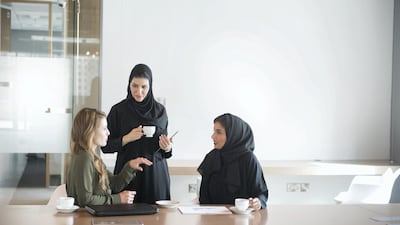

While 2020 has been a year of many firsts, including the launch of the Hope probe to Mars, it has also brought with it a unique set of hurdles that the world has never faced before.
The silver lining is that, in these difficult times, we are pushed to rethink and reimagine the world around us.
This phase has been called the “Great Reset”, challenging us to make new connections in order to create a shared future of prosperity, inclusion, and compassion. We have transformed our societies by recognising the power of our combined strength, of co-operation and of tapping into the collective genius that can only be unlocked when individuals from diverse backgrounds join forces for the common good.
The Great Reset sees diversity as a source of strength. Diversity and inclusion help us build new-found resilience – of the human spirit, of our corporations, of our countries and of the global community of peoples in the post-Covid 19 world. In the simplest terms, complexity, like we are experiencing now, is better served through diversity because different people see things differently.
-

Rania R Saeed, left, and Futtaim Beljaflah have recently completed their personal training certification and are now teaching cycling classes at Crank, Al Quoz. Courtesy Crank -
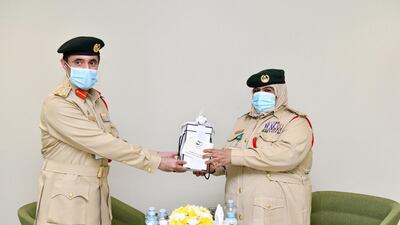
Brigadier Nabeel Abdullah Alrida, Deputy Director of Operations, honours Lt. Khatoon Ali Al Balooshi who has been serving the force in Dubai since 1977. Wam -
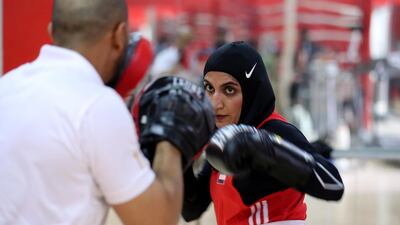
Fahima Falaknaz hits the pads with UAE national team coach Mohammed Al Shebli. Pawan Singh / The National -

Laila Al Dhaheri. Courtesy: Emirates Nuclear Energy Corporation -
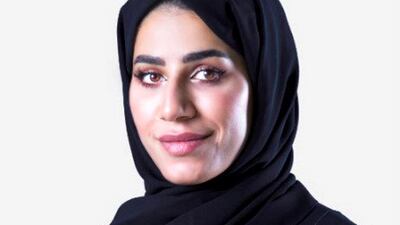
Badreya Al Marzooqi. Courtesy: Emirates Nuclear Energy Corporation -
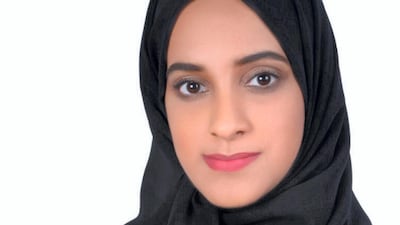
Amal Al Nuaimi. Courtesy: Emirates Nuclear Energy Corporation -
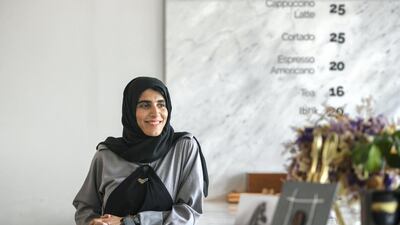
Noran Al Bannai followed her dreams by opening up her own coffee shop. Khushnum Bhandari for The National -
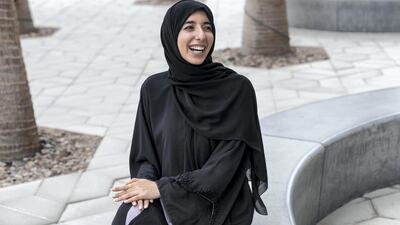
Dana Al Hosani has turned her passion for volunteering into her vocation. Antonie Robertson/The National -
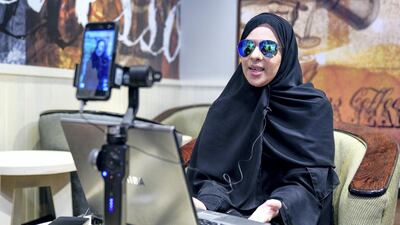
Amal Al Mansouri records an Arabic language voiceover for a cartoon for local television. Victor Besa / The National -
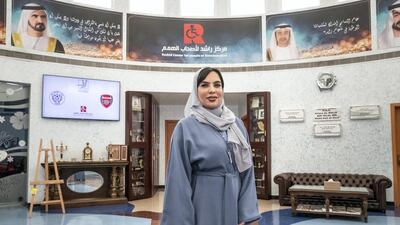
Mariam Othman, Emirati Founder and CEO of Rashid Centre for People with Determination. -
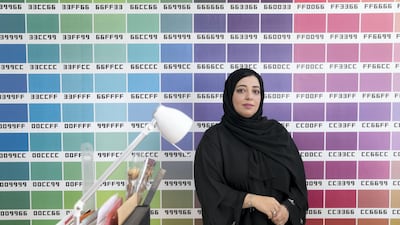
Kholoud Al Kendi, founder of Retaj Design, is a young Emirati entrepreneur who left her job as a banker to follow her passion for graphic design Reem Mohammed / The National -
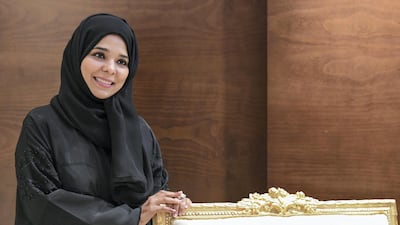
Abu Dhabi, United Arab Emirates - Shaima Al Jabry, 39, at her home in Baniyas, is the first Emirati to attain a licence as a life coach on October 17, 2018. (Khushnum Bhandari/ The National) -
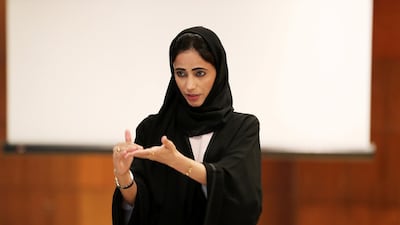
DUBAI , UNITED ARAB EMIRATES , MAY 9 – 2018 :- Abeer Al Shahi , First Emirati to specialise in sign language during the event held at Meydan hotel in Dubai. ( Pawan Singh / The National ) For News. Story by Ruba Haza -
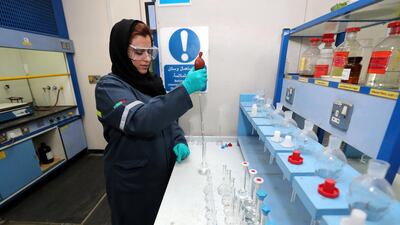
Engineering graduates topped the Ministry of Education study called Majors in Demand. Chris Whiteoak / The National -

One of Emirate Airline's youngest pilots, Bakhita Al Muhairi, 23, an Emirati, is pictured in the cockpit alongside a colleague.


For us in the UAE, the Great Reset comes on the eve of the nation’s Golden Jubilee as we chart a course for the next 50 years. The UAE has never shied away from adapting to the times. Tolerance, perseverance and the ability not only to adapt but also to leapfrog into the future are all deeply ingrained in our history, culture and vision. The role of Emirati women – then and now – has been integral to this continued progression.
Sheikh Zayed, the Founding Father, may his soul rest in peace, once said: “I hope that the women in my country will follow their sisters in those countries which have previously made the adjustment to the procession of progress and development.”
Looking at the inspirational Emirati women who have risen to leadership positions within organisations and in government, I can already see Sheikh Zayed’s vision being realised. Even in extraordinary times, our Minister of State for Food Security, Mariam Al Muhairi, has stepped up and shown extreme resilience when global supply chains were affected by the pandemic. There are also many Emirati frontline workers who have served their country – too many to name. But they have personified courage in their fight against Covid-19.
While this year’s Global Gender Gap Report has shown improvement in the Emirates, we are still on our journey, particularly in the area of advancing women in the boardroom. This week, Aurora50 hosted the first edition of The Board Summit, which brought together directors, business leaders and policymakers to progress discourse around diversity and inclusion at board-level. During the summit, a disappointing figure caught my attention: only 3.52 per cent of listed board seats are held by women in the UAE. However, a poll conducted at the virtual event found that around 55 per cent of the women in attendance were ready to take on these positions, but simply don’t know how to find the right opportunities.
My hope is that, through a community approach and our “20 for 2020” initiative, aimed at driving gender balance at the board level, we can create pathways for more women to have board careers.
I have taken the time to highlight some key elements that I hope will provoke thought on women in our economy.
Organisations need to start building a pipeline of women in senior positions. Research has shown that having women on boards correlates with better financial performance by bringing different perspectives to the boardroom. This not only makes organisations more resilient but gives a new voice to the enactment of policies that support maternity leave and flexible working hours, and cover other matters that affect female colleagues.

I have also found that among the main challenges for women are social and cultural norms that obstruct having women on boards. This can easily be solved by making a conscious effort to create environments that allow for professionals, both male and female, to network. Chairs also need to meet with board members outside the boardroom and in neutral settings, while making a conscious effort to connect with women.
A senior executive at LinkedIn, a professional networking platform, mentioned in a recent discussion that men usually apply for roles if they meet 60 per cent of the requirements, whereas women strive for perfection. The inner critic convinces them that even if the opportunity were to arise, they would not have the qualifications or experience to seize it. My hope is that women recognise their innate talents and gain the confidence to seize these opportunities.
Furthermore, women must give credit to themselves, where it is due. I have noticed that, in our part of the world, women have a tendency to attribute their success to their managers, or the leadership of their organisations, without fully acknowledging their own capabilities and efforts. While it is a beautiful, cultural habit to remain humble and express gratitude for one’s supporters, I would always encourage women to be proud of their accomplishments and give recognition to their ambition, drive and hard work.
It is also important to mentor talent. We recently launched an Aurora50’s initiative called the Manarat Women on Boards Network – the first formal network for women serving on boards of companies listed on the Abu Dhabi Securities Exchange and Dubai Financial Market. What began as a conversation with a select group of female directors holding board seats on locally listed companies has materialised into a tangible reality that provides female board members the opportunity to support and empower other competent women who aspire for board careers. Many of these women hold only one board position, so there is opportunity for boards to source and interview these women for possible seats in the future.
This network was created to further the gender-balance agenda and in its first year will guide high-potential female talent selected for the 2020 initiative, helping to enable their future board careers.
Seeing a community convene and work together to enhance female representation at the board level has been extremely encouraging, from board directors who are dedicating their time to supporting the creation of the pipeline, to the financial centres and exchanges collaborating to create a wider-reaching agreement with the regulators.
As the saying goes, it takes a village to raise a child. I would argue that it takes a collective effort to nurture and foster an economy that serves the greatest good. By empowering women on boards today, we can build resilient organisations that inspire the future female leaders of tomorrow.

