

Last night was the winter solstice – the longest night of the year, an occasion celebrated in Afghanistan and other Persian-speaking countries, where it is known as “shab-e-Yalda”.
It isn’t the prolonged darkness that is celebrated during Yalda. Rather, it is the rebirth of the daylight. Until the next solstice, the days progressively get brighter.
But will Afghanistan's days really get any brighter?
Longer, perhaps. To Afghans who have witnessed ever more monstrous displays of violence on their streets this week, the days certainly feel long.
But brighter? That depends upon the country’s leadership – both within the national government that resides in Kabul and the senior command of the Taliban militant group whose forces occupy much of the nation’s rural areas.
The two were, until 10 days ago, in negotiations known as “intra-Afghan dialogue” in Doha, Qatar, attempting to wade through the morass of their decades-long conflict to find peace on the other side. Now, despite the unrelenting escalation of crisis in Afghanistan, which is caught between the coronavirus pandemic and the civil war, the two sides’ negotiating teams are in the middle of a three-week recess.
-
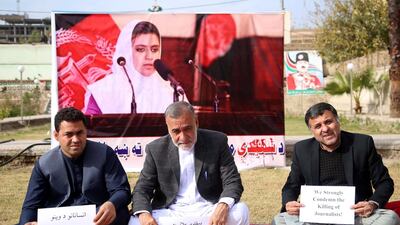
Journalists at a protest against the killing of Malala Maiwand, an Afghan journalist who was killed on 11 December. No group has claimed the attack. EPA -
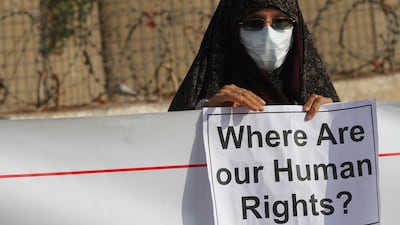
Activists gather in front of the UN office in Herat, Afghanistan, to demand peace and an end to war. EPA -
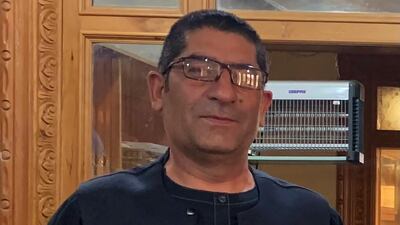
Afghan Journalist Rahmatullah Nikzad who was shot dead by unknown assailants in Afghanistan's central Ghazni province on Monday. AP -
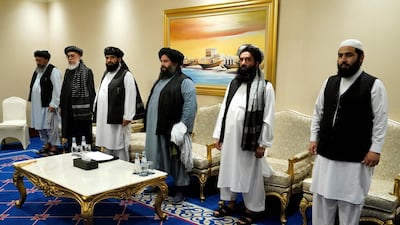
Members of the Taliban's peace negotiation team taking part in talks with the Afghan government in Doha. Reuters -
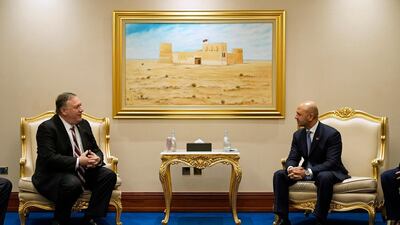
US Secretary of State Mike Pompeo talks to Afghanistan's State Minister for Peace Sayed Sadat Mansoor Naderi in Doha last November. The Afghan government and the Taliban are trying to hammer out a peace deal. AP -
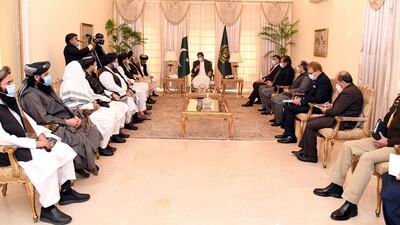
A Taliban delegation talking to Pakistan's Prime Minister Imran Khan in Islamabad last week. The two groups met to discuss an ongoing peace process. EPA -
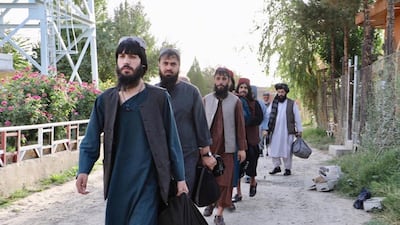
Taliban prisoners preparing to leave a government prison in Kabul, Afghanistan, as part of an arrangement to persuade the insurgent group to start peace talks. EPA


The recess is a holiday from the stressful negotiating environment of Doha’s luxury hotels, so that both teams can go back to their respective leaders and update them on their progress, which they and others have referred to as a “breakthrough”.
There has been no breakthrough, at least not one that will matter to historians who may one day reflect on the negotiations. The two achievements of the talks between September and now are, first, an agreement by both sides about the procedural rules they will follow during the negotiations and, second, the articulation of the distinct lists of topics they would like to discuss. They have decided – after 20 years of war, multiple years of back-channel communications and three months of the latest rounds of official talks – in what manner they wish to talk to each other and what each side wants to talk about.
The latter is hardly an achievement, as neither side approves of the other’s list of topics, nor the order in which to discuss the topics that overlap. Both sides want to discuss women’s rights, for example, but the Taliban only wants to discuss them within the context of its interpretation of Islamic principles. The Afghan government wants to discuss a ceasefire first. The Taliban wants to discuss it last.
The talks are due to resume on January 5. If that happens, then that may be the real breakthrough. In the history of talks between the Afghan government and the Taliban, no deadline has ever been adhered to.
Honouring this deadline is made less likely by the fact that the two sides now disagree about even the venue. The Afghan government wants it to be Afghanistan, but the Taliban fears that this means holding them in territory where the national government’s authority is recognised. Kabul’s response has been that the Taliban can choose any area of the country they like, but the distrust on both sides is so deep that they are now accusing one another of playing tricks.
“Afghans can negotiate under a tent, too, and in cold weather,” Afghan President Ashraf Ghani has said. “This is not the time for luxury hotels to be considered as preconditions.”
At this point, forcing negotiators to huddle together in a cold tent until they find a solution sounds like a constructive idea. The chasm between them is so vast otherwise. The quibbles over procedure and terminology (the Afghan government and Taliban were each insistent they be referred to by titles the other side doesn’t recognise) that have taken three months to hash out are utterly insignificant compared to the fundamental questions remaining, such as what kind of government and constitution Afghanistan should have. They are an absurdity compared to the overwhelming importance of securing an immediate and total ceasefire.

When the Doha talks began in September, the civilian death toll in Afghanistan’s war for 2020 stood at 2,100. The numbers continue to grow, and the attacks are so regular and ubiquitous that it begins to look like every Afghan life is under personal siege. Last week alone, 31 Afghan civilians were killed in the war. Several journalists have been killed this month. This morning, five people, including four doctors, were killed in a car bomb in Kabul. Last Friday, 15 children were killed when unexploded ordnance they were attempting to sell went off. Over the past 14 years, 26,000 Afghan children have been killed or maimed.
I have always found the phrase “intra-Afghan dialogue” to be curious. After all, why not “inter-Afghan dialogue”, which would more accurately reflect dialogue “between” Afghans? On reflection, however, “intra”, meaning “within”, is far more appropriate. Whoever coined it to describe these negotiations really knew the nature of the task.
The dialogue that has taken place thus far wasn’t really between Afghans at all. It has been within each side, as they struggle to continue pushing narrow strategies, pettiness and pride in the face of mounting casualties and a widening divide. They struggle to open their minds, and so delay any frank discussion of what an Afghanistan that really, practically works will look like.
Until that changes, the long night continues.
Sulaiman Hakemy is opinion editor at The National

