
I was sitting wearing my face mask at the kitchen table in my elderly parents’ home while they were eating dinner.
"You look worn out. Look after yourself," said my mum, echoing maternal advice given to children over centuries and across the world. Then she added, "If something happens to you, then what happens to us?"
Later that evening I was putting my five-year-old to bed. I asked her to hurry up and go to sleep, feeling guilty for rushing her through her most treasured time of the day, one-on-one time with mum.
"I'm feeling really ill and I have so much work to do. Please go to sleep," I begged her.
She turned her tiny face to me and gazed at me with her soft brown vulnerable eyes and asked, "Do you have coronavirus? Are you going to die?"
“It’s very hard if you don’t have a mummy,” she said, as she snuggled close to me. I stroked her hair and waited till she fell asleep. Then I went downstairs to sit at my desk and meet my work deadline – to earn money, to pay the bills.
These conversations with parents and children have become a soundtrack in life during the pandemic, and reflect the triple whammy of the "sandwich generation": looking after parents, children and finances.
The sandwich generation is the cohort of people in their 30s, 40s and 50s who find themselves simultaneously responsible for both parents and young kids. This is often a result of people having children later in life and parents living longer.
-
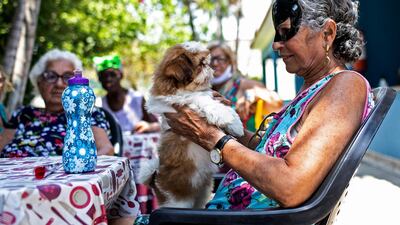
An elderly woman holds a dog named Cristal at a nursing home in Sepetiba, Brazil, on October 1. The nursing home brought the animals, who they rescued from abandonment, to provide a little relief from the isolation many elderly people feel, cut off from friends and family due to fear of contagion from the new coronavirus. Bruna Prado / AP -

Gino Verani is put on a stretcher as he is taken to hospital, after coming down with a fever, as his family stand around him, at his home in San Fiorano, Italy, August 23. Marzio Toniolo / Reuters -

Marzio Toniolo is carried on his grandfather Gino Verani's shoulder's through the mountains in Trentino-Alto Adige, in this undated family photograph taken by Verani's mother, at Verani's home in San Fiorano, Italy, September 5. Marzio Toniolo / Reuters -
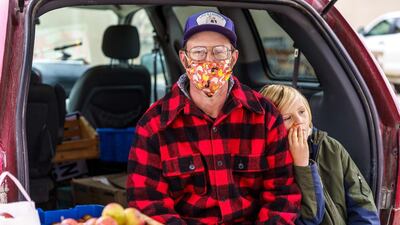
Organic produce vendor Jesse Downs with his son at the farmers market in Viroqua, Wisconsin, on October 3. In western Wisconsin, where family-run dairy farms dot the rolling green hills and eagle-watchers peer into the sparkling marshland, signs for Donald Trump and Joe Biden stand directly across each other on neighbours' yards. Kerem Yucel / AFP -
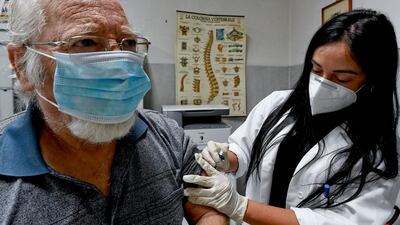
A doctor administers a flu vaccine to a patient in Naples, Italy, October 7. Ciro Fusco / EPA -
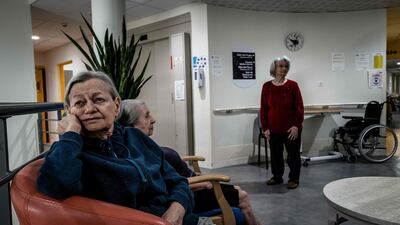
Elderly residents gather in a common area at The Vilanova Care Home in Corbas, south-eastern France on October 1. Jeff Pachoud / AFP -
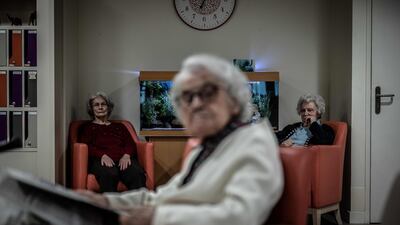
Elderly residents gather in a common area at The Vilanova Care Home in Corbas, south-eastern France on October 1. Jeff Pachoud / AFP -
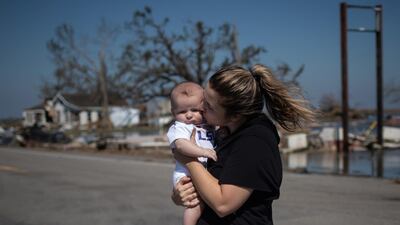
Sarah Adams, 33, kisses her three-month-old son Conner after surveying her family-run lumber yard which was destroyed by Hurricane Delta in Creole, Louisiana, US, October 10. Adrees Latif / Reuters -
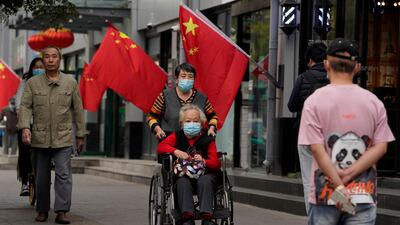
An elderly woman is wheeled past national flags on the last day of the National Day holidays in Beijing, October 8, 2020. Ng Han Guan / AP -
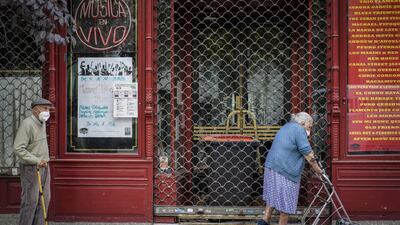
A couple walk past a closed cafe in Plaza del Angel in Madrid, Spain, on October 8. France, Spain and the Czech Republic posted record increases in coronavirus cases, underscoring growing alarm in Europe as it struggles to control the pandemic. Paul Hanna/Bloomberg -
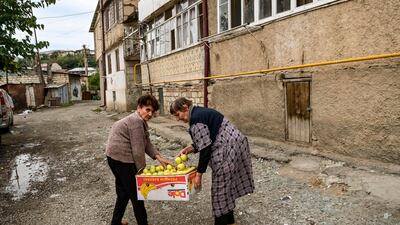
Two women carry fruits to a shelter in the city of Stepanakert, Azerbaijan on October 10, following a ceasefire during the military conflict between Armenia and Azerbaijan over the breakaway region of Nagorno-Karabakh. Aris Messinis/ AFP -
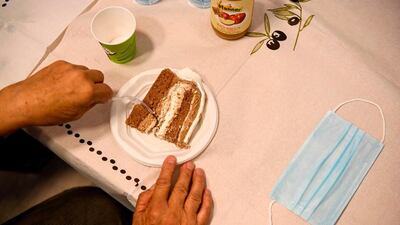
An elderly man eats a cake as a facemask lies beside him while attending a party at a carehome for the elderly in Pristina, Kosovo on October 1, on the occasion of the International Day of Older Persons. Armend Nimani / AFP -
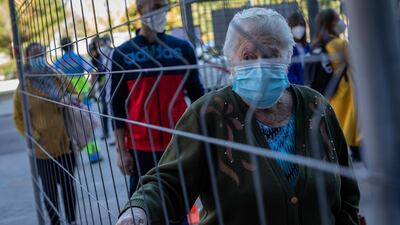
A woman lines up for a rapid antigen test for COVID-19 in the southern neighbourhood of Vallecas in Madrid, Spain, on September 29. Madrid has a rate of infection 2.5 times higher than the national average, which is already three times the European average, including the UK. Bernat Armangue / AP -
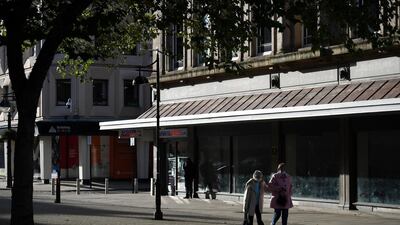
A woman walks with an elderly lady, both wearing a face mask in Bolton town centre, northwest England on October 7. Oli Scarff/ AFP -
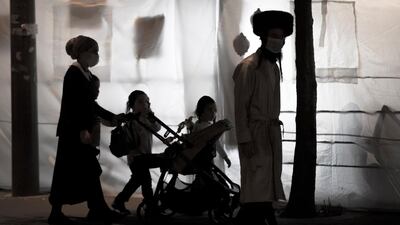
An ultra-Orthodox family passing next to sukkah (hut) during the Sukkot holiday, the Feast of the Tabernacles, in the ultra-Orthodox neighbourhood of Meah Shearim, Jerusalem, Israel, 07 October. Israel is under a full three-week lockdown aimed to prevent the spread of the coronavirus. Atef Safadi -
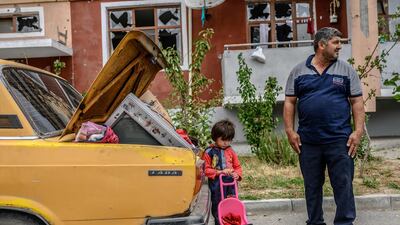
Father and child by a car outside a damaged apartment building after the family took their last belongings from their flat during a ceasefire during a military conflict between Armenia and Azerbaijan over the breakaway region of Nagorno-Karabakh, in the town of Terter, Azerbaijan, on October 10. Bulent Kilic / AFP -

A Kashmiri family wearing face masks as a precaution against the coronavirus rides on their scooter in Srinagar, Indian controlled Kashmir, October 11. Mukhtar Khan/ AP -
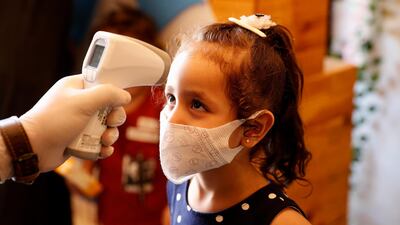
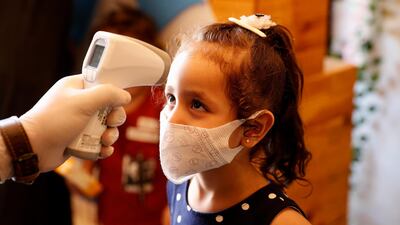
A girl wearing a mask has her body temperature checked while she arrives with her family at a beach side cafe in Gaza City, October 12. Cafes and restaurants reopened under strict regulations after a month and a half of closure as the coronavirus spread in the Gaza Strip. Adel Hana / AP


Before the pandemic, awareness of this generational phenomenon was only just building. We were beginning to look more closely at how much of our population is made up of the very young and the elderly, and what this means for families and societies.
Life was already a precarious balance for the sandwich generation. But if time was in short supply before the pandemic and responsibilities were plentiful, stresses were exacerbated over the past few months.
The magnitude of responsibilities for the sandwich generation is growing and the number of people stretched in this way is increasing.
In the UK, for example, the charity Carers UK states that before the outbreak there were around 2.4 million people caring for an elderly relative and a dependent child. Since then, an additional 4.5m people have taken on care responsibilities, a large number of whom have their own young families to look after.
Lockdown required greater shielding for the elderly, resulting in the need for more care – from food shopping to personal care. There was little, if any, outside help available. Lockdowns were severe. External visitors, even carers, posed a risk to the vulnerable and elderly.
Usual activities that would normally keep older people busy and enable social contact – so necessary for physical and mental health – were no longer available as everything was shut. Even the joy of regularly seeing grandchildren was off limits. The sandwich generation became the world to their parents, as the world became closed to them.
All of this while young children have needed more care than ever. During homeschooling, the strain was enormous. Even now, when many children are back at school, there are complications with regards to social distancing or isolation. Not to mention the concern about the limits on their experiences and development and their sensitivity to long-lasting trauma.
Financial struggles are all too common with many losing jobs. The pandemic has put strain on everyone but it has affected the sandwich generation in particular, who may have been struggling to hold down jobs, with children at home and the responsibility of caring for ageing parents and often, in-laws.
There has also been additional spend on items like shopping, food and technology.
According to UK insurance company Aviva, the sandwich generation, due to its tendency to support both children and parents, is carrying the heaviest financial burden as a result of the pandemic.
In the key 45-54 year age group, 55 per cent agreed they are more worried about their financial situation than before lockdown, and 30 per cent say it is negatively impacting their mental health.
In all of this, the key is not to forget the person being stretched in these directions.
They too need care, rest and fulfilment. The trauma that affects others affects them too. This is important to recognise because they are the linchpins that support both the youngest and the oldest. And if the pin snaps, ramifications for families as well as society are significant.
Aside from a mental health crisis for this entire generation, when it comes to all those they support, who is going to pick up the pieces? Or to paraphrase my mother, if something happens to the ones holding it together, what are all their dependents going to do?
Shelina Janmohamed is an author and a culture columnist for The National

