

There will be a lot on the plate for the leaders of the Gulf Co-operation Council when they meet in Al Ula, Saudi Arabia, for the 41st GCC Summit on Tuesday. Relations with Iran, Turkey and Israel, relations between GCC member states, the future of Palestine and Gulf-Arab unity will be some of the talking points likely to dominate the summit.
An important topic of discussion will be Gulf-Arab unity, which has on several occasions experienced headwinds, whether it was over relations with Iran amid its regime’s bid to expand its military footprint in Arab countries, or relations with Turkey amid its own expansionist project – in tandem with the Muslim Brotherhood – in the Arab world.
Gulf relations with the US, whether they are bilateral or multilateral, are far from contentious. But there is some ambiguity over the intentions of the incoming administration of President-elect Joe Biden – especially pertaining to the nuclear deal that America and other global powers signed with Tehran in 2015 but which President Donald Trump, the current incumbent, withdrew from in 2018. Key members of the Biden team are keen to revive the deal, which would translate to their dropping of sanctions against Iran. This would, in turn, unlock the funds necessary for the regime to expand its destabilising operations across the Middle East.

In such a scenario, the rest of the Arab world would be keen to see if the six GCC members states finalise a strategy on how to approach the Iran issue – which they must then put forward to the Biden administration as it comes to power on January 20.
The summit in Al Ula will be the first since the UAE and Bahrain signed the Abraham Accords with Israel. Today, Israel has either normalised relations or signed peace accords with several Arab countries, including Bahrain, Egypt, Jordan, Morocco, Sudan and the UAE. More countries are expected to follow.
It remains to be seen what impact this will have on the future of Palestine and ordinary Palestinians’ desire for statehood. In any case, the GCC member states will be expected to hold Israel to account and pressure its government not to proceed with its plans to annex parts of West Bank and Jordan Valley.
The summit will most certainly issue a position affirming the principles of the Arab Peace Initiative, drawn up by Saudi Arabia in 2002, in which Arab nations offered Israel normalised ties in return for a statehood deal with the Palestinians and full Israeli withdrawal from territory captured in 1967. However, the summit should also include the new framework – of continued normalisation and positive Gulf-Israeli relations – in effect recognising the leverage member states now have over Israel.
The incoming Biden administration will not walk back any of the Trump administration’s achievements, particularly its contribution to warming Gulf-Israeli relations, as Israel’s security and legitimacy remain important domestic issues in the US. However, while some in the Biden team view the process of Gulf-Israeli ties independent of the Iranian question, there are those who might consider them to be obstacles as Mr Biden seeks a return to dialogue with Tehran.
-
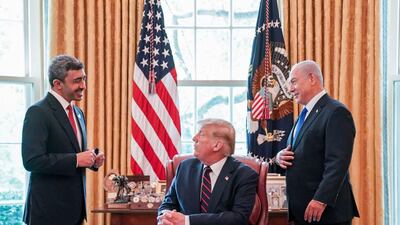
Sheikh Abdullah bin Zayed, UAE Minister of Foreign Affairs and International Co-operation, speaks to Donald Trump, US president at the time, and Israeli Prime Minister Benjamin Netanyahu in the Oval Office in September 2020. Ministry of Foreign Affairs and International Co-operation -
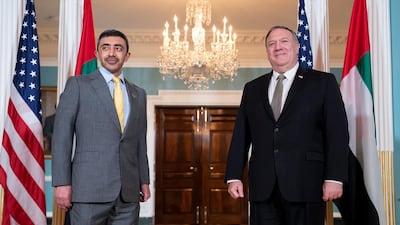
Sheikh Abdullah bin Zayed, UAE Minister of Foreign Affairs and International Co-operation, meets Mike Pompeo, US secretary of state at the time. Wam -
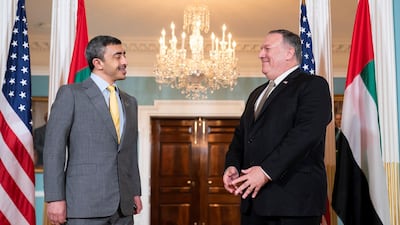
Sheikh Abdullah and Mr Pompeo in Washington. Wam -
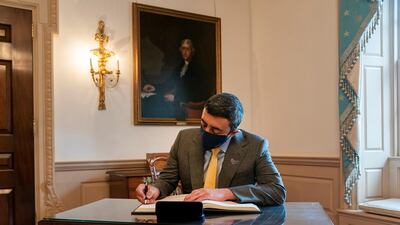
Sheikh Abdullah visits Washington in September last year. Wam -
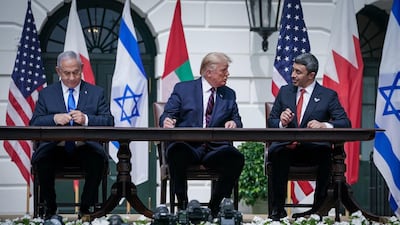
Sheikh Abdullah, UAE Minister of Foreign Affairs and International Co-operation, US President Donald Trump, centre, and Israeli Prime Minister Benjamin Netanyahu sign the Abraham Accord at the White House South Lawn. MOFAIC -
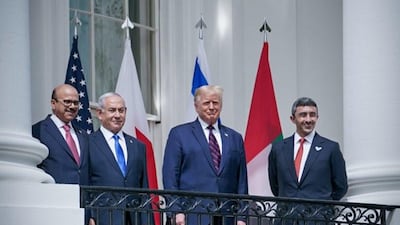
Sheikh Abdullah and, from left, Bahrain's Foreign Minister Abdullatif Al Zayani, Israeli Prime Minister Benjamin Netanyahu and US President Donald Trump at the White House. MOFAIC -
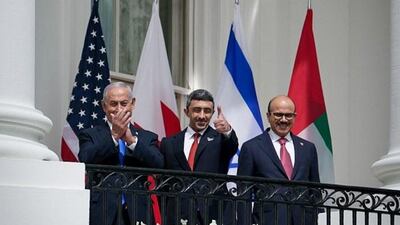
Sheikh Abdullah, Mr Al Zayani and Mr Netanyahu at the White House during the Abraham Accord signing ceremony. MOFAIC -
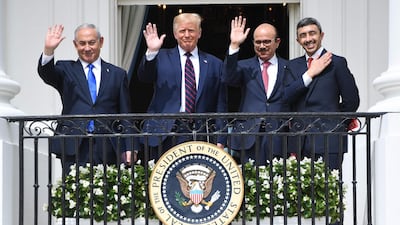
Sheikh Abdullah and, from left, Mr Netanyahu, Mr Trump and Mr Al Zayani wave from the Truman Balcony at the White House. AFP -
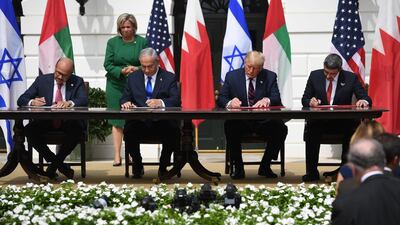
Sheikh Abdullah and, from left, Mr Al Zayani, Mr Netanyahu and Mr Trump sign the Abraham Accord. AFP -
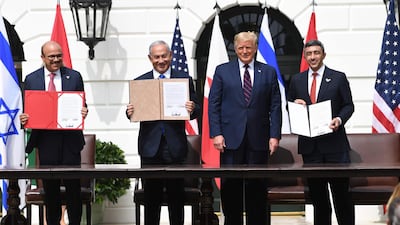
Sheikh Abdullah and, from left, Mr Al Zayani, Mr Netanyahu and Mr Trump after the signing ceremony. AFP -
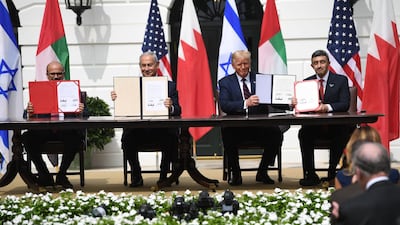
Sheikh Abdullah and, from left, Mr Al Zayani, Mr Netanyahu and Mr Trump after the signing ceremony. AFP -
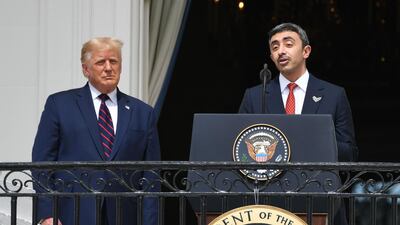
Sheikh Abdullah speaks from the Truman Balcony at the White House during the signing ceremony of the Abraham Accord. AFP -
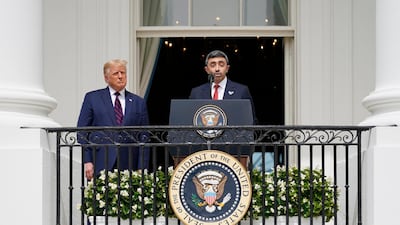
Sheikh Abdullah speaks as Mr Trump looks on before the signing of Abraham Accord on the South Lawn of the White House. AP -
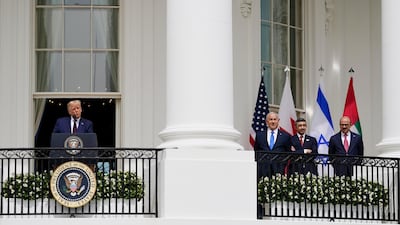
Sheikh Abdullah looks on from the White House as Mr Trump speaks at the Abraham Accord signing ceremony, also attended by Mr Al Zayani and Mr Netanyahu. AP -

Sheikh Abdullah bin Zayed, UAE Minister of Foreign Affairs and International Co-operation, Israeli Prime Minister Benjamin Netanyahu, left, and Bahraini Foreign Minister Abdullatif Al Zayani stand on the Blue Room Balcony during the signing ceremony. AP -
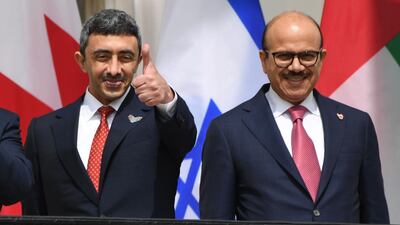
Sheikh Abdullah and Mr Al Zayani shortly before participating in the signing of the Abraham Accord. AFP -
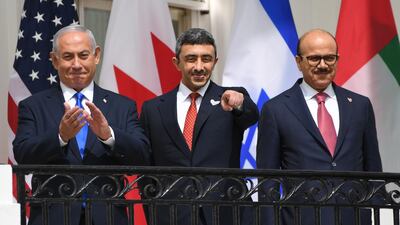
Sheikh Abdullah, with Mr Netanyahu, left, and Mr Al Zayani at the signing of the Abraham Accord on the South Lawn of the White House. AFP -
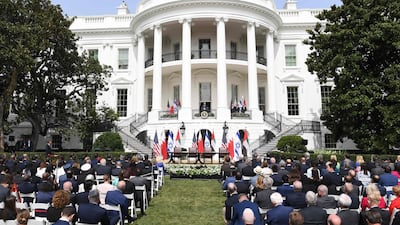
US President Donald Trump speaks from the Truman Balcony at the White House during the signing ceremony of the Abraham Accord. AFP -
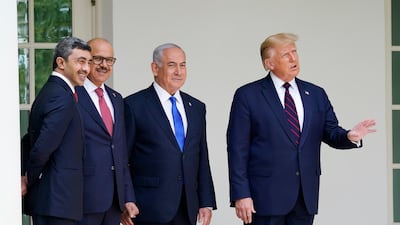
President Donald Trump walks to the Abraham Accord signing ceremony at the White House with Sheikh Abdullah bin Zayed, UAE Minister of Foreign Affairs and International Co-operation, Israeli Prime Minister Benjamin Netanyahu, and Bahrain's Foreign Minister Abdullatif Al Zayani. AP -
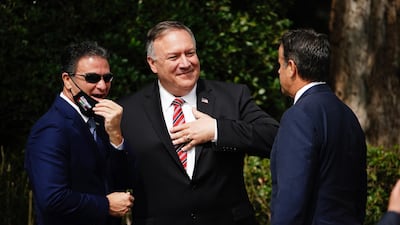
US Secretary of State Mike Pompeo arrives at the White House to attend the Abraham Accord signing ceremony hosted by President Donald Trump. EPA -
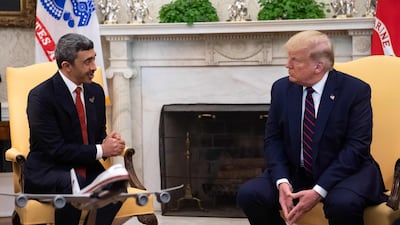
Sheikh Abdullah bin Zayed, UAE Minister of Foreign Affairs and International Co-operation, meets US President Donald Trump in the Oval Office of the White House before the signing of Abraham Accord. AFP -
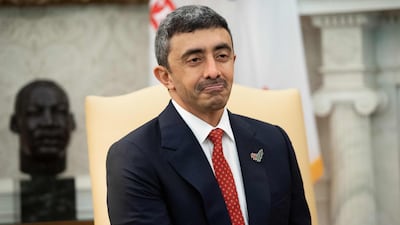
Sheikh Abdullah bin Zayed, UAE Minister of Foreign Affairs and International Co-operation, in the Oval Office. AFP -
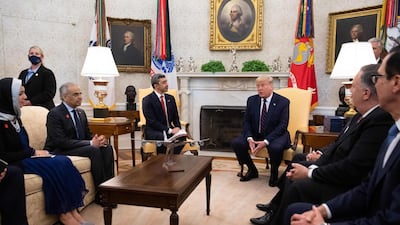
Sheikh Abdullah bin Zayed, UAE Minister of Foreign Affairs and International Co-operation, meets US President Donald Trump in the Oval Office of the White House. AFP -
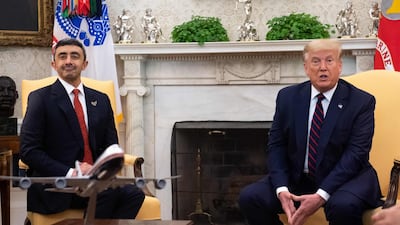
Sheikh Abdullah with Mr Trump in the Oval Office. AFP -
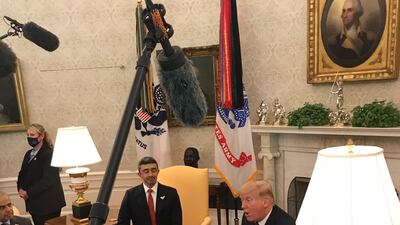
Sheikh Abdullah bin Zayed, UAE Minister of Foreign Affairs and International Co-operation, with by President Donald Trump at the White House. Mustafa Alrawi / The National -
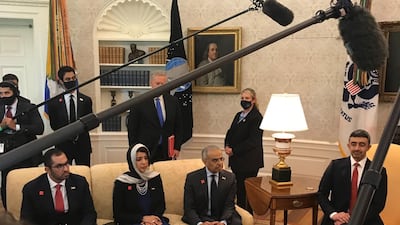
The UAE delegation led by Sheikh Abdullah bin Zayed, Minister of Foreign Affairs and International Co-operation, with US President Donald Trump at the White House. Mustafa Alrawi / The National -
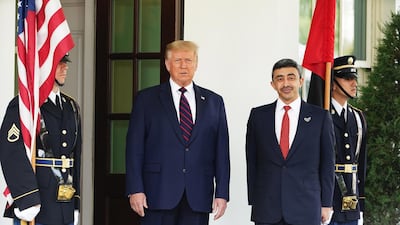
Sheikh Abdullah bin Zayed, UAE Minister of Foreign Affairs and International Co-operation, is welcomed to the White House by US President Donald Trump. EPA -
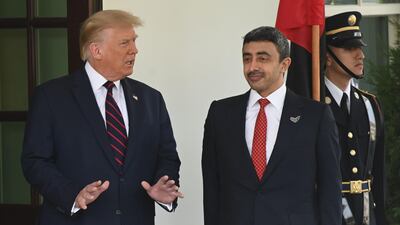
Sheikh Abdullah and Mr Trump outside the White House. AFP -
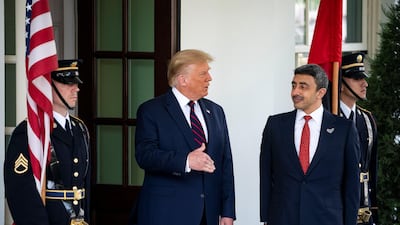
Sheikh Abdullah bin Zayed speaks to Mr Trump after arriving at the White House. Reuters -
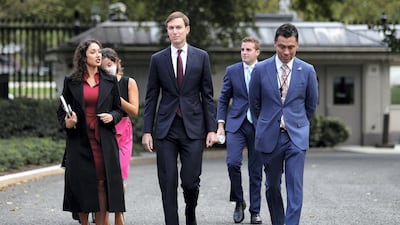
White House Senior Adviser Jared Kushner walks away following a television interview on the North Lawn at the White House in Washington. Reuters -
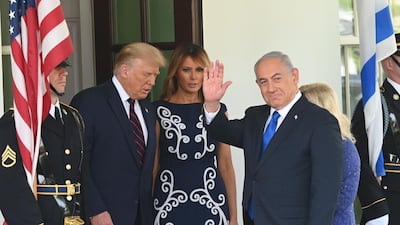
US President Donald Trump and First Lady Melania Trump welcome the arrival of Prime Minister of Israel Benjamin Netanyahu and his wife Sara on the North Lawn of the White House in Washington DC. AFP -
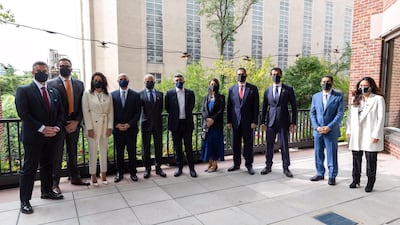
A delegation of senior UAE officials led by Sheikh Abdullah bin Zayed, UAE Minister of Foreign Affairs and International Co-operation, prepares to depart for the White House to sign the Abraham Accord. MOFAIC -
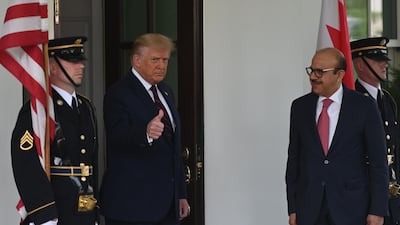
US President Donald Trump welcomes Bahraini Foreign Minister Abdullatif Al Zayani. AFP -

Bahraini Foreign Minister Abdullatif Al Zayani arrives at the White House in Washington DC. AFP -
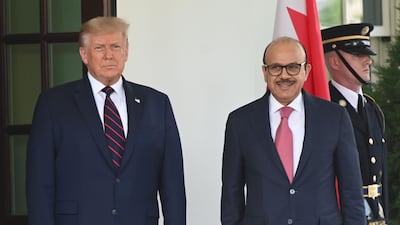
US President Donald Trump welcomes Bahraini Foreign Minister Abdullatif Al Zayani on the North Lawn of the White House in Washington, DC. AFP -
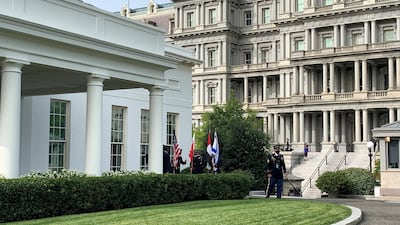
Preparations at the White House for the signing of the Abraham Accord. -
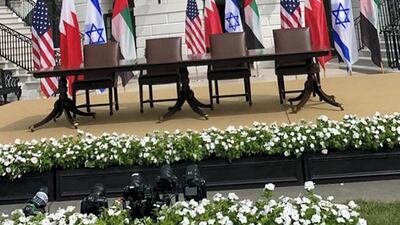
Preparations under way at the White House for the signing of the Abraham Accord. -
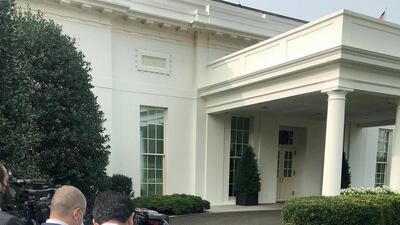
Preparations under way at the White House for the signing of the Abraham Accord. -

Preparation at the White House for the signing of the Abraham Accord. The National


It does not have to be the case. That being said, the summit must oppose the two-track approach that Mr Biden has suggested he intends to follow to repair relations: first renegotiate the nuclear deal and then confront Tehran about its malign behaviour in the Middle East. This could be a problematic approach because once sanctions – even if only a few of them – are lifted following renegotiation of the nuclear deal, that would give Tehran free rein to resume its destabilising activities and manufacturing of ballistic missiles.
The summit will be held amid an important development that is slowly unfolding in the US.
This week, two elections in the state of Georgia will determine the composition of the US Senate. If the Biden-led Democratic Party wins both seats, the new president will have enough legroom to govern as he pleases, for the most part. If the Trump-led Republican Party retains control of the Senate, it will impose checks and balances on key Biden initiatives, particularly in the foreign policy domain.

Iran’s leaders will surely be worried about the second outcome, as Mr Biden will find it more challenging to reset Washington-Tehran relations and, more importantly for Tehran, lift sanctions against it.
The regime, meanwhile, fears military attacks from the Trump administration during the transition period, possibly on its nuclear or ballistic missile installations. Over the past few days, as a result, it has amped up its rhetoric against the US.
Some leaders have called to avenge the killing of Iranian commander Qassem Suleimani by an American drone in Baghdad on this day one year ago. In a closed session of parliament, Suleimani's successor Esmail Ghaani said Iran-backed militias in the region are ready to take revenge, a sentiment echoed by President Hassan Rouhani himself.
Amid harsh rhetoric coming out of Iran and a wobbly transfer of power under way in the US, in Al Ula, efforts will be on to resolve the Qatar crisis.
In 2017, the UAE, Saudi Arabia, Bahrain and Egypt all cut ties with Doha accusing it of sponsoring terror groups and intervening in the internal affairs of its neighbours. The UAE has confirmed that it looks forward to a successful summit. And that it is confident Saudi Arabia is efficiently managing this crisis through "steps to enhance the intra-Gulf dialogue towards the future", as said in a tweet by Dr Anwar Gargash, the UAE'S Minister of State for Foreign Affairs.
In summation, a very interesting summit awaits us all.
Raghida Dergham is the founder and executive chairwoman of the Beirut Institute and a columnist for The National

