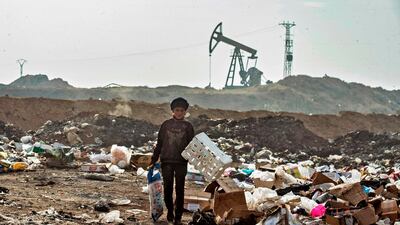
Twenty-twenty was a year unlike any other in our lifetimes. The dramatic impacts that Covid-19 had on the global energy system – including oil prices in the US going negative for the first time – were a side note, however, compared to the larger stories of suffering and death, economic upheaval and the singular scientific achievement of developing multiple highly effective vaccines in under a year.
Nonetheless, it is quite possible that the energy system will emerge from the Covid-19 crisis indelibly altered – changes that could be seen by future generations as some of the most consequential of the pandemic, if policymakers act on the opportunities at hand.
In late 2020, the Atlantic Council’s Global Energy Centre surveyed a group of senior energy leaders from around the world to better understand how Covid-19 was changing the energy system. The results were telling, and they give hope that the world might yet address climate change. Sixty-one per cent of respondents believe that the pandemic will accelerate the energy transition, while only 20 per cent thought it would impede it. However, the respondents also set a task for global leaders: to make good on the opportunity of green recovery. Survey respondents think that political will and policy are the biggest impediments to reaching net-zero greenhouse gas emissions by 2050. The consensus is that the most uncertain pathways and hardest choices are still to come.
Many global leaders see a chance to address climate change through "green stimulus" plans
Two figures from the survey demonstrate the difficulty ahead. First, we asked when or if global oil demand will peak, and 43 per cent of those surveyed responded that peak oil demand has already occurred or that it will occur within the next five years; 46 per cent forecast that it will occur late this decade or sometime in the next one.
While we do not have survey data from last year to compare, we believe these responses are markedly different than they would have before the pandemic, and that the average predicted timeline for a peak in oil demand was far sooner in 2020 than it would have been in 2019. Numerous articles were published in 2020 – like one from Bloomberg called "Peak oil is suddenly upon us" – that both reflected and impacted the zeitgeist.
Second, we asked respondents the likelihood of achieving net-zero emissions by 2050. Only 30 per cent think it is somewhat likely, and just six per cent consider it very likely or certain.
That 89 per cent of respondents think oil demand will peak by 2040 – a true accomplishment, given that global oil demand grew by about 88 per cent between 1971 and 2019 – and yet only 36 per cent think we are likely or somewhat likely to reach net-zero emissions by 2050, illustrates the scope of the challenge.
From a technical perspective, this is obvious: oil is only one source of emissions, and reductions must be realised across many sectors. The survey data suggests that, while energy leaders are optimistic about stopping the growth of and perhaps reversing emissions from the production and consumption of oil, they are less optimistic about other emissions. In this vein, only 11 per cent believe that consensus will be reached on carbon-trading rules at the United Nations Climate Change Conference this year, despite 94 per cent stating that doing so is important to prevent a rise in average temperature of over 2°C. Perhaps most telling, 19 per cent of government respondents say such consensus will never be reached.
This is why it is up to policymakers to make good on the opportunities that have emerged from the tragedy of Covid-19. Spurred by the need to rebuild their economies, many global leaders see a chance to address climate change through “green stimulus” plans and net-zero pledges. With the pandemic raging and unemployment at near-record highs, one easily could have imagined that climate change would have yet again been put on the backburner, a long-term problem that could be addressed only after the crisis at hand was resolved. But following a year of record wildfires, hurricanes and extreme heat, many leaders see an opportunity to address both the economic and climate crises together.
It is hard to imagine a stronger global alignment of political will to act on climate change – and, crucially, to spend on climate action – than we have right now. 2021 will be the year we see if leaders start to make good on their promises and if the global community can meaningfully address climate change or not.
The Atlantic Council Global Energy Forum, taking place this week, will explore these issues in depth with leaders from around the world. We hope that following through on the commitments they made in 2020 will be the energy agenda for 2021.
This column is adapted from the forthcoming Atlantic Council Global Energy Centre publication “The Global Energy Agenda”
Randolph Bell is the Global Energy Centre Director and Richard Morningstar Chair for Global Energy Security at the Atlantic Council

Notable Yas events in 2017/18
October 13-14 KartZone (complimentary trials)
December 14-16 The Gulf 12 Hours Endurance race
March 5 Yas Marina Circuit Karting Enduro event
March 8-9 UAE Rotax Max Challenge
57%20Seconds
%3Cp%3E%3Cstrong%3EDirector%3A%3C%2Fstrong%3E%20Rusty%20Cundieff%0D%3Cbr%3E%3Cstrong%3EStars%3A%20%3C%2Fstrong%3EJosh%20Hutcherson%2C%20Morgan%20Freeman%2C%20Greg%20Germann%2C%20Lovie%20Simone%0D%3Cbr%3E%3Cstrong%3ERating%3A%20%3C%2Fstrong%3E2%2F5%0D%3Cbr%3E%0D%3Cbr%3E%3C%2Fp%3E%0A
Western Region Asia Cup Qualifier
Results
UAE beat Saudi Arabia by 12 runs
Kuwait beat Iran by eight wickets
Oman beat Maldives by 10 wickets
Bahrain beat Qatar by six wickets
Semi-finals
UAE v Qatar
Bahrain v Kuwait
Switching%20sides
%3Cp%3EMahika%20Gaur%20is%20the%20latest%20Dubai-raised%20athlete%20to%20attain%20top%20honours%20with%20another%20country.%0D%3C%2Fp%3E%0A%3Cp%3E%3Cstrong%3EVelimir%20Stjepanovic%20(Serbia%2C%20swimming)%20%3C%2Fstrong%3E%0D%3Cbr%3EBorn%20in%20Abu%20Dhabi%20and%20raised%20in%20Dubai%2C%20he%20finished%20sixth%20in%20the%20final%20of%20the%202012%20Olympic%20Games%20in%20London%20in%20the%20200m%20butterfly%20final.%20%0D%3C%2Fp%3E%0A%3Cp%3E%3Cstrong%3EJonny%20Macdonald%20(Scotland%2C%20rugby%20union)%20%3C%2Fstrong%3E%0D%3Cbr%3EBrought%20up%20in%20Abu%20Dhabi%20and%20represented%20the%20region%20in%20international%20rugby.%20When%20the%20Arabian%20Gulf%20team%20was%20broken%20up%20into%20its%20constituent%20nations%2C%20he%20opted%20to%20play%20for%20Scotland%20instead%2C%20and%20went%20to%20the%20Hong%20Kong%20Sevens.%20%0D%3C%2Fp%3E%0A%3Cp%3E%3Cstrong%3ESophie%20Shams%20(England%2C%20rugby%20union)%20%3C%2Fstrong%3E%0D%3Cbr%3EThe%20daughter%20of%20an%20English%20mother%20and%20Emirati%20father%2C%20Shams%20excelled%20at%20rugby%20in%20Dubai%2C%20then%20after%20attending%20university%20in%20the%20UK%20played%20for%20England%20at%20sevens.%20%0D%3C%2Fp%3E%0A
Start-up hopes to end Japan's love affair with cash
Across most of Asia, people pay for taxi rides, restaurant meals and merchandise with smartphone-readable barcodes — except in Japan, where cash still rules. Now, as the country’s biggest web companies race to dominate the payments market, one Tokyo-based startup says it has a fighting chance to win with its QR app.
Origami had a head start when it introduced a QR-code payment service in late 2015 and has since signed up fast-food chain KFC, Tokyo’s largest cab company Nihon Kotsu and convenience store operator Lawson. The company raised $66 million in September to expand nationwide and plans to more than double its staff of about 100 employees, says founder Yoshiki Yasui.
Origami is betting that stores, which until now relied on direct mail and email newsletters, will pay for the ability to reach customers on their smartphones. For example, a hair salon using Origami’s payment app would be able to send a message to past customers with a coupon for their next haircut.
Quick Response codes, the dotted squares that can be read by smartphone cameras, were invented in the 1990s by a unit of Toyota Motor to track automotive parts. But when the Japanese pioneered digital payments almost two decades ago with contactless cards for train fares, they chose the so-called near-field communications technology. The high cost of rolling out NFC payments, convenient ATMs and a culture where lost wallets are often returned have all been cited as reasons why cash remains king in the archipelago. In China, however, QR codes dominate.
Cashless payments, which includes credit cards, accounted for just 20 per cent of total consumer spending in Japan during 2016, compared with 60 per cent in China and 89 per cent in South Korea, according to a report by the Bank of Japan.
How to donate
Send “thenational” to the following numbers or call the hotline on: 0502955999
2289 – Dh10
2252 – Dh 50
6025 – Dh20
6027 – Dh 100
6026 – Dh 200
Avatar: Fire and Ash
Director: James Cameron
Starring: Sam Worthington, Sigourney Weaver, Zoe Saldana
Rating: 4.5/5
Company Profile
Name: Thndr
Started: 2019
Co-founders: Ahmad Hammouda and Seif Amr
Sector: FinTech
Headquarters: Egypt
UAE base: Hub71, Abu Dhabi
Current number of staff: More than 150
Funds raised: $22 million
AI traffic lights to ease congestion at seven points to Sheikh Zayed bin Sultan Street
The seven points are:
Shakhbout bin Sultan Street
Dhafeer Street
Hadbat Al Ghubainah Street (outbound)
Salama bint Butti Street
Al Dhafra Street
Rabdan Street
Umm Yifina Street exit (inbound)
Dust and sand storms compared
Sand storm
- Particle size: Larger, heavier sand grains
- Visibility: Often dramatic with thick "walls" of sand
- Duration: Short-lived, typically localised
- Travel distance: Limited
- Source: Open desert areas with strong winds
Dust storm
- Particle size: Much finer, lightweight particles
- Visibility: Hazy skies but less intense
- Duration: Can linger for days
- Travel distance: Long-range, up to thousands of kilometres
- Source: Can be carried from distant regions
'Brazen'
Director: Monika Mitchell
Starring: Alyssa Milano, Sam Page, Colleen Wheeler
Rating: 3/5
WWE TLC results
Asuka won the SmackDown Women's title in a TLC triple threat with Becky Lynch and Charlotte Flair
Dean Ambrose won the Intercontinental title against Seth Rollins
Daniel Bryan retained the WWE World Heavyweight Championship against AJ Styles
Ronda Rousey retained the Raw Women's Championship against Nia Jax
Rey Mysterio beat Randy Orton in a chairs match
Finn Balor defeated Drew McIntyre
Natalya beat Ruby Riott in a tables match
Braun Strowman beat Baron Corbin in a TLC match
Sheamus and Cesaro retained the SmackDown Tag Titles against The Usos and New Day
R-Truth and Carmella won the Mixed Match Challenge by beating Jinder Mahal and Alicia Fox
