• After nearly a decade of war, Syria is crumbling under the weight of a repressive, corrupt ruling elite, a pandemic and an economic downslide compounded by western sanctions. AP Photo
    After nearly a decade of war, Syria is crumbling under the weight of a repressive, corrupt ruling elite, a pandemic and an economic downslide compounded by western sanctions. AP Photo
  • Souvenir plates bearing the Syrian flag and the portraits of Russian President Vladimir Putin and Syrian President Bashar Al Assad are pictured in a shop in a bazaar in old Damascus. AFP
    Souvenir plates bearing the Syrian flag and the portraits of Russian President Vladimir Putin and Syrian President Bashar Al Assad are pictured in a shop in a bazaar in old Damascus. AFP
  • A man works in his metal workshop beneath a portrait of Syrian President Bashar Al Assad in old Damascus earlier this week. AFP
    A man works in his metal workshop beneath a portrait of Syrian President Bashar Al Assad in old Damascus earlier this week. AFP
  • A Syrian boy carrying textiles is pictured in the bazaar in old Damascus. AFP
    A Syrian boy carrying textiles is pictured in the bazaar in old Damascus. AFP
  • A Syrian shopkeeper waits for customers in a bazaar in old Damascus. AFP
    A Syrian shopkeeper waits for customers in a bazaar in old Damascus. AFP
  • Syrians walk in old Damascus in front of a portrait of Syrian President Bashar Al Assad. AFP
    Syrians walk in old Damascus in front of a portrait of Syrian President Bashar Al Assad. AFP
  • Syrian shoppers walk in the bazaar in old Damascus. AFP
    Syrian shoppers walk in the bazaar in old Damascus. AFP
  • Syrian men work in their bakery in old Damascus. AFP
    Syrian men work in their bakery in old Damascus. AFP
  • Employees stack packets of the Syrian pound in the Central Syrian Bank in Damascus. AP Photo
    Employees stack packets of the Syrian pound in the Central Syrian Bank in Damascus. AP Photo
  • An anti-Assad regime demonstration under way in Suweida, southern Syria, in early June 2020. AFP
    An anti-Assad regime demonstration under way in Suweida, southern Syria, in early June 2020. AFP

Caesar Act: Shield Syria's suffering civilians from sanctions


  • English
  • Arabic

You would be forgiven for thinking you had taken a time machine back to 2011 when watching videos of the protests in the southern Syrian province of Suweida over the past week. Demonstrators marching in their hundreds calling for the fall of the regime of Bashar Al Assad, and being assaulted by riot and plainclothes policemen attempting to stifle and intimidate them.

But it is 2020, and Mr Al Assad has all but won the war in Syria because of his allies in Russia, Iran, Lebanon and Iraq. Now, he faces a challenge that could still upend his rule, an economic armageddon that has left citizens hungry and impoverished, the currency in tatters, and which his forces cannot bully their way out of.

Suweida, a majority Druze province in the south-east of the country, has largely escaped the nine-year civil war unscathed, having maintained an uneasy relative neutrality in which they resisted sending their young men to fight Mr Al Assad's war. But they suffered attacks by ISIS extremists in the past, including in 2018 a brazen attack that killed over 200 civilians and shocked the province with its brutality.

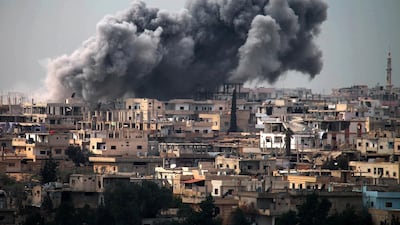
  • Smoke billows following air strikes on a rebel-held area in the southern city of Daraa on March 16, 2017. AFP
    Smoke billows following air strikes on a rebel-held area in the southern city of Daraa on March 16, 2017. AFP
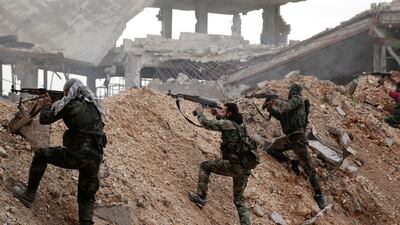
  • Syrian army soldiers fire their weapons during a battle with rebel fighters at the Ramouseh front line, east of Aleppo, on December 5, 2016. AP Photo
    Syrian army soldiers fire their weapons during a battle with rebel fighters at the Ramouseh front line, east of Aleppo, on December 5, 2016. AP Photo
  • Russians, Syrians and others gather next to an American military convoy stuck in the village of Khirbet Ammu, east of Qamishli city, on February 12, 2020. AP Photo
    Russians, Syrians and others gather next to an American military convoy stuck in the village of Khirbet Ammu, east of Qamishli city, on February 12, 2020. AP Photo
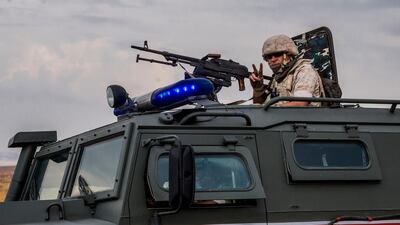
  • A Russian soldier mans a machine gun during a patrol near the Syrian and Turkish border in north Syria on October 25, 2019. AP Photo
    A Russian soldier mans a machine gun during a patrol near the Syrian and Turkish border in north Syria on October 25, 2019. AP Photo
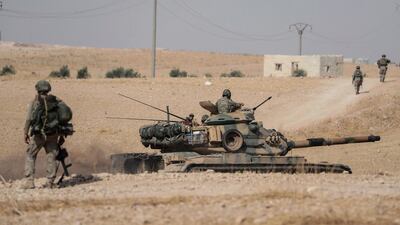
  • Turkish tanks and troops stationed near Syrian town of Manbij. AP
    Turkish tanks and troops stationed near Syrian town of Manbij. AP
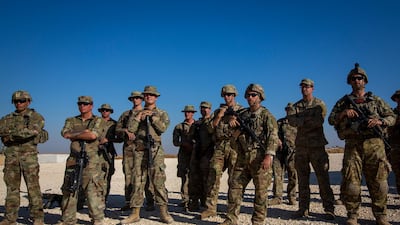
  • Crew of Bradley fighting vehicles stand at a US military base in north-eastern Syria on November 11, 2019. AP Photo
    Crew of Bradley fighting vehicles stand at a US military base in north-eastern Syria on November 11, 2019. AP Photo
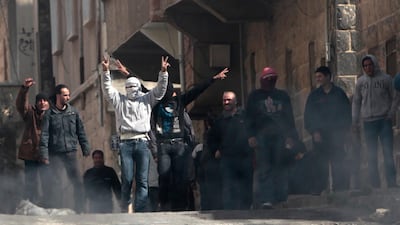
  • Anti-government protesters flash victory signs as they protest in the southern Syrian city of Daraa on March 23, 2011. AP Photo
    Anti-government protesters flash victory signs as they protest in the southern Syrian city of Daraa on March 23, 2011. AP Photo
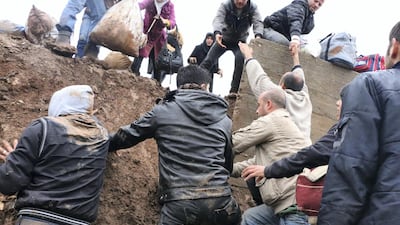
  • Syrians climb up a mud bank as they flee across fields to reach the Syrian-Turkish border on March 10, 2014. AFP
    Syrians climb up a mud bank as they flee across fields to reach the Syrian-Turkish border on March 10, 2014. AFP
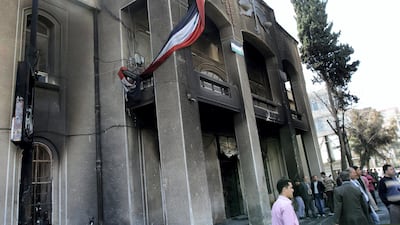
  • Syrian men gather outside the courthouse in Daraa that was torched a day earlier by angry protesters on March 21, 2011. AFP
    Syrian men gather outside the courthouse in Daraa that was torched a day earlier by angry protesters on March 21, 2011. AFP
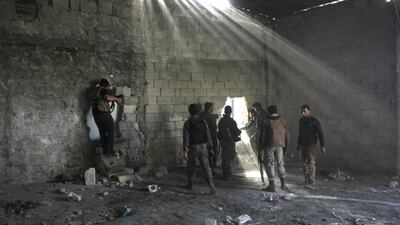
  • Rebel fighters inside a building during clashes with pro-government forces in the Sheikh Al Said neighbourhood of Aleppo city on November 28, 2013. AFP
    Rebel fighters inside a building during clashes with pro-government forces in the Sheikh Al Said neighbourhood of Aleppo city on November 28, 2013. AFP
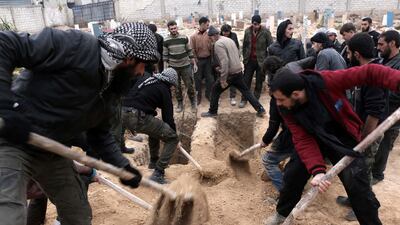
  • Syrians bury victims in a group funeral following air strikes in the rebel-held city of Douma on January 7, 2016. AFP
    Syrians bury victims in a group funeral following air strikes in the rebel-held city of Douma on January 7, 2016. AFP
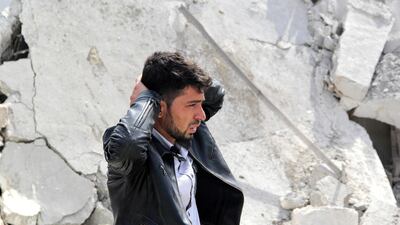
  • A man reacts to the destruction of his home in an air strike by government forces on the northern Syrian city of Aleppo on February 22, 2014. AFP
    A man reacts to the destruction of his home in an air strike by government forces on the northern Syrian city of Aleppo on February 22, 2014. AFP
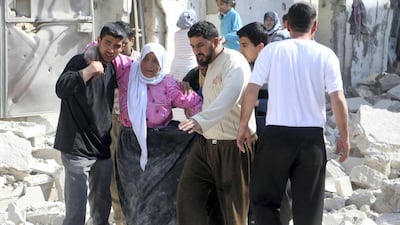
  • A woman is helped through the rubble of buildings hit by a reported Syrian government air strike in Al Sakhour district of Aleppo city on April 4, 2014. AFP
    A woman is helped through the rubble of buildings hit by a reported Syrian government air strike in Al Sakhour district of Aleppo city on April 4, 2014. AFP
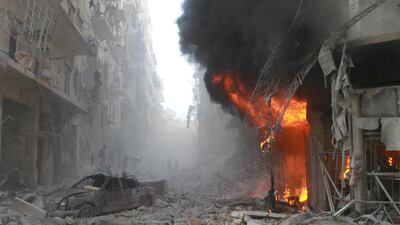
  • Debris fills a street and flames rise from a building following an air strike by Syrian government forces in the Sukkari neighborhood of Aleppo on March 7, 2014. AFP
    Debris fills a street and flames rise from a building following an air strike by Syrian government forces in the Sukkari neighborhood of Aleppo on March 7, 2014. AFP
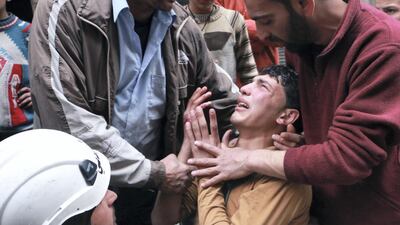
  • A man is comforted following an air strike by government forces that killed a rescue worker in Aleppo city on March 9, 2014. AFP
    A man is comforted following an air strike by government forces that killed a rescue worker in Aleppo city on March 9, 2014. AFP
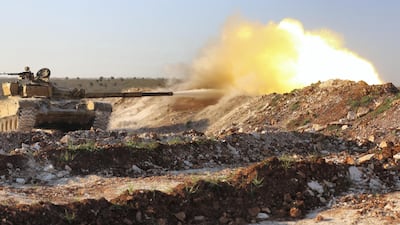
  • A tank seized by rebel fighters fires at a pro-government position near the Syrian city of Hama on February 19, 2014. AFP
    A tank seized by rebel fighters fires at a pro-government position near the Syrian city of Hama on February 19, 2014. AFP
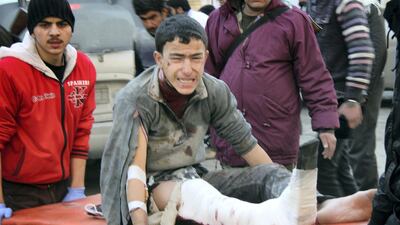
  • An injured Syrian youth cries as he is carried on a gurney following an air strike in the Maadi neighbourhood of Aleppo city on December 17, 2013. AFP
    An injured Syrian youth cries as he is carried on a gurney following an air strike in the Maadi neighbourhood of Aleppo city on December 17, 2013. AFP
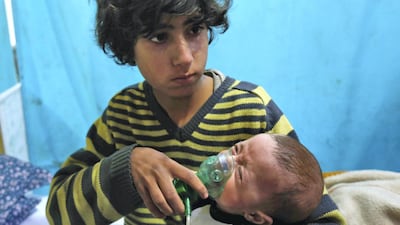
  • A Syrian boy holds an oxygen mask to an infant's face following a reported gas attack in Douma on January 22, 2018, when the town near Damascus was held by rebels. AFP
    A Syrian boy holds an oxygen mask to an infant's face following a reported gas attack in Douma on January 22, 2018, when the town near Damascus was held by rebels. AFP
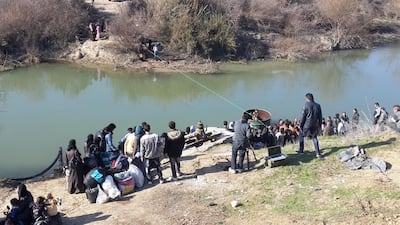
  • Displaced Syrians wait to enter Turkey from Idlib province across the Orontes river on February 5, 2014. AFP
    Displaced Syrians wait to enter Turkey from Idlib province across the Orontes river on February 5, 2014. AFP

The call for the regime's overthrow was paired with demands for an end to economic corruption and mismanagement that has led to great suffering in Syria in recent months. The country's economy has already contracted greatly as a result of the war and its destruction and the flight of capital, but that crisis has been exacerbated by three recent developments.

The first is the economic collapse in neighbouring Lebanon, where a banking system that was essentially a house of cards unravelled along with a currency crash that greatly limited access to dollars. Lebanon was always an important conduit for foreign currency into Syria, and many wealthy Syrians had placed their deposits there.

Second, the coronavirus pandemic has led to partial shutdowns of the economy (partial because, by the government’s acknowledgement, that was all citizens could afford) and worsened the conditions of ordinary Syrians.

Finally, a raft of US measures known as the Caesar sanctions, after a military photographer who escaped Syria with a cache of photographs documenting the systematic torture and mass murder of detainees, are due to come into effect this week. Meant to tighten the noose around the regime over its war crimes and force renewed UN-led talks, the measures have scuttled any attempts at reopening the country for business, reconstruction and even humanitarian ventures, despite having provisions excluding such aid from its framework.

All the while, Mr Al Assad has refused to take any real and concrete measures towards political reform that could pave the way for a rapprochement with the international community and the eventual influx of reconstruction funds. Buoyed by his apparent victory, he has characteristically refused to compromise, apparently willing to sacrifice the well-being of his people. He also turned on the elites who bolstered his rule, including his cousin Rami Makhlouf, who allegedly owes billions of Syrian pounds in taxes to the state.

In real economic terms, Syrians are suffering. The currency has gone from about 47 pounds to the dollar in 2011 to 3,000 in June, making their savings worthless. Unemployment is sky high, and as of 2019, an estimated two thirds of Syrians were living in extreme poverty, making what amounts to less than $1.90 a day. They are much worse off now, as are the soldiers that rely on government pay cheques to support themselves and their families.

On the ground, the situation is far more visceral and real. Syrians speak of having to go without staples or meat, having to reduce their meals and hide what groceries they have from onlookers on the street, barely able to afford basic necessities and expenses. The pandemic will exacerbate these needs.

It is difficult to see a way out of the crisis besides band aids. Humanitarian organisations ought to work with the US administration to ensure the Caesar Act does not increase the suffering of ordinary citizens buckling under the weight of nine years of war, even as it attempts to compel the regime to the negotiating table. Aid in the form of medical supplies and food as well as provisions for basic infrastructure such as water pumps and electricity must continue, even in the face of the pandemic.

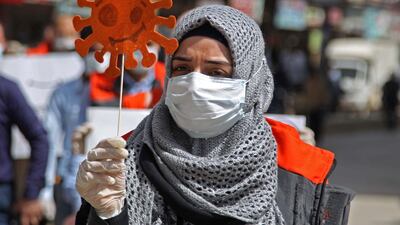
  • A mask-clad civil society volunteer marches with an effigy depicting the SARS-CoV-2 virion, the agent responsible for the COVID-19 coronavirus disease, during an awareness campaign about the novel coronavirus pandemic, urging people to remain at home, in Syria's northwestern city of Idlib in Idlib province on March 24, 2020. (Photo by Abdulaziz KETAZ / AFP)
    A mask-clad civil society volunteer marches with an effigy depicting the SARS-CoV-2 virion, the agent responsible for the COVID-19 coronavirus disease, during an awareness campaign about the novel coronavirus pandemic, urging people to remain at home, in Syria's northwestern city of Idlib in Idlib province on March 24, 2020. (Photo by Abdulaziz KETAZ / AFP)
  • Syrian Kurdish passengers who were stranded in Damascus arrive in Qamishli in Syria's northeastern Hasakeh province on April 5, 2020, after being stranded in Damascus for the past weeks. (Photo by DELIL SOULEIMAN / AFP)
    Syrian Kurdish passengers who were stranded in Damascus arrive in Qamishli in Syria's northeastern Hasakeh province on April 5, 2020, after being stranded in Damascus for the past weeks. (Photo by DELIL SOULEIMAN / AFP)
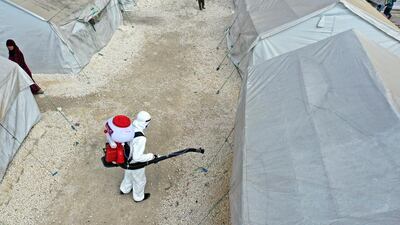
  • A drone image taken on April 9, 2020, shows a sanitation worker disinfecting a camp for displaced Syrians next to the Idlib municipal stadium in the northwestern Syrian city, during a campaign to limit the spread of the coronavirus (COVID-19) pandemic. (Photo by OMAR HAJ KADOUR / AFP)
    A drone image taken on April 9, 2020, shows a sanitation worker disinfecting a camp for displaced Syrians next to the Idlib municipal stadium in the northwestern Syrian city, during a campaign to limit the spread of the coronavirus (COVID-19) pandemic. (Photo by OMAR HAJ KADOUR / AFP)
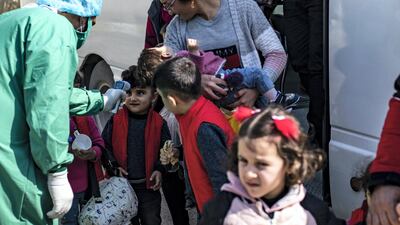
  • A medic checks the body temperature of young passengers, as a preventive measure against the coronavirus, upon their arrival by bus in Syria's Kurdish area from Iraqi Kurdistan via the Semalka border crossing in northeastern Syria on February 26, 2020. (Photo by Delil SOULEIMAN / AFP)
    A medic checks the body temperature of young passengers, as a preventive measure against the coronavirus, upon their arrival by bus in Syria's Kurdish area from Iraqi Kurdistan via the Semalka border crossing in northeastern Syria on February 26, 2020. (Photo by Delil SOULEIMAN / AFP)
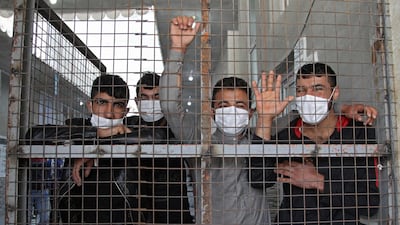
  • A picture taken on April 27, 2020 shows Syrians who returned from Turkey standing at a quarantine facility in the countryside of the town of Jisr al-Shughur, west of the mostly rebel-held Syrian province of Idlib, on April 27, 2020 during the coronavirus COVID-19 pandemic. / AFP / Abdulaziz KETAZ
    A picture taken on April 27, 2020 shows Syrians who returned from Turkey standing at a quarantine facility in the countryside of the town of Jisr al-Shughur, west of the mostly rebel-held Syrian province of Idlib, on April 27, 2020 during the coronavirus COVID-19 pandemic. / AFP / Abdulaziz KETAZ
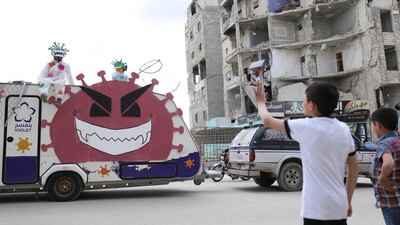
  • epa08392436 A truck for prevention against the COVID-19 coronavirus disease, operated by local NGO 'Violet Organization', drives through the streets of Idlib, Syria, 29 April 2020. EPA/YAHYA NEMAH
    epa08392436 A truck for prevention against the COVID-19 coronavirus disease, operated by local NGO 'Violet Organization', drives through the streets of Idlib, Syria, 29 April 2020. EPA/YAHYA NEMAH
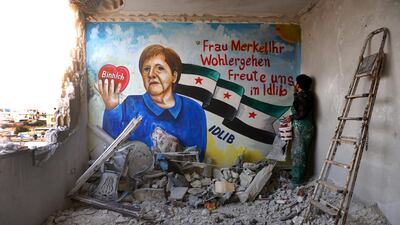
  • Artist Aziz al-Asmar paints a mural wishing for the well-being of German Chancellor Angela Merkel, who is in quarantine after being treated by a doctor who tested positive for coronavirus (COVID-19), inside a damaged building in the town of Binnish in Syria's northwestern Idlib province on March 24, 2020. (Photo by Muhammad HAJ KADOUR / AFP)
    Artist Aziz al-Asmar paints a mural wishing for the well-being of German Chancellor Angela Merkel, who is in quarantine after being treated by a doctor who tested positive for coronavirus (COVID-19), inside a damaged building in the town of Binnish in Syria's northwestern Idlib province on March 24, 2020. (Photo by Muhammad HAJ KADOUR / AFP)
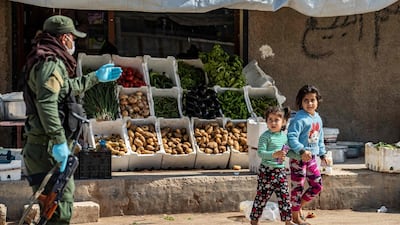
  • A member of the Kurdish Internal Security Forces of Asayesh urges children to return home, in Syria's northeastern city of Hasakeh on April 30, 2020, following measures taken by the Kurdish-led local authorities there, to limit the spread of the novel coronavirus. / AFP / DELIL SOULEIMAN
    A member of the Kurdish Internal Security Forces of Asayesh urges children to return home, in Syria's northeastern city of Hasakeh on April 30, 2020, following measures taken by the Kurdish-led local authorities there, to limit the spread of the novel coronavirus. / AFP / DELIL SOULEIMAN
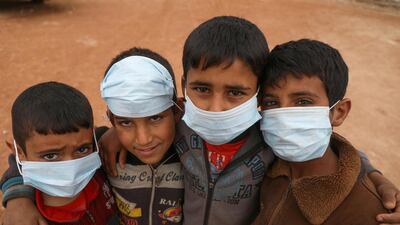
  • Syrian boys pose for a picture during an awareness workshop on Coronavirus (COVID-19) held by Doctor Ali Ghazal at a camp for displaced people in Atme town in Syria's northwestern Idlib province, near the border with Turkey, on March 14, 2020. (Photo by AAREF WATAD / AFP)
    Syrian boys pose for a picture during an awareness workshop on Coronavirus (COVID-19) held by Doctor Ali Ghazal at a camp for displaced people in Atme town in Syria's northwestern Idlib province, near the border with Turkey, on March 14, 2020. (Photo by AAREF WATAD / AFP)
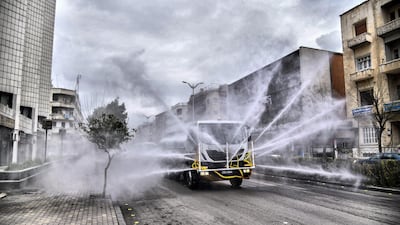
  • A handout picture released by the official Syrian Arab News Agency (SANA) on March 20, 2020 shows Syrian Red Crescent vehicles spraying disinfectant along a street in the capital Damascus, as part of measures against the spread of COVID-19 coronavirus disease. (Photo by - / SANA / AFP) / == RESTRICTED TO EDITORIAL USE - MANDATORY CREDIT "AFP PHOTO / HO / SANA" - NO MARKETING NO ADVERTISING CAMPAIGNS - DISTRIBUTED AS A SERVICE TO CLIENTS ==
    A handout picture released by the official Syrian Arab News Agency (SANA) on March 20, 2020 shows Syrian Red Crescent vehicles spraying disinfectant along a street in the capital Damascus, as part of measures against the spread of COVID-19 coronavirus disease. (Photo by - / SANA / AFP) / == RESTRICTED TO EDITORIAL USE - MANDATORY CREDIT "AFP PHOTO / HO / SANA" - NO MARKETING NO ADVERTISING CAMPAIGNS - DISTRIBUTED AS A SERVICE TO CLIENTS ==
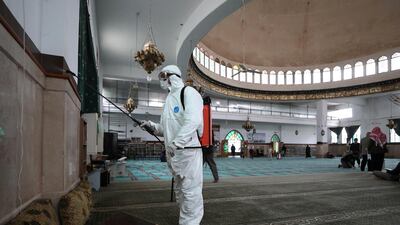
  • A volunteer from the Violet organisation disinfects a mosque in Syria's northwestern city of Idlib on April 25, 2020, from coronavirus (COVID-19) during the Muslim holy fasting month of Ramadan. (Photo by OMAR HAJ KADOUR / AFP)
    A volunteer from the Violet organisation disinfects a mosque in Syria's northwestern city of Idlib on April 25, 2020, from coronavirus (COVID-19) during the Muslim holy fasting month of Ramadan. (Photo by OMAR HAJ KADOUR / AFP)
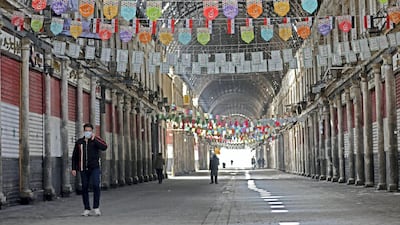
  • Only a few people walk in the century-old covered bazaar of Hamidiya in Syria's capital Damascus on March 24, 2020, after measures were taken by the authorities to fight the novel coronavirus pandemic. - Across much of the Syrian capital, with squares and markets once thronging with people even during the war, are now almost entirely empty. Five cases of COVID-19 have been reported in the country since Sunday, and the authorities have ordered all non-essential businesses closed. (Photo by LOUAI BESHARA / AFP)
    Only a few people walk in the century-old covered bazaar of Hamidiya in Syria's capital Damascus on March 24, 2020, after measures were taken by the authorities to fight the novel coronavirus pandemic. - Across much of the Syrian capital, with squares and markets once thronging with people even during the war, are now almost entirely empty. Five cases of COVID-19 have been reported in the country since Sunday, and the authorities have ordered all non-essential businesses closed. (Photo by LOUAI BESHARA / AFP)
  • Researchers are examining the possibility of using inhalers to introduce stem cells into a patients lungs. AFP
    Researchers are examining the possibility of using inhalers to introduce stem cells into a patients lungs. AFP
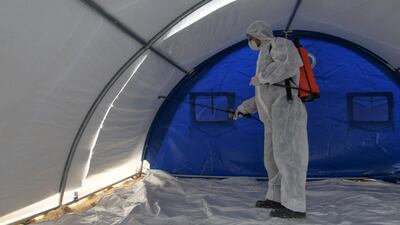
  • A member of the Syrian Violet NGO disinfects a triage tent erected for suspected coronavirus patients outside the Ibn Sina Hospital in Syria's northwestern Idlib city on March 19, 2020. - Syrian authorities on March 13 announced measures aimed at preventing coronavirus from reaching the war-torn country, including school closures and a ban on smoking shisha in cafes, state media reported. (Photo by Abdulaziz KETAZ / AFP)
    A member of the Syrian Violet NGO disinfects a triage tent erected for suspected coronavirus patients outside the Ibn Sina Hospital in Syria's northwestern Idlib city on March 19, 2020. - Syrian authorities on March 13 announced measures aimed at preventing coronavirus from reaching the war-torn country, including school closures and a ban on smoking shisha in cafes, state media reported. (Photo by Abdulaziz KETAZ / AFP)
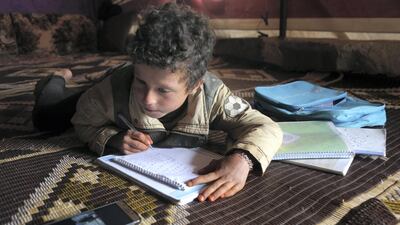
  • A young pupil follows a lesson on a mobile telephone inside a tent, in a camp for displaced Syrians in the village of Kafr Yahmoul in the northwestern Idlib province, amid the coronavirus pandemic on April 3, 2020. - Like in much of the world, educators in Syria are taking classes online after the country's various regions sent pupils home hoping to stem the COVID-19 pandemic. But distance learning is no small feat in a country battered by nine years of war, where fighting has displaced millions and the electricity supply is sporadic at best. (Photo by Aref TAMMAWI / AFP)
    A young pupil follows a lesson on a mobile telephone inside a tent, in a camp for displaced Syrians in the village of Kafr Yahmoul in the northwestern Idlib province, amid the coronavirus pandemic on April 3, 2020. - Like in much of the world, educators in Syria are taking classes online after the country's various regions sent pupils home hoping to stem the COVID-19 pandemic. But distance learning is no small feat in a country battered by nine years of war, where fighting has displaced millions and the electricity supply is sporadic at best. (Photo by Aref TAMMAWI / AFP)

But none of this will fix the rotten core at the heart of Syria – the Assad regime. For years, it has employed savage brutality to get its way.

The country has burned, and Mr Al Assad teeters again, and this time the bombs will not save him. Yet somehow, it is ordinary Syrians who will be made to suffer once again.

Kareem Shaheen is a former Middle East correspondent based in Canada

EA Sports FC 26

Publisher: EA Sports

Consoles: PC, PlayStation 4/5, Xbox Series X/S

Rating: 3/5

RESULTS

Men – semi-finals

57kg – Tak Chuen Suen (MAC) beat Phuong Xuan Nguyen (VIE) 29-28; Almaz Sarsembekov (KAZ) beat Zakaria Eljamari (UAE) by points 30-27.

67kg – Mohammed Mardi (UAE) beat Huong The Nguyen (VIE) by points 30-27; Narin Wonglakhon (THA) v Mojtaba Taravati Aram (IRI) by points 29-28.

60kg – Yerkanat Ospan (KAZ) beat Amir Hosein Kaviani (IRI) 30-27; Long Doan Nguyen (VIE) beat Ibrahim Bilal (UAE) 29-28

63.5kg – Abil Galiyev (KAZ) beat Truong Cao Phat (VIE) 30-27; Nouredine Samir (UAE) beat Norapat Khundam (THA) RSC round 3.

71kg​​​​​​​ – Shaker Al Tekreeti (IRQ) beat Fawzi Baltagi (LBN) 30-27; Amine El Moatassime (UAE) beat Man Kongsib (THA) 29-28

81kg – Ilyass Hbibali (UAE) beat Alexandr Tsarikov (KAZ) 29-28; Khaled Tarraf (LBN) beat Mustafa Al Tekreeti (IRQ) 30-27

86kg​​​​​​​ – Ali Takaloo (IRI) beat Mohammed Al Qahtani (KSA) RSC round 1; Emil Umayev (KAZ) beat Ahmad Bahman (UAE) TKO round

The biog

Name: Younis Al Balooshi

Nationality: Emirati

Education: Doctorate degree in forensic medicine at the University of Bonn

Hobbies: Drawing and reading books about graphic design

The%20specs
%3Cp%3E%3Cstrong%3EEngine%3A%3C%2Fstrong%3E%201.8-litre%204-cyl%20turbo%0D%3Cbr%3E%3Cstrong%3EPower%3A%20%3C%2Fstrong%3E190hp%20at%205%2C200rpm%0D%3Cbr%3E%3Cstrong%3ETorque%3A%3C%2Fstrong%3E%20320Nm%20from%201%2C800-5%2C000rpm%0D%3Cbr%3E%3Cstrong%3ETransmission%3A%20%3C%2Fstrong%3ESeven-speed%20dual-clutch%20auto%0D%3Cbr%3E%3Cstrong%3EFuel%20consumption%3A%3C%2Fstrong%3E%206.7L%2F100km%0D%3Cbr%3E%3Cstrong%3EPrice%3A%3C%2Fstrong%3E%20From%20Dh111%2C195%0D%3Cbr%3E%3Cstrong%3EOn%20sale%3A%20%3C%2Fstrong%3ENow%3C%2Fp%3E%0A
COMPANY%20PROFILE
%3Cp%3E%3Cstrong%3EName%3A%20%3C%2Fstrong%3EElmawkaa%3Cbr%3E%3Cstrong%3EBased%3A%3C%2Fstrong%3E%20Hub71%2C%20Abu%20Dhabi%3Cbr%3E%3Cstrong%3EFounders%3A%3C%2Fstrong%3E%20Ebrahem%20Anwar%2C%20Mahmoud%20Habib%20and%20Mohamed%20Thabet%3Cbr%3E%3Cstrong%3ESector%3A%3C%2Fstrong%3E%20PropTech%3Cbr%3E%3Cstrong%3ETotal%20funding%3A%3C%2Fstrong%3E%20%24400%2C000%3Cbr%3E%3Cstrong%3EInvestors%3A%20%3C%2Fstrong%3E500%20Startups%2C%20Flat6Labs%20and%20angel%20investors%3Cbr%3E%3Cstrong%3ENumber%20of%20employees%3A%3C%2Fstrong%3E%2012%3Cbr%3E%3C%2Fp%3E%0A
AI traffic lights to ease congestion at seven points to Sheikh Zayed bin Sultan Street

The seven points are:

Shakhbout bin Sultan Street

Dhafeer Street

Hadbat Al Ghubainah Street (outbound)

Salama bint Butti Street

Al Dhafra Street

Rabdan Street

Umm Yifina Street exit (inbound)

The stats

Ship name: MSC Bellissima

Ship class: Meraviglia Class

Delivery date: February 27, 2019

Gross tonnage: 171,598 GT

Passenger capacity: 5,686

Crew members: 1,536

Number of cabins: 2,217

Length: 315.3 metres

Maximum speed: 22.7 knots (42kph)

IF YOU GO
 
The flights: FlyDubai offers direct flights to Catania Airport from Dubai International Terminal 2 daily with return fares starting from Dh1,895.
 
The details: Access to the 2,900-metre elevation point at Mount Etna by cable car and 4x4 transport vehicle cost around €57.50 (Dh248) per adult. Entry into Teatro Greco costs €10 (Dh43). For more go to www.visitsicily.info

 Where to stay: Hilton Giardini Naxos offers beachfront access and accessible to Taormina and Mount Etna. Rooms start from around €130 (Dh561) per night, including taxes.

Company%20Profile
%3Cp%3E%3Cstrong%3ECompany%3A%3C%2Fstrong%3E%20Astra%20Tech%3Cbr%3E%3Cstrong%3EStarted%3A%20%3C%2Fstrong%3EMarch%202022%3Cbr%3E%3Cstrong%3EBased%3A%20%3C%2Fstrong%3EDubai%3Cbr%3E%3Cstrong%3EFounder%3A%20%3C%2Fstrong%3EAbdallah%20Abu%20Sheikh%3Cbr%3E%3Cstrong%3EIndustry%3A%3C%2Fstrong%3E%20technology%20investment%20and%20development%3Cbr%3E%3Cstrong%3EFunding%20size%3A%3C%2Fstrong%3E%20%24500m%3C%2Fp%3E%0A
RESULT

Australia 3 (0) Honduras 1 (0)
Australia: Jedinak (53', 72' pen, 85' pen)
Honduras: Elis (90 4)

MOUNTAINHEAD REVIEW

Starring: Ramy Youssef, Steve Carell, Jason Schwartzman

Director: Jesse Armstrong

Rating: 3.5/5

Volvo ES90 Specs

Engine: Electric single motor (96kW), twin motor (106kW) and twin motor performance (106kW)

Power: 333hp, 449hp, 680hp

Torque: 480Nm, 670Nm, 870Nm

On sale: Later in 2025 or early 2026, depending on region

Price: Exact regional pricing TBA

Company%20profile
%3Cp%3E%3Cstrong%3EName%3A%20%3C%2Fstrong%3EPurpl%3C%2Fp%3E%0A%3Cp%3E%3Cstrong%3ECo-founders%3A%20%3C%2Fstrong%3EKarl%20Naim%2C%20Wissam%20Ghorra%2C%20Jean-Marie%20Khoueir%3C%2Fp%3E%0A%3Cp%3E%3Cstrong%3EBased%3A%20%3C%2Fstrong%3EHub71%20in%20Abu%20Dhabi%20and%20Beirut%3C%2Fp%3E%0A%3Cp%3E%3Cstrong%3EStarted%3A%20%3C%2Fstrong%3E2021%3C%2Fp%3E%0A%3Cp%3E%3Cstrong%3ENumber%20of%20employees%3A%20%3C%2Fstrong%3E12%3C%2Fp%3E%0A%3Cp%3E%3Cstrong%3ESector%3A%20%3C%2Fstrong%3EFinTech%3C%2Fp%3E%0A%3Cp%3E%3Cstrong%3EFunding%3A%20%3C%2Fstrong%3E%242%20million%26nbsp%3B%3C%2Fp%3E%0A
Timeline

2012-2015

The company offers payments/bribes to win key contracts in the Middle East

May 2017

The UK SFO officially opens investigation into Petrofac’s use of agents, corruption, and potential bribery to secure contracts

September 2021

Petrofac pleads guilty to seven counts of failing to prevent bribery under the UK Bribery Act

October 2021

Court fines Petrofac £77 million for bribery. Former executive receives a two-year suspended sentence 

December 2024

Petrofac enters into comprehensive restructuring to strengthen the financial position of the group

May 2025

The High Court of England and Wales approves the company’s restructuring plan

July 2025

The Court of Appeal issues a judgment challenging parts of the restructuring plan

August 2025

Petrofac issues a business update to execute the restructuring and confirms it will appeal the Court of Appeal decision

October 2025

Petrofac loses a major TenneT offshore wind contract worth €13 billion. Holding company files for administration in the UK. Petrofac delisted from the London Stock Exchange

November 2025

180 Petrofac employees laid off in the UAE

COMPANY%20PROFILE
%3Cp%3E%3Cstrong%3ECompany%20name%3A%3C%2Fstrong%3E%20Sav%3Cbr%3E%3Cstrong%3EStarted%3A%3C%2Fstrong%3E%202021%3Cbr%3E%3Cstrong%3EFounder%3A%3C%2Fstrong%3E%20Purvi%20Munot%3Cbr%3E%3Cstrong%3EBased%3A%3C%2Fstrong%3E%20Dubai%3Cbr%3E%3Cstrong%3EIndustry%3A%3C%2Fstrong%3E%20FinTech%3Cbr%3E%3Cstrong%3EFunding%3A%3C%2Fstrong%3E%20%24750%2C000%20as%20of%20March%202023%3Cbr%3E%3Cstrong%3EInvestors%3A%3C%2Fstrong%3E%20Angel%20investors%3C%2Fp%3E%0A