
On Tuesday, Lebanon's beautiful capital city of Beirut, which I call home, was rocked by massive explosions in its port area. More than 150 were killed, with the death toll continuing to rise, while thousands more were injured and hundreds of thousands, including myself, rendered homeless. Scores of people remain missing.
Plenty of questions are being asked by us all: how did the ammonium nitrate that was stored in a warehouse at the port catch fire before exploding on Tuesday; why were 2,750 tons of this dangerous material even stored at the port – and that, too, for so many years; why were there no safety inspections; was this an accident, or was this the handiwork of a state or non-state actor? Why is the Lebanese government not holding itself accountable?
The list of questions and theories is endless.
The least the government can and must do at this time, therefore, is to allow for an international investigation – and not just one that is conducted by its own agencies. It is the only way for us to find out the truth. What occurred in Beirut on Tuesday was a crime against humanity. Justice needs to be delivered and steps need to be taken to ensure that this tragedy is not repeated ever again.
Also, there has to be an end to impunity. For failing to do so in the past has contributed to criminal negligence, with perpetrators exploiting this impunity and getting away with it, given that our collective memory is weak and the demand for accountability recedes over time.
-
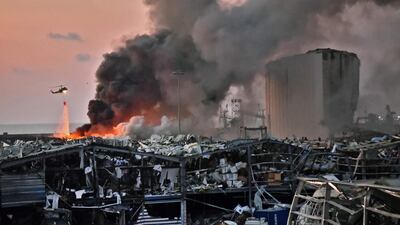
A helicopter puts out a fire at the scene of the explosion at the port of Lebanon's capital Beirut on August 4, 2020. AFP -
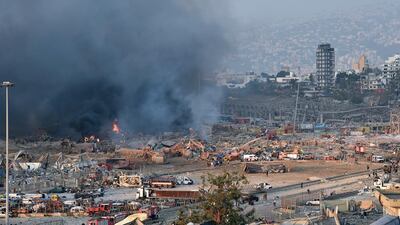
Smoke billows from an area of a large explosion that rocked the harbour area of Beirut, Lebanon. EPA -

The aftermath of blast in Beirut. Sunniva Rose / The National -
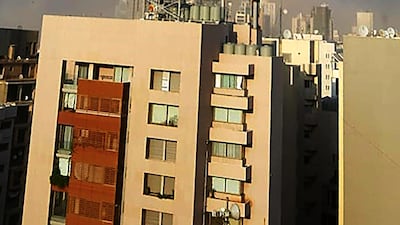
The scene of the explosion that rocked Beirut. AFP -
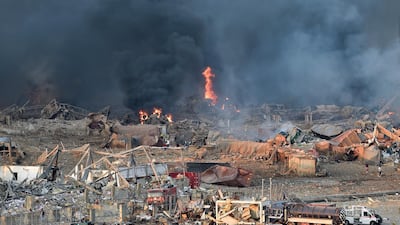
The harbour area with smoke billowing from an area of the explosion, Beirut, Lebanon. EPA -
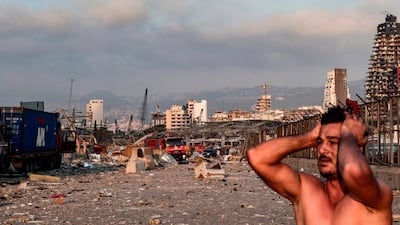
A man reacts at the scene of an explosion at the port in Lebanon's capital Beirut. AFP -
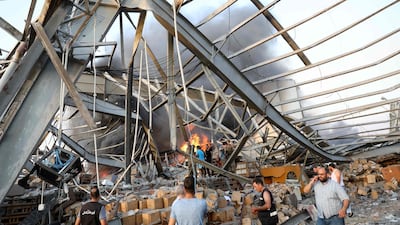
The scene of the explosion at the port in Beirut. AFP -
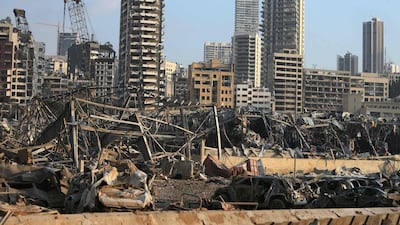
The scene of the explosion at the port in Beirut. AFP -

The scene of the explosion in Beirut. AFP -
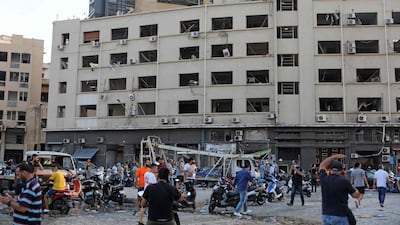
People gather near the scene of the explosion in Beirut. AFP -
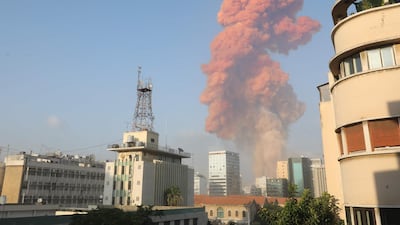
The scene of the blast in Beirut. AFP -
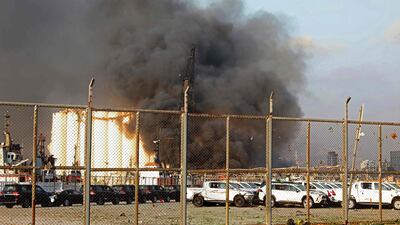
The scene of the explosion in Beirut. AFP -
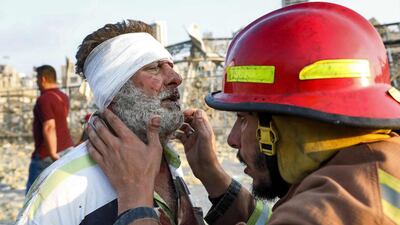
A wounded man is checked by a fireman near the scene of the explosion in Beirut. AFP -
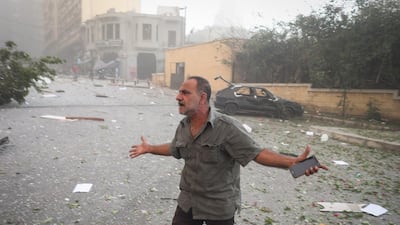
A resident stands in the street by a destroyed car, following the explosion near by at the port of Beirut. Bloomberg -
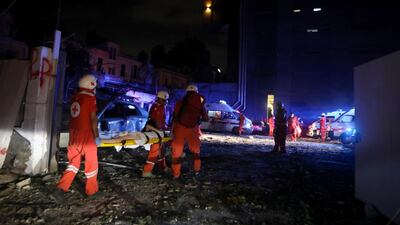
Lebanese Red Cross officers carry an injured woman following an explosion at the port of Beirut on August 4, 2020. AFP -
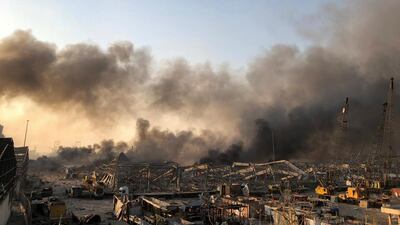
Smoke rises after the explosion was heard in Beirut. Reuters -
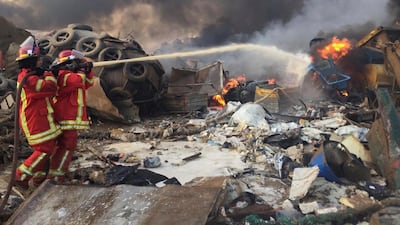
Firefighters spray water at a blaze after the explosion in Beirut. Reuters -
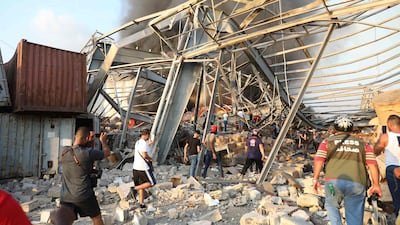
People walk at scene of the explosion in Beirut. AFP -

The blast at Beirut port. Twitter/ @borzou -

Army personnel around entrance to port. -

The aftermath of the blast in Beirut. Sunniva Rose / The National -

The aftermath of the blast in Beirut. Sunniva Rose / The National -
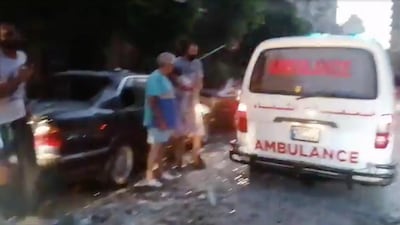
The aftermath of the blast in Beirut. Sunniva Rose / The National -
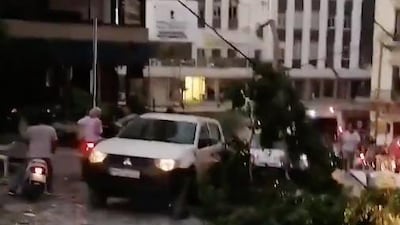
The aftermath of blast in Beirut. Sunniva Rose / The National -
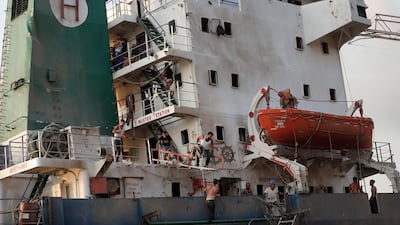
Sailors leave their damaged ship near the explosion in Beirut. AP Photo -
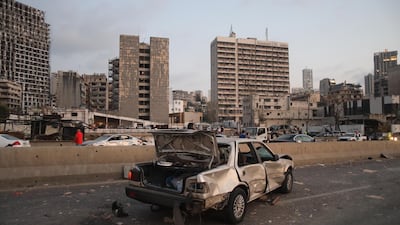
A vehicle stands damaged on a road following a large explosion at the port area of Beirut. Bloomberg -
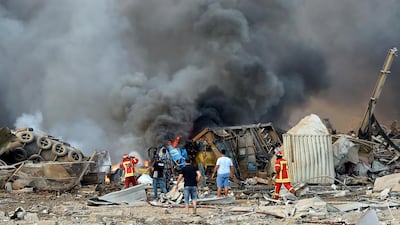
Firefighters try to extinguish flames after a large explosion rocked the harbour area of Beirut. EPA -
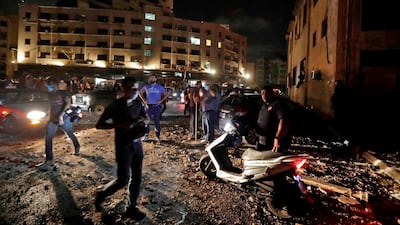
People and journalists gather at the scene of an explosion at the port of Lebanon's capital Beirut. AFP -

An injured man sits outside American University of Beirut medical centre on August 5, 2020. Reuters -
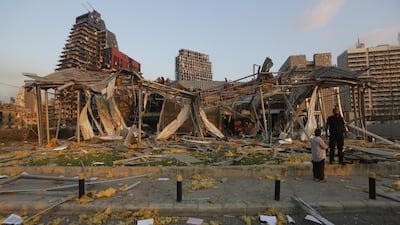
Men stand before wrecked buildings near the port. Getty Images -
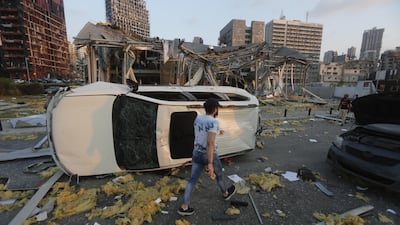
A man walks by an overturned car and destroyed buildings. Getty Images -
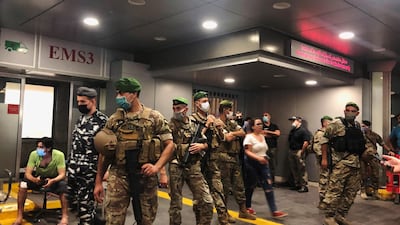
Lebanese soldiers stand outside American University of Beirut medical centre. Reuters -
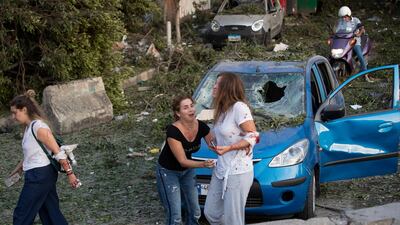
Injured people stand after the explosion. AP Photo -
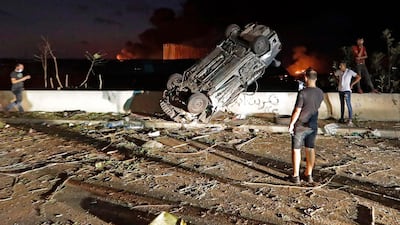
People gather by cars destroyed following an explosion at the port of Lebanon's capital Beirut. AFP -
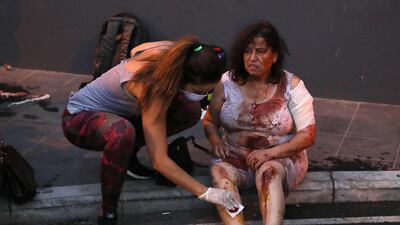
Wounded people wait to receive treatment outside a hospital following an explosion near the Beirut port. AFP


The humanitarian aid offered by the international community to our country is crucial, for Lebanon's afflicted people are in dire need of it. However, we also require the rest of the world to exert pressure on our government in demanding accountability and transparency.
I understand there are hurdles in this regard. The UN Security Council, for instance, is divided and crippled by procrastination as some member states are likely to hinder calls for a probe. The International Criminal Court does not have the mandate to intervene, given that Lebanon is not a member of it.
Yet, I believe where there is a will there is a way.
The UN General Assembly could certainly demand that the Lebanese government comply with calls for an international participation in the investigation. It could appeal to the UN Secretary General Antonio Guterres to apply pressure on the Security Council to, at least, send a fact-finding commission to Beirut.
Simultaneously, influential states must unite under international law and mobilise legal experts to explore relevant mechanisms to end any impunity on the part of those who have so far rejected transparency or deliberately concealed evidence.
If the government continues to rebuff calls for an international investigation, as President Michel Aoun already has, then the European Union – spearheaded by our ally France – should consider this plan of action. It is important that key figures in Lebanon's political establishment are held accountable, including Mr Aoun himself, Prime Minister Hassan Diab and Parliament Speaker Nabih Berri. None of the ministers in Mr Diab's cabinet who resist calls for a fair probe must be spared from scrutiny either.
Our national leaders have truly disappointed us.
Mr Diab, it seems, answers only to the militant party Hezbollah and not to the people of Lebanon. Mr Berri boasts about being the most seasoned of politicians. However, we confuse his savvy and shrewdness with wisdom. As for Mr Aoun, he is not the “father of all” that some Lebanese consider him to be. And it is difficult to describe his tenure as President as anything but a failure.
-

A Lebanese youth hugs French President Emmanuel Macron during a visit to the Gemmayzeh neighbourhood, which has suffered extensive damage due to a massive explosion in the Lebanese capital. AFP -
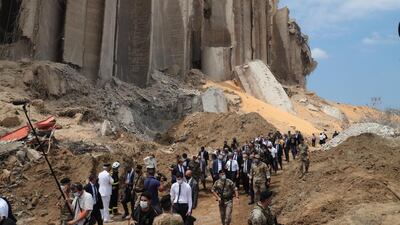
French President Emmanuel Macron (C) visiting the devastated site of the explosion at the port of Beirut, Lebanon. Macron arrived to Lebanon to show support after a massive explosion on 04 August -
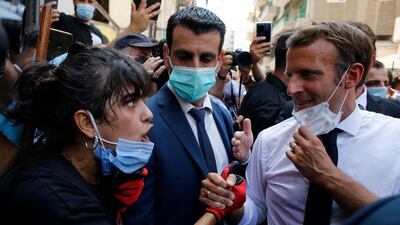
French President Emmanuel Macron listens to a resident as he visits a devastated street of Beirut. AP Photo -
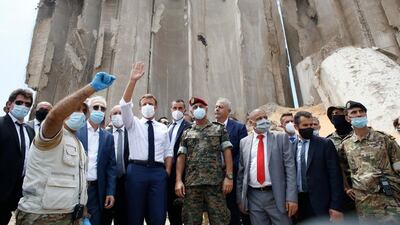
French President Emmanuel Macron gestures as he visits the devastated site of the explosion at the port of Beirut. EPA -
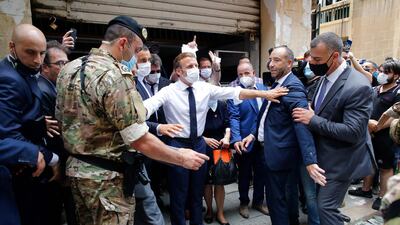
French President Emmanuel Macron gestures as he visits a devastated street of Beirut. AFP -
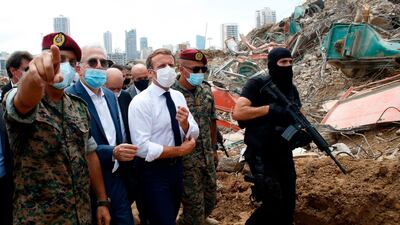
French President Emmanuel Macron surrounded by Lebanese servicemen, visits the devastated site of the explosion at the port of Beirut. AFP -

French President Emmanuel Macron, speaks with a woman as he visits the Gemayzeh neighborhood, which suffered extensive damage from an explosion on Tuesday. AP Photo -
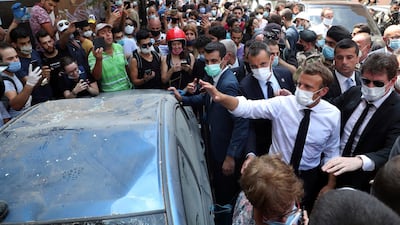
French President Emmanuel Macron visits the Gemayzeh neighborhood, which suffered extensive damage from an explosion on Tuesday that hit the seaport of Beirut. AP Photo -
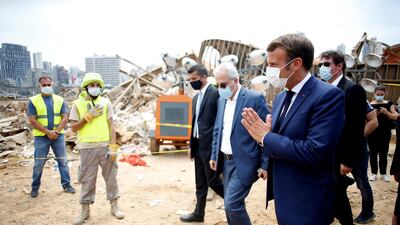
French President Emmanuel Macron gestures as he arrives at the devastated site of the explosion at the port of Beirut. REUTERS -
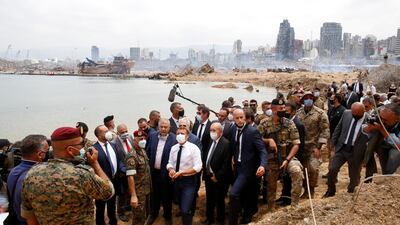
French President Emmanuel Macron visits the devastated site of the explosion at the port of Beirut. REUTERS -
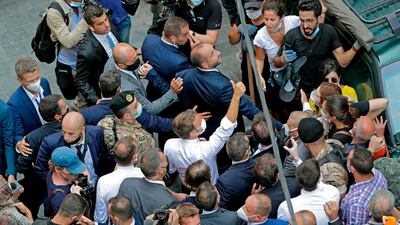
French President Emmanuel Macron greets people during a visit to the Gemmayzeh neighbourhood, which has suffered extensive damage due to a massive explosion in the Lebanese capital. AFP -
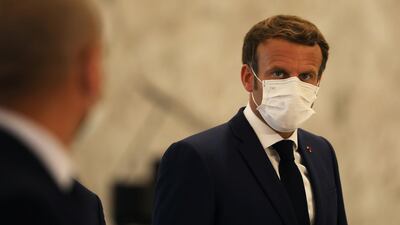
French President Emmanuel Macron wears a protective face mask as he meets Lebanon's President Michel Aoun following Tuesday's blast in Beirut's port area, at the presidential palace in Baabda, Lebanon. Reuters -
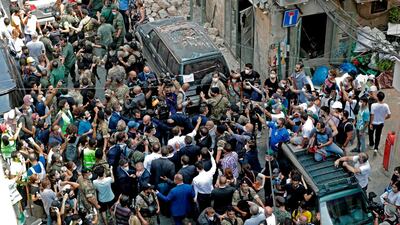
French President Emmanuel Macron greets people during a visit to the Gemmayzeh neighbourhood, which has suffered extensive damage due to a massive explosion in the Lebanese capital, on August 6, 2020. French President Emmanuel Macron visited shell-shocked Beirut, pledging support and urging change after a massive explosion devastated the Lebanese capital in a disaster that has sparked grief and fury. / AFP / ANWAR AMRO -
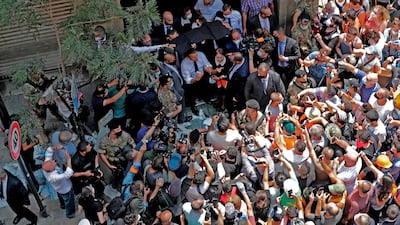
French President Emmanuel Macron speaks to the crowd during a visit to the Gemmayzeh neighbourhood, which has suffered extensive damage due to a massive explosion in the Lebanese capital, on August 6, 2020. French President Emmanuel Macron visited shell-shocked Beirut, pledging support and urging change after a massive explosion devastated the Lebanese capital in a disaster that has sparked grief and fury. / AFP / ANWAR AMRO -
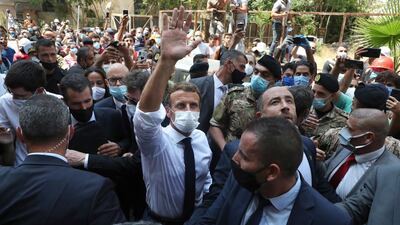
French President Emmanuel Macron, center, gestures as he visits the Gemayzeh neighborhood, which suffered extensive damage from an explosion on Tuesday that hit the seaport of Beirut, Lebanon, Thursday, Aug. 6, 2020. (AP Photo/Bilal Hussein) -

French President Emmanuel Macron gestures as he visits a devastated street of Beirut, Lebanon, on August 6, 2020 a day after a massive explosion devastated the Lebanese capital in a disaster that has sparked grief and fury. French President Emmanuel Macron visited shell-shocked Beirut Thursday, pledging support and urging change after a massive explosion devastated the Lebanese capital in a disaster that has sparked grief and fury. / AFP / POOL / Thibault Camus -
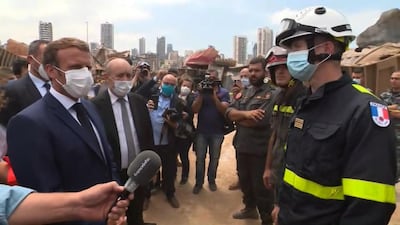
A video grab shows French President Emmmanuel Macron, left, speaking with a member of a French rescue team which arrived overnight to support relief efforts at the port of Lebanon's capital Beirut. AFP -
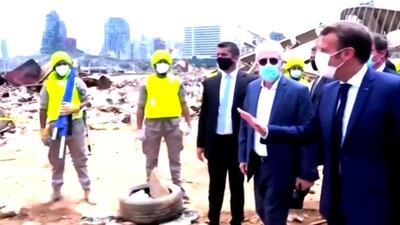
French President Emmanuel Macron visits the site of Tuesday's blast in Beirut. Tele Liban / Reuters -
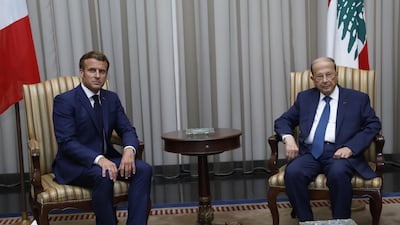
Lebanon's President Michel Aoun meets French President Emmanuel Macron on his arrival at the airport in Beirut. Dalati Nohra/Reuters -
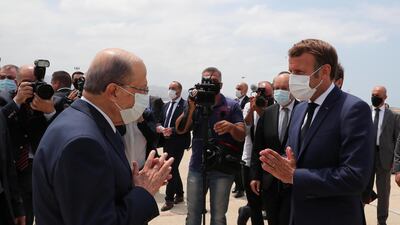
Lebanon's President Michel Aoun welcomes French President Emmanuel Macron on his arrival at the airport in Beirut. Dalati Nohra/Reuters -
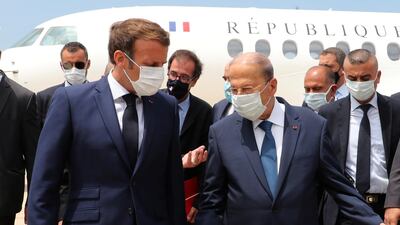
"Lebanon is not alone," Mr Macron tweeted shortly after landing. Dalati Nohra/Reuters -
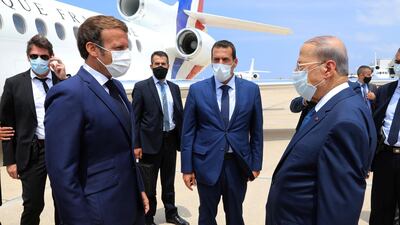
The French president is the first foreign leader to visit the Lebanese capital since an explosion on Tuesday killed at least 137 people. Dalati Nohra / Reuters -
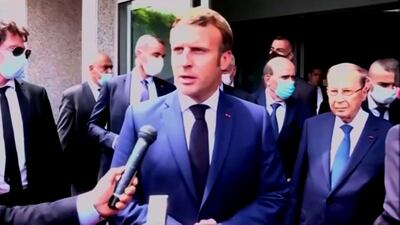
Mr Macron said Lebanon was facing a political and economic crisis, and that it would continue to suffer unless it enacted reforms. Reuters


It was deeply heartening, therefore, that French President Emmanuel Macron visited Beirut just a couple of days after the tragedy.
Not only did he take on the risk of Covid-19 infection by hugging a distraught woman, he also rebuked Lebanon's political leaders, pointing to “missing funds” from international donations to the country and insisting on channelling aid through NGOs. He also called for a new political charter for Lebanon.
Mr Marcon added that there will be no more blank checks given to a regime that no longer enjoys the confidence of its people. He promised to mobilise support through an international pledging conference that ensures there is accountability and transparency.
It is also time for the Lebanese people to collectively say "enough" to the creeping extremism, sectarianism and corruption in our country. We must review our political system, which has somehow prevailed over the country since the 15-year civil war came to an end in 1990, but also exploited by politicians thereby bringing untold misery to ordinary Lebanese, especially on the economic front.
Whatever happens in the national and international domains, it has to be said that it is the spirit of the people that gives me hope for a better future in the midst of this gloom. I can only hope that all those volunteers who have braved the pandemic by taking to the streets across the city to help people are blessed abundantly. These young men and women have over the past few days put on their masks and carried brooms, cleaning up the debris and searching for bodies.
I will not forget the scenes around the apartment building I used to live in.
It was harrowing to find out about the death of one neighbour, a beautiful mother of two teenagers. I was told that another neighbour rushed to the ground floor after the explosion to find these children crying for help while sitting next to their mother. Upon checking her pulse and discovering that she had died, he then forcibly drew the children away from the building in order to ensure their safety.
The stories of those who survived the blasts are many – and they are depressing. Most people living in Skyline Tower, an iconic landmark by the port, are young men and women who work hard with the hope of leading normal lives. Others include older residents, who were once expats before returning to Beirut and investing their life savings to buy their dream homes that have been devastated.

In what used to be my apartment, there once hung a painting by Yehya Warrak. It was in front of that painting that I did my work, which included recording the e-Policy Circles of the Beirut Institute Summit in Abu Dhabi. It was apt, for the painting symbolised defiance – that one one cannot and will not be silenced.
That painting has been destroyed, but we – my team and myself – are grateful that we are still alive. Had we not decided to take a break from recording over the next few weeks, it is likely that we would have been killed.
We are determined to continue our work. We are undeterred by displacement and incapacitation. We will find a place, any place, to record again next month – even if it is on a deserted street or atop the rubble of a building. We may have lost Warrak's painting but we will not be silent. Through our work, we will continue to be a voice of moderation – even as our country is wracked by extremism.
Raghida Dergham is the founder and executive chairwoman of the Beirut Institute

