

For the Lebanese and those who love Lebanon, this has been a week of mourning and grief. No words can adequately describe the extent of pain and suffering that has been felt by those who lost family, friends, homes and memories. The explosion of 2,750 tonnes of ammonium nitrate that tore through Beirut last Tuesday shattered lives and dreams. Lebanon and its people were already struggling before the blast, but somehow carrying on. Now, even coping seems like a stretch.
Among those who are mourned is Sahar Fares, a 25-year-old member of the Lebanese civil defence unit, which was the initial group of responders to arrive at the Beirut port to tackle the first fire, only to be killed by the explosion that followed.
Sahar symbolised the best of Lebanon: beautiful, bold and willing to put her life in danger in the pursuit of saving others. Her family have subsequently shared photos and videos of Sahar at her happiest, at work and at a party with her beloved fiance Gilbert. Instead of preparing for her wedding, she was laid to rest in a white casket. A life filled with beauty and potential was gone in an instant, extinguished by the sheer negligence and incompetence of others.
Sahar symbolises Lebanon, so filled with beauty and potential, but destroyed by negligence at best, but more likely by criminal corruption. Sahar's death and Beirut's suffering are a direct result of a failed political system.
While anger rages against the ruling class, borne out of this failed political system, it became quickly apparent that the government of Hassan Diab could not stay in power. Hugely unpopular, Mr Diab gave a speech on Saturday saying that he would oversee early elections and hand over power. The speech was contrite, lacking in empathy for his own countrymen and completely lacking in self-awareness. The idea that "early elections" would address the catastrophic situation exemplifies how removed Mr Diab is from the heart-breaking realities on the ground.

Firstly, everyone who suffered a loss from the Beirut attack expects some sort of accountability. “Voting out” politicians is not an acceptable form of accountability for an event of this magnitude. Secondly, elections would not bring about a solution. Elections without a complete system overhaul would reinforce the current system of patronage. Political parties playing on identity politics and long-held grievances would quickly swoop in to capitalise on divisions in Lebanon to perhaps bring in fresh faces with the same archaic approach to leadership based on narrow political interest and identity politics.
Successive coalition governments that have been formed from competing political groups have in effect been "veto-wielding", rather than working together. Hezbollah and its allies are the greatest culprits of political manoeuvres within government that have largely held Lebanon hostage as it lurched from one crisis to another.
One of the perpetual lies told about Lebanon is that it is a sectarian country. One that can only be ruled by a group of leaders each claiming to “protect” his or her own sect. There is nothing further from the truth. No single group has fared better in the country because of sectarian politics. On the other hand, a national protest movement has been calling for overarching reforms since last year.
Moreover, volunteers who have worked night and day in Beirut in the past seven days have not been moved based on sect or religion. Rather, active civic society action has been galvanised out of patriotism and a love of the country. That energy, despite the pain and loss, is what will propel Lebanon forward. But it will be destroyed if a sectarian system of rule is allowed to continue.
-

A photograph of the missing silo employee Ghassan Hasrouty pictured with his wife Ibtissam in the family home. Reuters -
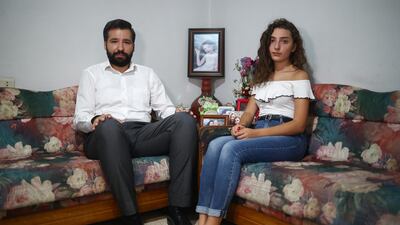
Elie Hasrouty and Tatiana Hasrouty pose for a photograph as they wait for news about their father Ghassan Hasrouty. Reuters -
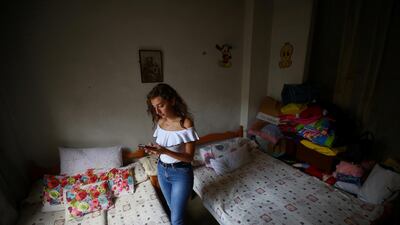
Tatiana Hasrouty uses her mobile phone next to the bed of her father Ghassan Hasrouty, a missing silo employee. Reuters -
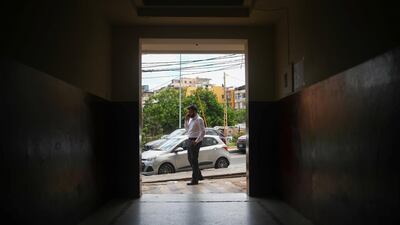
Elie Hasrouty talks on the phone as he waits for news about his father Ghassan Hasrouty, a missing silo employee. Reuters -
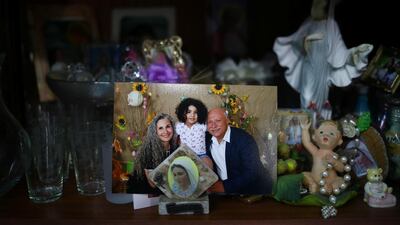
A photograph shows a missing silo employee Ghassan Hasrouty posing with his family. Reuters


Introducing new laws to reform the voting and governing systems of the country would take time and would require buy-in from some of the current political actors. This is not likely to come in time. However, no shortcuts will work.
The aid conference for Lebanon hosted on Sunday by French President Emmanuel Macron and the UN said that relief would be distributed through global organisations. This is not a viable long-term solution. While acceptable for immediate aid distribution, it cannot be the mechanism for recovery and reconstruction. The state should be responsible for the rebuilding of Beirut. Undercutting the state by handing over responsibilities to the UN – or France – is not a solution.
The nation state is a concept we should protect. The fact that aid, the investigation into the explosion, the clean-up of the city are all bypassing normal channels represents the failure of this government, and deals a series of blows to Lebanon's state institutions. There are more than enough competent and able Lebanese who can lead their country – if given the chance.
-

A Lebanese youth hugs French President Emmanuel Macron during a visit to the Gemmayzeh neighbourhood, which has suffered extensive damage due to a massive explosion in the Lebanese capital. AFP -
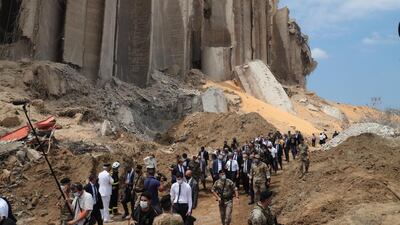
French President Emmanuel Macron (C) visiting the devastated site of the explosion at the port of Beirut, Lebanon. Macron arrived to Lebanon to show support after a massive explosion on 04 August -
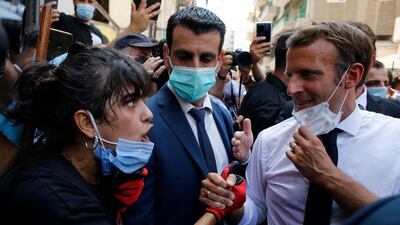
French President Emmanuel Macron listens to a resident as he visits a devastated street of Beirut. AP Photo -
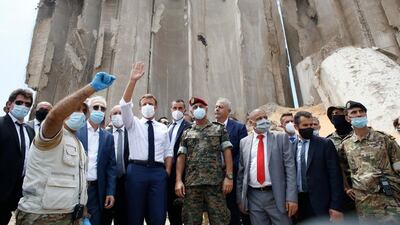
French President Emmanuel Macron gestures as he visits the devastated site of the explosion at the port of Beirut. EPA -
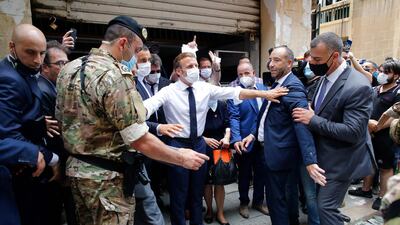
French President Emmanuel Macron gestures as he visits a devastated street of Beirut. AFP -
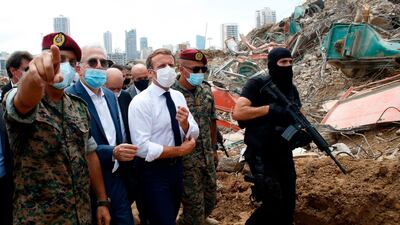
French President Emmanuel Macron surrounded by Lebanese servicemen, visits the devastated site of the explosion at the port of Beirut. AFP -

French President Emmanuel Macron, speaks with a woman as he visits the Gemayzeh neighborhood, which suffered extensive damage from an explosion on Tuesday. AP Photo -
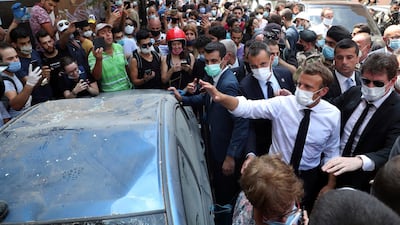
French President Emmanuel Macron visits the Gemayzeh neighborhood, which suffered extensive damage from an explosion on Tuesday that hit the seaport of Beirut. AP Photo -
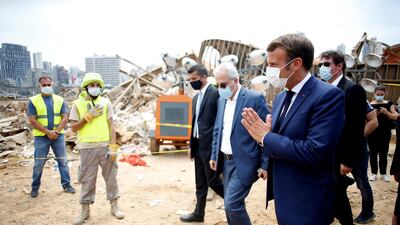
French President Emmanuel Macron gestures as he arrives at the devastated site of the explosion at the port of Beirut. REUTERS -
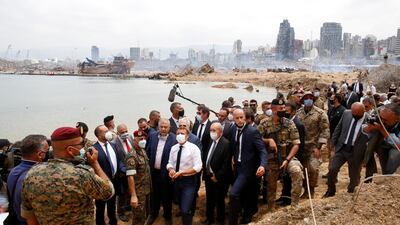
French President Emmanuel Macron visits the devastated site of the explosion at the port of Beirut. REUTERS -
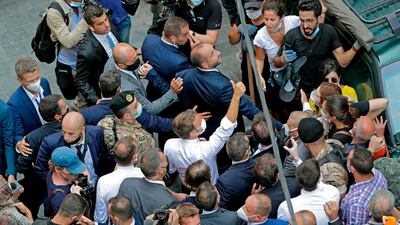
French President Emmanuel Macron greets people during a visit to the Gemmayzeh neighbourhood, which has suffered extensive damage due to a massive explosion in the Lebanese capital. AFP -
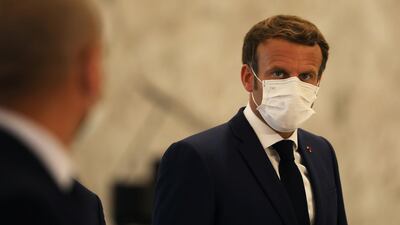
French President Emmanuel Macron wears a protective face mask as he meets Lebanon's President Michel Aoun following Tuesday's blast in Beirut's port area, at the presidential palace in Baabda, Lebanon. Reuters -
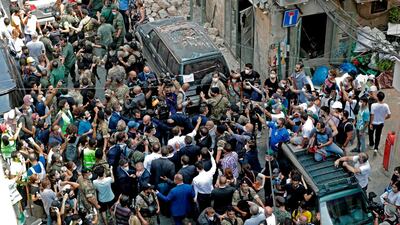
French President Emmanuel Macron greets people during a visit to the Gemmayzeh neighbourhood, which has suffered extensive damage due to a massive explosion in the Lebanese capital, on August 6, 2020. French President Emmanuel Macron visited shell-shocked Beirut, pledging support and urging change after a massive explosion devastated the Lebanese capital in a disaster that has sparked grief and fury. / AFP / ANWAR AMRO -
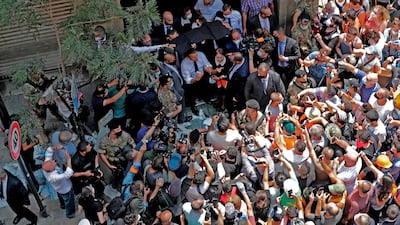
French President Emmanuel Macron speaks to the crowd during a visit to the Gemmayzeh neighbourhood, which has suffered extensive damage due to a massive explosion in the Lebanese capital, on August 6, 2020. French President Emmanuel Macron visited shell-shocked Beirut, pledging support and urging change after a massive explosion devastated the Lebanese capital in a disaster that has sparked grief and fury. / AFP / ANWAR AMRO -
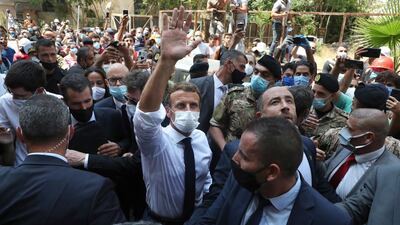
French President Emmanuel Macron, center, gestures as he visits the Gemayzeh neighborhood, which suffered extensive damage from an explosion on Tuesday that hit the seaport of Beirut, Lebanon, Thursday, Aug. 6, 2020. (AP Photo/Bilal Hussein) -

French President Emmanuel Macron gestures as he visits a devastated street of Beirut, Lebanon, on August 6, 2020 a day after a massive explosion devastated the Lebanese capital in a disaster that has sparked grief and fury. French President Emmanuel Macron visited shell-shocked Beirut Thursday, pledging support and urging change after a massive explosion devastated the Lebanese capital in a disaster that has sparked grief and fury. / AFP / POOL / Thibault Camus -
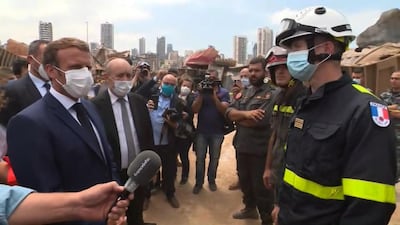
A video grab shows French President Emmmanuel Macron, left, speaking with a member of a French rescue team which arrived overnight to support relief efforts at the port of Lebanon's capital Beirut. AFP -
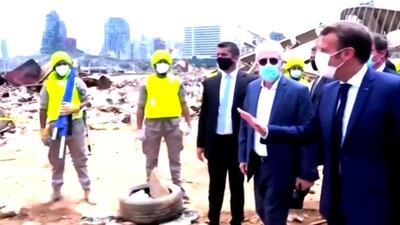
French President Emmanuel Macron visits the site of Tuesday's blast in Beirut. Tele Liban / Reuters -
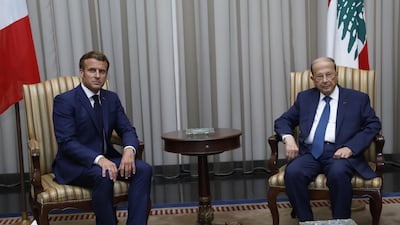
Lebanon's President Michel Aoun meets French President Emmanuel Macron on his arrival at the airport in Beirut. Dalati Nohra/Reuters -
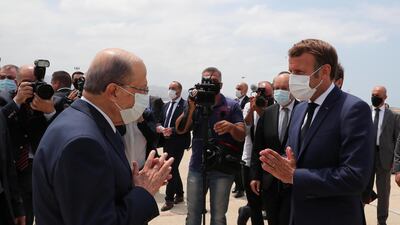
Lebanon's President Michel Aoun welcomes French President Emmanuel Macron on his arrival at the airport in Beirut. Dalati Nohra/Reuters -
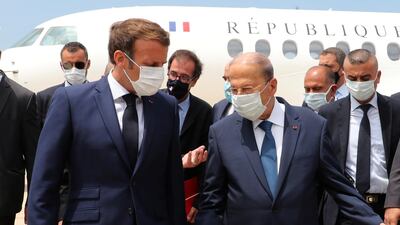
"Lebanon is not alone," Mr Macron tweeted shortly after landing. Dalati Nohra/Reuters -
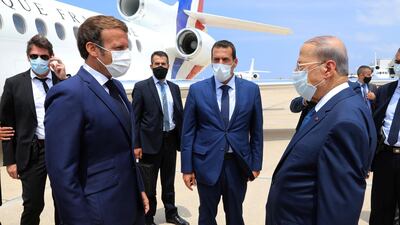
The French president is the first foreign leader to visit the Lebanese capital since an explosion on Tuesday killed at least 137 people. Dalati Nohra / Reuters -
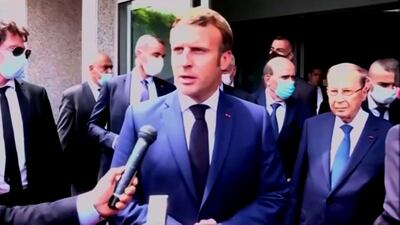
Mr Macron said Lebanon was facing a political and economic crisis, and that it would continue to suffer unless it enacted reforms. Reuters


Soon after images of Mr Macron visiting the streets of Beirut were broadcast around the world, an online petition began to circulate calling for the return of the French mandate to Lebanon. Angry voices called for a return to "foreign rule" due to the failure of Lebanon's ruling elite. And yet, these are voices speaking largely from anger and an overwhelming sense of disappointment, not conviction.
Over 60,000 people have signed the petition stating that “Lebanon’s officials have clearly shown a total inability to secure and manage the country. With a failing system, corruption, terrorism and militia, the country just reached its last breath. We believe Lebanon should go back under the French mandate in order to establish a clean and durable governance”.
What greater insult could be given to national leaders than to say that a country prefers foreign rule to that of its own rulers. Consecutive Lebanese governments have failed to provide security, electricity, a banking system or safety from life-terminating waste. But, unsurprisingly, it can muster up its force against protesters with the might of a "strong state".
That too is not a solution. There is no shortcut to the need for structural reform and an overhaul of a political system that has passed it use by date.
Mina Al-Oraibi is editor-in-chief of The National

