Since its founding 50 years ago, the UAE has worked to establish enduring political ties, trade exchange and people-to-people connections throughout Africa. Now, with major investments in economic projects and human capital throughout Africa, the UAE is eager to work hand-in-hand in the spirit of mutual co-operation to boost the continent’s welfare and security through additional infrastructure, humanitarian and political initiatives.
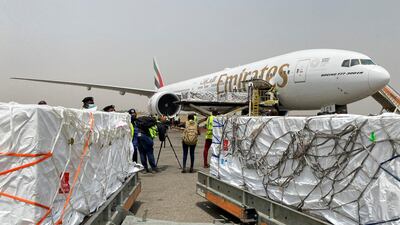
Over the past year, much of our attention has been focused on the fight against Covid-19. The UAE has not hesitated in extending a hand of assistance to numerous African countries by providing medical and food aid to combat the pandemic. It has sent a total of 144.4 metric tons of medical aid to African countries through 28 flights, benefiting over 144,000 healthcare workers. It has also sent nearly eight metric tons of medical aid by sea.
Africa has thus far been spared the worst of the coronavirus pandemic, with both cases and deaths attributed to the virus far below the numbers seen elsewhere. For that, we can all be thankful, particularly given the limited resources available in Africa to fight pandemics. But we must not be complacent. Africa now faces twin challenges: procuring and distributing enough vaccines for a continent home to more than a billion people, and rebuilding economies in some cases shattered by border closures and lockdowns.
It is estimated Africa will need 1.5 billion vaccine doses to immunise 60 per cent of its population, costing between $7bn and $10bn. The WHO has committed to vaccinating at least 20 per cent of the continent by the end of the year. Yet there is considerable disparity between nations over vaccination progress. The UAE, the US, the UK and Israel are leading the world, with vaccination rates ranging from 25 per cent to nearly 100 per cent; yet so far, just a handful of African nations have been able to begin vaccination programs, including Morocco, Egypt, Seychelles and South Africa.
The UAE is firmly committed to equitable access of the vaccine and supports Covax, an organisation born out of the G20 Leadership Summit last November, of which the UAE was a part. Covax is a framework for global collaboration in procuring and distributing Covid-19 vaccines, no matter the ability of a nation to pay for it. Yet while Covax is doing excellent work, there is still a real danger that developed western nations will gallop ahead in the race to inoculate their populations by relying on what the World Economic Forum has termed “vaccine nationalism”.
For the sake of not only Africa but the entire world, we cannot allow this to happen. Viruses do not respect borders, nationalities or governments. We live in a globalised, interconnected world, and we can only manage this virus and its impact by working together. We remain concerned that many in sub-Saharan Africa will not receive vaccines until 2023, and are committed to assisting the continent in addressing this issue.

Getting the people of Africa the same access to vaccines that much of the rest of the world enjoys is just half the battle, however. There is still the matter of the continent’s economic recovery. We must ensure that Africa does not suffer an economic version of “long Covid”. The danger is that this virus will further increase unemployment, poverty and inequality. The International Monetary Fund estimates that the economy of sub-Saharan Africa shrunk three per cent last year, while incomes fell 5.3 per cent, back to 2013 levels.
While diversified nations have fared better, those dependent on tourism have been hit hard. According to the World Bank, between 26 million and 40 million Africans could fall into extreme poverty amid the pandemic. Nearly half of African students lack access to remote learning, even as the region still lags behind in global enrolment and completion rates. Ghana’s Finance minister and chairman of the G24, Ken Ofori-Atta, has warned of a “lost decade of development” for Africa after the pandemic.
It is pleasing to see G20 member states place a moratorium on interest payments for 47 developing countries, most of them in Africa. The G20 has also said its members are ready to re-negotiate some of the debt, but as around 40 percent of it is private, not public, debt, there are limits to the extent of this relief.
A recent report from the UN Department of Economic and Social Affairs highlights the need for African countries to prioritise the diffusion of digital technologies, supported by the expansion of affordable and universal digital infrastructure. The UAE agrees, which is why we last year launched the Consortium for Africa to focus on digitisation and youth as part of an optimistic vision for Africa’s future. By leveraging public and private sector investment in Africa, we will devote significant resources to boost development throughout the continent. This support is, of course, in addition to a wide variety of aid programs, as Africa remains the UAE’s largest recipient of funding, receiving $16.4bn between 2015 and 2019.
Africa would benefit from strong policy actions and further support from the international community to avert a debt crisis and ensure sustained revival of growth. Once the immediate crisis is over, African countries must lay the groundwork for a strong and inclusive development path in the medium term, which entails the creation of decent jobs at a large scale. Representation of African voices in international fora such as the UN and the WHO is also essential, and if the UAE is successful in its bid to join the UN Security Council for the 2022-23 term, we will support African nations to garner wide support where necessary.
The UAE has a rich history of cultural exchange with the African continent. This interconnectedness remains today, with large diasporas from African countries living and working in the UAE and contributing significantly to our own development. While we have faced challenges recently, I am confident we will both come out of this even stronger. The more we can also unite other nations beneath African skies, the faster this great continent will rise renewed from the Covid-19 pandemic.
Sheikh Shakhbout Al Nahyan is a UAE Minister of State at the Ministry of Foreign Affairs and International Co-operation

