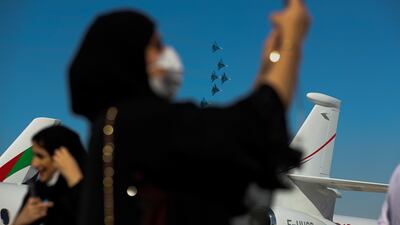

During a Covid-19 media briefing on Monday evening, the National Emergency Crisis and Disaster Management Authority announced the relaxation of a raft of safety measures.
The announcement moves us on to a very different footing although, as the virus has delivered many surprises over nearly three years and may well continue to do so, it probably does not mean that Covid-19 is over just yet – but we are getting much closer. The authority intimated as much, acknowledging that the current situation is stable but that the “pandemic is ongoing and the next phase will require community responsibility”.
NCEMA said on Monday that the mandate governing the use of face masks indoors would be relaxed except for in a few situations, such as on public transport, hospital visits and in places of worship. While this, of course, is the most visible, welcome and immediate change to our daily lives, the other measures are equally significant in their own ways.
The Covid-19 home quarantine period has been reduced to five days from 10 and close contacts are now asked to test as a precaution and then act accordingly.
The Al Hosn app will retain green status for 30 days following a negative test rather than 14 days, more than doubling the validity period of routine PCR testing regimes for vaccinated people. Unvaccinated community members also now have longer green status validity periods after testing. And finally, daily caseloads will no longer be reported by the authorities.
It is easy to understand why all this has happened now.
NCEMA said on Monday that “we are witnessing a recovery from the pandemic, as the situation is stable in the country, and cases are declining while deaths are nearly zero". Low cases and better outcomes equals a firm step in the better direction and, it seems, a future with fewer masks.
-

A member of staff takes down signage urging pupils to keep wearing masks at Brighton College in Dubai. Schools no longer require children and teachers to wear masks. All photos: Chris Whiteoak / The National -

Masks are no longer mandatory at schools. The relaxation of Covid-19 protocols comes amid a sharp drop in infection rates in recent months. -

Kirk, aged 18, with Michael Darby, head of science, conducts an experiment without face masks at Brighton College in Dubai. -

Pupils in a Year 6 class at Brighton College study without their masks. -

Mr Tavner teaches a Year 5 class on Wednesday morning. Masks are no longer mandatory at schools such as Brighton College in Dubai. -

Pupils in a Year 6 class study without masks after Covid-19 rules were relaxed. -

Antonio studies in his Year 6 class. -

Mrs Clayton teaches her Year 3 class, who no longer have to wear masks. -

A pupil in a Year 3 class at Brighton College. Masks are no longer mandatory at schools in the UAE. -

Year 8 drama students at Brighton College perform without face masks for the first time in more than two and a half years. -

Pupils in a Year 5 class at Brighton School in Dubai. From Wednesday, schools nationwide will not require children or teachers to wear masks. -

Pupils in a Year 6 class at Brighton College. Masks are no longer mandatory at schools. -

Pupils in a Year 3 class enjoy school without masks. -

Myla, 10, studies in Year 6 at Brighton College on Wednesday morning. Masks are no longer mandatory at UAE schools.


Average reported cases have been declining since reaching a recent peak in early July, vaccination rates are high and, more importantly, outcomes from positive tests have continued to improve as knowledge and understanding of the complexities of the virus has grown. The uncertain world of the earliest days of the pandemic has been replaced by the greater certainty and higher confidence of today.
There has, of course, been a gradual change leading up to Monday’s welcome announcement.
The outdoor face mask mandate was withdrawn in February, requirements for social distancing were reduced as capacity limits were increased at public venues, border controls were eased earlier this year, temporary drive-through testing centres have been packed away and protocols redrawn as the threat of the virus has declined. Under Monday’s announcement, “event organisers can decide on the precautionary measures to be applied, according to the situation".
The country’s considered approach to the pandemic has consistently placed it in the upper reaches of the Bloomberg Resilience Index and, today, puts it top of a nation brand performance league table that measures a number of metrics, including perception and performance.
No longer tracking those daily figures of infections and recoveries will be a hard habit to break for some, me included, given they have been a fixture of our lives for more than two years, although this type of data will still be shared on government websites.
Daily reporting also only offered a snapshot rather than giving deeper insights. Its absence will help balance our emotional reaction to the pandemic. Stress has often risen and fallen in the same way cases have ebbed and flowed since 2020. The recovery period should be far less visceral than the most intense periods of the pandemic.

The other obvious downside of publishing stats daily is that they offer a lagging picture of where the progress of the virus is and are focused on infections, not outcomes.
Many of the precautionary measures that were introduced at the start of the pandemic were put in place to prevent the healthcare system being overwhelmed with hospitalisations. That they were not overrun is testament to the broader strength of the healthcare architecture and Covid-19 response, but raw numbers do not capture that positive reality.
The final step in the broader recovery journey may be to replace routine testing with the ability to only test when needed, such as is if a citizen or resident felt unwell or was presenting with Covid-19 symptoms and wanted to check if they were infected.
Some of the keynotes of the NCEMA briefing indicated that social responsibility will be key in the next phase and a further movement towards home tests or self-certification of testing would be consistent with that.
NCEMA reminded listeners and viewers on Monday that the first positive case was identified in the UAE during the final days of January 2020, so it has been a long haul. And as we approach the finish line of the pandemic, there is also profound awareness of what it has left behind – including generational health and well-being challenges, such as burnout, anxiety and long Covid – which will require prudent and responsible management. That, perhaps, will be one of the greatest challenges of the next phase, but it should not lessen the sense that Monday marked a clear and welcome step towards our collective future.

