Latest from the Israel-Gaza war - in pictures

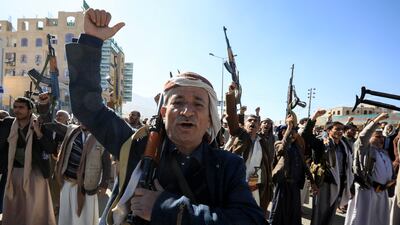
  • Houthi fighters shout gather in Sanaa. The rebels have launched attacks in the Red Sea in response to the Gaza war. EPA
    Houthi fighters shout gather in Sanaa. The rebels have launched attacks in the Red Sea in response to the Gaza war. EPA
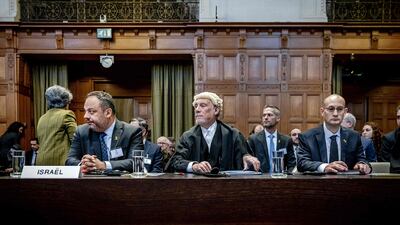
  • From left, Israeli Foreign Ministry adviser Tal Becker, lawyer Malcolm Shaw and Gilad Noam, deputy attorney general for international affairs, at the International Court of Justice in The Hague. AFP
    From left, Israeli Foreign Ministry adviser Tal Becker, lawyer Malcolm Shaw and Gilad Noam, deputy attorney general for international affairs, at the International Court of Justice in The Hague. AFP
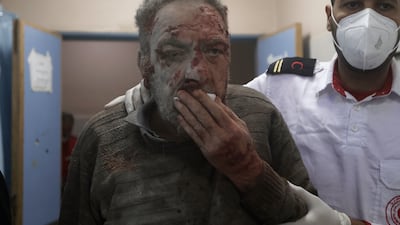
  • A Palestinian man injured in an Israeli strike receives treatment in Khan Younis, southern Gaza. AP
    A Palestinian man injured in an Israeli strike receives treatment in Khan Younis, southern Gaza. AP
  • Palestinian medics mourn after members of the Palestinian Red Crescent were killed in an Israeli strike in Deir Al Balah. Reuters
    Palestinian medics mourn after members of the Palestinian Red Crescent were killed in an Israeli strike in Deir Al Balah. Reuters
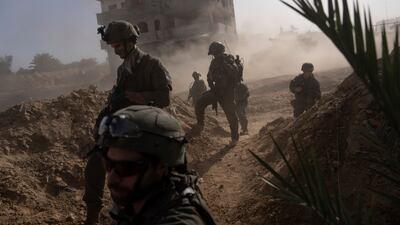
  • Israeli soldiers take up positions during a ground operation in Khan Younis. AP
    Israeli soldiers take up positions during a ground operation in Khan Younis. AP
  • Mourners gather at Al Najar hospital in Rafah, after several relatives of a member of the Hamas general military council were killed in a strike. AFP
    Mourners gather at Al Najar hospital in Rafah, after several relatives of a member of the Hamas general military council were killed in a strike. AFP
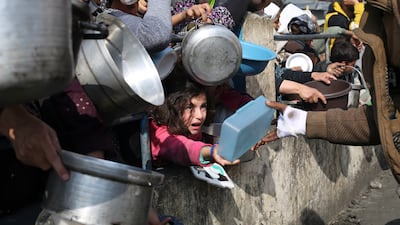
  • Palestinians wait to receive food aid in Rafah. AP
    Palestinians wait to receive food aid in Rafah. AP
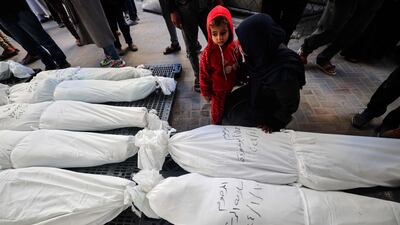
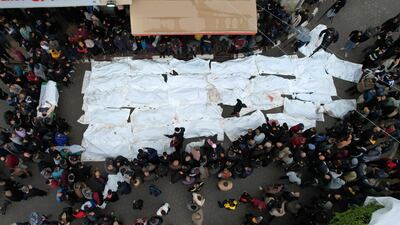
  • A mass grave in Rafah. More than 23,000 people have been killed in Gaza since October 7. AFP
    A mass grave in Rafah. More than 23,000 people have been killed in Gaza since October 7. AFP
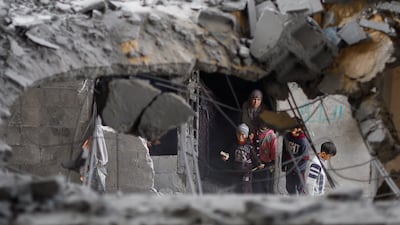
  • Palestinians search the rubble of destroyed buildings after an Israeli attack on Rafah. AFP
    Palestinians search the rubble of destroyed buildings after an Israeli attack on Rafah. AFP
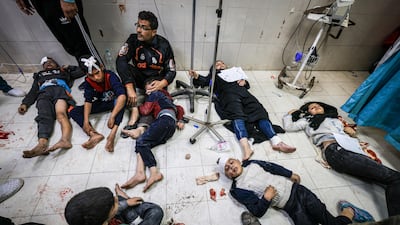
  • Injured Palestinians receive treatment at Nasser hospital in Khan Younis. AFP
    Injured Palestinians receive treatment at Nasser hospital in Khan Younis. AFP
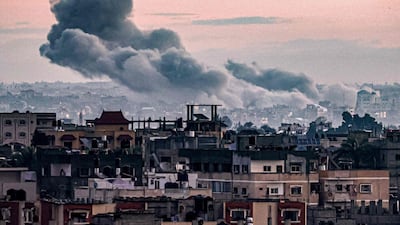
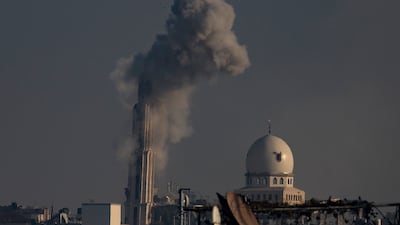
  • Smoke rises over Khan Younis in the southern Gaza Strip, as seen from Rafah, during sustained Israeli air strikes. AFP
    Smoke rises over Khan Younis in the southern Gaza Strip, as seen from Rafah, during sustained Israeli air strikes. AFP
  • The destruction has spread throughout the Gaza Strip, from the north to Rafah in the south. Reuters
    The destruction has spread throughout the Gaza Strip, from the north to Rafah in the south. Reuters
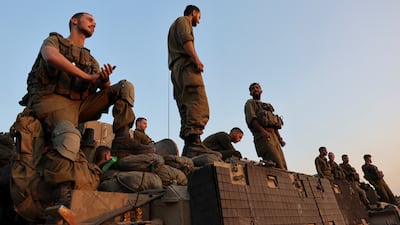
  • Israeli soldiers stand on an armoured personnel carrier near the Israel-Gaza border, in southern Israel. Reuters
    Israeli soldiers stand on an armoured personnel carrier near the Israel-Gaza border, in southern Israel. Reuters
  • Smoke rises following Israeli air strikes in Khan Younis, the southern Gaza Strip. EPA
    Smoke rises following Israeli air strikes in Khan Younis, the southern Gaza Strip. EPA
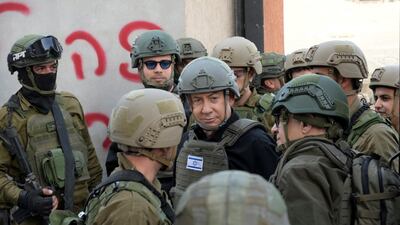
  • Israeli Prime Minister Benjamin Netanyahu receives a security briefing with commanders and soldiers in the northern Gaza Strip. AP
    Israeli Prime Minister Benjamin Netanyahu receives a security briefing with commanders and soldiers in the northern Gaza Strip. AP
  • Palestinians mourn their relatives killed in an Israeli strike on the Al Maghazi refugee camp. AFP
    Palestinians mourn their relatives killed in an Israeli strike on the Al Maghazi refugee camp. AFP
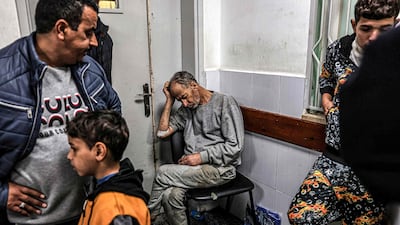
  • A Palestinian man detained by the Israeli military awaits treatment for his injuries in Rafah. AFP
    A Palestinian man detained by the Israeli military awaits treatment for his injuries in Rafah. AFP
Kat Wightman's tips on how to create zones in large spaces


  • Area carpets or rugs are the easiest way to segregate spaces while also unifying them.
  • Lighting can help define areas. Try pendant lighting over dining tables, and side and floor lamps in living areas.
  • Keep the colour palette the same in a room, but combine different tones and textures in different zone. A common accent colour dotted throughout the space brings it together.
  • Don’t be afraid to use furniture to break up the space. For example, if you have a sofa placed in the middle of the room, a console unit behind it will give good punctuation.
  • Use a considered collection of prints and artworks that work together to form a cohesive journey.
Ten tax points to be aware of in 2026

1. Domestic VAT refund amendments: request your refund within five years

If a business does not apply for the refund on time, they lose their credit.

2. E-invoicing in the UAE

Businesses should continue preparing for the implementation of e-invoicing in the UAE, with 2026 a preparation and transition period ahead of phased mandatory adoption. 

3. More tax audits

Tax authorities are increasingly using data already available across multiple filings to identify audit risks. 

4. More beneficial VAT and excise tax penalty regime

Tax disputes are expected to become more frequent and more structured, with clearer administrative objection and appeal processes. The UAE has adopted a new penalty regime for VAT and excise disputes, which now mirrors the penalty regime for corporate tax.

5. Greater emphasis on statutory audit

There is a greater need for the accuracy of financial statements. The International Financial Reporting Standards standards need to be strictly adhered to and, as a result, the quality of the audits will need to increase.

6. Further transfer pricing enforcement

Transfer pricing enforcement, which refers to the practice of establishing prices for internal transactions between related entities, is expected to broaden in scope. The UAE will shortly open the possibility to negotiate advance pricing agreements, or essentially rulings for transfer pricing purposes. 

7. Limited time periods for audits

Recent amendments also introduce a default five-year limitation period for tax audits and assessments, subject to specific statutory exceptions. While the standard audit and assessment period is five years, this may be extended to up to 15 years in cases involving fraud or tax evasion. 

8. Pillar 2 implementation 

Many multinational groups will begin to feel the practical effect of the Domestic Minimum Top-Up Tax (DMTT), the UAE's implementation of the OECD’s global minimum tax under Pillar 2. While the rules apply for financial years starting on or after January 1, 2025, it is 2026 that marks the transition to an operational phase.

9. Reduced compliance obligations for imported goods and services

Businesses that apply the reverse-charge mechanism for VAT purposes in the UAE may benefit from reduced compliance obligations. 

10. Substance and CbC reporting focus

Tax authorities are expected to continue strengthening the enforcement of economic substance and Country-by-Country (CbC) reporting frameworks. In the UAE, these regimes are increasingly being used as risk-assessment tools, providing tax authorities with a comprehensive view of multinational groups’ global footprints and enabling them to assess whether profits are aligned with real economic activity. 

Contributed by Thomas Vanhee and Hend Rashwan, Aurifer

if you go

The flights
Fly direct to Kutaisi with Flydubai from Dh925 return, including taxes. The flight takes 3.5 hours. From there, Svaneti is a four-hour drive. The driving time from Tbilisi is eight hours.
The trip
The cost of the Svaneti trip is US$2,000 (Dh7,345) for 10 days, including food, guiding, accommodation and transfers from and to ­Tbilisi or Kutaisi. This summer the TCT is also offering a 5-day hike in Armenia for $1,200 (Dh4,407) per person. For further information, visit www.transcaucasiantrail.org/en/hike/

AL%20BOOM
%3Cp%20style%3D%22text-align%3Ajustify%3B%22%3E%26nbsp%3B%26nbsp%3B%26nbsp%3BDirector%3AAssad%20Al%20Waslati%26nbsp%3B%3C%2Fp%3E%0A%3Cp%20style%3D%22text-align%3Ajustify%3B%22%3E%0DStarring%3A%20Omar%20Al%20Mulla%2C%20Badr%20Hakami%20and%20Rehab%20Al%20Attar%0D%3Cbr%3E%0D%3Cbr%3EStreaming%20on%3A%20ADtv%0D%3Cbr%3E%0D%3Cbr%3ERating%3A%203.5%2F5%0D%3Cbr%3E%0D%3Cbr%3E%3C%2Fp%3E%0A

Mercer, the investment consulting arm of US services company Marsh & McLennan, expects its wealth division to at least double its assets under management (AUM) in the Middle East as wealth in the region continues to grow despite economic headwinds, a company official said.

Mercer Wealth, which globally has $160 billion in AUM, plans to boost its AUM in the region to $2-$3bn in the next 2-3 years from the present $1bn, said Yasir AbuShaban, a Dubai-based principal with Mercer Wealth.

Within the next two to three years, we are looking at reaching $2 to $3 billion as a conservative estimate and we do see an opportunity to do so,” said Mr AbuShaban.

Mercer does not directly make investments, but allocates clients’ money they have discretion to, to professional asset managers. They also provide advice to clients.

“We have buying power. We can negotiate on their (client’s) behalf with asset managers to provide them lower fees than they otherwise would have to get on their own,” he added.

Mercer Wealth’s clients include sovereign wealth funds, family offices, and insurance companies among others.

From its office in Dubai, Mercer also looks after Africa, India and Turkey, where they also see opportunity for growth.

Wealth creation in Middle East and Africa (MEA) grew 8.5 per cent to $8.1 trillion last year from $7.5tn in 2015, higher than last year’s global average of 6 per cent and the second-highest growth in a region after Asia-Pacific which grew 9.9 per cent, according to consultancy Boston Consulting Group (BCG). In the region, where wealth grew just 1.9 per cent in 2015 compared with 2014, a pickup in oil prices has helped in wealth generation.

BCG is forecasting MEA wealth will rise to $12tn by 2021, growing at an annual average of 8 per cent.

Drivers of wealth generation in the region will be split evenly between new wealth creation and growth of performance of existing assets, according to BCG.

Another general trend in the region is clients’ looking for a comprehensive approach to investing, according to Mr AbuShaban.

“Institutional investors or some of the families are seeing a slowdown in the available capital they have to invest and in that sense they are looking at optimizing the way they manage their portfolios and making sure they are not investing haphazardly and different parts of their investment are working together,” said Mr AbuShaban.

Some clients also have a higher appetite for risk, given the low interest-rate environment that does not provide enough yield for some institutional investors. These clients are keen to invest in illiquid assets, such as private equity and infrastructure.

“What we have seen is a desire for higher returns in what has been a low-return environment specifically in various fixed income or bonds,” he said.

“In this environment, we have seen a de facto increase in the risk that clients are taking in things like illiquid investments, private equity investments, infrastructure and private debt, those kind of investments were higher illiquidity results in incrementally higher returns.”

The Abu Dhabi Investment Authority, one of the largest sovereign wealth funds, said in its 2016 report that has gradually increased its exposure in direct private equity and private credit transactions, mainly in Asian markets and especially in China and India. The authority’s private equity department focused on structured equities owing to “their defensive characteristics.”

Voy!%20Voy!%20Voy!
%3Cp%3E%3Cstrong%3EDirector%3A%3C%2Fstrong%3E%20Omar%20Hilal%3Cbr%3E%3Cstrong%3EStars%3A%3C%2Fstrong%3E%20Muhammad%20Farrag%2C%20Bayoumi%20Fouad%2C%20Nelly%20Karim%3Cbr%3E%3Cstrong%3ERating%3A%3C%2Fstrong%3E%204%2F5%3C%2Fp%3E%0A
Dubai Bling season three

Cast: Loujain Adada, Zeina Khoury, Farhana Bodi, Ebraheem Al Samadi, Mona Kattan, and couples Safa & Fahad Siddiqui and DJ Bliss & Danya Mohammed 

Rating: 1/5

WHAT IS A BLACK HOLE?

1. Black holes are objects whose gravity is so strong not even light can escape their pull

2. They can be created when massive stars collapse under their own weight

3. Large black holes can also be formed when smaller ones collide and merge

4. The biggest black holes lurk at the centre of many galaxies, including our own

5. Astronomers believe that when the universe was very young, black holes affected how galaxies formed

The finalists

Player of the Century, 2001-2020: Cristiano Ronaldo (Juventus), Lionel Messi (Barcelona), Mohamed Salah (Liverpool), Ronaldinho

Coach of the Century, 2001-2020: Pep Guardiola (Manchester City), Jose Mourinho (Tottenham Hotspur), Zinedine Zidane (Real Madrid), Sir Alex Ferguson

Club of the Century, 2001-2020: Al Ahly (Egypt), Bayern Munich (Germany), Barcelona (Spain), Real Madrid (Spain)

Player of the Year: Cristiano Ronaldo, Lionel Messi, Robert Lewandowski (Bayern Munich)

Club of the Year: Bayern Munich, Liverpool, Real Madrid

Coach of the Year: Gian Piero Gasperini (Atalanta), Hans-Dieter Flick (Bayern Munich), Jurgen Klopp (Liverpool)

Agent of the Century, 2001-2020: Giovanni Branchini, Jorge Mendes, Mino Raiola

Updated: January 02, 2024, 1:32 PM