• Israeli Prime Minister Benjamin Netanyahu and his wife Sara cast their ballots at a polling station in Jerusalem. EPA
    Israeli Prime Minister Benjamin Netanyahu and his wife Sara cast their ballots at a polling station in Jerusalem. EPA
  • Chairman of Israel's New Hope party Gideon Saar and his wife Geula vote with their children at a polling station in the coastal city of Tel Avivi. EPA
    Chairman of Israel's New Hope party Gideon Saar and his wife Geula vote with their children at a polling station in the coastal city of Tel Avivi. EPA
  • Officials instruct a man as he votes from a car at a special mobile polling station for Israelis in quarantine or infected with Covid-19. Israelis were voting on Tuesday, March 23 in the country's fourth general election in less than two years. Reuters
    Officials instruct a man as he votes from a car at a special mobile polling station for Israelis in quarantine or infected with Covid-19. Israelis were voting on Tuesday, March 23 in the country's fourth general election in less than two years. Reuters
  • Covid-19 patient Rahamim Havura votes in Israel's parliamentary election inside an intensive care ward for coronavirus patients at Ichilov Hospital in Tel Aviv. AP
    Covid-19 patient Rahamim Havura votes in Israel's parliamentary election inside an intensive care ward for coronavirus patients at Ichilov Hospital in Tel Aviv. AP
  • Israeli centrist former television anchor Yair Lapid, the prime minister's main challenger, and his wife Lihi cast their votes at a polling station in Tel Aviv. AFP
    Israeli centrist former television anchor Yair Lapid, the prime minister's main challenger, and his wife Lihi cast their votes at a polling station in Tel Aviv. AFP
  • Naftali Bennett, leader of the right wing 'New Right' Yamina party, waves as he walks with his wife Gilat at a polling station where they voted in the city of Raanana. AFP
    Naftali Bennett, leader of the right wing 'New Right' Yamina party, waves as he walks with his wife Gilat at a polling station where they voted in the city of Raanana. AFP
  • Ayman Odeh, leader of Israel's predominantly Arab Joint List and the Hadash party, casts his ballot in Haifa. AFP
    Ayman Odeh, leader of Israel's predominantly Arab Joint List and the Hadash party, casts his ballot in Haifa. AFP
  • An Israeli Arab woman casts her ballot in the Bedouin town of Rahat. AFP
    An Israeli Arab woman casts her ballot in the Bedouin town of Rahat. AFP
  • A man prepares to cast his ballot at a special mobile polling station near a beach in Ashdod. Reuters
    A man prepares to cast his ballot at a special mobile polling station near a beach in Ashdod. Reuters
  • A voter wearing casts his ballot inside a special temporary polling station tent, set up for people quarantined for potential exposure to coronavirus, in Tel Aviv. Bloomberg
    A voter wearing casts his ballot inside a special temporary polling station tent, set up for people quarantined for potential exposure to coronavirus, in Tel Aviv. Bloomberg
  • An ultra-Orthodox Jewish man arrives to vote in Israel's parliamentary election, at a polling station in Bnei Brak. AP
    An ultra-Orthodox Jewish man arrives to vote in Israel's parliamentary election, at a polling station in Bnei Brak. AP
  • A mobile voting booth is seen at a special polling station for Israelis in quarantine or infected with the coronavirus disease. Reuters
    A mobile voting booth is seen at a special polling station for Israelis in quarantine or infected with the coronavirus disease. Reuters
  • A man votes with his children in Tel Aviv on the fourth national election in two years. AFP
    A man votes with his children in Tel Aviv on the fourth national election in two years. AFP
  • Sara Netanyahu, wife of Israeli Prime Minister Benjamin Netanyahu, prays at the Western Wall, ahead of national elections in the Old City of Jerusalem. AP
    Sara Netanyahu, wife of Israeli Prime Minister Benjamin Netanyahu, prays at the Western Wall, ahead of national elections in the Old City of Jerusalem. AP
  • A boy looks up at a Blue and White party election campaign banner depicting its leader, Israeli Defence Minister Benny Gantz, alongside Israeli Prime Minister Benjamin Netanyahu, in Bnei Brak. Reuters
    A boy looks up at a Blue and White party election campaign banner depicting its leader, Israeli Defence Minister Benny Gantz, alongside Israeli Prime Minister Benjamin Netanyahu, in Bnei Brak. Reuters
  • Israeli Prime Minister Benjamin Netanyahu greets supporters as he tours the Mahane Yehuda market in Jerusalem. AFP
    Israeli Prime Minister Benjamin Netanyahu greets supporters as he tours the Mahane Yehuda market in Jerusalem. AFP
  • Israeli Prime Minister Benjamin Netanyahu eats dessert from a stall as he tours the Mahane Yehuda market in Jerusalem. AFP
    Israeli Prime Minister Benjamin Netanyahu eats dessert from a stall as he tours the Mahane Yehuda market in Jerusalem. AFP
  • Gideon Saar, head of Israel's New Hope party, works at the party's headquarters in the Israeli coastal city of Tel Aviv. AFP
    Gideon Saar, head of Israel's New Hope party, works at the party's headquarters in the Israeli coastal city of Tel Aviv. AFP

Israel election 2021: Netanyahu woos Arab-Israeli vote amid Joint List split


Rosie Scammell
  • English
  • Arabic

“We are all with you,” reads an Arabic billboard bearing Israeli Prime Minister Benjamin Netanyahu’s picture, outside the city of Umm Al Fahm, signalling the intense campaign for votes following a split among Arab parties ahead of Tuesday’s election.

The right-wing premier's unusual push for Arab supporters seeks to profit from divisions among the Joint List, which has been weakened in the polls after the Ra'am party broke away from the Arab-led alliance.

“Our campaign is really challenging, to convince people about the importance of supporting us and of voting,” said Yousef Jabareen, a Joint List legislator.

After soaring to win 15 seats in the election last March, the Joint List is slated to pick up just eight places in the 120-seat parliament on Tuesday. It is Israel's fourth election in two years.

The decline follows the decision by Mansour Abbas, leader of the Islamist party Ra’am, to run alone after suggesting he would be open to co-operating with Mr Netanyahu. The move proved deeply controversial for the Joint List, which vows it can best serve its constituents by being active in parliament from the opposition.

But some Arab voters, who make up 20 per cent of the population, believe ties to the government will provide funds to tackle poverty and a rise in violent crime within their community.

“They want to see something really changing their lives for the better, and they say maybe his (Mr Abbas’) way will make the difference, so more and more people are going to vote for him,” said lawyer Tawfiq Jabareen, an Umm Al Fahm resident who is not closely related to the politician of the same name.

Israel’s third-largest Arab city, Umm Al Fahm has been the site of weekly protests against gun violence and the perceived inaction of authorities. So far this year 22 Arab-Israelis have been shot dead, according to the Abraham Initiatives organisation which promotes equality.

Samah Salaime, a Palestinian feminist activist in Israel, said the Arab community is grappling with how to “survive this wave of crime”.

With community concerns focusing on violence, poverty and housing, she said the rights of Palestinians in the West Bank and Gaza are not being discussed in this electoral campaign.

“All the priorities now that force themselves onto the agenda - we are in survival mode - we are talking about the basics,” said Mrs Salaime, who heads the communications and development office of Wahat El Salam/Neve Shalom, a co-operative village founded by Arab and Jewish Israelis.

While voters like Mr Jabareen remain committed to the Joint List, the lawyer said some of his siblings are backing Ra’am and he hopes the party will win parliamentary seats.

“I want him to succeed,” he said of Mr Abbas. “I also want to see this experience, what he will do. Maybe he will change our lives, I don’t know.”

Ra’am is forecast to pass the electoral threshold and pick up four seats, according to final television polls published Friday, which could prove decisive in determining the next government.

While Mr Netanyahu's Likud is set to emerge as the largest party, polling at 30 to 32 seats, he needs the support of smaller parties to form a governing majority of 61 seats.

It's time for the Israeli audience to see that the Palestinians inside Israel have differences. They are not the same.

It is doubtful that Ra’am would be welcomed into a Likud-led government, given no Arab party has joined a coalition before and Mr Netanyahu relies on right-wing and ultra-Orthodox alliances which are unlikely to govern alongside Mr Abbas.

The Ra’am leader could, however, prop up a minority government led by the incumbent, or alternatively support a coalition seeking to oust Mr Netanyahu.

One path to victory for Israel’s longest-serving leader would be for Likud to snatch seats away from Arab-led parties, hence the premier’s unprecedented campaign among the Arab community.

The overture could lead to Likud gaining two more seats, according to the Abraham Initiatives, though Joint List politician Mr Jabareen remained hopeful his constituents would not be drawn in by Mr Netanyahu.

“His appeal in this way is kind of like an insult to the Arab community and to the Arab voters, because we know that he’s personally been in power for 12 years,” he said. “So he cannot come today as if he’s a new candidate and ask for our votes.”

While the Joint List is expected to emerge from the election as a weakened alliance, Mrs Salaime noted its internal split has exposed the diversity among the Arab community to the broader public.

“It’s time for the Israeli audience to see that the Palestinians inside Israel have differences,” she said. “They are not the same.”

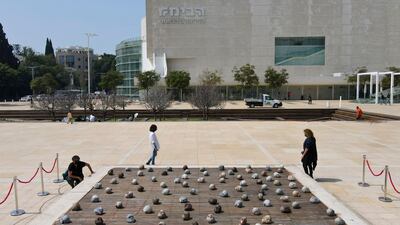
Art installation encourages Israelis to vote

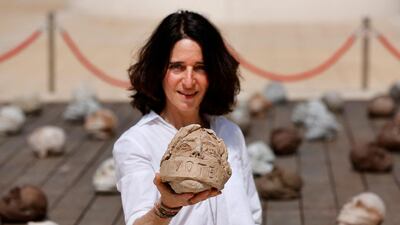
  • Artist Sophie Halbreich unveiled the installation 'Speak Out!' at Habima Square in the Israeli coastal city of Tel Aviv. AFP
    Artist Sophie Halbreich unveiled the installation 'Speak Out!' at Habima Square in the Israeli coastal city of Tel Aviv. AFP
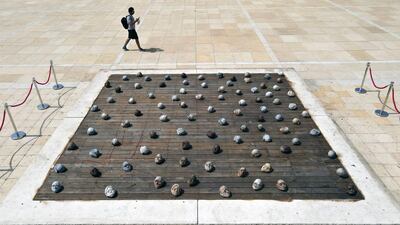
  • 'Speak Out!' consists of 90 sculpted heads and is designed to encourage people to vote. AFP
    'Speak Out!' consists of 90 sculpted heads and is designed to encourage people to vote. AFP
  • Artist Sophie Halbreich posing next to her installation. AFP
    Artist Sophie Halbreich posing next to her installation. AFP
  • Israelis are voting in their fourth election in two years, with polls showing no clear end to the political chaos as Prime Minister Benjamin Netanyahu seeks to hold on to power. AFP
    Israelis are voting in their fourth election in two years, with polls showing no clear end to the political chaos as Prime Minister Benjamin Netanyahu seeks to hold on to power. AFP
  • A person walks past the installation 'Speak Out!' AFP
    A person walks past the installation 'Speak Out!' AFP
MATCH INFO

Champions League quarter-final, first leg

Tottenham Hotspur v Manchester City, Tuesday, 11pm (UAE)

Matches can be watched on BeIN Sports

The five pillars of Islam

1. Fasting

2. Prayer

3. Hajj

4. Shahada

5. Zakat 

PREMIER LEAGUE FIXTURES

All kick-off times UAE ( 4 GMT)

Saturday
Liverpool v Manchester United - 3.30pm
Burnley v West Ham United - 6pm
Crystal Palace v Chelsea - 6pm
Manchester City v Stoke City - 6pm
Swansea City v Huddersfield Town - 6pm
Tottenham Hotspur v Bournemouth - 6pm
Watford v Arsenal - 8.30pm

Sunday
Brighton and Hove Albion v Everton - 4.30pm
Southampton v Newcastle United - 7pm

Monday
Leicester City v West Bromwich Albion - 11pm

The biog

Most memorable achievement: Leading my first city-wide charity campaign in Toronto holds a special place in my heart. It was for Amnesty International’s Stop Violence Against Women program and showed me the power of how communities can come together in the smallest ways to have such wide impact.

Favourite film: Childhood favourite would be Disney’s Jungle Book and classic favourite Gone With The Wind.

Favourite book: To Kill A Mockingbird for a timeless story on justice and courage and Harry Potters for my love of all things magical.

Favourite quote: “We make a living by what we get, but we make a life by what we give.” — Winston Churchill

Favourite food: Dim sum

Favourite place to travel to: Anywhere with natural beauty, wildlife and awe-inspiring sunsets.

THE SPECS

Engine: 6.0-litre, twin-turbocharged W12

Transmission: eight-speed automatic

Power: 626bhp

Torque: 900Nm

Price: Dh1,050,000

On sale: now

Director: Laxman Utekar

Cast: Vicky Kaushal, Akshaye Khanna, Diana Penty, Vineet Kumar Singh, Rashmika Mandanna

Rating: 1/5

ETFs explained

Exhchange traded funds are bought and sold like shares, but operate as index-tracking funds, passively following their chosen indices, such as the S&P 500, FTSE 100 and the FTSE All World, plus a vast range of smaller exchanges and commodities, such as gold, silver, copper sugar, coffee and oil.

ETFs have zero upfront fees and annual charges as low as 0.07 per cent a year, which means you get to keep more of your returns, as actively managed funds can charge as much as 1.5 per cent a year.

There are thousands to choose from, with the five biggest providers BlackRock’s iShares range, Vanguard, State Street Global Advisors SPDR ETFs, Deutsche Bank AWM X-trackers and Invesco PowerShares.

The story in numbers

18

This is how many recognised sects Lebanon is home to, along with about four million citizens

450,000

More than this many Palestinian refugees are registered with UNRWA in Lebanon, with about 45 per cent of them living in the country’s 12 refugee camps

1.5 million

There are just under 1 million Syrian refugees registered with the UN, although the government puts the figure upwards of 1.5m

73

The percentage of stateless people in Lebanon, who are not of Palestinian origin, born to a Lebanese mother, according to a 2012-2013 study by human rights organisation Frontiers Ruwad Association

18,000

The number of marriages recorded between Lebanese women and foreigners between the years 1995 and 2008, according to a 2009 study backed by the UN Development Programme

77,400

The number of people believed to be affected by the current nationality law, according to the 2009 UN study

4,926

This is how many Lebanese-Palestinian households there were in Lebanon in 2016, according to a census by the Lebanese-Palestinian dialogue committee

The%20Genius%20of%20Their%20Age
%3Cp%3EAuthor%3A%20S%20Frederick%20Starr%3Cbr%3EPublisher%3A%20Oxford%20University%20Press%3Cbr%3EPages%3A%20290%3Cbr%3EAvailable%3A%20January%2024%3C%2Fp%3E%0A