Israel allowed exports from Gaza to leave the Palestinian enclave on Monday, for the first time since war broke out between the two sides last month.
Lorries loaded with clothes drove through the Kerem Shalom crossing in southern Gaza, Rami Abu Alreesh, general manager of trade at the territory's Finance Ministry, told The National.
Cogat, a wing of the Israeli military, said on Sunday it would permit the export of agricultural produce. No other items were mentioned.
The export of products abroad and to the Israeli-occupied West Bank depend on “the preservation of security stability”, Cogat said in a statement.
Ahmad Al Nawajha, an official at Gaza’s Agriculture Ministry, said fish and vegetables would be transported out of the enclave on Tuesday.
"Today, farmers are preparing the vegetables and after they are examined by us, they will load them on to trucks to export tomorrow," he told The National.
Mr Al Nawajha said the ban on food exports has caused prices to plummet, leaving farmers unable to cover the costs of irrigating their land or paying workers.
Goods have been banned from passing into Israel since a war broke out on May 10 between the country and Hamas, the militant group that rules Gaza.
At least 260 Gazans were killed in the fighting, the UN said, and 10 civilians in Israel were killed by rocket fire from the territory, medics said.
A fragile ceasefire has been in place since May 21 and some other restrictions imposed by Israel have been partially lifted, including the resumption of fishing up to six miles off the Gazan coast.
Mahmoud Abu Taiem, 55, a farmer in the southern Khan Younis area of Gaza, said he lost his entire crop when he was unable to access his land during the war.
“I used to export around 20 tonnes to 30 tonnes of all kinds of vegetables daily,” he said.
He estimated he had accrued losses of more than $180,000 since the conflict broke out.
"There is no compensation," he told The National.
-
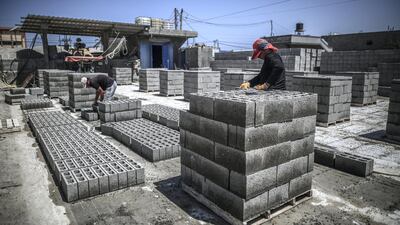
Workers produce construction bricks from the recycled rubble of buildings destroyed during the May rocket attacks. Sanad Latefa for The National -
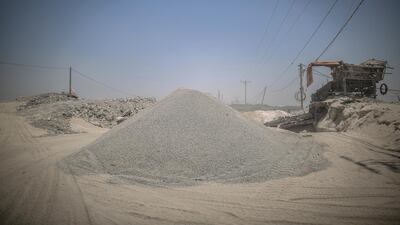
Crushed rock from the recycled rubble of buildings destroyed during the May rocket attacks. Sanad Latefa for The National -

Workers with the rubble of buildings destroyed during the May rocket attacks. Sanad Latefa for The National -
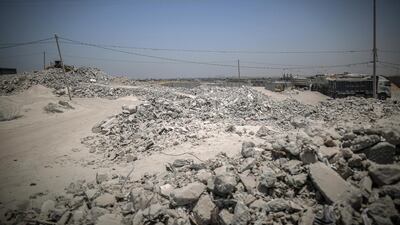
Rocks from the recycled rubble of buildings destroyed during the May rocket attacks. Sanad Latefa for The National -

Breaking down the rubble of buildings destroyed during the May air strikes. Sanad Latefa for The National -
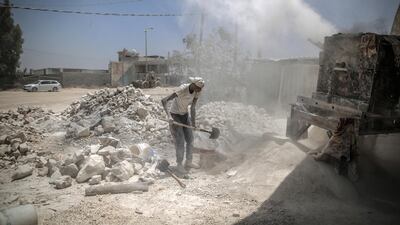
Workers with the rubble of buildings destroyed during the May rocket attacks. Sanad Latefa for The National -

Delivering the rubble of buildings destroyed during the May rocket attacks. Sanad Latefa for The National -
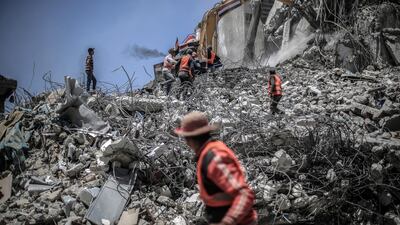
Workers collect the rubble of buildings destroyed during the May rocket attacks. Sanad Latefa for The National


Ahmad Al Asttal, another farmer in Khan Younis, said his family lost more than $150,000 in earnings over the same period.
“I used to export around 30 tonnes of each type of vegetable” per day, he said. With so much of their crop gone to waste in recent weeks, he said, his family will export only three tonnes on Tuesday.
“I need to continue despite the loss; we have to live and not give up,” said Mr Al Asttal, 27.
Gisha, an Israeli NGO that campaigns for Palestinians’ freedom of movement, said the crossing was expected to open for two days only, so agricultural products could be sent to the West Bank.
Miriam Marmur, a Gisha spokeswoman, said post was also due to reach Gaza for the first time since early May.
“Obviously, this has also impacted people who have waited for their passports,” she said.
This included passports from foreign embassies and those being processed by Palestinian officials in the West Bank city of Ramallah, she said.
While exports have resumed after more than a month, imports to Gaza through Israel remain severely restricted. Only vital supplies such as medicine, food, fuel and animal fodder are currently allowed, said Ocha, the UN humanitarian agency.
Since the ceasefire entered into force on May 21, the Israeli military has twice launched air strikes on Gaza. There were no reported injuries from the strikes, which were made after Palestinians launched incendiary balloons from the enclave.
The balloons, which started fires on land across the border, were a response to a nationalist Israeli march to celebrate the conquest of East Jerusalem in 1967.

