


Pope Francis's message of tolerance and coexistence in Iraq is welcome but justice and accountability is needed in order to safeguard religious freedom in Iraq, said a coalition of rights groups led by Nobel Peace Prize laureate Nadia Murad.
Ms Murad, an Iraqi Yazidi survivor of ISIS, signed the open letter alongside 34 NGOs that raise awareness of crimes against humanity and victims of sexual violence during wartime. In this context, the coalition of NGOs welcomed Pope Francis’s visit to Iraq.
"We welcome the efforts already taken to safeguard religious freedom in Iraq, such as the Interfaith Statement on the Victims of ISIS endorsed by religious leaders from the Christian, Sunni, Shia, and Yazidi communities" the letter said.
“However, without justice and accountability for past atrocities, religious communities will continue to face persecution and the threat of repeated violence.”
The letter calls for greater efforts by the government to educate Iraqis about different minorities in the country, hoping that the semi-autonomous Kurdish Regional Government and the federal government in Baghdad can co-ordinate more effectively to protect minorities.
"The Christian population has been reduced to a mere 300,000 today," it said.
“Other minority communities such as Yazidis, Sabean-Mandaeans, Turkmen, Kakais, and Shabaks have faced existential threats in recent years.”
-

Pope Francis gestures as he boards a plane to depart for Rome, at Baghdad International Airport in Baghdad. Reuters -
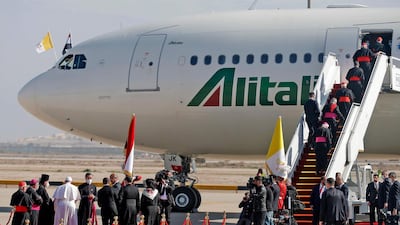
Cardinals and ranking Catholic clergymen board the Alitalia Airbus A330 aircraft as Pope Francis bids farewell to other bishops and Iraq's President Barham Saleh and his wife Sarbagh before departing from the Iraqi capital's Baghdad International. AFP -
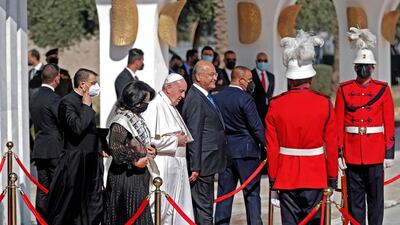
Iraq's President Barham Saleh and his wife Sarbagh escort Pope Francis during the farewell ceremony for the pontiff at the Iraqi capital's Baghdad International Airport. AFP -
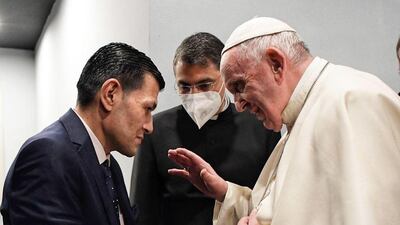
Pope Francis meets Abdullah Kurdi, father of little Alan, who was shipwrecked with his brother and mother on the Turkish coast in September 2015 while he was trying to reach Europe with his family, at the end of a Mass in the Erbil Stadium. EPA -
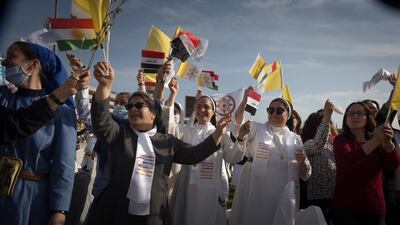
Nuns cheer and dance at the Franso Hariri Stadium in Erbil, Iraq. Getty Images -
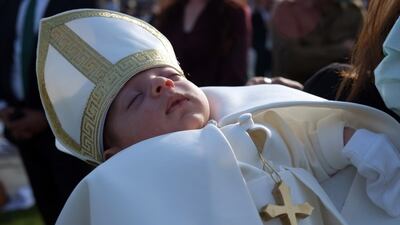
A baby dressed in papal outfit during a mass with Pope Francis at the Erbil Stadium. EPA -
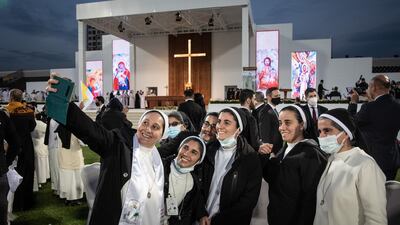
Nuns take a selfie after the completion of a mass conducted by Pope Francis. Getty Images -
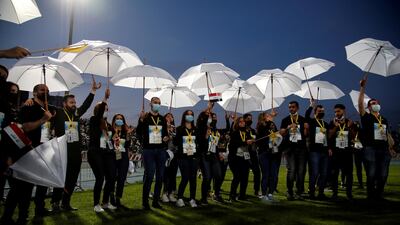
People carry umbrellas as they celebrate after a mass led by Pope Francis at the Franso Hariri Stadium in Erbil, Iraq. Reuters -

Pope Francis conducts mass at the Franso Hariri Stadium. Getty Images -
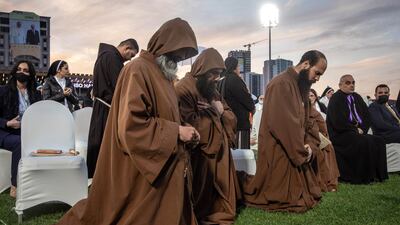
Monks pray during a mass conducted by Pope Francis at the Franso Hariri Stadium. Getty Images -
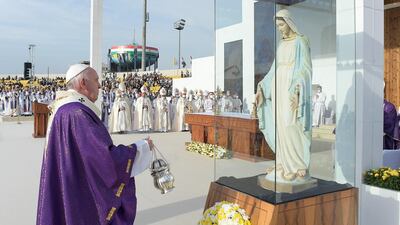
Pope Francis blesses a statue of the Virgin Mary at a mass at the Franso Hariri Stadium. EPA -
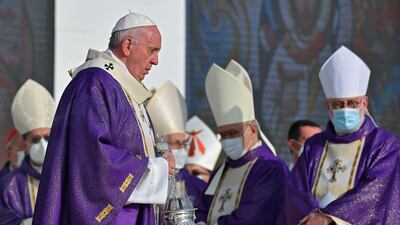
Pope Francis walks with an incense censer as he leads mass at the Franso Hariri Stadium. AFP -
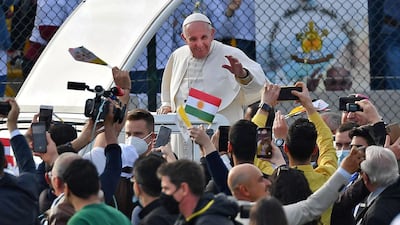
Pope Francis blesses people as he arrives in the popemobile vehicle at the Franso Hariri Stadium in Erbil. AFP -
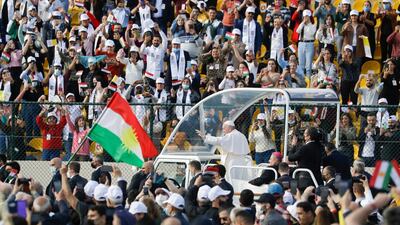
Pope Francis arrives on the popemobile to celebrate Mass at the Franso Hariri Stadium in Erbil. AP Photo -

Nuns wave flags of Iraq, Kurdistan, and the Holy See as they wait for the arrival of Pope Francis at the Franso Hariri Stadium in Erbil. AFP -
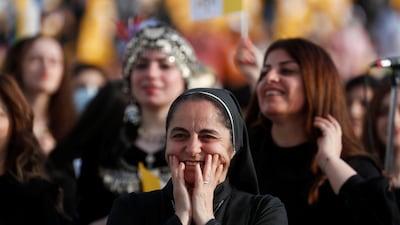
A faithful waits for Pope Francis to hold Mass at Franso Hariri Stadium in Erbil. Reuters -

Pope Francis blessing people as he arrives in the popemobile vehicle at the Franso Hariri Stadium. AFP -
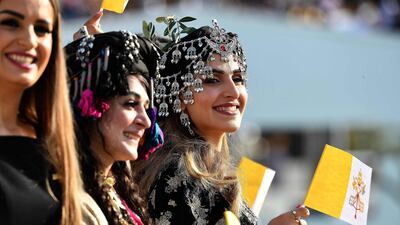
Young women dressed in traditional Kurdish clothing wave flags of the Holy See as they wait for the arrival of Pope Francis at the Franso Hariri Stadium in Erbil. AFP -
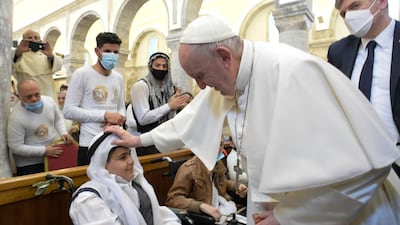
Pope Francis arrives to hold a mass at the Grand Immaculate Church, in Qaraqosh. Reuters -
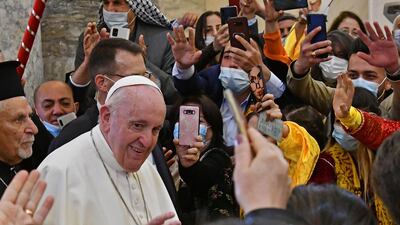
Pope Francis is greeted by people as he arrives at the Syriac Catholic Church of the Immaculate Conception (al-Tahira-l-Kubra), in the predominantly Christian town of Qaraqosh. AFP -
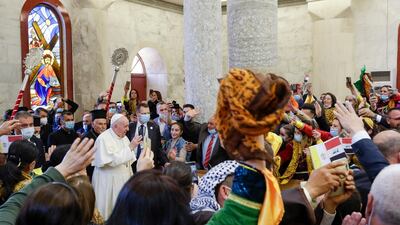
Pope Francis arrives at a meeting with local residents at the Church of the Immaculate Conception in Qaraqosh. AP Photo -
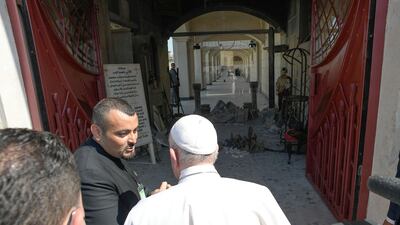
Pope Francis visits the town before holding a mass at the Grand Immaculate Church, in Qaraqosh. Reuters -
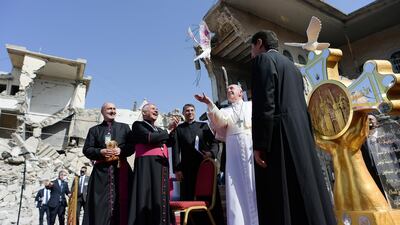
Pope Francis releases a white dove during a prayer for war victims at 'Hosh al-Bieaa', Church Square, in Mosul's Old City. Reuters -
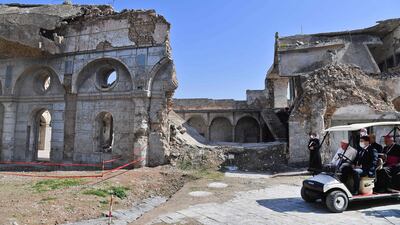
Pope Francis rides in a golf cart at the ruins of the Syriac Catholic Church of the Immaculate Conception. AFP -
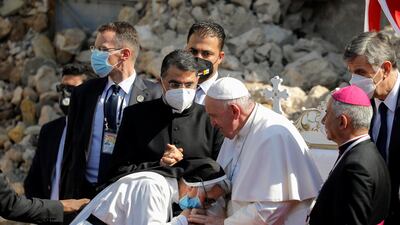
A nun kisses the hand of Pope Francis during a prayer for war victims at 'Hosh al-Bieaa', Church Square, in Mosul's Old City. Reuters -
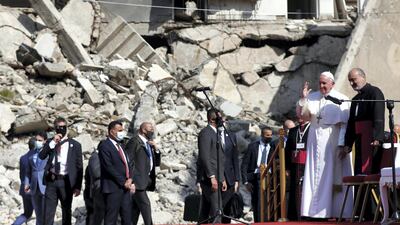
Pope Francis arrives to pray for war victims at 'Hosh al-Bieaa', Church Square, in Mosul's old city. Reuters -
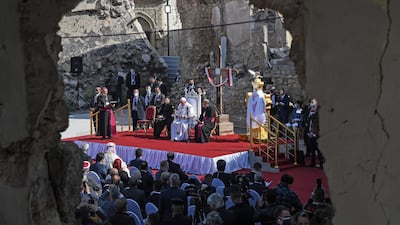
Pope Francis attends a prayer for the victims of the war at Church Square, Mosul. EPA -
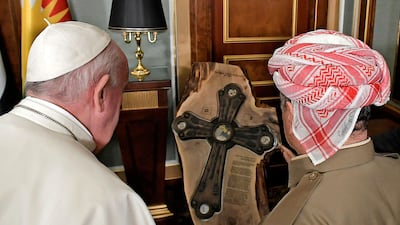
Pope Francis and the leader of the Kurdistan Democratic Party (KDP) Masud Barzani viewing a gift sculpture of a Chaldean cross during their meeting in Arbil, the capital of Iraq's northern autonomous Kurdish region. AFP -
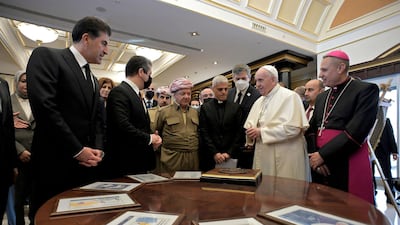
Pope Francis meeting with the President of the autonomous Kurdistan Region Nechirvan Barzani, the Prime Minister of the 9th cabinet of the Kurdistan Regional Government Mansour Barzani, and the leader of the Kurdistan Democratic Party (KDP) Masud Barzani in Arbil. AFP -

Pope Francis greets Iraqis dressed in traditional outfits upon his arrival at Erbil airport, in the capital of the northern Iraqi Kurdish autonomous region. AFP -
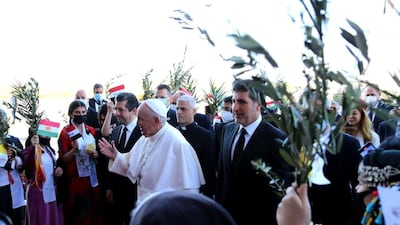
Pope Francis walks with Masrour Barzani, Prime Minister of Kurdistan region, and President of the Kurdistan region in Iraq Nechirvan Barzani, upon his arrival at Erbil International Airport. Reuters -
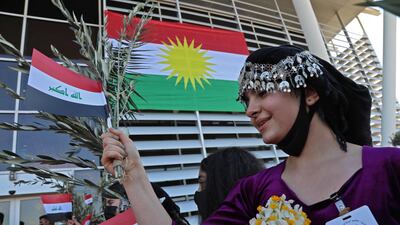
Iraqi women dressed in traditional outfits hold palm leafs as they welcome Pope Francis upon his arrival at Erbil airport. AFP -
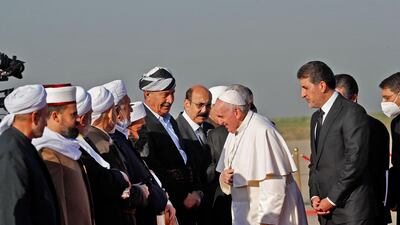
Mansour Barzani, Prime Minister of the 9th cabinet of the Kurdistan Regional Government looks on , as Pope Francis greets religious dignitaries at the Erbil airport. AFP -
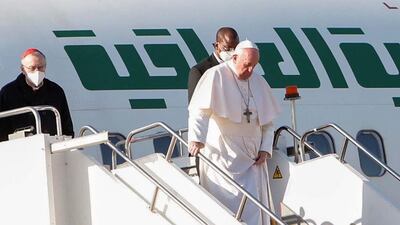
Pope Francis arrives at Erbil International Airport in Iraq. Reuters -
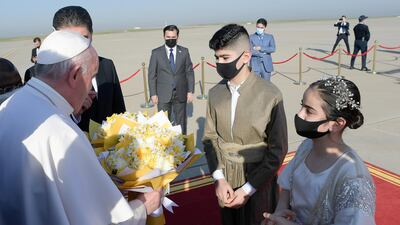
Pope Francis is welcomed at Erbil International Airport in Erbil. Reuters -
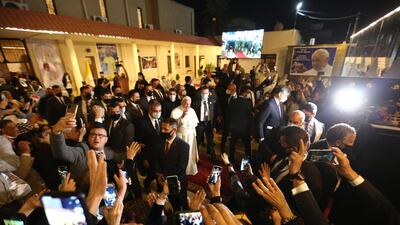
Pope Francis greets people as he leave the Chaldean Cathedral of Saint Joseph. Getty Images -
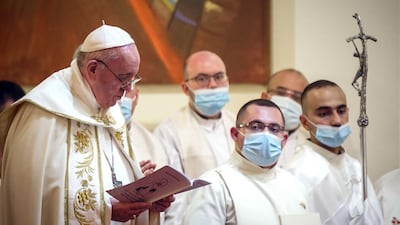
Pope Francis leads mass at Baghdad's Saint Joseph Cathedral. AFP -
Iraqi Christian worshippers attend the mass led by the Pope at Baghdad's Saint Joseph Cathedral. AFP -
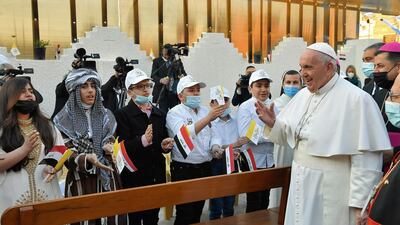
Pope Francis greeted by children upon his arrival for a mass at Baghdad's Saint Joseph Cathedral. AFP -
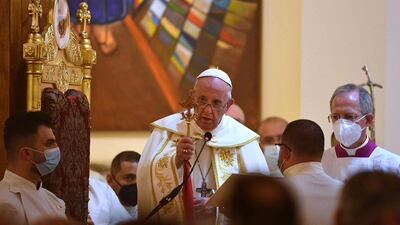
Pope Francis blesses the congregation as he leads mass at Baghdad's Saint Joseph Cathedral. AFP -
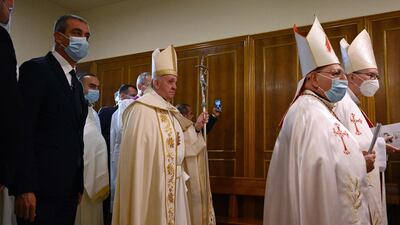
Pope Francis arrives to lead mass at Baghdad's Saint Joseph Cathedral. AFP -
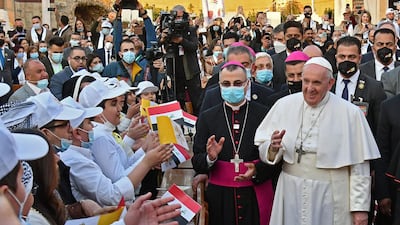
Pope Francis is greeted by children upon his arrival at Baghdad's Saint Joseph Cathedral. AFP -
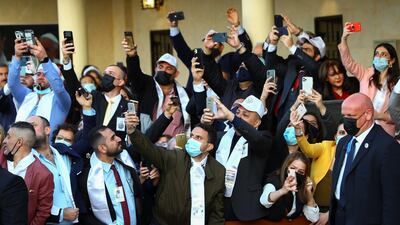
People take pictures with their mobiles upon the arrival of Pope Francis. Reuters -
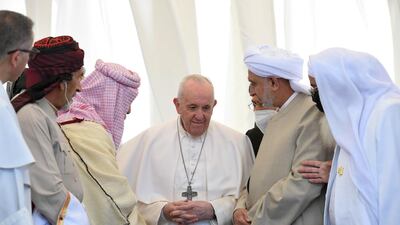
Pope Francis speaks to Iraqi religious figures during an interfaith service at the House of Abraham in the ancient city of Ur in Iraq's southern Dhi Qar province. EPA -

Pope Francis speaks to Iraqi religious figures during an interfaith service at the House of Abraham in the ancient city of Ur. EPA -
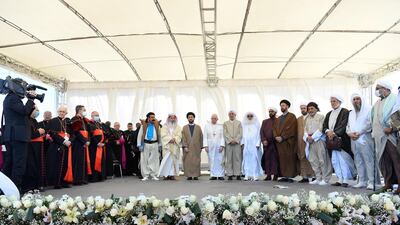
Pope Francis speaks to Iraqi religious figures during an interfaith service at the House of Abraham in the ancient city of Ur. EPA -
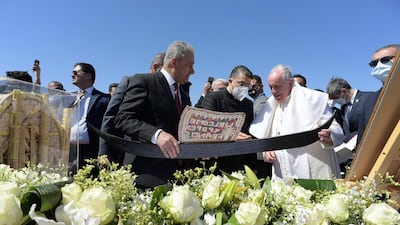
Pope Francis is seen behind flowers at an interfaith service at the House of Abraham in the ancient city of Ur. EPA -
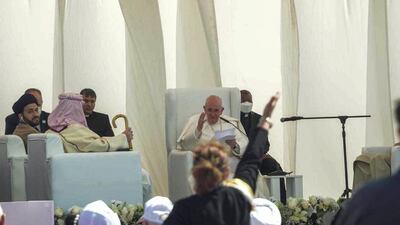
Pope Francis smiles and waves at a women that threw a kiss to him. Haider Husseini/ The National -
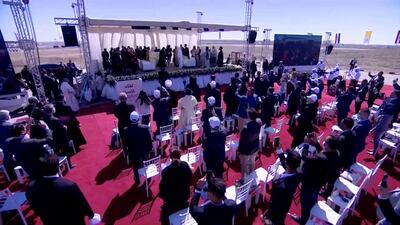
People attend an inter-religious ceremony in Ur near Nassiriya. Reuters -
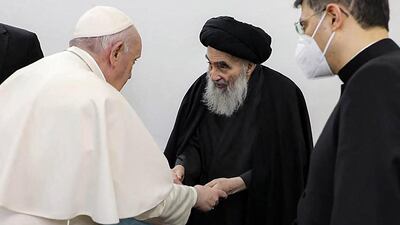
Grand Ayatollah Ali al-Sistani meeting with Pope Francis and his delegation, at his home in the holy city of Najaf. AFP -
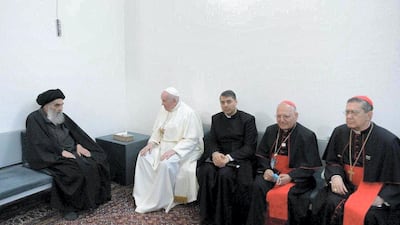
Pope Francis, accompanied by clerics, and Iraq's top Shiite cleric, Grand Ayatollah Ali Al Sistani, meet in Najaf. Courtesy of the Vatican -
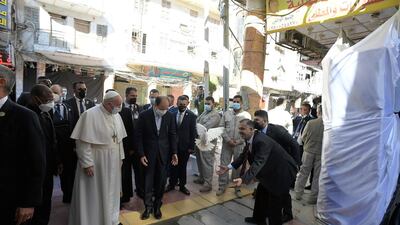
Pope Francis's meeting with Iraq's top Shiite cleric, Grand Ayatollah Ali Al Sistani, in Najaf, followed months of negotiations between Najaf and the Vatican. Reuters -

Pope Francis smiles with Iraq's prime minister Mustafa Al Kadhimi on arrival at Baghdad airport. Handout from the office of the Prime Minister of Iraq -
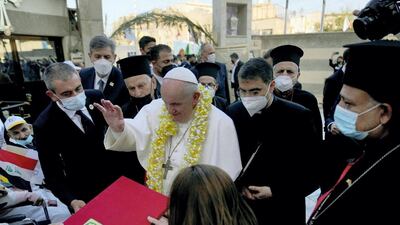
The Pope visits Our Lady of Salvation Church. Courtesy of the Prime Minister office -
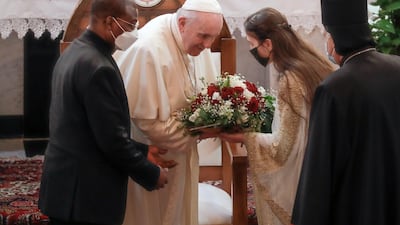
Pope Francis is welcomed upon his arrival at the Our Lady of Salvation Church. AP Photo -
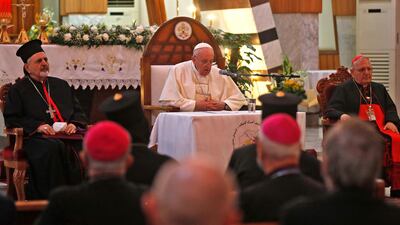
Pope Francis speaks in the Our Lady of Salvation Church. AFP -
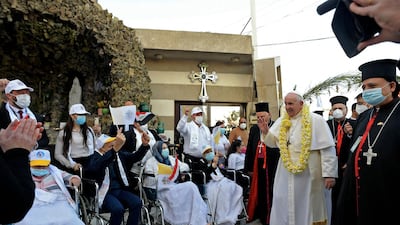
Pope Francis greets people in front of the the Our Lady of Salvation Church. AFP -
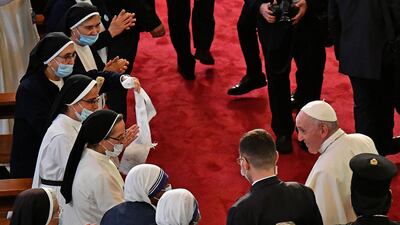
Nuns welcome Pope Francis at the Our Lady of Salvation Church. AFP -
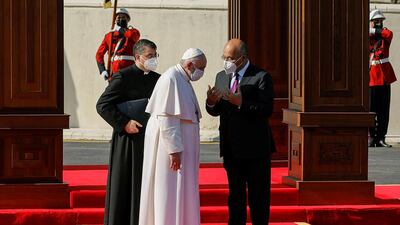
Iraq's President Barham Salih speaks with Pope Francis during a welcoming ceremony at the Presidental Palace in Baghdad. Reuters -
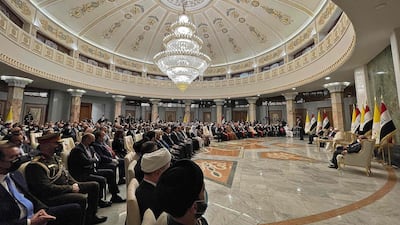
Iraqi President Barham Salih welcomes Pope Francis at the Presidential Palace. AFP -
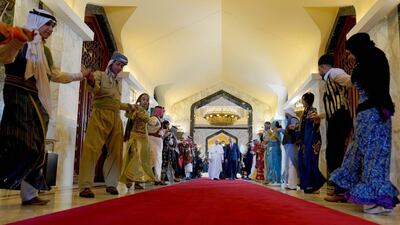
Pope Francis walk with Iraq's prime minister Mustafa Al Kadhimi on arrival at Baghdad airport. Handout from the office of the Prime Minister of Iraq -
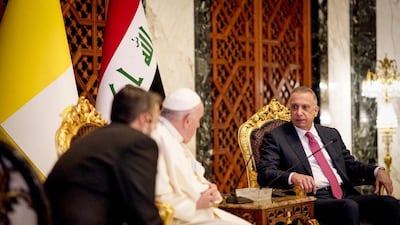
Pope Francis talks with Iraq's prime minister Mustafa Al Kadhimi on arrival in Baghdad. Handout from the office of the Prime Minister of Iraq -
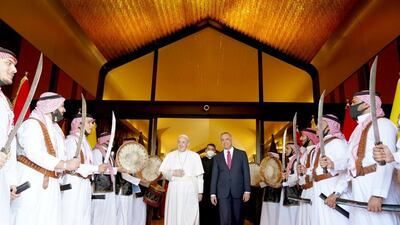
Pope Francis walks with Iraq's prime minister Mustafa Al Kadhimi on arrival at Baghdad airport. Handout from the office of the Prime Minister of Iraq -
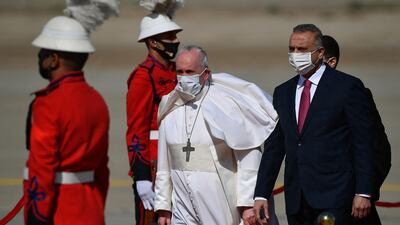
Pope Francis walks alongside Iraq's Prime Minister Mustafa Al Kadhimi upon his arrival in Baghdad. AFP -
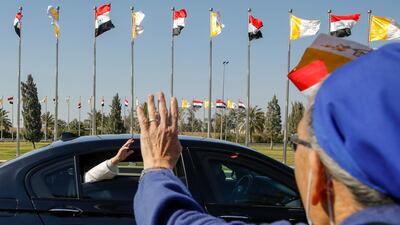
Pope Francis waves to the crowd upon his arrival in Baghdad. Reuters -
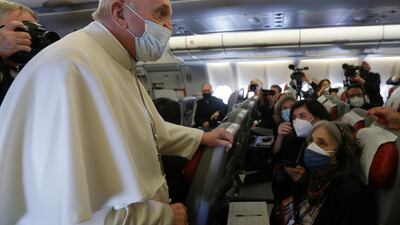
Pope Francis speaks to journalists aboard the plane heading to Iraq. AP Photo -
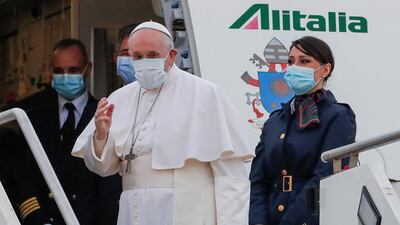
Pope Francis waves as he boards the plane for his visit to Iraq, at Leonardo da Vinci-Fiumicino Airport in Rome, Italy. Reuters -
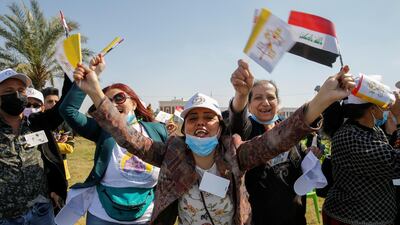
People holding Iraqi and Vatican flags as they wait for the arrival of Pope Francis, at Baghdad Airport Road, in Baghdad, Iraq. Reuters -
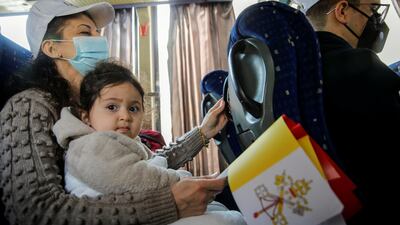
A Christian woman holds the Vatican flag as she heads to the airport to wait for the arrival of Pope Francis, in Baghdad, Iraq. Reuters


Ms Murad is from Iraq's small Yazidi minority, who were ruthlessly targeted by ISIS in what the UN has deemed a genocide. Yazidi men were murdered while as many as 6,000 Yazidi women and girls were taken away as slaves for ISIS fighters, suffering sexual violence.
The call shone a spotlight on the conditions that minorities continue to face in Iraq, despite the territorial defeat of ISIS.
Cautious optimism
Peter Jacob is an Iraqi Christian who now lives in Erbil, in the semi-autonomous Kurdish Region of Iraq.
He said he shared some of the optimism that has accompanied the pontiff’s visit, but remains concerned about long-term stability for minorities.
His family – originally from Mosul – has been displaced multiple times over the past decade.
"Of course, it is a historic visit and there's a little bit of hope. But I want to see something real on the ground," he said.
“I think it’s going to be something good after this visit, especially for the minorities in Iraq. So the world will know about what happened to us, which is a good thing.”
“And for me personally, it is a source of power that the Pope is in Iraq for us,” he said.
Mr Jacob now works on humanitarian projects in and around Mosul with local NGOs.
A bleak history
"The government was not able to protect minority groups in Iraq and this led to forcing a significant number of people from religious minority communities to leave the country," said Salah Ali, of the Iraq Religious Freedom and Anti-discrimination Roundtable and Fellow of the Religious Freedom Institute.
“So the country is in the process of draining out the minority groups. It seems that this process is continuing, therefore, there was a demand from these affected groups for international involvement to protect their survival, particularly Christians and Yazidis,” he said.
"I think the Pope's visit is a kind of support that they waited for, for a long time. Not only for Christians, but for all minority groups."
-
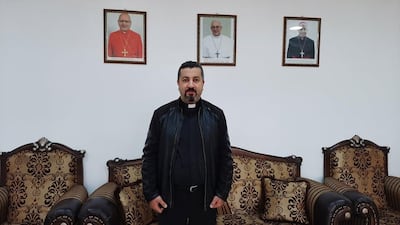
Ayman Aziz Hurmz, priest of the St. Joseph's Chaldean Catholic Church in Sulaimaniyah photo by Dana Taib Menmy. Dana Taib Menmy -
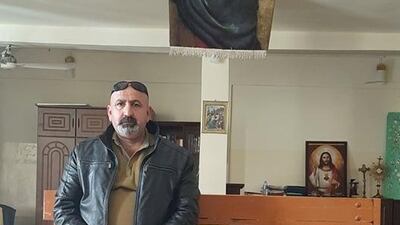
Aram Burhan, an evangelical Christian sitting inside the Chaldean Mariam Al-Adra church in Sulaymaniyah, photo by Dana Taib Menmy. Dana Taib Menmy -
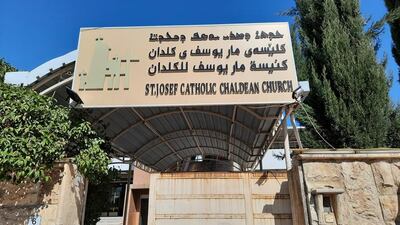
St. Joseph's Chaldean Catholic Church in SulaimaniyahPhoto Dana Taib Menmy. Dana Taib Menmy -
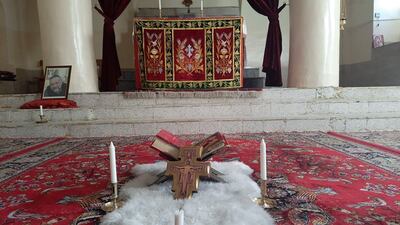
Inside the Chaldean Mariam Al-Adra (Virgin Mary, Immaculate Conception) church in Sulaymaniyah, photo by Dana Taib Menmy. Dana Taib Menmy


Jeremy Barker, Middle East director at the Religious Freedom Institute, shared the sentiment.
"Despite the attempts to erase the presence of Christians and other minorities, whether ISIS's genocidal attacks, the Arabisation campaigns under Saddam or other attempts to erase or subsume these communities, they remain. Their presence contributes to the richness of Iraqi society," he told The National.
“Yet as important as the heritage sites are, it is vital that steps are taken to protect and support the flourishing of the people of Iraq’s diverse communities, otherwise there may be restored temples and churches which sit as empty relics of a disappearing people, who have all been driven out.”
In this respect, Mr Barker points to the importance of preserving intangible aspects of minority communities, including language and religious traditions.
Father Salar Kajo, a Chaldean Catholic priest who is from the town of Telskuf on the Nineveh Plain, said the Pope's historic Mass in Baghdad was vital for highlighting Iraq's Christian heritage.
-
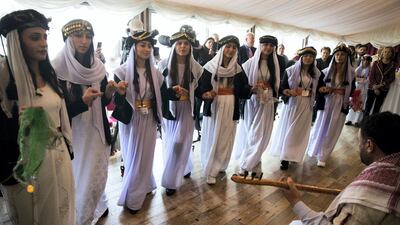
Members of the Yazidi Choir performing at the Houses of Parliament in London during their tour of the United Kingdom. Stephen Lock for the National -

Members of the Yazidi Choir performing at the Houses of Parliament in London during their tour of the United Kingdom. Stephen Lock for the National -
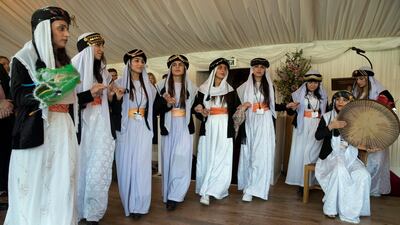
Members of the Yazidi Choir performing at the Houses of Parliament in London during their tour of the United Kingdom. Stephen Lock for the National -
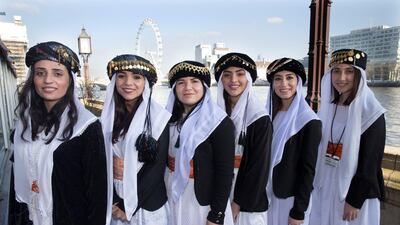
Members of the Yazidi Choir on the terrace of the Houses of Parliament in London before their performance for UK politicians and their guests, during their tour of the United Kingdom. Stephen Lock for the National -
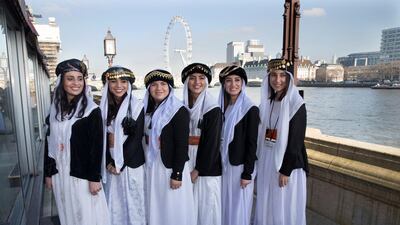
Yazidi choir is made up of 14 girls from refugee camps in northern Iraq. Stephen Lock for the National -
An Iraqi Yazidi woman visits the Temple of Lalish, in a valley near the Kurdish city of Dohuk, about 430km northwest of the Iraqi capital Baghdad. AFP -
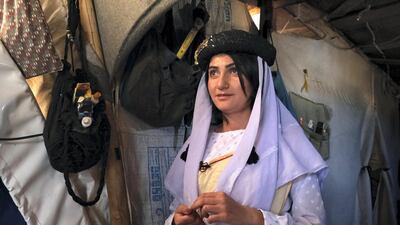
Iman Abbas, an 18-year-old Yazidi woman dressed in a traditional outfit, is pictured inside a tent at the Shaira camp for displaced people in the Simele district of the Dohuk governorate in northern Iraq. AFP -
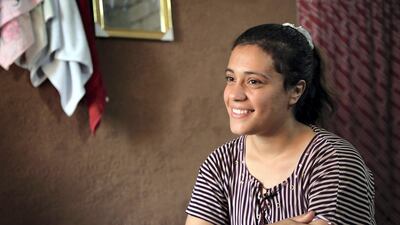
Iraq's Yazidi Jihan Qassem, 18, smiles as she talks to a AFP reporter at a makeshift house in an area housing many displaced people on the outskirts of the northwestern Iraqi town of Baadre. AFP -

Young Yazidi and Muslim women, part of the musical group "40 Plaits," rehearse a traditional Kurdish song accompanied by the Daf, a large Kurdish frame drum, in a community centre in Dahuk, about 260 miles (430 kilometers) northwest of the Iraqi capital Baghdad. AFP -
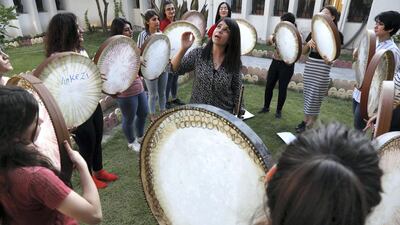
Young Yazidi and Muslim women, part of the musical group "40 Plaits," rehearse a traditional Kurdish song accompanied by the Daf, a large Kurdish frame drum, in a community centre in Dahuk, about 260 miles (430 kilometers) northwest of the Iraqi capital Baghdad. AFP -

Iraqi Yezidi women hold placards with pictures of victims of the 2014 invasion of their region by the Islamic State (IS) group, a day ahead of commemorations at the Temple of Lalish, in a valley near the Kurdish city of Dohuk, about 430km northwest of the Iraqi capital Baghdad. AFP -
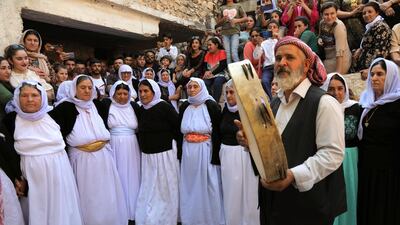
Iraqi Yazidis dance to traditional music at the Temple of Lalish, in a valley near the Kurdish city of Dohuk, about 430km northwest of the Iraqi capital Baghdad. AFP -
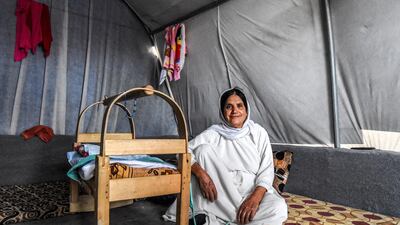
A woman sits on a futon next to a baby cradle inside a tent shelter at a camp for internally displaced persons (IDP) of Iraq's Yazidi minority in the Sharya area, some 15 kilometres from the northern city of Dohuk in the autonomous Iraqi Kurdistan region. AFP -
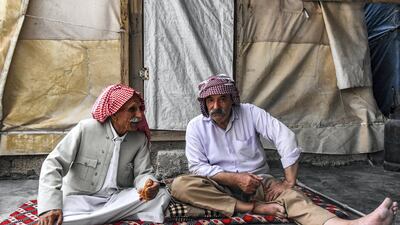
Men sit togther on a futon outside a shelter at a camp for internally displaced persons (IDP) of Iraq's Yazidi minority in the Sharya area, some 15 kilometres from the northern city of Dohuk in the autonomous Iraqi Kurdistan region. AFP
"We hope that this visit will bring peace and serenity to our people and all of the orient," he told The National.
“The liturgy in Chaldean Mass included a traditional recitation calling for the Holy Father, Holy Son, and Holy Spirit to have mercy on us. This is an important symbol for the world and is a beautiful language, as it is the language of Jesus and it was used in the Bible.”
Mr Kajo’s community at Telskuf suffered under the ISIS occupation, but has now almost recovered – nearly 1,000 families have already returned.

