


Egypt and Sudan will be left to “suffer” from reduced and erratic water supplies if a second filling of a Nile Dam being built in Ethiopia goes ahead this summer, the Egyptian Ministry of Irrigation said on Monday.
The two nations would be affected if the river's flood this year proves to be average or low, the ministry said, highlighting what it alleged was a serious design flaw in the dam.
An escalating row over the dam's construction has led to international fears that a military stand-off could occur.
In a letter to the UN Security Council last week, Egyptian Foreign Minister Sameh Shukry said the second filling would cause "great if not disastrous harm" to Egypt and Sudan and warned that failure to reach an agreement with Ethiopia would raise regional tensions and pose a threat to international peace and security.
-
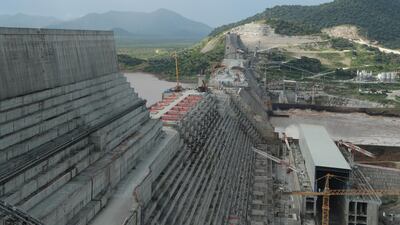
Ethiopia's Grand Renaissance Dam under construction on September 26, 2019. Reuters -

Ethiopia's Grand Renaissance Dam under construction on September 26, 2019. Reuters -
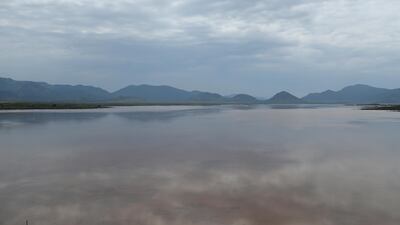
A water basin near Ethiopia's Grand Renaissance Dam. Reuters -

Turbine housings at Ethiopia's Grand Renaissance Dam powerhouse. Reuters


Egypt's irrigation ministry said on Monday that last year's first filling was designed for "media and political purposes" rather than technical requirements.
This was because last year, the hydroelectric dam was not ready to generate electricity, a situation which would not change when the next filling is due, it said.
Talks on water sharing stumble
Talks between Egypt, Sudan and Ethiopia on the dam have been deadlocked for a decade, with the two nations unable to persuade Addis Ababa to enter a legally binding deal on the filling and the operation of the dam.
Cairo and Khartoum have also failed to persuade Ethiopia to allow a quartet of the UN the US, European Union and African Union to mediate in the dispute.
There has been no progress in the latest negotiations since the AU began sponsoring them nearly a year ago, but Addis Ababa wants the AU to remain as the sole party with a say in the process, beside the three nations.
“Regrettably, the process led by the African Union has thus far proved ineffective,” Mr Shukry told the UN Security Council last week.
Ethiopia meanwhile insists the second filling of the Grand Ethiopian Renaissance Dam, or GERD, will go ahead regardless of whether a deal is reached.
"The two downstream nations will suffer in the case of an average flood. Conditions will be worse in the case of a low flood," said the Egyptian ministry.
The next filling is expected to total 13.5 billion cubic metres, nearly three times the size of last year's.
The earlier filling disrupted work at Sudan’s water treatment plants, leaving thousands of homes without running water for days. Sudan says this year’s filling could put the lives of 20 million of its people at risk.

Egypt, which depends on the Nile for more than 90 per cent of its fresh water needs, was not affected by last year’s filling, thanks to a bumper flood that filled its large Aswan Dam reservoir to near capacity.
"Why a second filling when the dam is not ready to generate electricity?" said the irrigation ministry.
“It is a continuation of a policy that aims to impose a fait accompli through unilateral actions that harm the two downstream nations because of the absence of a clear co-ordination mechanism framed through a legally binding and fair agreement.”
The ministry went on to question the safety of the GERD, citing what it said were a series of changes that suggested a level of shoddiness in construction. These include the reduction of the number of power turbines originally planned from 16 to 13 and adjusting the level of the dam's gates.
“Ethiopia’s assertion that the dam complies with international standards is a false claim,” it said.
Egypt, the most populous Arab nation with more than 100 million people, is deeply concerned that a significant cut in its share of the Nile water would wipe out hundreds of thousands of jobs and disrupt its delicate food balance.
Egyptian President Abdel Fattah El Sisi has repeatedly stated his preference for a negotiated resolution of the GERD dispute but also warned Egypt would not stand by idly if denied a “single drop” of water and that no one should be in doubt about the far reach of its “capabilities,” a thinly-veiled reference to its military.
Egypt and Sudan have also forged close military ties in recent months, conducting joint air and land war games and signing a military co-operation agreement.

