A procession of 22 mummies made its way through Cairo on Saturday in a multi-million dollar event intended to draw attention to Egypt's ancient heritage.
The procession included the preserved remains of 18 kings and four queens moving in order of the eldest first on climate-controlled floats decorated with wings and pharaonic design in an ancient Egyptian style.
Well-known ancient rulers including kings Ramses II and III, Queen Hatshepsut, King Seti I and kings Thutmose III and IV were accompanied by horses, carriages, Egyptian film stars and celebrities.
“This parade is a unique global event that will not be repeated,” said Tourism and Antiquities Minister Khaled El Anany.
-
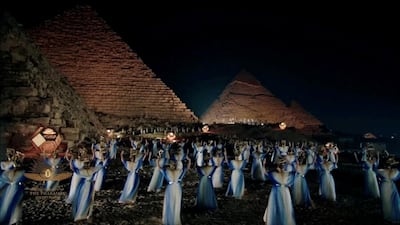
Artists perform near pyramids in a video screened at a ceremony of a transfer of royal mummies from the Egyptian Museum in Tahrir to the National Museum of Egyptian Civilization in Fustat. Reuters -
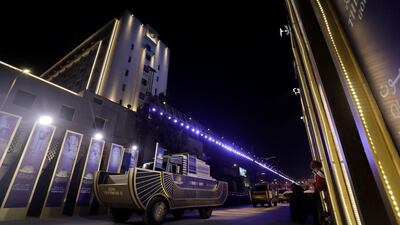
Royal mummies are transported in a convoy from the Egyptian Museum in Tahrir to the National Museum of Egyptian Civilization in Fustat. Reuters -
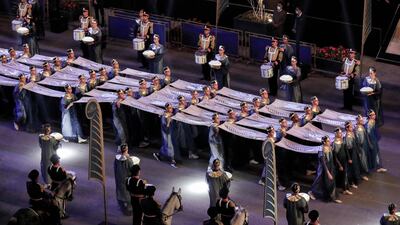
Performers dressed in ancient Egyptian costume march at the start of the parade of 22 ancient Egyptian royal mummies departing from the Egyptian Museum in Cairo's Tahrir Square. AFP -
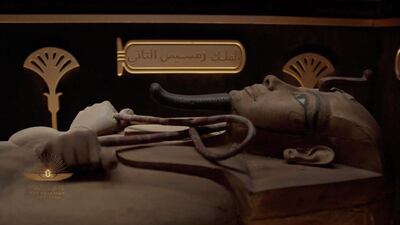
A mummy is seen in a video screened during a ceremony of a transfer of Royal mummies from the Egyptian Museum in Tahrir to the National Museum of Egyptian Civilization in Fustat. Reuters -
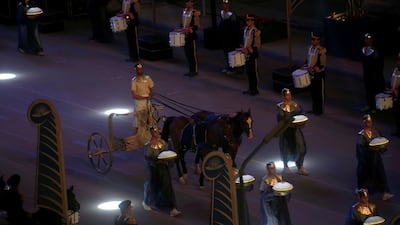
Artists perform during a transfer of royal mummies from the Egyptian Museum in Tahrir to the National Museum of Egyptian Civilization in Fustat. Reuters -
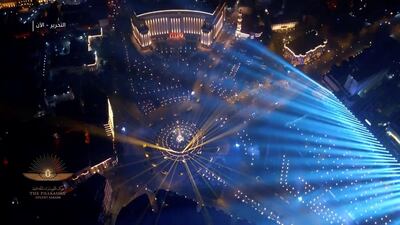
General view of a parade at a ceremony of a transfer of royal mummies from the Egyptian Museum in Tahrir to the National Museum of Egyptian Civilization in Fustat. Reuters -
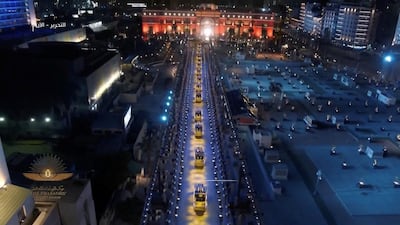
Vehicles are seen during a parade at a ceremony of a transfer of royal mummies from the Egyptian Museum in Tahrir to the National Museum of Egyptian Civilization in Fustat. Reuters -
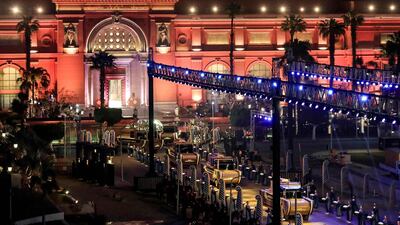
The carriages carrying 22 ancient Egyptian royal mummies depart from the Egyptian Museum in Cairo's Tahrir Square. AFP -
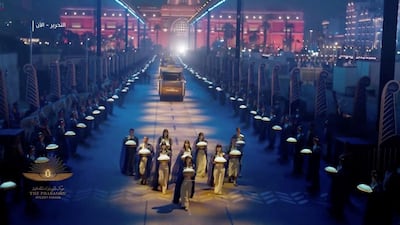
General view of a parade at a ceremony of a transfer of Royal mummies from the Egyptian Museum in Tahrir to the National Museum of Egyptian Civilization in Fustat. Reuters -
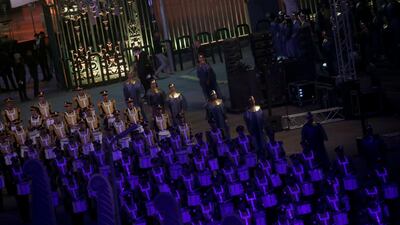
Egyptian police orchestra waits ahead of a transfer of royal mummies from the Egyptian Museum in Tahrir to the National Museum of Egyptian Civilization in Fustat, in Cairo. Reuters -
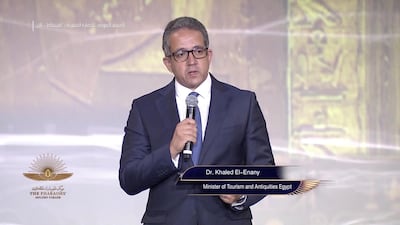
Egypt's Minister of Tourism and Antiquities Khaled El-Enany speaks during a ceremony of a transfer of Royal mummies from the Egyptian Museum in Tahrir to the National Museum of Egyptian Civilization in Fustat. Reuters -

Egypt's President Abdel Fattah El Sisi attends a ceremony of a transfer of royal mummies from the Egyptian Museum in Tahrir to the National Museum of Egyptian Civilization in Fustat, in Cairo. Reuters -

Musicians perform during a ceremony of a transfer of royal mummies from the Egyptian Museum in Tahrir to the National Museum of Egyptian Civilization in Fustat. Reuters -
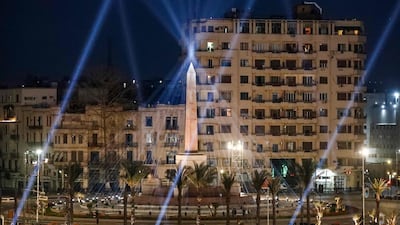
A view of the Obelisk of Ramses II, surrounded by the recently-unveiled and restored four ancient sandstone sphinxes extracted from the Avenue of the Sphinxes in Luxor, in the centre of the main roundabout of Tahrir Square in Egypt's capital Cairo. AFP


Lights and banners lined the route, which passed through Cairo's upmarket Garden City district and the Nile Corniche.
It is hoped that the event will be a showcase for Egypt's world-leading tourist potential to a global audience, after the coronavirus pandemic caused losses to the industry of about $1 billion a month.
The mummies were relocated from Cairo's Egyptian Museum to a site in the capital at Fustat, an ancient city built after the Muslim conquest of Egypt in AD 641.
A new museum, the National Egyptian Museum of Civilisation, will be their resting place.
A historic procession
As the parade was set to begin, President Abdel Fattah El Sisi issued a statement on its significance.
"The awe-inspiring spectacle will be proof of the greatness of Egypt’s people, who stand guard over this unique civilisation that extends back to the depths of history. I invite all Egyptians to witness this monumental day, and to be inspired by the spirit of their ancestors."
"Let’s continue on the road we started, the road of growth and humanity," he said.
"I think this convoy will bring magic and excitement everywhere in the world," said Zahi Hawass, a renowned Egyptologist and former minister of state for antiquities.
Mr Hawass also narrated the event, which was broadcast in 60 countries.
“Our aim is to be simultaneously present in every home across the world,” Tourism and Antiquities Minister Khaled El Anany said.
-
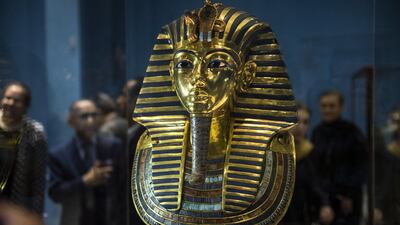
A picture taken on November 28, 2017 shows Golden Mask of King Tutankhamun, on display at the Egyptian Museum in the capital Cairo. AFP -
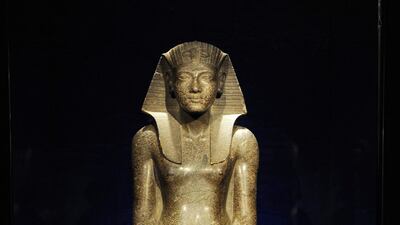
Detail of a granite statue of Tutankhamun on display April 21, 2010 at a preview of "Tutankhamun and the Golden Age of the Pharaohs", an exhibition at Discovery Times Square Exposition in New York. Multicolored medical scans of the real mummy are reflected in the glass case. AFP -
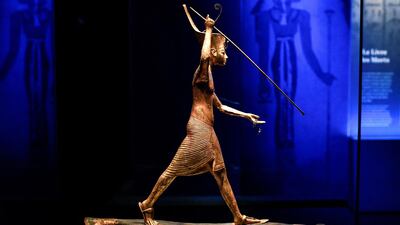
A statuette of Tutankhamun is displayed during the exhibition 'Tutankhamun, Treasures of the Golden Pharaoh' at La Villette in Paris, on March 21, 2019. AFP -

This picture taken on January 31, 2019 shows the golden sarcophagus of the 18th dynasty Pharaoh Tutankhamun (1332–1323 BC), displayed in his burial chamber in his underground tomb (KV62) in the Valley of the Kings on the west bank of the Nile river opposite the southern Egyptian city of Luxor (650 kilometres south of the capital Cairo). AFP -
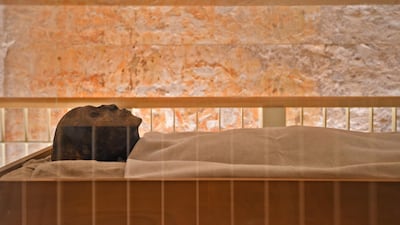
The linen-wrapped mummy of the 18th Dynasty Pharaoh Tutankhamun, displayed in a climate-controlled glass case in his underground tomb A picture taken on January 31, 2019 shows tin the Valley of the Kings on the west bank of the Nile river opposite the southern Egyptian city of Luxor. AFP -
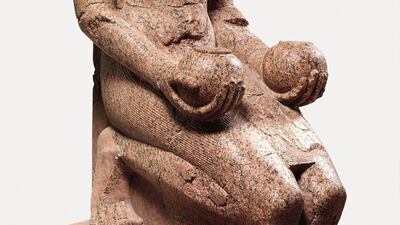
Large Kneeling Statue of Hatshepsut, New Kingdom, Dynasty 18, ca. 1479-1458 B.C., From Egypt, Upper Egypt, Thebes, Deir el-Bahri, Senenmut Quarry, 1927-28. On the upper terrace of Hatshepsut's temple at Deir el-Bahri, the central sanctuary was dedicated to the god Amun-Re, whose principal place of worship was Karnak temple, located across the Nile, on the east bank of the river. Getty Images -

The mummified remains of Queen Hatshepsut, ancient Egypt's most famous female pharaoh, lie in a glass case after being unveiled at the Cairo Museum, June 27, 2007. AFP -
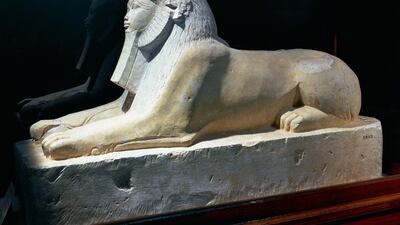
Egyptian civilization, New Kingdom, Dynasty XXI - Limestone sphinx of Queen Hatshepsut. Getty Images -
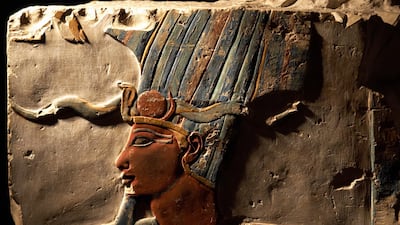
Polychrome relief of Pharaoh Thutmose III (h.1490-1436 BC), Sixth pharaoh of the 18th Dynasty, New Kingdom, Part from Thutmose Temple in Deir el-Bahari, Luxor Museum, Egypt. Getty Images -
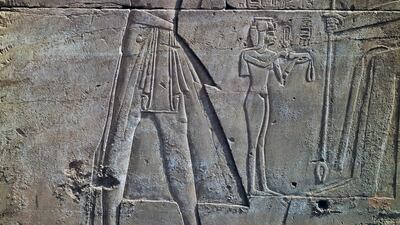
Thutmose III, relief, Temple of Amun, Karnak Temple Complex (Unesco World Heritage List, 1979). Egyptian Civilisation, New Kingdom, Dynasty XVIII. Getty Images -

The Sphinx of Thutmose III, from Egypt and dated 1480-1425 on loan from the Metropolitan Museum of Art in New York City, on show in the archaeological exhibition 'Pharaoh in Canaan: The Untold Story', at the Israel Museum in Jerusalem, Israel, March 2, 2016. EPA -
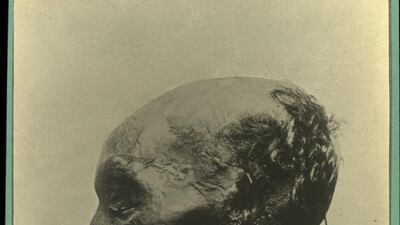
Mummified head of Egyptian Pharaoh Thutmose III, Egypt, 1900. Getty Images -
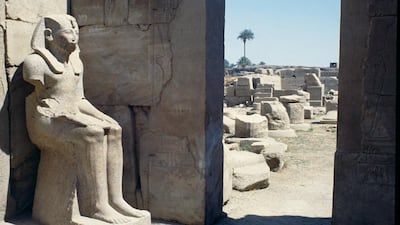
Statue of Thutmose III in ceremonial attire, Sanctuary of the sacred boat, Temple of Amun, Karnak Temple Complex (UNESCO World Heritage List, 1979). Egyptian Civilisation, New Kingdom, Dynasty XVIII. Getty Images -
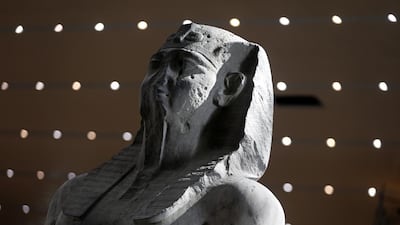
The statue of Seti I is seen after it was transferred to the Grand Egyptian Museum in Giza, Egypt September 21, 2019. Reuters -
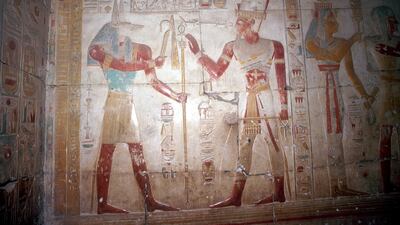
Painted relief of Sethos before Anubis (jackal headed god), Temple of Sethos I, Abydos, Egypt, 19th Dynasty, c1280 BC. Getty Images -
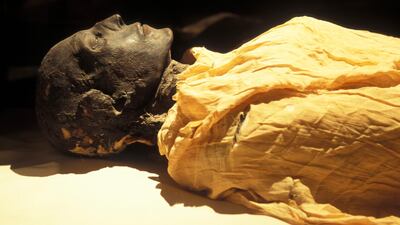
The mummy of Seti I (1294-1279 BC) bears witness to the mastery of mummification techniques of embalmers of ancient Egypt during the New Empire, April 2006. Getty Images -
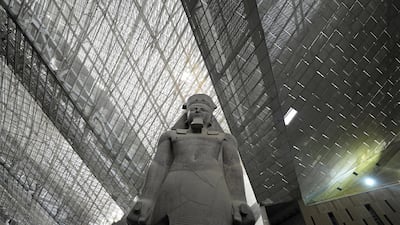
The statue of King Ramses II is seen after it was transferred to the Grand Egyptian Museum in Giza, Egypt September 21, 2019. Reuters -
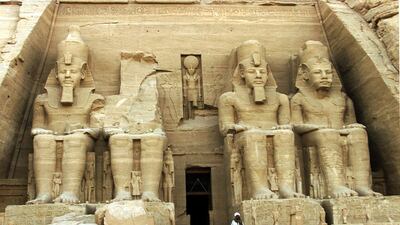
Egyptian Kamal Ahmed Mahran, an antiquities guardian, walks out of the 3200-year-old Abu Simbel temple in between the four colossal statues of the pharaoh king Ramses II, January 13, 2002. -
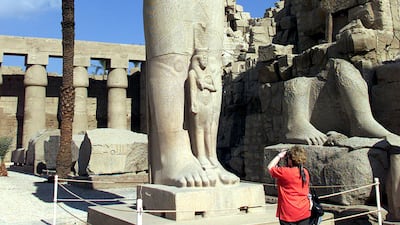
A visitor takes a picture of Pharaoh King Ramses II's statue at Karnak temple January 13, 2002. Reuters -
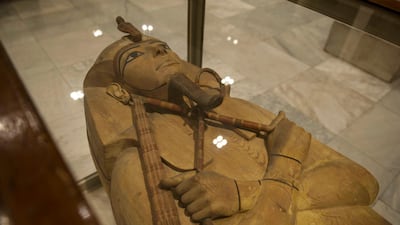
A view of the wooden coffin of King Ramses II on display in the Egyptian Museum at Tahrir Square in Cairo, Egypt, April 16, 2019. EPA -
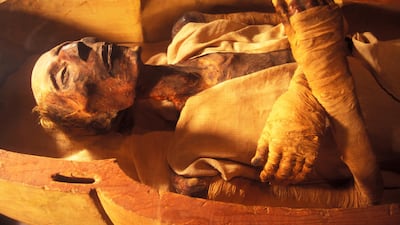
The mummy of Ramses II (1301-1235 BC), son of Sethy at Cairo Museum, Egypt, April 2006. The mummy was discovered with the other royal mummies in the Deir el Bahari hiding place. Getty Images -
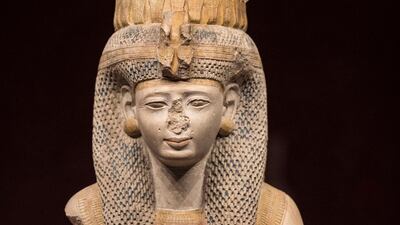
A picture taken on June 18, 2020 shows a statue of Queen Meritamen, one of the daughters of Rameses II, who became his Great Royal Wife after the death of her mother, Nefertari, at the museum in the Red Sea Egyptian resort of Hurghada. AFP -
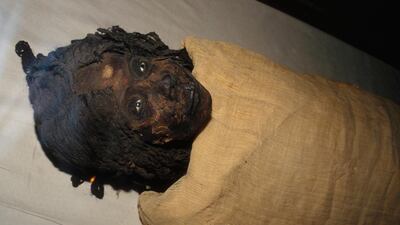
Mummy of Meritamen, daughter of Nefertari and Ramesses the Great, and later Great Royal Wife of Pharaoh Ramesses the Great. Getty Images -
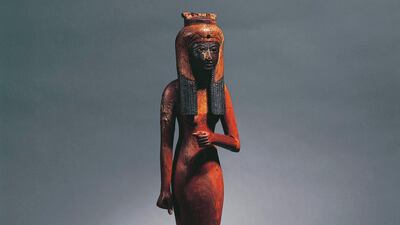
Statuette representing the Queen Ahmose-Nefertari (circa 1570-1505 B.C.)Getty Images -
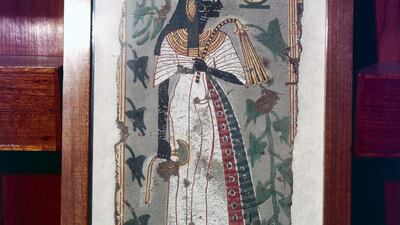
Ahmose-Nefertari, Wallpainting from a tomb of Thebes c1200BC. Ahmose-Nefertari of Ancient Egypt was the first Queen of the 18th Dynasty and mother of king Amenhotep I and may have served as his regent when he was young. Getty Images -
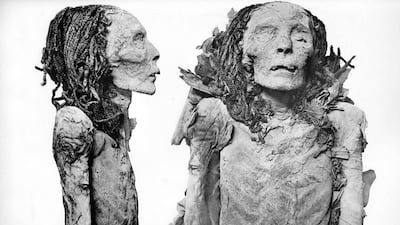
The mummy of Ahmose-Nefertari, queen of pharaoh Ahmose of the 18th dynasty. Courtesy G Elliot Smith


The Pharaohs' Golden Parade
Anticipation of the parade reached a fever pitch on social media on Thursday night, as Egyptians posted footage from Tahrir Square, which has received an extensive facelift for the event.
The square, which was the site of protests during the Arab uprisings of 2011, has been closed to the public.
A new obelisk and statues of four rams taken from Luxor’s famed Karnak Temple now adorn the square.
"The streets around Tahrir Square are the cleanest I've ever seen them," El Hassan Hedaya, a resident of downtown Cairo, told The National.
The Egyptian Museum, where the mummies were moved from, was lit by floodlights powerful enough to be seen in the sky from the nearby 6th of October bridge.
The government also gave the Tahrir Complex, Egypt’s largest administrative entity, and the nearby Arab League headquarters a coat of paint, as both buildings are prominent landmarks on the parade’s route.
Downtown Cairo, a district synonymous with heavy traffic and hordes of shoppers who visit its many retail stores, was empty before the parade.
The government closed off all streets with access to the procession’s route and urged everyone to stay at home and watch the event on television.
A delicate task
All 22 mummies were transferred in nitrogen-sealed capsules designed to protect them from oxygen, which promotes decomposition, and to keep them from high levels of pollution on Cairo's streets.
The capsules were equipped with a stabilisation mechanism to stop the mummies from bumping into the sides of their coffins, said Dr Mustafa Ismail, director of the mummies division and head of the Mummy Conservation Laboratory at the National Museum of Egyptian Civilisation (NMEC).
Once the mummies arrived at Fustat, they were to be moved into a temperature controlled environment.
The NMEC will open its doors for visitors starting on Sunday, and the Ministry of Tourism and Antiquities announced that tickets will be sold at half price for a month to celebrate the mummies' procession.
The Royal Mummies exhibit, however, will open on April 18, said the tourism ministry. Some restoration work is still needed before the mummies can go on display.
The curse of the Pharaoh
"The museum has what it takes to preserve (mummies), the best laboratories... It is one of the best museums we have," Waleed El Batoutti, adviser to the tourism and antiquities ministry, told state television.
The NMEC opened its doors to limited exhibits from 2017 and will open fully on Sunday.
In the coming months, the country is scheduled to inaugurate another new attraction, the Grand Egyptian Museum, near the Giza pyramids.
It, too, will house pharaonic collections, including the celebrated treasure of Tutankhamun.
Discovered in 1922, the tomb of the young ruler, who took the throne briefly in the 14th century BC, contained treasures including gold and ivory.
A so-called "curse of the pharaoh" emerged in the wake of Tutankhamun's unearthing in 1922-23.

