


Iraq's health authorities announced a cholera outbreak after at least 13 cases were confirmed across the country and thousands of hospital admissions for acute diarrhoea were reported.
Ten of the confirmed cases were in the northern city of Sulaymaniyah, one of three provinces that make up the Kurdish region, Health Ministry spokesman Saif Al Badr said on Sunday.
Two cases were in the southern province of Al Muthanna and the other in Kirkuk province north of Baghdad, Mr Al Badr told the state-run Al Iraqiya television station.
He said the number of cases was expected to rise.
Cholera is an virulent disease caused by ingestion of food or water contaminated with the bacterium Vibrio cholerae. The disease can cause severe diarrhoea and lead to death, although most infected people do not develop symptoms, according to the World Health Organisation.
Mr Al Badr described the outbreak as a limited one “that we hope we can control, depending on the seriousness in implementing preventive measures”.
Sabah Hawrami, the director of the Sulaymaniyah Health Department, called a press conference on Sunday and asked the Ministry of Health to declare a state of emergency in the city.
Mr Hawrami said about 4,000 cases of diarrhoea and vomiting were recorded in Sulaymaniyah's hospitals over the previous six days.
“Cholera is a terrible illness but can be easily treated. We can save lives in a matter of hours,” he said.
There has also been a spike in hospital admissions because of diarrhoea in the nearby cities of Erbil and Duhok, but to a smaller degree.
No deaths have been reported.
Provincial health authorities make an initial diagnosis and send patient samples to a central laboratory in the capital, Baghdad, for final analysis before announcing the case as confirmed.
According to the World Health Organisation, cholera remains a threat to public health and an indicator of inequity and lack of social development.
Researchers estimate that there are 1.3 million to 4 million cases of cholera each year worldwide, causing between 21,000 and 143,000 deaths.
The disease can kill within hours if untreated. Severe cases require urgent treatment with intravenous fluids and antibiotics.
Iraq's cholera outbreak follows a surge in cases of Crimean-Congo haemorrhagic fever this year.
Health officials said last week that there have been more than 170 cases, of which 32 have been fatal, compared with an annual average of about 20 and one or two deaths.
-
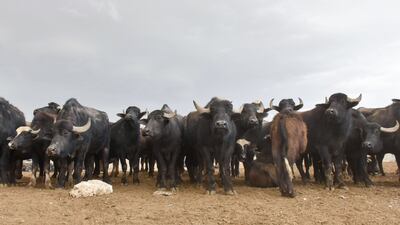
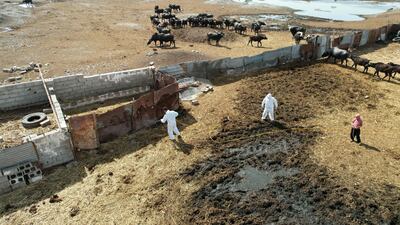
A herd of cattle is rounded up as members of a veterinary team spray disinfectant, in Iraq's northern city of Kirkuk. All photos: AFP -

Authorities said one person died on Friday of Crimean-Congo haemorrhagic fever as cases of the virus spread to the country's north. -
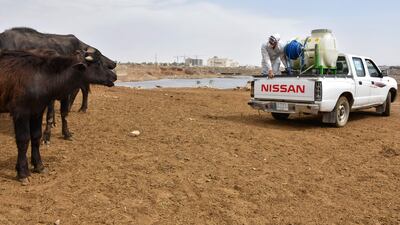
Veterinary workers spray cattle and enclosures with disinfectant at a farm in Kirkuk. -

Iraq has registered eight deaths from 40 cases of the illness since the start of the year. -
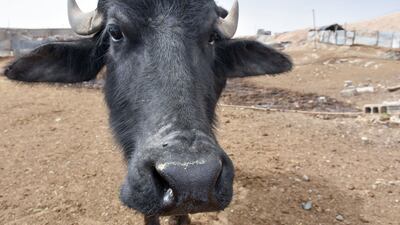
Also known as Congo fever, the disease is tick-borne and causes severe haemorrhaging. -

People are generally infected through contact with the blood of infected animals, often after slaughtering livestock. -

It can also be transmitted between humans through close contact with the blood, secretions, organs or other bodily fluids of infected persons. -
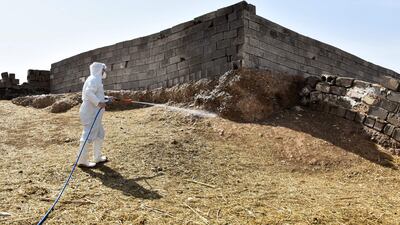
The disease has a high death rate of between 10 and 40 per cent of all cases. -
Kirkuk authorities have prohibited the transport of cattle to or from the province. -
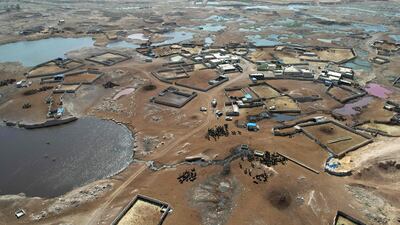
The poor, largely rural southern province is known for rearing cattle, sheep and goats, all of which are potential carriers of the disease.



