
"I read it in the Daily Express". Information that should always be treated with caution when it comes from a British tabloid with a reputation for unreliable weather predictions and dubious accounts of the life of Diana, Princess of Wales.
In this instance, it is a 1904 report from ace reporter Bernard Fletcher Robinson on an ancient mummy case in the British Museum, alleged to be that of an Egyptian priestess.
All is reasonably straightforward in the article, until the point at which Robinson types the words: “Facts I will presently relate are true.”

What follows is an entirely unverified claim that various unnamed tragedies are the result of an ancient curse.
“I have now in my possession proofs of the identity of all those who suffered from the anger of the priestess of Amen Ra. But for the sake of friends and relatives I have been requested to suppress the names,” Robinson writes, conveniently.
The mummy myth returns
The idea of a mummy’s curse is one that will not lie down. It stumbles, wrapped in bandages and growling with menace even into the 21st century.
Most recently it has arisen in Egypt again with everything from the container ship Ever Given blocking the Suez Canal to a deadly building collapse and a fatal train crash blamed on a parade of the mummified bodies of pharaohs through Cairo to the new National Museum.
Scroll through the gallery below for images from Egypt's Pharaohs' Golden Parade:
-
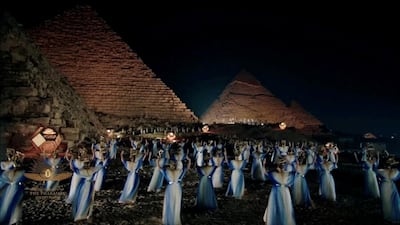
Artists perform near pyramids in a video screened at a ceremony of a transfer of royal mummies from the Egyptian Museum in Tahrir to the National Museum of Egyptian Civilization in Fustat. Reuters -
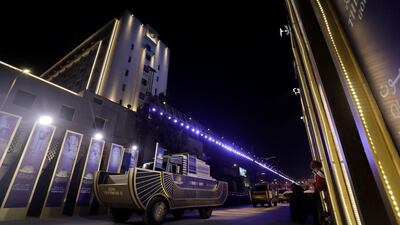
Royal mummies are transported in a convoy from the Egyptian Museum in Tahrir to the National Museum of Egyptian Civilization in Fustat. Reuters -
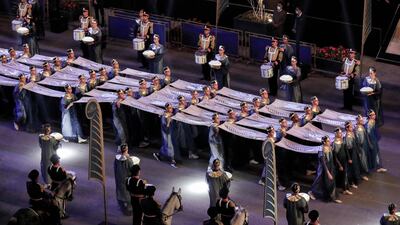
Performers dressed in ancient Egyptian costume march at the start of the parade of 22 ancient Egyptian royal mummies departing from the Egyptian Museum in Cairo's Tahrir Square. AFP -
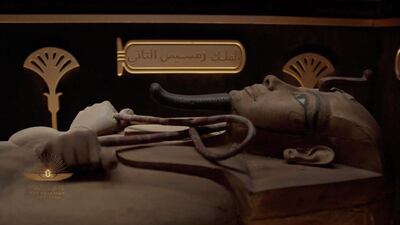
A mummy is seen in a video screened during a ceremony of a transfer of Royal mummies from the Egyptian Museum in Tahrir to the National Museum of Egyptian Civilization in Fustat. Reuters -
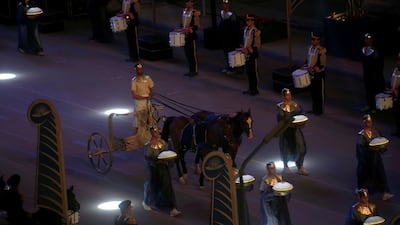
Artists perform during a transfer of royal mummies from the Egyptian Museum in Tahrir to the National Museum of Egyptian Civilization in Fustat. Reuters -
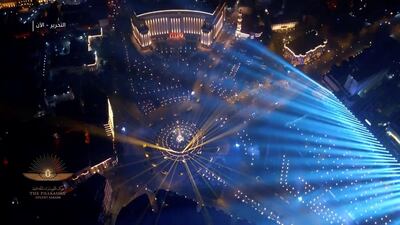
General view of a parade at a ceremony of a transfer of royal mummies from the Egyptian Museum in Tahrir to the National Museum of Egyptian Civilization in Fustat. Reuters -

Vehicles are seen during a parade at a ceremony of a transfer of royal mummies from the Egyptian Museum in Tahrir to the National Museum of Egyptian Civilization in Fustat. Reuters -
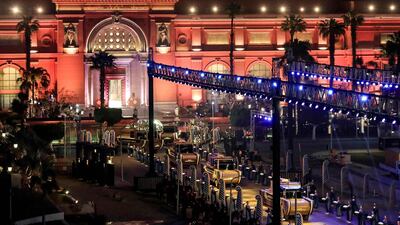
The carriages carrying 22 ancient Egyptian royal mummies depart from the Egyptian Museum in Cairo's Tahrir Square. AFP -
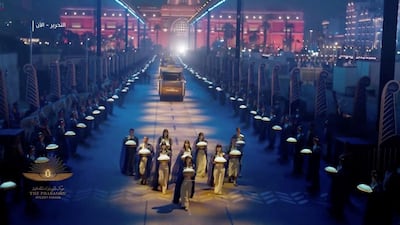
General view of a parade at a ceremony of a transfer of Royal mummies from the Egyptian Museum in Tahrir to the National Museum of Egyptian Civilization in Fustat. Reuters -
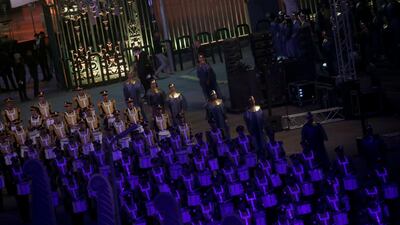
Egyptian police orchestra waits ahead of a transfer of royal mummies from the Egyptian Museum in Tahrir to the National Museum of Egyptian Civilization in Fustat, in Cairo. Reuters -
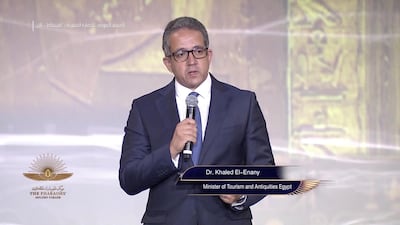
Egypt's Minister of Tourism and Antiquities Khaled El-Enany speaks during a ceremony of a transfer of Royal mummies from the Egyptian Museum in Tahrir to the National Museum of Egyptian Civilization in Fustat. Reuters -

Egypt's President Abdel Fattah El Sisi attends a ceremony of a transfer of royal mummies from the Egyptian Museum in Tahrir to the National Museum of Egyptian Civilization in Fustat, in Cairo. Reuters -

Musicians perform during a ceremony of a transfer of royal mummies from the Egyptian Museum in Tahrir to the National Museum of Egyptian Civilization in Fustat. Reuters -
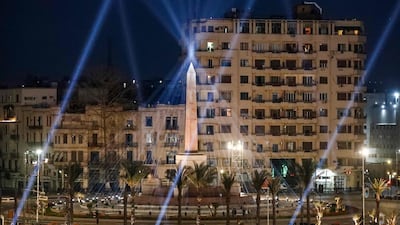
A view of the Obelisk of Ramses II, surrounded by the recently-unveiled and restored four ancient sandstone sphinxes extracted from the Avenue of the Sphinxes in Luxor, in the centre of the main roundabout of Tahrir Square in Egypt's capital Cairo. AFP


How it all began
Robinson’s account, over a century ago, popularised the idea, which had been around since hieroglyphs were first properly decoded in the 1820s and the discovery of dire warnings on the walls of Egyptian tombs intended to deter tomb robbers – almost entirely without success.
It only really took hold with the discovery, in 1922, of the fabulous tomb of the boy-king Tutankhamun in an expedition funded by the British aristocrat Lord Carnarvon.
Four months later, Carnarvon was dead in a Cairo hotel. A mosquito bite, made worse by a shaving cut, led to blood poisoning and pneumonia. He was 56 and had been in poor health following a near fatal car crash in 1903 – one of the reasons he frequently visited the warmer climate of North Africa.
At this point, Sir Arthur Conan Doyle enters the story. The creator of Sherlock Holmes had been devastated by the deaths of his son and brother both from pneumonia and had developed an intense interest in the spirit world.
He was also a close friend of Robinson, who had given him the idea for The Hound of the Baskervilles.
Ask for his views on the cause of Carnarvon’s death, the great man, now in his early sixties, pronounced: “The ancient Egyptians were very anxious to guard the tombs of their Kings. There is reason to believe that they placed elementals on guard, and such may have caused Lord Carnarvon’s death.”
It was tabloid fodder, as newspapers scavenged for other titbits, including the death of his lordship’s pet canary, which was eaten by a snake, and a wealthy American who died of pneumonia after visiting the tomb.
In fact, no curse was ever discovered on Tutankhamun's tomb. Carnarvon's death can be easily explained on his very poor health and the fact antibiotics were not available for another 20 years. A simple course of penicillin would have probably saved his life.
Even Robinson’s original story does not quite stand up to fact checking. There is no body accompanying the mummy he described in the British Museum, or any evidence it belonged to a priestess.
Not that anyone ever challenged the Daily Express journalist on his account. At the age of 37 in 1907, Conan Doyle's old friend had died from a bout of typhoid fever. There were those who looked at his most famous story from three years earlier and wondered "what if?"
Scroll through the gallery below for Egypt's most famous mummies:
-
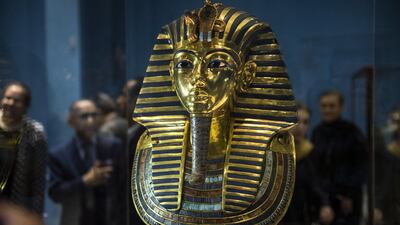
A picture taken on November 28, 2017 shows Golden Mask of King Tutankhamun, on display at the Egyptian Museum in the capital Cairo. AFP -
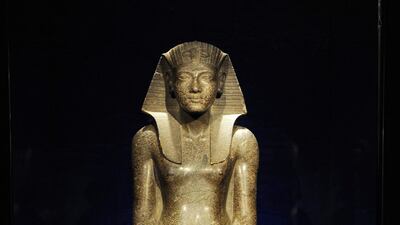
Detail of a granite statue of Tutankhamun on display April 21, 2010 at a preview of "Tutankhamun and the Golden Age of the Pharaohs", an exhibition at Discovery Times Square Exposition in New York. Multicolored medical scans of the real mummy are reflected in the glass case. AFP -
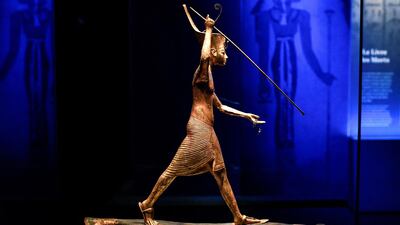
A statuette of Tutankhamun is displayed during the exhibition 'Tutankhamun, Treasures of the Golden Pharaoh' at La Villette in Paris, on March 21, 2019. AFP -

This picture taken on January 31, 2019 shows the golden sarcophagus of the 18th dynasty Pharaoh Tutankhamun (1332–1323 BC), displayed in his burial chamber in his underground tomb (KV62) in the Valley of the Kings on the west bank of the Nile river opposite the southern Egyptian city of Luxor (650 kilometres south of the capital Cairo). AFP -
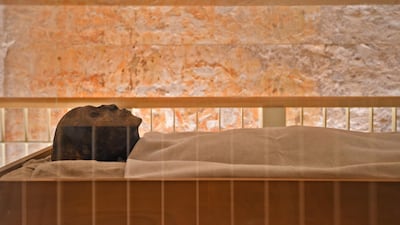
The linen-wrapped mummy of the 18th Dynasty Pharaoh Tutankhamun, displayed in a climate-controlled glass case in his underground tomb A picture taken on January 31, 2019 shows tin the Valley of the Kings on the west bank of the Nile river opposite the southern Egyptian city of Luxor. AFP -
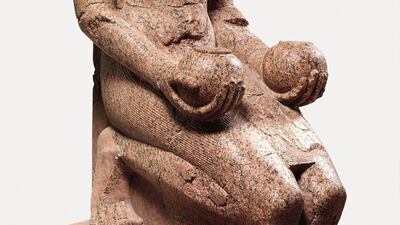
Large Kneeling Statue of Hatshepsut, New Kingdom, Dynasty 18, ca. 1479-1458 B.C., From Egypt, Upper Egypt, Thebes, Deir el-Bahri, Senenmut Quarry, 1927-28. On the upper terrace of Hatshepsut's temple at Deir el-Bahri, the central sanctuary was dedicated to the god Amun-Re, whose principal place of worship was Karnak temple, located across the Nile, on the east bank of the river. Getty Images -

The mummified remains of Queen Hatshepsut, ancient Egypt's most famous female pharaoh, lie in a glass case after being unveiled at the Cairo Museum, June 27, 2007. AFP -
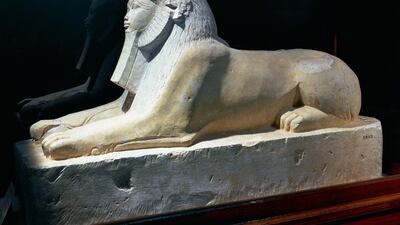
Egyptian civilization, New Kingdom, Dynasty XXI - Limestone sphinx of Queen Hatshepsut. Getty Images -
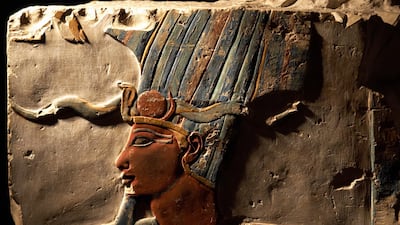
Polychrome relief of Pharaoh Thutmose III (h.1490-1436 BC), Sixth pharaoh of the 18th Dynasty, New Kingdom, Part from Thutmose Temple in Deir el-Bahari, Luxor Museum, Egypt. Getty Images -
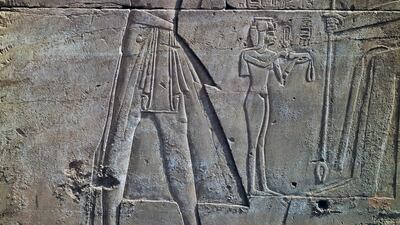
Thutmose III, relief, Temple of Amun, Karnak Temple Complex (Unesco World Heritage List, 1979). Egyptian Civilisation, New Kingdom, Dynasty XVIII. Getty Images -

The Sphinx of Thutmose III, from Egypt and dated 1480-1425 on loan from the Metropolitan Museum of Art in New York City, on show in the archaeological exhibition 'Pharaoh in Canaan: The Untold Story', at the Israel Museum in Jerusalem, Israel, March 2, 2016. EPA -
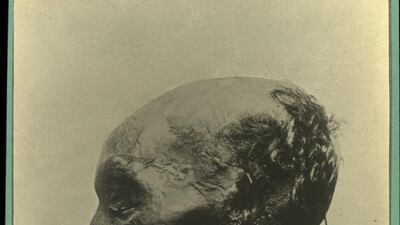
Mummified head of Egyptian Pharaoh Thutmose III, Egypt, 1900. Getty Images -
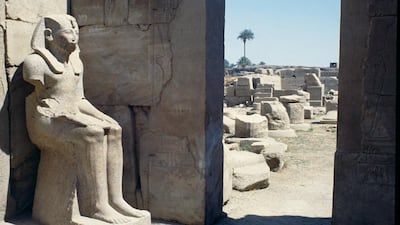
Statue of Thutmose III in ceremonial attire, Sanctuary of the sacred boat, Temple of Amun, Karnak Temple Complex (UNESCO World Heritage List, 1979). Egyptian Civilisation, New Kingdom, Dynasty XVIII. Getty Images -
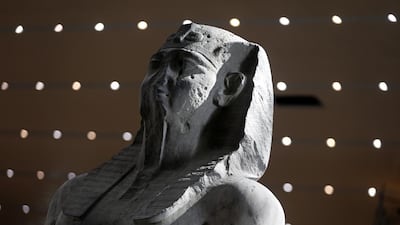
The statue of Seti I is seen after it was transferred to the Grand Egyptian Museum in Giza, Egypt September 21, 2019. Reuters -
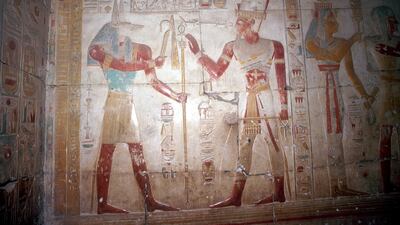
Painted relief of Sethos before Anubis (jackal headed god), Temple of Sethos I, Abydos, Egypt, 19th Dynasty, c1280 BC. Getty Images -
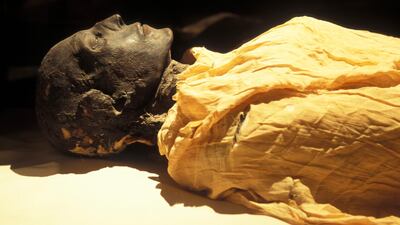
The mummy of Seti I (1294-1279 BC) bears witness to the mastery of mummification techniques of embalmers of ancient Egypt during the New Empire, April 2006. Getty Images -
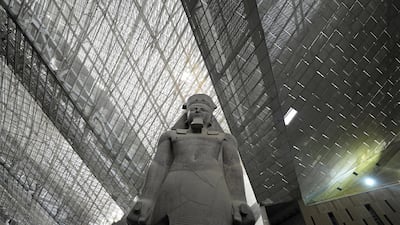
The statue of King Ramses II is seen after it was transferred to the Grand Egyptian Museum in Giza, Egypt September 21, 2019. Reuters -
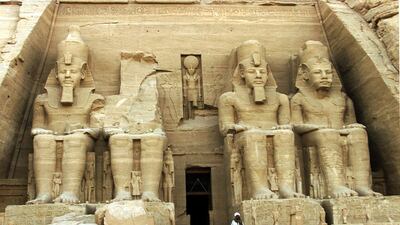
Egyptian Kamal Ahmed Mahran, an antiquities guardian, walks out of the 3200-year-old Abu Simbel temple in between the four colossal statues of the pharaoh king Ramses II, January 13, 2002. -
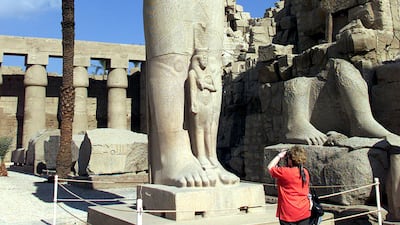
A visitor takes a picture of Pharaoh King Ramses II's statue at Karnak temple January 13, 2002. Reuters -
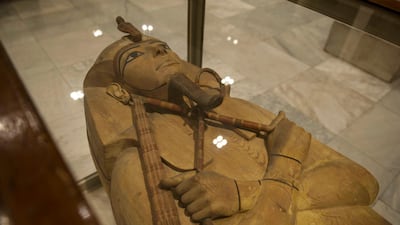
A view of the wooden coffin of King Ramses II on display in the Egyptian Museum at Tahrir Square in Cairo, Egypt, April 16, 2019. EPA -
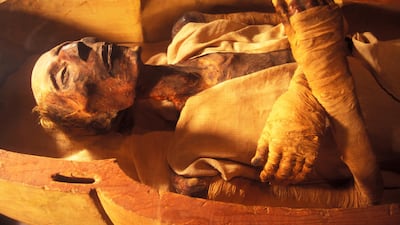
The mummy of Ramses II (1301-1235 BC), son of Sethy at Cairo Museum, Egypt, April 2006. The mummy was discovered with the other royal mummies in the Deir el Bahari hiding place. Getty Images -
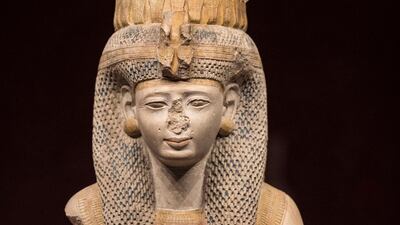
A picture taken on June 18, 2020 shows a statue of Queen Meritamen, one of the daughters of Rameses II, who became his Great Royal Wife after the death of her mother, Nefertari, at the museum in the Red Sea Egyptian resort of Hurghada. AFP -
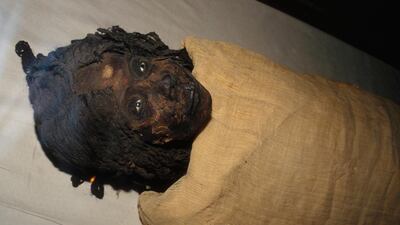
Mummy of Meritamen, daughter of Nefertari and Ramesses the Great, and later Great Royal Wife of Pharaoh Ramesses the Great. Getty Images -
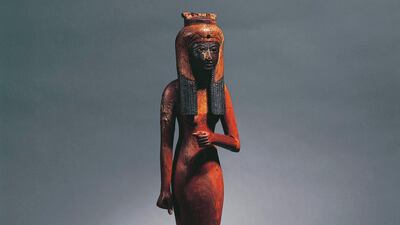
Statuette representing the Queen Ahmose-Nefertari (circa 1570-1505 B.C.)Getty Images -
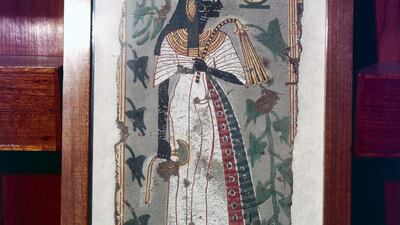
Ahmose-Nefertari, Wallpainting from a tomb of Thebes c1200BC. Ahmose-Nefertari of Ancient Egypt was the first Queen of the 18th Dynasty and mother of king Amenhotep I and may have served as his regent when he was young. Getty Images -
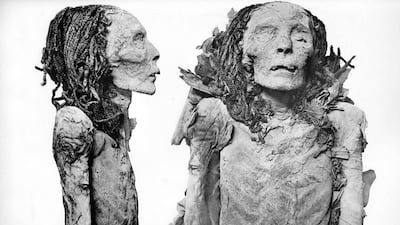
The mummy of Ahmose-Nefertari, queen of pharaoh Ahmose of the 18th dynasty. Courtesy G Elliot Smith



