

Sheikh Hamdan is encouraging people across Dubai to get involved with a fitness challenge that will transform Sheikh Zayed Road into a cycle track.
For the first time, Dubai residents will be able to cycle along the busy 14-lane highway when it is closed to traffic on November 20 for Dubai Ride, part of the Dubai Fitness Challenge.
The Crown Prince of Dubai shared a video on his Twitter page encouraging people to sign up for the one-off event.
"Dubai endeavours to be among the most active and dynamic cities in the world, and as part of this year's Dubai Fitness challenge, we've launched Dubai Ride on November 20, which will pass through the city's top landmarks," he said. "Join me by registering at dubairide.com."
Cyclists of all abilities are invited to take part and participants can choose between two routes; a four-kilometre family ride and a 14km open ride.
The 4km family-friendly fun ride is open to participants aged 5 and above and will take cyclists around Sheikh Mohammed bin Rashid Boulevard.
The 14km route, created for cycling enthusiasts aged 13 or older, will go past Downtown Dubai, Business Bay, Dubai Canal and along both sides of Sheikh Zayed Road, which be closed to traffic from Al Meydan Road to the roundabout at the World Trade Centre.
Sheikh Hamdan said the event aimed to encourage cycling among the emirate's residents "to enhance our health and well-being, or promote environmentally friendly transport in our communities".
Cyclists must be able to cycle a minimum of 4km, bring their own bike and helmet and register to participate at dubairide.com.
Speed limits, closely monitored by pace cars, will be set to ensure safety. They will also ensure cyclists follow social distancing rules.
The event is free, but participants are invited to support Education Uninterrupted, a nationwide fundraising campaign that aims to help pupils affected by Covid-19, with donations.
More information on Education Uninterrupted is available here.
Click through the gallery below to see photos of Sheikh Mohammed bin Rashid cycling around Dubai:
-
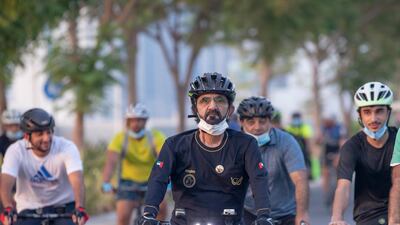
Sheikh Mohammed bin Rashid, Vice President and Ruler of Dubai, with friends and family as they cycle around Dubai on August 9. Courtesy: Dubai Media Office -
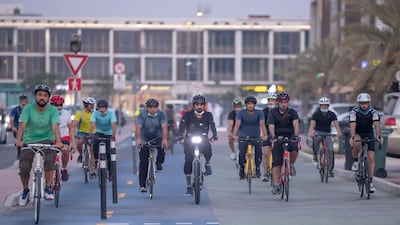
Sheikh Mohammed paces down the city's cycle paths. Courtesy: Dubai Media Office -
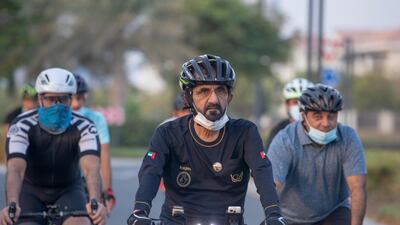
Sheikh Mohammed bin Rashid travelled down the cycle path by the city's canal and in to Downtown. Courtesy: Dubai Media Office -
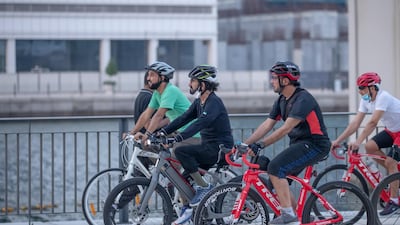
Sheikh Mohammed is an avid cyclist who is often seen at Al Qudra desert track. Courtesy: Dubai Media Office -

The group pose for a photo by the canal bridge waterfall near Business Bay. Courtesy: Dubai Media Office -
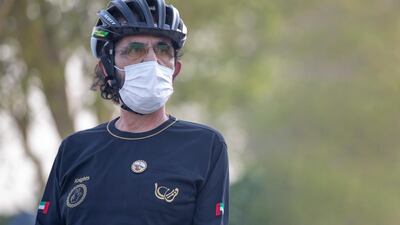
All of Sheikh Mohammed's entourage had cycling helmets on. Courtesy: Dubai Media Office -
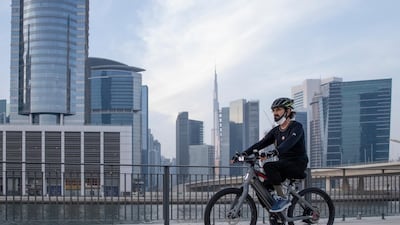
Dubai now has hundreds of kilometres of cycle tracks after investment in recent years. Courtesy: Dubai Media Office -
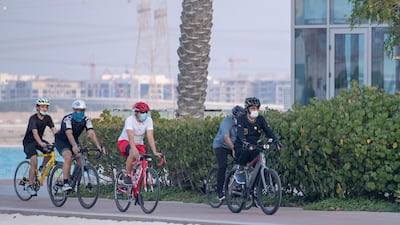
Sheikh Mohammed bin Rashid, Vice President and Ruler of Dubai, and family cycle around Dubai on Thursday. Courtesy: Dubai Media Office -
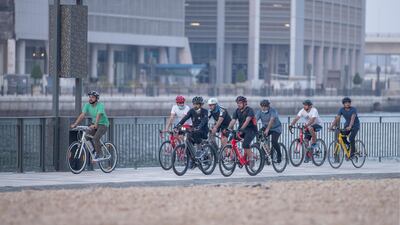
Sheikh Mohammed bin Rashid, Vice President and Ruler of Dubai, and family cycle around Dubai on Thursday. Courtesy: Dubai Media Office -
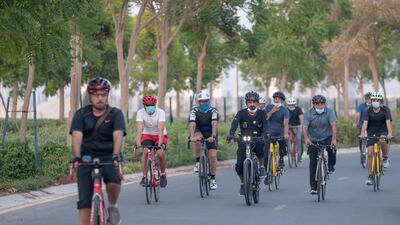
Sheikh Mohammed bin Rashid, Vice President and Ruler of Dubai, and family cycle around Dubai on Thursday. Courtesy: Dubai Media Office -
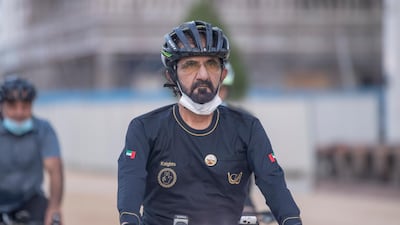
Sheikh Mohammed bin Rashid, Vice President and Ruler of Dubai, and family cycle around Dubai on Thursday. Courtesy: Dubai Media Office -
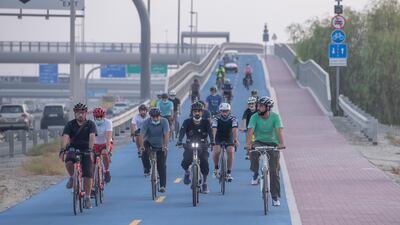
Sheikh Mohammed bin Rashid, Vice President and Ruler of Dubai, and family cycle around Dubai on Thursday. Courtesy: Dubai Media Office



