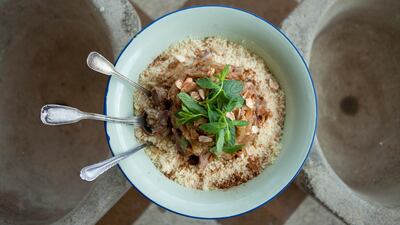
Lamb couscous and caramelised onions, prepared by Mark Dougherty, a chef from Ireland. Courtesy Philip Cheung

The unexpected allure of couscous: the history and tradition behind the North African staple


  • English
  • Arabic

In a solemn announcement that may surprise gourmets across the globe, the august arbiters of Unesco have decided that the humble North African dish of couscous is to be elevated to the UN Agency’s elite list of the world’s Intangible Cultural Heritage of Humanity.

Foodies from the Maghreb are hailing their “couscous traditions”, a staple that is just as much a part of daily life as rice and noodles in Asia or potatoes in Europe and North America.

Because while couscous may sound like the blandest base for a meal – steamed semolina traditionally made from crushed durum wheat – what brings it to life are the traditions of its preparation, the rites and rituals of serving, and, above all, the incredible variety of ingredients that can accompany it.

Algerian chef Rabah Ourrad prepares a couscous dish in Algiers on December 13, 2020. AFP

Why has Unesco chosen to single out couscous? Because it is actually more than just a dish.

It represents a way of life, originally that of the North African Maghreb, which is why the official description extolls the ”knowledge, know-how and practices related to the production and consumption of couscous”.

Transcending national borders

And in a unique judgment of heritage transcending national borders, Unesco has not chosen one country as “the home of couscous”, but awarded a joint inscription to Algeria, Morocco, Tunisia and Mauritania, recognising that “couscous is much more than a dish, it is a moment, memories, traditions, know-how, gestures that are passed on from generation to generation”.

Couscous is much more than a dish, it is a moment, memories, traditions, know-how, gestures that are passed on from generation to generation

This historic dish almost certainly began with nomadic Berber tribes whose indigenous word "seksu" has metamorphosed over the centuries into couscous, though dates for its first appearance are disputed.

Some food historians point back more than 2,000 years, to the then Berber kingdom of Numidia, while the earliest recipes were written down in Arabic during the 13th century.

The beauty of couscous is that it is indefinable. The magical semolina granules can be made from sorghum or pearl millet, as well as classic hard wheat. Alongside the obligatory harissa paste, you can serve it with raisins, almonds, saffron, orange blossoms and cinnamon.

Fish couscous served at Assud Porta Nuova. Courtesy Elena Dan

Couscous can be eaten as a basic vegetarian dish without the usual cornucopia of meats, while as far away as Sicily, there is a North African tradition of seafood couscous with fish, octopus and squid.

In Libya or Mauritania, don’t be surprised to see couscous accompanied by camel meat, while the Egyptians save couscous for dessert, topping it with honey, dates, sultanas and nuts.

From Dubai to Dallas

As you would expect in any discussion about food, every nation is fiercely patriotic when it comes to where the best couscous is made, especially chefs from neighbouring Algeria, Morocco and Tunisia. But what is interesting about couscous is that at the end of any heated argument, all food lovers will end up agreeing that “the best couscous is my mother’s”.

While its origins may lie in Algeria, Morocco and Tunisia, the heritage of preparing and eating couscous soon spread across North Africa, becoming a vital element in the traditional cuisine of Libya, Mauritania, Egypt and the Sahel, before more recently making its mark on the global eating-out scene.

A marinated lamb rump with couscous from Jones the Grocer. Courtesy Jones the Grocer

While certainly not as ubiquitous as McDonald’s, the Maghreb diaspora has today ensured that a hungry diner can find a colourful couscous eatery, invariably cheap and cheerful, in every corner of the world, from Dubai to Dallas, Shanghai to Seville, Bombay to Berlin.

'It belongs to everyone'

Moroccan-born chef Fatema Hal goes as far to say that couscous "really belongs to everyone".

"It is that rare dish that transcends frontiers, a dish that existed long before our modern international boundaries," she says.

"It is the only dish that accompanies the Maghreban throughout his life, served at birth, marriage, birthdays and death, always reunifying the family. Another profound tradition is that on Fridays, couscous is served for free to the poor.”

Hal has dedicated herself to safeguarding and recording culinary heritage with her books, including Couscous, published in 2001.

She remembers when welcoming France’s most famous Michelin-starred chef, Alain Ducasse, to try her very own couscous recipe, how “very, very curious he was, always taking pleasure to taste something new, always taking the time to appreciate the subtleties of each dish”.

In another of the cradles of couscous, one of Tunisia's most respected chefs, Slim Bettaieb, who oversees the kitchens of the luxury La Badira hotel in the seaside resort of Hammamet, reminisces how he found his early inspiration for cuisine. "In Tunisia, the spicy hot harissa sauce that accompanies every couscous is often prepared to a family recipe," he says.

“My maman would make enough to last the whole year, and as soon as I could walk, I loved helping her and learning her secrets. I continue the tradition today, serving it in my restaurant, though the only time I could not make enough was when I entered the Guinness Book of Records in 2001, preparing two tonnes of couscous!”

He makes the point that couscous can also be the perfect seasonal dish.

“My all time favourite couscous is right now, using winter vegetables: cabbage, fava beans, potatoes, peppers, pumpkin and a little ‘kaddid’, salted air-dried lamb that is traditionally prepared after Eid.”

The local couscous joint

When I was making Paris my home, it quickly became apparent that in addition to deciding on my favourite local cafe, bistrot and brasserie, I also had to choose my preferred couscous restaurant, Le Berbere. After all, way back in 2006, Gallic food critics were already taken by surprise when couscous came first in a poll of France’s favourite dishes, ahead of steak-frites, boeuf bourguignon and cassoulet.

The Berbere’s owner, Hocin Buouaziz, who was born in Paris from a family of the Algerian diaspora, recently told me how, “couscous was always present in my life, as I was born upstairs from a restaurant, Le Roi du Couscous, where my father was the chef".

"France has made me what I am, but my origins are Berber and from 11 to 17 years of age I lived in the family 'bled', our village in the Kabylie mountains," he says.

"When I came to Paris in 1999 and opened Le Berbere, the name was a nod to my origins, my culture. Over the years, my clients, who are 99.5 per cent local French, have become my friends, my family, and we now have wonderful meals with three generations at table, eating a couscous of course.”

My work as a travel and food writer takes me to some of the world's top gastronomic fine-dining restaurants, but once back home, I can’t wait for a convivial couscous shared with friends at Le Berbere, where the table is laid out with a huge tureen of vegetables floating in a rich broth – carrots, courgettes, celery, turnip, chickpeas, fennel, leek – plates of spicy merguez sausages, juicy grilled chops, skewers of chunky beef and chicken, savoury kofta meatballs, and a spit-roasted joint of mechoui lamb.

The waiter slowly does a tour of the table, gently ladling generous spoonfuls of delicately steamed couscous on to plates, and then everyone tucks into the ultimate comfort food feast. Definitely worthy of the title Intangible Cultural Heritage.

Scroll through the gallery below to see more 2020 additions to Unesco's list of Intangible Cultural Heritage:

  • An aflaj in the Al Ain area taken at some point between 1962 and 1964. Courtesy: David Riley
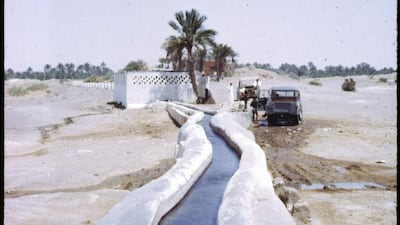
    An aflaj in the Al Ain area taken at some point between 1962 and 1964. Courtesy: David Riley
  • Camels at the Marmoom season finals for the camel racing season at Al Marmoom Heritage Village in Dubai. Satish Kumar
    Camels at the Marmoom season finals for the camel racing season at Al Marmoom Heritage Village in Dubai. Satish Kumar
  • A Bedouin woman threads reeds as she weaves a rug at the Al Hayah community co-operative in the El Farafra Oasis, southwest of Cairo. AFP
    A Bedouin woman threads reeds as she weaves a rug at the Al Hayah community co-operative in the El Farafra Oasis, southwest of Cairo. AFP
  • Tunisian chef Taieb Bouhadra presents a traditional Tunisian lamb couscous dish at a restaurant in the Medina of Tunisia's capital, Tunis. AFP
    Tunisian chef Taieb Bouhadra presents a traditional Tunisian lamb couscous dish at a restaurant in the Medina of Tunisia's capital, Tunis. AFP
  • A man drinks terere, a Paraguayan infusion of yerba mate and cold water. AFP
    A man drinks terere, a Paraguayan infusion of yerba mate and cold water. AFP
  • The drink is prepared in a jug or thermos, in which cold water is mixed with medicinal herbs crushed in a mortar. AFP
    The drink is prepared in a jug or thermos, in which cold water is mixed with medicinal herbs crushed in a mortar. AFP
  • People have their lunch at the Maxwell market hawker centre in Singapore on December 17, 2020, a day after Singapore's street food culture was included on the Unesco list. AFP
    People have their lunch at the Maxwell market hawker centre in Singapore on December 17, 2020, a day after Singapore's street food culture was included on the Unesco list. AFP
  • The Lotus Lantern Festival in Seoul, South Korea. EPA
    The Lotus Lantern Festival in Seoul, South Korea. EPA
  • The craftsmanship of mechanical watchmaking has won Unesco Intangible Heritage status. AFP
    The craftsmanship of mechanical watchmaking has won Unesco Intangible Heritage status. AFP
  • An employee of Swiss watchmaker H Moser & Cie assembles a wristwatch at the Salon International de la Haute Horlogerie professional fair in fine watchmaking in Geneva. AFP
    An employee of Swiss watchmaker H Moser & Cie assembles a wristwatch at the Salon International de la Haute Horlogerie professional fair in fine watchmaking in Geneva. AFP
  • Venetian glass beads at the 1911-established company Ercole Moretti. AFP
    Venetian glass beads at the 1911-established company Ercole Moretti. AFP
  • Italian artist and craftsman Davide Penso holds a Murano glass pearl outside his workshop on December 18, 2020. AFP
    Italian artist and craftsman Davide Penso holds a Murano glass pearl outside his workshop on December 18, 2020. AFP
  • Finland's sauna culture was inscribed on Unesco's list of Intangible Cultural Heritage. EPA
    Finland's sauna culture was inscribed on Unesco's list of Intangible Cultural Heritage. EPA
  • This is Finland's first inscription on the list. EPA
    This is Finland's first inscription on the list. EPA
  • A cat enjoys the warmth in a sauna in Helsinki, Finland, on December 18, 2020. EPA
    A cat enjoys the warmth in a sauna in Helsinki, Finland, on December 18, 2020. EPA
The%20specs
%3Cp%3E%3Cstrong%3EEngine%3A%3C%2Fstrong%3E%203.0-litre%20six-cylinder%20turbo%20(BMW%20B58)%3Cbr%3E%3Cstrong%3EPower%3A%3C%2Fstrong%3E%20340hp%20at%206%2C500rpm%3Cbr%3E%3Cstrong%3ETorque%3A%3C%2Fstrong%3E%20500Nm%20from%201%2C600-4%2C500rpm%3Cbr%3E%3Cstrong%3ETransmission%3A%3C%2Fstrong%3E%20ZF%208-speed%20auto%3Cbr%3E%3Cstrong%3E0-100kph%3A%3C%2Fstrong%3E%204.2sec%3Cbr%3E%3Cstrong%3ETop%20speed%3A%3C%2Fstrong%3E%20267kph%3C%2Fp%3E%0A%3Cp%3E%3Cstrong%3EOn%20sale%3A%3C%2Fstrong%3E%20Now%3Cbr%3E%3Cstrong%3EPrice%3A%3C%2Fstrong%3E%20From%20Dh462%2C189%3Cbr%3E%3Cstrong%3EWarranty%3A%3C%2Fstrong%3E%2030-month%2F48%2C000k%3C%2Fp%3E%0A
HOW TO WATCH

Facebook: TheNationalNews  

Twitter: @thenationalnews  

Instagram: @thenationalnews.com  

TikTok: @thenationalnews 

Company%20profile
%3Cp%3E%3Cstrong%3EName%3A%20%3C%2Fstrong%3EMaly%20Tech%3Cbr%3E%3Cstrong%3EStarted%3A%3C%2Fstrong%3E%202023%3Cbr%3E%3Cstrong%3EFounder%3A%3C%2Fstrong%3E%20Mo%20Ibrahim%3Cbr%3E%3Cstrong%3EBased%3A%3C%2Fstrong%3E%20Dubai%20International%20Financial%20Centre%3Cbr%3E%3Cstrong%3ESector%3A%3C%2Fstrong%3E%20FinTech%3Cbr%3E%3Cstrong%3EFunds%20raised%3A%3C%2Fstrong%3E%20%241.6%20million%3Cbr%3E%3Cstrong%3ECurrent%20number%20of%20staff%3A%3C%2Fstrong%3E%2015%3Cbr%3E%3Cstrong%3EInvestment%20stage%3A%20%3C%2Fstrong%3EPre-seed%2C%20planning%20first%20seed%20round%3Cbr%3E%3Cstrong%3EInvestors%3A%3C%2Fstrong%3E%20GCC-based%20angel%20investors%3C%2Fp%3E%0A
The specs: 2018 BMW R nineT Scrambler

Price, base / as tested Dh57,000

Engine 1,170cc air/oil-cooled flat twin four-stroke engine

Transmission Six-speed gearbox

Power 110hp) @ 7,750rpm

Torque 116Nm @ 6,000rpm

Fuel economy, combined 5.3L / 100km

The%20Afghan%20connection
%3Cp%3EThe%20influx%20of%20talented%20young%20Afghan%20players%20to%20UAE%20cricket%20could%20have%20a%20big%20impact%20on%20the%20fortunes%20of%20both%20countries.%20Here%20are%20three%20Emirates-based%20players%20to%20watch%20out%20for.%0D%3Cbr%3E%20%0D%3Cbr%3E%3Cstrong%3EHassan%20Khan%20Eisakhil%3C%2Fstrong%3E%0D%3Cbr%3EMohammed%20Nabi%20is%20still%20proving%20his%20worth%20at%20the%20top%20level%20but%20there%20is%20another%20reason%20he%20is%20raging%20against%20the%20idea%20of%20retirement.%20If%20the%20allrounder%20hangs%20on%20a%20little%20bit%20longer%2C%20he%20might%20be%20able%20to%20play%20in%20the%20same%20team%20as%20his%20son%2C%20Hassan%20Khan.%20The%20family%20live%20in%20Ajman%20and%20train%20in%20Sharjah.%0D%3Cbr%3E%20%0D%3Cbr%3E%3Cstrong%3EMasood%20Gurbaz%3C%2Fstrong%3E%0D%3Cbr%3EThe%20opening%20batter%2C%20who%20trains%20at%20Sharjah%20Cricket%20Academy%2C%20is%20another%20player%20who%20is%20a%20part%20of%20a%20famous%20family.%20His%20brother%2C%20Rahmanullah%2C%20was%20an%20IPL%20winner%20with%20Kolkata%20Knight%20Riders%2C%20and%20opens%20the%20batting%20with%20distinction%20for%20Afghanistan.%0D%3Cbr%3E%20%0D%3Cbr%3E%3Cstrong%3EOmid%20Rahman%3C%2Fstrong%3E%0D%3Cbr%3EThe%20fast%20bowler%20became%20a%20pioneer%20earlier%20this%20year%20when%20he%20became%20the%20first%20Afghan%20to%20represent%20the%20UAE.%20He%20showed%20great%20promise%20in%20doing%20so%2C%20too%2C%20playing%20a%20key%20role%20in%20the%20senior%20team%E2%80%99s%20qualification%20for%20the%20Asia%20Cup%20in%20Muscat%20recently.%0D%3Cbr%3E%3C%2Fp%3E%0A
The Brutalist

Director: Brady Corbet

Stars: Adrien Brody, Felicity Jones, Guy Pearce, Joe Alwyn

Rating: 3.5/5

Who's who in Yemen conflict

Houthis: Iran-backed rebels who occupy Sanaa and run unrecognised government

Yemeni government: Exiled government in Aden led by eight-member Presidential Leadership Council

Southern Transitional Council: Faction in Yemeni government that seeks autonomy for the south

Habrish 'rebels': Tribal-backed forces feuding with STC over control of oil in government territory

Ten tax points to be aware of in 2026

1. Domestic VAT refund amendments: request your refund within five years

If a business does not apply for the refund on time, they lose their credit.

2. E-invoicing in the UAE

Businesses should continue preparing for the implementation of e-invoicing in the UAE, with 2026 a preparation and transition period ahead of phased mandatory adoption. 

3. More tax audits

Tax authorities are increasingly using data already available across multiple filings to identify audit risks. 

4. More beneficial VAT and excise tax penalty regime

Tax disputes are expected to become more frequent and more structured, with clearer administrative objection and appeal processes. The UAE has adopted a new penalty regime for VAT and excise disputes, which now mirrors the penalty regime for corporate tax.

5. Greater emphasis on statutory audit

There is a greater need for the accuracy of financial statements. The International Financial Reporting Standards standards need to be strictly adhered to and, as a result, the quality of the audits will need to increase.

6. Further transfer pricing enforcement

Transfer pricing enforcement, which refers to the practice of establishing prices for internal transactions between related entities, is expected to broaden in scope. The UAE will shortly open the possibility to negotiate advance pricing agreements, or essentially rulings for transfer pricing purposes. 

7. Limited time periods for audits

Recent amendments also introduce a default five-year limitation period for tax audits and assessments, subject to specific statutory exceptions. While the standard audit and assessment period is five years, this may be extended to up to 15 years in cases involving fraud or tax evasion. 

8. Pillar 2 implementation 

Many multinational groups will begin to feel the practical effect of the Domestic Minimum Top-Up Tax (DMTT), the UAE's implementation of the OECD’s global minimum tax under Pillar 2. While the rules apply for financial years starting on or after January 1, 2025, it is 2026 that marks the transition to an operational phase.

9. Reduced compliance obligations for imported goods and services

Businesses that apply the reverse-charge mechanism for VAT purposes in the UAE may benefit from reduced compliance obligations. 

10. Substance and CbC reporting focus

Tax authorities are expected to continue strengthening the enforcement of economic substance and Country-by-Country (CbC) reporting frameworks. In the UAE, these regimes are increasingly being used as risk-assessment tools, providing tax authorities with a comprehensive view of multinational groups’ global footprints and enabling them to assess whether profits are aligned with real economic activity. 

Contributed by Thomas Vanhee and Hend Rashwan, Aurifer

Abu Dhabi Desert Challenge – Rally schedule:

Saturday: Super Special Spectator Stage – Yas Marina Circuit – start 3.30pm.
Sunday: Yas Marina Circuit Stage 1 (276.01km)
Monday: Nissan Stage 2 (287.92km)
Tuesday: Al Ain Water Stage 3 (281.38km)
Wednesday: ADNOC Stage 4 (244.49km)
Thursday: Abu Dhabi Aviation Stage 5 (218.57km) Finish: Yas Marina Circuit – 4.30pm.

The years Ramadan fell in May

1987

1954

1921

1888

COMPANY%20PROFILE
%3Cp%3E%3Cstrong%3EName%3A%20%3C%2Fstrong%3EEjari%3Cbr%3E%3Cstrong%3EBased%3A%20%3C%2Fstrong%3ERiyadh%2C%20Saudi%20Arabia%3Cbr%3E%3Cstrong%3EFounders%3A%20%3C%2Fstrong%3EYazeed%20Al%20Shamsi%2C%20Fahad%20Albedah%2C%20Mohammed%20Alkhelewy%20and%20Khalid%20Almunif%3Cbr%3E%3Cstrong%3ESector%3A%20%3C%2Fstrong%3EPropTech%3Cbr%3E%3Cstrong%3ETotal%20funding%3A%20%3C%2Fstrong%3E%241%20million%3Cbr%3E%3Cstrong%3EInvestors%3A%20%3C%2Fstrong%3ESanabil%20500%20Mena%2C%20Hambro%20Perks'%20Oryx%20Fund%20and%20angel%20investors%3Cbr%3E%3Cstrong%3ENumber%20of%20employees%3A%20%3C%2Fstrong%3E8%3C%2Fp%3E%0A
Key facilities
  • Olympic-size swimming pool with a split bulkhead for multi-use configurations, including water polo and 50m/25m training lanes
  • Premier League-standard football pitch
  • 400m Olympic running track
  • NBA-spec basketball court with auditorium
  • 600-seat auditorium
  • Spaces for historical and cultural exploration
  • An elevated football field that doubles as a helipad
  • Specialist robotics and science laboratories
  • AR and VR-enabled learning centres
  • Disruption Lab and Research Centre for developing entrepreneurial skills
Living in...

This article is part of a guide on where to live in the UAE. Our reporters will profile some of the country’s most desirable districts, provide an estimate of rental prices and introduce you to some of the residents who call each area home.

Company%C2%A0profile
%3Cp%3E%3Cstrong%3ECompany%20name%3A%20%3C%2Fstrong%3ETuhoon%0D%3Cbr%3E%3Cstrong%3EYear%20started%3A%20%3C%2Fstrong%3EJune%202021%0D%3Cbr%3E%3Cstrong%3ECo-founders%3A%20%3C%2Fstrong%3EFares%20Ghandour%2C%20Dr%20Naif%20Almutawa%2C%20Aymane%20Sennoussi%0D%3Cbr%3E%3Cstrong%3EBased%3A%20%3C%2Fstrong%3ERiyadh%0D%3Cbr%3E%3Cstrong%3ESector%3A%20%3C%2Fstrong%3Ehealth%20care%0D%3Cbr%3E%3Cstrong%3ESize%3A%20%3C%2Fstrong%3E15%20employees%2C%20%24250%2C000%20in%20revenue%0D%3Cbr%3EI%3Cstrong%3Envestment%20stage%3A%20s%3C%2Fstrong%3Eeed%0D%3Cbr%3E%3Cstrong%3EInvestors%3A%20%3C%2Fstrong%3EWamda%20Capital%2C%20Nuwa%20Capital%2C%20angel%20investors%3C%2Fp%3E%0A
Brief scoreline:

Liverpool 2

Mane 51', Salah 53'

Chelsea 0

Man of the Match: Mohamed Salah (Liverpool)

Moon Music

Artist: Coldplay

Label: Parlophone/Atlantic

Number of tracks: 10

Rating: 3/5

Global state-owned investor ranking by size

1.

United States

2.

China

3.

UAE

4.

Japan

5

Norway

6.

Canada

7.

Singapore

8.

Australia

9.

Saudi Arabia

10.

South Korea

In numbers: PKK’s money network in Europe

Germany: PKK collectors typically bring in $18 million in cash a year – amount has trebled since 2010

Revolutionary tax: Investigators say about $2 million a year raised from ‘tax collection’ around Marseille

Extortion: Gunman convicted in 2023 of demanding $10,000 from Kurdish businessman in Stockholm

Drug trade: PKK income claimed by Turkish anti-drugs force in 2024 to be as high as $500 million a year

Denmark: PKK one of two terrorist groups along with Iranian separatists ASMLA to raise “two-digit million amounts”

Contributions: Hundreds of euros expected from typical Kurdish families and thousands from business owners

TV channel: Kurdish Roj TV accounts frozen and went bankrupt after Denmark fined it more than $1 million over PKK links in 2013 

Results

Stage 7:

1. Caleb Ewan (AUS) Lotto Soudal - 3:18:29

2. Sam Bennett (IRL) Deceuninck-QuickStep - same time

3. Phil Bauhaus (GER) Bahrain Victorious

4. Michael Morkov (DEN) Deceuninck-QuickStep

5. Cees Bol (NED) Team DSM

General Classification:

1. Tadej Pogacar (SLO) UAE Team Emirates - 24:00:28

2. Adam Yates (GBR) Ineos Grenadiers - 0:00:35

3. Joao Almeida (POR) Deceuninck-QuickStep - 0:01:02

4. Chris Harper (AUS) Jumbo-Visma - 0:01:42

5. Neilson Powless (USA) EF Education-Nippo - 0:01:45

Day 5, Abu Dhabi Test: At a glance

Moment of the day When Dilruwan Perera dismissed Yasir Shah to end Pakistan’s limp resistance, the Sri Lankans charged around the field with the fevered delirium of a side not used to winning. Trouble was, they had not. The delivery was deemed a no ball. Sri Lanka had a nervy wait, but it was merely a stay of execution for the beleaguered hosts.

Stat of the day – 5 Pakistan have lost all 10 wickets on the fifth day of a Test five times since the start of 2016. It is an alarming departure for a side who had apparently erased regular collapses from their resume. “The only thing I can say, it’s not a mitigating excuse at all, but that’s a young batting line up, obviously trying to find their way,” said Mickey Arthur, Pakistan’s coach.

The verdict Test matches in the UAE are known for speeding up on the last two days, but this was extreme. The first two innings of this Test took 11 sessions to complete. The remaining two were done in less than four. The nature of Pakistan’s capitulation at the end showed just how difficult the transition is going to be in the post Misbah-ul-Haq era.

MATCH INFO

Syria v Australia
2018 World Cup qualifying: Asia fourth round play-off first leg
Venue: Hang Jebat Stadium (Malacca, Malayisa)
Kick-off: Thursday, 4.30pm (UAE)
Watch: beIN Sports HD

* Second leg in Australia scheduled for October 10

FIGHT CARD

Welterweight Mostafa Radi (PAL) v Tohir Zhuraev (TJK)

Catchweight 75kg Leandro Martins (BRA) v Anas Siraj Mounir (MAR)

Flyweight Corinne Laframboise (CAN) v Manon Fiorot (FRA)

Featherweight Ahmed Al Darmaki (UAE) v Bogdan Kirilenko (UZB)

Lightweight Izzedine Al Derabani (JOR) v Atabek Abdimitalipov (KYG)

Featherweight Yousef Al Housani (UAE) v Mohamed Arsharq Ali (SLA)

Catchweight 69kg Jung Han-gook (KOR) v Elias Boudegzdame (ALG)

Catchweight 71kg Usman Nurmagomedov (RUS) v Jerry Kvarnstrom (FIN)

Featherweight title Lee Do-gyeom (KOR) v Alexandru Chitoran (ROU)

Lightweight title Bruno Machado (BRA) v Mike Santiago (USA)

Real estate tokenisation project

Dubai launched the pilot phase of its real estate tokenisation project last month.

The initiative focuses on converting real estate assets into digital tokens recorded on blockchain technology and helps in streamlining the process of buying, selling and investing, the Dubai Land Department said.

Dubai’s real estate tokenisation market is projected to reach Dh60 billion ($16.33 billion) by 2033, representing 7 per cent of the emirate’s total property transactions, according to the DLD.