
Dubai’s culinary scene is a shifting, swirling cauldron of constant change.
Over the past few decades, restaurants by celebrity chefs have come and gone, home-grown concepts have made their mark, some beloved hidden joints have rebranded or shut shop. Meanwhile, Instagram has driven food trends, cloud kitchens have gained a foothold and influencer marketing has become a thing.
And while change is the only constant, there are some restaurants that have managed to stand the test of time. Here's what Dubai's golden oldies have learnt over the years to survive in a fickle landscape – and how they're using that knowledge to make it through the pandemic.
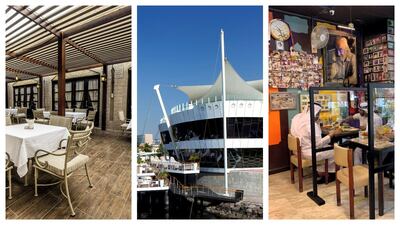
Al Ustad Special Kabab: low prices and good service
Ask anyone where to enjoy tender kebabs and saffron rice, and they will probably direct you towards Al Ustad Special Kabab. Launched by Mohammed Ali Ansari about 43 years ago, the restaurant in Al Fahidi area has racked up a loyal following over the years for its delectable Iranian cuisine and wallet-friendly prices.

But even with its enviable popularity – past customers include Bollywood actors and royalty – Abbas Ansari, son of Mohammed, says customer demands have changed drastically over the years, presenting some challenges.
“Back in the day, we had few cuisines. But the UAE has so many nationalities today and everyone brings their national food with them. Today, the sheer number of options is surprising. All you have to do is drive 20 minutes and you’ll find something new,” says the co-owner, who runs the restaurant along with his brothers, Majed and Taleb.
“Meanwhile, people expect more for less as the cost of living increases. In Dubai, you can fill your stomach for Dh8 or Dh800. With the new restaurants opening constantly, there’s plenty of choice.”

In this truly competitive market, Abbas says their secret to surviving is keeping business costs low behind the scenes, so customers can continue to enjoy wallet-friendly prices front-of-house. The home-grown restaurant manages to do so by getting discounts on suppliers through cash payments, and running business operations between them. To this day, the brothers take on the roles of public relations officer, supervisor and even deliveryman.
“We are carrying a legacy, which is why we never compromise on quality or raise prices – even if the costs are high,” says Abbas. The family even travel to Iran themselves to buy some of the spices they need for cooking.
“Service is another thing, second only to quality – no one wants a waiter in a bad mood.”
With the brothers working six-and-a-half days a week, Al Ustad Special Kabab runs like a well-oiled machine. But even they felt the pinch in 2020, when restaurants had to rely on delivery for survival.

“The restaurant is usually so busy, bustling and colourful, but during that phase, people were scared to dine in," says Abbas. "The only people that could be there were my brothers and our staff. There was nothing to do but look at the pictures on the walls and remember fond memories of the restaurant. At that point we realised that the beauty of our business did not lie in its legacy, but its customers."
It was money saved for a rainy day that helped the restaurant survive, which is why Abbas recommends all entrepreneurs keep emergency funds aside.
The dedication has paid off. With Dubai residents unable to travel much in 2020, well-loved restaurants saw business pick back up in the last quarter. This includes Al Ustad Special Kabab, where sales returned to 100 per cent, despite its limited seating.
True to form, Abbas is modest about this achievement. "It's the love from customers and God's blessing that has helped Al Ustad survive."
Casa Mia: building a solid foundation
Fine-dining Italian restaurants might be a dime a dozen in the UAE, but even in an oversaturated market, Casa Mia, at Le Meridien Dubai Hotel & Conference Centre, manages to stand out.
The trattoria-style joint recently marked its 27th anniversary, something Philip Hardie, complex assistant director of food and beverage, credits to its “simple, homely style”.
“Even now, in 2021, when everything is modern, chic and cool, and Instagram is the direction everyone’s heading, Casa Mia holds the right charm. It’s not the biggest of restaurants, but that’s part of the allure. It is cosy, intimate, something of a hidden gem.”
A visit to the restaurant might feel “like a warm hug”, according to Hardie, but it's taken great knowledge to survive in Dubai’s competitive environment.
It all comes down to the basics, says Hardie. “Dubai, as a city, is ever-progressing, ever-growing. The food industry is going to become more competitive. But once you are past that five or 10-year mark, you have a stronger hold on the market.
“As a restaurant, you need to play to your strengths. If you are known for a certain style, stay true to that.”

That isn’t to say that restaurants should not modernise or join the social media movement. “Once the basics are there, you can incorporate those added-value moments,” Hardie explains. “But if you constantly want to move with the times, you might lose what has been built over the past 25 years."
Once a restaurant has its “mission statement” down pat, hiring the right people is of utmost importance, he continues. “When you look after your employees and your customers, your business can be sustained for another 27 years. The people make the restaurant.”
Despite getting everything right, there will always be certain events that threaten to destroy everything. Hardie lists the 2008 financial crisis and the pandemic as examples. Like all other restaurants, Casa Mia was affected, but Hardie is taking it in his stride.
“This industry is very much about ups and downs. You have to remember that it’s a marathon, not a sprint. You can’t sustain a legacy overnight. An economic crisis may rock the house, but it won’t fall down, if you have 25 years of groundwork and a strong foundation.
"It’s not going to be easy – it’s a quick and ever-changing market. But if it's a brand you believe in, everything will be good.”
Boardwalk: sailing with the times
Most residents know Dubai Creek Marina's boat-shaped restaurant well – it's part of Dubai Creek Golf & Yacht Club, which is a landmark in its own right (the shape of the clubhouse has even found its way on to the Dh20 note) – but few may know Boardwalk turns 26 in 2021.

It has certainly come a long way in that time, says food and beverage manager Pattabi Raman. “Boardwalk started as a small mini brasserie-gastropub for captains in the marina. It was a very small opening at that time. But as Dubai grew, we kept extending with it and adding new decks. Today, we are a seafood Mediterranean restaurant, more refined with our offerings.”
It is the restaurant's ability to keep moving with the times and trends that has helped it stay afloat, he says. "Twenty six years ago, hotel restaurants were a driving force, but then concept restaurants became a standard. We noticed that there was a strong push towards healthier food, which is why we introduced the seafood concept. We then went further by sustainably sourcing all our fishing products. We always cater to the market."
Being part of Dubai Creek Golf & Yacht Club and near Park Hyatt Dubai also helps, says Raman, as many people have booked staycations at the hotel over the past year and venture to nearby restaurants for a bite to eat.

The restaurant’s unusual shape and water views are designed to make residents feel as though they’re on holiday or on a cruise, which is another strong selling point as people have travelled less over the past year. “The location is something that has stayed the same – although there are a lot more skyscrapers in the view now,” he says.
For these reasons and more, the business “exceeded expectations” in the last quarter of 2020 – something Raman credits to the UAE’s government’s able handling of the pandemic.
“We had a lot of customers bring friends and family to remember the good times and relive memories from when they’ve been here before. We’ve had people who have met here for the first time, now they bring their children here. It’s such a wonderful feeling.”
LPM Restaurant: Innovating while staying true to one's roots
Staying classic while also moving with the times could seem like a mixed message. But Nicolas Budzynski, global operations director of LPM Restaurant & Bar, which marks its 10th anniversary in 2021, puts it in a simpler way: “Remaining consistent, while being innovative and adaptable, is key for the longevity of any restaurant."
He adds: “Restaurants here have carved an identity for themselves that sets a good foundation for everything else that they do."

LPM might be younger than other brands mentioned above, but it still happens to be one of Dubai’s most popular restaurants and, pandemic notwithstanding, is still growing. The restaurant is in the process of opening a sixth global location in Saudi Arabia.
"The pandemic affected everyone, especially those in the dining-out culture of the UAE – this is no secret," Budzynski says. But the team used this trying time to incorporate new measures. An example of this was its home deliveries, aimed at recreating the fine-dining experience at home.
“The pandemic opened a plethora of opportunities and made us challenge ourselves to ensure we consistently do better each day.”

