• Vision 2030 is championed by Saudi Crown Prince Mohammed bin Salman. Presidency Press Service / AP
    Vision 2030 is championed by Saudi Crown Prince Mohammed bin Salman. Presidency Press Service / AP
  • The world's biggest oil exporter is undertaking a slew of reforms as part of Vision 2030, an economic overhaul plan aimed at lowering the kingdom's dependence on oil income. Reuters
    The world's biggest oil exporter is undertaking a slew of reforms as part of Vision 2030, an economic overhaul plan aimed at lowering the kingdom's dependence on oil income. Reuters
  • Visitors walk through the ancient rock heritage site at Al Ula, Saudi Arabia. Bloomberg
    Visitors walk through the ancient rock heritage site at Al Ula, Saudi Arabia. Bloomberg
  • Saudi crown prince Mohammed bin Salman shakes hands with Klaus Kleinfeld , appointed as NEOM's chief executive. Reuters
    Saudi crown prince Mohammed bin Salman shakes hands with Klaus Kleinfeld , appointed as NEOM's chief executive. Reuters
  • The Vision also aims to encourage more women to participate in the workplace. Reuters
    The Vision also aims to encourage more women to participate in the workplace. Reuters
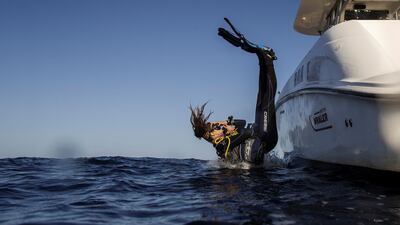
  • Researcher Michelle Havlik of Australia retrieves a piece of equipment as she dives during a research trip in the Red Sea offshore of the King Abdullah University of Science and Technology (KAUST) near the city of Jeddah, Saudi Arabia. Reuters
    Researcher Michelle Havlik of Australia retrieves a piece of equipment as she dives during a research trip in the Red Sea offshore of the King Abdullah University of Science and Technology (KAUST) near the city of Jeddah, Saudi Arabia. Reuters
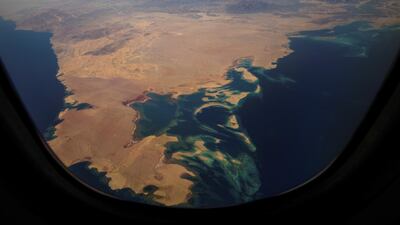
  • Shores of the Red Sea in Gizan, Saudi Arabia, where the kingdom plans to boost tourism as part of Vision 2030. Courtesy: flydubai
    Shores of the Red Sea in Gizan, Saudi Arabia, where the kingdom plans to boost tourism as part of Vision 2030. Courtesy: flydubai
  • Saudi Arabia will work to restore, conserve and sustainably manage a billion hectares of land by 2040. Riyadh Green Project
    Saudi Arabia will work to restore, conserve and sustainably manage a billion hectares of land by 2040. Riyadh Green Project
  • The kingdom is overhauling its economy under Vision 2030, a roadmap unveiled in 2016 to help wean the kingdom off oil income. AFP
    The kingdom is overhauling its economy under Vision 2030, a roadmap unveiled in 2016 to help wean the kingdom off oil income. AFP
  • Saudi women at a factory in Sudair Industrial City. Modon
    Saudi women at a factory in Sudair Industrial City. Modon
  • The site of the $500bn Neom project in the Tabuk Province of northwestern Saudi Arabia. Courtesy SCTH
    The site of the $500bn Neom project in the Tabuk Province of northwestern Saudi Arabia. Courtesy SCTH
  • The lush greenery of Jazan resembles the rice terraces of Bali. Courtesy of Consulum
    The lush greenery of Jazan resembles the rice terraces of Bali. Courtesy of Consulum
  • Qiddiya City, an entertainment development located on the outskirts of Riyadh, will be home to the kingdom's first theme park. Courtesy Saudi Tourism
    Qiddiya City, an entertainment development located on the outskirts of Riyadh, will be home to the kingdom's first theme park. Courtesy Saudi Tourism
  • Jack Nicklaus will design a signature championship course at Qiddiya, Saudi Arabia. Courtesy Golf Saudi
    Jack Nicklaus will design a signature championship course at Qiddiya, Saudi Arabia. Courtesy Golf Saudi
  • Qiddiya City is an entertainment development project due to be built in Riyadh as part of Vision 2030
    Qiddiya City is an entertainment development project due to be built in Riyadh as part of Vision 2030
  • Qiddiya City is an entertainment development project to be established in Riyadh.
    Qiddiya City is an entertainment development project to be established in Riyadh.
  • The Twilight Gardens land at Six Flags Qiddiya. Courtesy Qiddiya
    The Twilight Gardens land at Six Flags Qiddiya. Courtesy Qiddiya
  • Saudi women work on pots in a workshop in Al Ula, Saudi Arabia. Reuters
    Saudi women work on pots in a workshop in Al Ula, Saudi Arabia. Reuters
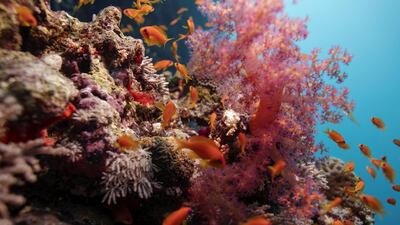
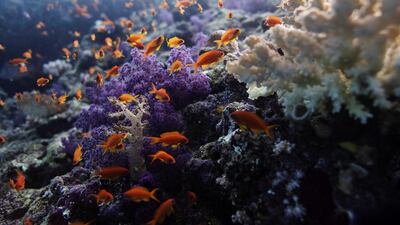
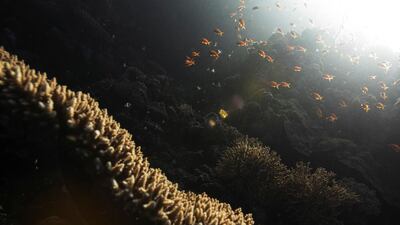
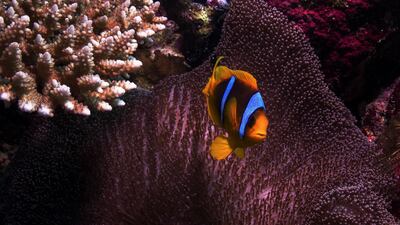
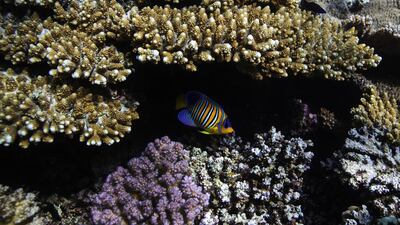
  • Fish swim above a coral reef in the Red Sea offshore of the King Abdullah University of Science and Technology (KAUST) near the city of Jeddah. Reuters
    Fish swim above a coral reef in the Red Sea offshore of the King Abdullah University of Science and Technology (KAUST) near the city of Jeddah. Reuters
  • The Red Sea Project will turn untouched coastlines into one of Saudi Arabia's biggest tourism projects where conservation is key. Courtesy The Red Sea Development Company.
    The Red Sea Project will turn untouched coastlines into one of Saudi Arabia's biggest tourism projects where conservation is key. Courtesy The Red Sea Development Company.
  • An illustration of the Amaala mega-project - one of a number of coastal and tourism schemes Saudi Arabia is developing under Vision 2030. Courtesy of the Saudi Commission for Tourism and Natural Heritage
    An illustration of the Amaala mega-project - one of a number of coastal and tourism schemes Saudi Arabia is developing under Vision 2030. Courtesy of the Saudi Commission for Tourism and Natural Heritage

Saudi Crown Prince Mohammed bin Salman explains Vision 2030 in landmark interview


Mina Aldroubi
  • English
  • Arabic

Saudi Crown Prince Mohammed bin Salman gave a televised interview on Tuesday night for the fifth anniversary of the kingdom’s Vision 2030 reform programme launch.

Under the Vision 2030 plan, Prince Mohammed has brought in several multibillion-dollar projects to put Saudi Arabia on the map for innovation, tech and youth-driven initiatives.

The most important thing to have is integrity and passion when making these changes

"We have big opportunities in front of us in different sectors and we have to exploit them to continue to grow and prosper," he said on the Liwan Al Mudaifer Show.

The crown prince's opening remarks addressed the urgency for the kingdom to diversify away from oil revenue dependency, while also describing how crucial Saudi Arabia's oil reserves are for the next stage of Vision 2030.

"If we look back, oil has helped develop our country for centuries so we’ve always had that impression to depend on oil," Prince Mohammed said.

"But the increase in population will not be able to depend on oil production, at the rate we are going."

Saudi Arabia's non-oil revenues have increased more than 200 per cent since the start of the Vision 2030 plan.

"Oil is still the main source of income for the state," Prince Mohammed said. "My intention is to make sure that the country is secure, safe and has a better future to look forward to."

Infrastructure investment 

He gave some earlier indication of what the kingdom's next plans are when he said at the end of March that Saudi energy giant Aramco would be investing 5 trillion riyals, or about $1.3tn, in the private sector by 2030.

But already, the strategy is paying dividends.

"We have solved many issues in the economic sector, including the housing sector, within the last five years since launching Vision 2030," Prince Mohammed said.

"The percentage of people owning houses before Vision 2030 was only 47 per cent. Now it has increased to 60 per cent.

"Unemployment has decreased. Before Vision 2030 it was 14 per cent and now it’s gone down to 11 per cent this year."

"We are aiming to reach unemployment rates in 2030 of 7 per cent."

He also highlighted some of the less well known – but still vital – aspects of the national strategy, including access to finance for private and business loans.

"The public is able to attain grants and loans from banks much more easily and faster than before," Prince Mohammed said.

"It used to take them years to get a loan from the bank."

Sweeping reform

One of the most high-profile ventures in Vision 2030 is the $500 billion mega-city Neom, which will combine sustainability, futurism, tourism and innovation.

Vision 2030 has three main pillars.

The first is an ambitious nation, with effective governance and social responsibility.

The second is a thriving economy with high employment and a robust non-oil private sector.

And the third is a vibrant society with a strong Islamic national identity and a fulfilling and healthy life for all.

Political reforms 

Prince Mohammed outlined how political reform had preceded the Vision's implementation.

"2015 was a difficult year for us," he said. "We made some serious changes to many ministries and government sectors, including security and the economy, by changing strategies and imposing the programs of Vision 2030.

"Lack of a strong state structure was one of the main challenges we faced in 2015.

"We managed to restructure various ministries by establishing new councils. The most important thing to have is integrity and passion when making these changes."

Saudi Arabia’s Council of Economic and Development Affairs, chaired by Prince Mohammed, has said the kingdom is on track to meet the ambitious targets set for the next nine years.

  • Researcher Michelle Havlik of Australia dives into the water during a research trip in the Red Sea, offshore of the King Abdullah University of Science and Technology, near Jeddah, Saudi Arabia. Reuters
    Researcher Michelle Havlik of Australia dives into the water during a research trip in the Red Sea, offshore of the King Abdullah University of Science and Technology, near Jeddah, Saudi Arabia. Reuters
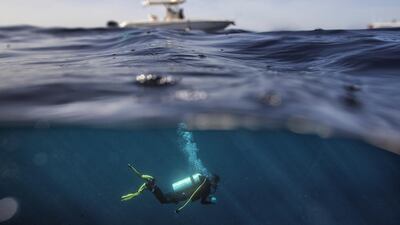
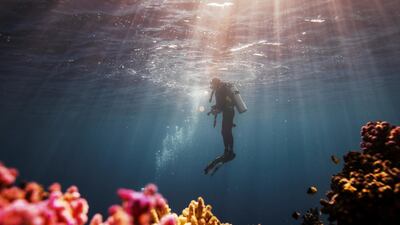
  • Researcher Nathan Geraldi of the US dives during a research trip in the Red Sea, offshore of the King Abdullah University of Science and Technology, near Jeddah, Saudi Arabia. Reuters
    Researcher Nathan Geraldi of the US dives during a research trip in the Red Sea, offshore of the King Abdullah University of Science and Technology, near Jeddah, Saudi Arabia. Reuters
  • Scientists at KAUST are working on a new technology to help restore coral globally. Reuters
    Scientists at KAUST are working on a new technology to help restore coral globally. Reuters
  • If it succeeds, KAUST's experiment may allow coral from Saudi Arabia to be transplanted to other parts of the world. Reuters
    If it succeeds, KAUST's experiment may allow coral from Saudi Arabia to be transplanted to other parts of the world. Reuters
  • The Red Sea is warmer than almost any other large body of water in the world. Reuters
    The Red Sea is warmer than almost any other large body of water in the world. Reuters
  • Red Sea coral has adapted, over hundreds of thousands of years, to the higher temperatures. Reuters
    Red Sea coral has adapted, over hundreds of thousands of years, to the higher temperatures. Reuters
  • KAUST scientists are developing techniques that will grow reefs in a few years rather than hundreds of years. Reuters
    KAUST scientists are developing techniques that will grow reefs in a few years rather than hundreds of years. Reuters
  • Experts plan to place hundreds of similar tanks in public places, such as airports and resorts, that will allow tiny corals to grow until they're large enough to be transplanted into the wild. Reuters
    Experts plan to place hundreds of similar tanks in public places, such as airports and resorts, that will allow tiny corals to grow until they're large enough to be transplanted into the wild. Reuters
  • Another Saudi project is the planned fossil-fuel-free Neom City on the Red Sea near Egypt and Israel, and bordering Jordan. Reuters
    Another Saudi project is the planned fossil-fuel-free Neom City on the Red Sea near Egypt and Israel, and bordering Jordan. Reuters
  • The Saudis hope these embryonic projects will spur tourism and put the country at the fore of renewable-energy generation, carbon-sequestration technology and solar-powered production of hydrogen gas. Reuters
    The Saudis hope these embryonic projects will spur tourism and put the country at the fore of renewable-energy generation, carbon-sequestration technology and solar-powered production of hydrogen gas. Reuters
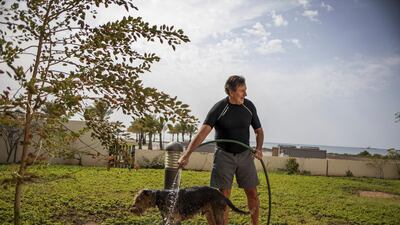
  • Carlos Duarte, professor of Marine Science and Tarek Ahmed Juffali Research Chair in Red Sea Ecology at KAUST, washes his dog at his home at the campus. Reuters
    Carlos Duarte, professor of Marine Science and Tarek Ahmed Juffali Research Chair in Red Sea Ecology at KAUST, washes his dog at his home at the campus. Reuters
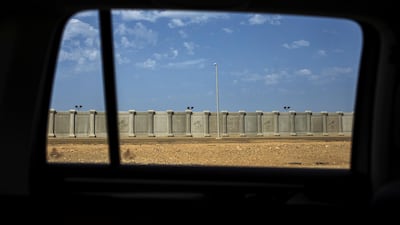
  • A view of the security wall at KAUST. Reuters
    A view of the security wall at KAUST. Reuters
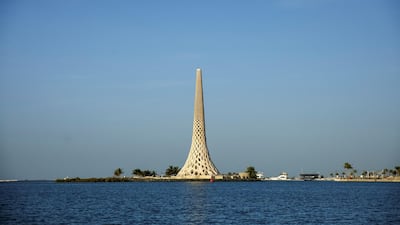
  • A beacon rises above the harbour at KAUST. Reuters
    A beacon rises above the harbour at KAUST. Reuters
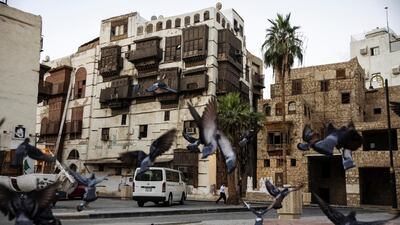
  • Wooden shutters and balconies adorn the front of a building in the Old City of Jeddah. Reuters
    Wooden shutters and balconies adorn the front of a building in the Old City of Jeddah. Reuters

Social reforms 

Some of the most striking changes brought about by Prince Mohammed are in women's rights.

Saudi women are also due to play bigger roles in the kingdom's workforce, and now make up 33 per cent of workers, up from 19 per cent in 2017.

The kingdom has implemented other sweeping changes led by Prince Mohammed and King Salman, including the removal of a ban on women driving, and introducing measures to increase their independence from male guardians in key areas such as employment, education and health.

Opening up Saudi Arabian society does not, however, mean long-held traditions are being jettisoned. Far from it, he said.

"The Holy Quran is our constitution and the government’s policies and statutes depend on it," Prince Mohammed said.

Other social potential can be unleashed with continued investment in education, he said.

"Education in the kingdom is not bad, but by 2030 we aim to have at least three universities in the top 200 institutions in the world.".

The social contract would also be reinforced by health sector reform, where public and private ventures would form more partnerships.

"The health sector is free for all but I don’t have any doubt that when Vision 2030 is complete we will have some private and public hospitals," he said.

"The health sector will see a huge transformation that will significantly change its level of services."

Tourism and the environment

One of the cornerstones of Vision 2030 is increasing tourism revenue and attracting a global audience to places of outstanding natural beauty and heritage value in the kingdom.

To this end, Prince Mohammed said that preserving and enhancing the environment was a key priority.

"Environmental initiatives in the country have a direct impact on tourism and many other sectors," he said.

"Vegetation in the kingdom has increased by 40 per cent during the past four years, which has provided many opportunities.

"Growing trees has been one of the main objectives in the country."

Such initiatives could boost tourism plans for some of the kingdom's most ambitious projects, including a series of resorts called the the Red Sea Project, which spans 90 islands, at a cost of almost $4bn.

This project "was part of our vision to present a new identity of the kingdom", the crown prince said.

Some of the country’s most notable achievements in the plan’s first five years include a rise in the number of heritage sites open to visitors, from 241 in 2017 to 354 in 2020, the council said.

Saudi Arabia’s entertainment sector has also expanded, with more than 100,000 jobs added over the last five years.

Optimism for the future

Despite a globally challenging 2020 with the coronavirus pandemic, Prince Mohammed said he believed Saudi Arabia was firmly back to growth.

"We are close to achieving the overall aims and goals of Vision 2030. We are on the right track," he said.

"We will see a strong rebound in our economic performance and achievements this year.

“Our goal is to ensure that the [public investment] fund achieves growth. We aim to increase the fund’s assets to 10tn riyals in 2030."


Country-size land deals

US interest in purchasing territory is not as outlandish as it sounds. Here's a look at some big land transactions between nations:

Louisiana Purchase

If Donald Trump is one who aims to broker "a deal of the century", then this was the "deal of the 19th Century". In 1803, the US nearly doubled in size when it bought 2,140,000 square kilometres from France for $15 million.

Florida Purchase Treaty

The US courted Spain for Florida for years. Spain eventually realised its burden in holding on to the territory and in 1819 effectively ceded it to America in a wider border treaty. 

Alaska purchase

America's spending spree continued in 1867 when it acquired 1,518,800 km2 of  Alaskan land from Russia for $7.2m. Critics panned the government for buying "useless land".

The Philippines

At the end of the Spanish-American War, a provision in the 1898 Treaty of Paris saw Spain surrender the Philippines for a payment of $20 million. 

US Virgin Islands

It's not like a US president has never reached a deal with Denmark before. In 1917 the US purchased the Danish West Indies for $25m and renamed them the US Virgin Islands.

Gwadar

The most recent sovereign land purchase was in 1958 when Pakistan bought the southwestern port of Gwadar from Oman for 5.5bn Pakistan rupees. 

The biog

Favourite films: Casablanca and Lawrence of Arabia

Favourite books: Start with Why by Simon Sinek and Good to be Great by Jim Collins

Favourite dish: Grilled fish

Inspiration: Sheikh Zayed's visionary leadership taught me to embrace new challenges.