


At the thought of breaking his Ramadan fast with a snack of sambusa, a deep-fried savoury pastry triangle popular in Yemen, Issa Al Shabi's face lights up with joy.
On a street in the rebel-held capital Sanaa, bustling with shoppers stocking up on tasty treats for iftar, the meal observant Muslims have after sunset during the Islamic month of fasting, Mr Al Shabi grins and his eyes shine in anticipation.
"The sambusa is a beautiful food, and tastes delicious," he says, jabbing the air with his hand for emphasis. "Especially so during this blessed month."
Ramadan brings out a zeal among Muslims everywhere for particular memory-laden foods.
Sambusa stuffed with vegetables or meat are found across the Middle East and are a cousin of the South Asian samosa. In Yemen, they are a much-loved tradition and a business opportunity for those who know how to make the best ones.
"People compete to get the best sambusa," Mr Al Shabi says, adding that shops known for their cleanliness, the skill of their staff and the quality of their ingredients fill with jostling customers.
Yemen has endured six years of war that has left millions hungry and some parts of the country facing famine-like conditions. The country does have food supplies, but a deep economic crisis has sent prices skyrocketing out of the reach of many.
The Emirates Red Crescent had sent 60 tonnes of food aid for the residents of Hadramawt governorate, where food parcels were given to the residents before the Ramadan started, in efforts to alleviate some of the Yemenis' suffering
The UN's envoy to Yemen, Martin Griffiths, urged armed groups in the country to silence their guns for a Ramadan respite to the gruelling civil war.
Mr Griffiths said the holy month offered an “opportunity for all of us to come together, think of those who are suffering, and overcome our differences”.
-

A man reads from a large version of the holy Quran at the Great Mosque of Sana'a, Yemen, ahead of Ramadan. AFP -
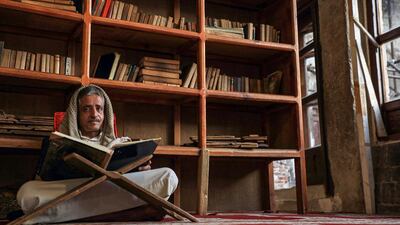
Celebrated by millions of Muslims around the world, Ramadan is observed during the ninth month of the Islamic lunar calendar. AFP -

Taking place for approximately 30 days – depending on moon sightings – it marks the month that the Quran was revealed to the Prophet Mohammed in AD610. AFP -
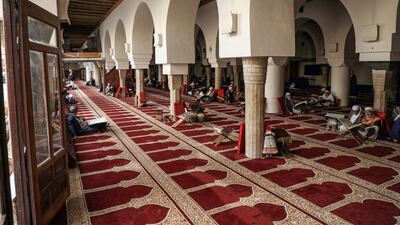
Ramadan is the month that aims to purify the soul and bring the individual closer to Allah. AFP -
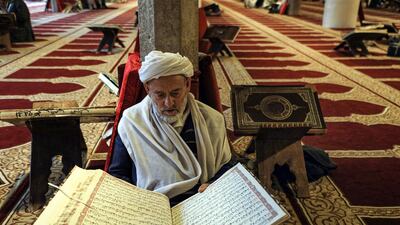
It is also the month during which Muslims fast from sunrise to sunset. AFP -
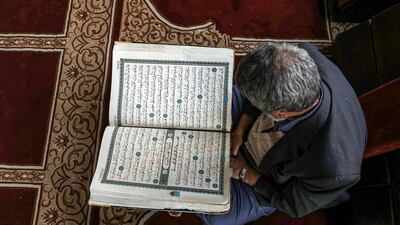
The central religious text of Islam, the Quran is widely regarded as the finest work in classical Arabic literature. AFP -
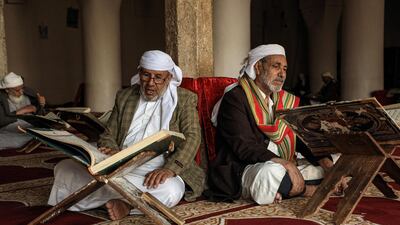
Selected verses from the Quran have been translated into more than 100 languages. AFP -

The literal meaning of Quran is “that which is being read”. AFP -
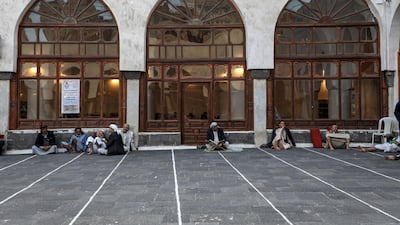
The Quran has 114 parts of unequal length. In Arabic, each chapter is called a surah, while the sentences or phrases are called ayah, meaning ‘a sign’. AFP -
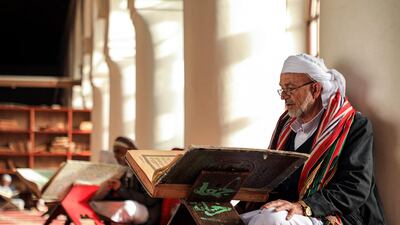
Traditionally, the Quran was written using Arabic calligraphy. AFP -
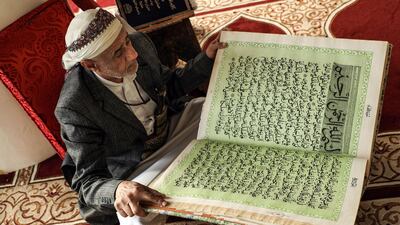
During Ramadan, many Muslims recite one part of the Quran every night, aiming to complete the holy book by the end of the month. AFP


For Yemenis able to spend, the joy of a crispy sambusa, spongy rawani or syrupy baklava is at the heart of the Ramadan experience.
These traditional treats, enjoyed at iftar, keep people going through the night until they resume their fast at dawn, refraining from eating or drinking throughout the day.
"You can consider them as one of the main meals. People crave them after fasting, after the fatigue, exhaustion and thirst," says Fuad Al Kebsi, a popular singer, sitting down with family and friends to share sweets for iftar.
For those with a sweet tooth, Ali Abd whisks a bowl of eggs into a cloud before adding flour and vanilla. Tins of his yellow rawani cake are baked in a wood-fired furnace before being cut and drenched in aromatic syrup.
The draw of sweets from one particular shop he rates highly brought Muhammad al-Bina from his house on the edge of town into central Sanaa.
"The sweets are awesome. Trust me!" he says, beaming.

