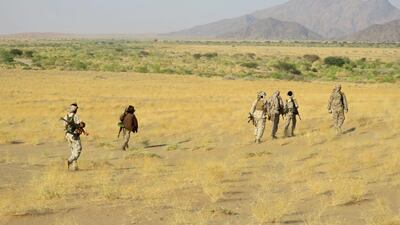
Tim Lenderking stressed the importance of dialogue. CNP

Tim Lenderking: the US is committed to helping Yemen towards a peaceful future


Mina Al-Oraibi
  • English
  • Arabic

Tim Lenderking, the US special envoy for Yemen, says the US is pushing for “regional solutions for a regional problem”.

In an interview with The National in Manama, he said there was an opportunity to improve the situation in Yemen as “there is a lot of unity among the international community and attention, partly because of the Biden’s administration’s emphasis on Yemen”.

He said the “attention that the international institutions are starting to place on the economy, an area of severe need that has been under-appreciated in this conflict, the fact that donors are still willing to come forward and pay into UN and other coffers, should show the Yemeni people that they are not forgotten.

“I can assure you that the US is going to stay in it until we see Yemen turn the corner away from conflict and into a peaceful future,” he said.

He stressed that it is for Yemenis to decide that future.

Mr Lenderking, who visited Yemen last month and is often in the region, stressed the importance of speaking with Yemenis directly.

“In my conversations with Yemenis inside the country and outside, it is apparent they are thirsty for a peaceful resolution,” he said.

He spoke of the importance of having the government working inside Yemen.

By focusing on alleviating the humanitarian situation in Yemen, we hope the Yemeni parties can also focus on engaging in dialogue
Tim Lenderking,
US Special Envoy for Yemen

However, he added that “the government of Yemen needs more financial and economic help and we will mobilise to help them".

Despite Mr Lenderking’s commitment, the Houthis have shown intransigence.

One of the first decisions the Biden administration made related to Yemen was to revoke the terror designation that the Trump administration had imposed on the Houthis.

On February 12, Antony Blinken, US Secretary of State, announced the administration would remove the designation of the Houthis as a Foreign Terrorist Organisation and as a Specially Designated Global Terrorist group.

“The revocations are intended to ensure that relevant US policies do not impede assistance to those already suffering what has been called the world’s worst humanitarian crisis,” he said.

“By focusing on alleviating the humanitarian situation in Yemen, we hope the Yemeni parties can also focus on engaging in dialogue."

The humanitarian situation in Yemen remains precarious, however, and the Houthis have not engaged in dialogue.

Mr Lenderking defended the decision saying it was “based on primarily humanitarian factors. We thought there would be impediments for humanitarian work in Yemen and there was an adverse reactions from commercial shippers almost immediately and this was not something we could afford to take.

“Our decision was not out of recognition that the Houthis were a benevolent force. We were still very concerned, and remain very concerned, about their behaviour."

Asked if the revocation of the designation brought about the desired results, Mr Lenderking said: “It was something we just felt we just had to do and we had hoped it would send a signal to the Houthis that we are approaching the conflict in a different way."

Mr Lenderking said it was a “positive gesture. They have not responded in a way that I would have liked to see”.

We continue to ask why do Yemeni youth need to be sacrificed here in this battle?
Tim Lenderking,
US Special Envoy for Yemen

The US continues to sanction top Houthi leaders and last Friday announced new sanctions on Saleh Mesfer Al Shaer, commander of the Houthi-controlled military logistics organisation that smuggles weapons, and the “Specialised Criminal Court” that seizes assets of their opponents.

The Biden administration views these sanctions as part of the leverage it has over the Houthis.

Mr Lenderking said: “They don’t like when their leaders or operators are designated, that is something they react against. The fact they are out of step with the international community, with the exception of Iran, is something that they notice.

“There is an element of the Houthi leadership and the legitimacy that that confers is important to the organisation and I would say that is a debate I hope they would have."

Part of the American calculation is that if there was a political agreement, it is expected that the Houthis would have representation in government, which would mean they would want their political leaders to be left unsanctioned.

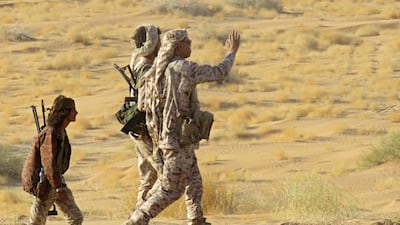
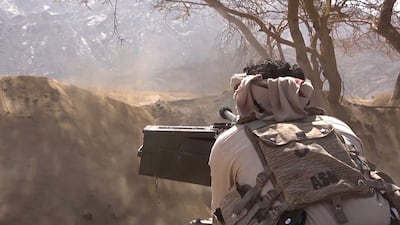
The US envoy sounded particular alarm about Marib, calling it a “brutal fight”.

He added that “the fact they have persisted in a military campaign against the strength of global opinion, continuing to fight in Marib.

“It is a brutal fight. We continue to ask why do Yemeni youth need to be sacrificed here in this battle? I know there are other fronts but this is really the one where the Houthis have devoted so much attention, this is out of step with the international community”.

Yemeni army reinforcements arrive on Marib's southern front in November. AFP

However, Mr Lenderking said that “it is not a foregone conclusion” that the Houthis will be able to take over Marib, and even if they did “there would still be a lot of territory not under their control”.

The US diplomat therefore call on the Houthis “to see that their pursuit of a military solution is not good for Yemen … what we are talking about is the sacrifice of Yemeni lives”.

But since the Stockholm talks almost three years ago, there have not been direct talks between the Yemenis for a peaceful resolution.

There has been an escalation of attacks by Iranian-backed proxies in a number of countries in the region, particularly in the aftermath of the attack on the residence of the Iraqi Prime Minister Mustafa Al Kadhimi.

Mr Lenderking said “certainly the role that the Iranians play is a negative one, and the Iranians continue to train, supply, equip, encourage Houthi attacks and the pace of attacks this year is more than last year, and the month of September more than August and that is completely unacceptable”.

He clarified that “I don’t expect in any scenario that we plan that we envision Iran playing a constructive role at this point. If there is improvement on the JCPOA [Iranian nclear deal] track, there could be some positive rebound on the conflict, even though Yemen is not an agenda item in those talks”.

However, Mr Lenderking said “as the Yemen envoy, I cannot wait for that moment, we have to continue putting all of our efforts into solving the Yemen conflict and not wait for other developments on the world stage to happen”.

In his speech at Manama Dialogue, US Secretary of Defence Lloyd Austin stressed the need to bolster the defences of Saudi Arabia and said that now 90 per cent of projectiles approaching the kingdom were intercepted.

Mr Lenderking said that “we need to get to 100 per cent. Of course, we need the Houthis to stop attacking the kingdom, in the same way we need Saudi Arabia to take all the appropriate steps to end the conflict. Everyone working together to come to a political solution … the Saudis do want to see the conflict resolved.”

Another recent escalation by the Houthis has been the arrest of Yemenis who had worked in the US embassy in Sanaa.

Mr Lenderking said he was not aware as the reason for the current escalation. However, he alluded to possible divisions between the Houthis who led to this escalation, asking “are we seeing rivalries between different leaders of the Houthi leadership? This is not a step for an organisation that wants to build credibility would do”.

Asked whether the US withdrawal from Afghanistan would embolden the Houthis, Mr Lenderking sees the Afghan developments as a lesson for the Houthis.

He explained that “the message the Houthis should take from Afghanistan is what the Taliban are experiencing now, which is they cannot get anywhere without international support. The Taliban will be associated with the taking down of Afghanistan as they are the new leadership, just as the Houthis will be if they don’t end the fighting and look for international support.”

He said the Houthis cannot do it on their own.

“The Houthis will not be able to control all of Yemen. Eventually they will decide that their future can best be solidified through a political process."


TECH%20SPECS%3A%20APPLE%20WATCH%20SERIES%208
%3Cp%3E%3Cstrong%3EDisplay%3A%3C%2Fstrong%3E%2041mm%2C%20352%20x%20430%3B%2045mm%2C%20396%20x%20484%3B%20Retina%20LTPO%20OLED%2C%20up%20to%201000%20nits%2C%20always-on%3B%20Ion-X%20glass%3C%2Fp%3E%0A%3Cp%3E%3Cstrong%3EProcessor%3A%3C%2Fstrong%3E%20Apple%20S8%2C%20W3%20wireless%2C%20U1%20ultra-wideband%3C%2Fp%3E%0A%3Cp%3E%3Cstrong%3ECapacity%3A%3C%2Fstrong%3E%2032GB%3C%2Fp%3E%0A%3Cp%3E%3Cstrong%3EMemory%3A%3C%2Fstrong%3E%201GB%3C%2Fp%3E%0A%3Cp%3E%3Cstrong%3EPlatform%3A%3C%2Fstrong%3E%20watchOS%209%3C%2Fp%3E%0A%3Cp%3E%3Cstrong%3EHealth%20metrics%3A%3C%2Fstrong%3E%203rd-gen%20heart%20rate%20sensor%2C%20temperature%20sensing%2C%20ECG%2C%20blood%20oxygen%2C%20workouts%2C%20fall%2Fcrash%20detection%3B%20emergency%20SOS%2C%20international%20emergency%20calling%3C%2Fp%3E%0A%3Cp%3E%3Cstrong%3EConnectivity%3A%3C%2Fstrong%3E%20GPS%2FGPS%20%2B%20cellular%3B%20Wi-Fi%2C%20LTE%2C%20Bluetooth%205.3%2C%20NFC%20(Apple%20Pay)%3C%2Fp%3E%0A%3Cp%3E%3Cstrong%3EDurability%3A%3C%2Fstrong%3E%20IP6X%2C%20water%20resistant%20up%20to%2050m%2C%20dust%20resistant%3C%2Fp%3E%0A%3Cp%3E%3Cstrong%3EBattery%3A%3C%2Fstrong%3E%20308mAh%20Li-ion%2C%20up%20to%2018h%2C%20wireless%20charging%3C%2Fp%3E%0A%3Cp%3E%3Cstrong%3ECards%3A%3C%2Fstrong%3E%20eSIM%3C%2Fp%3E%0A%3Cp%3E%3Cstrong%3EFinishes%3A%3C%2Fstrong%3E%20Aluminium%20%E2%80%93%20midnight%2C%20Product%20Red%2C%20silver%2C%20starlight%3B%20stainless%20steel%20%E2%80%93%20gold%2C%20graphite%2C%20silver%3C%2Fp%3E%0A%3Cp%3E%3Cstrong%3EIn%20the%20box%3A%3C%2Fstrong%3E%20Watch%20Series%208%2C%20magnetic-to-USB-C%20charging%20cable%2C%20band%2Floop%3C%2Fp%3E%0A%3Cp%3E%3Cstrong%3EPrice%3A%3C%2Fstrong%3E%20Starts%20at%20Dh1%2C599%20(41mm)%20%2F%20Dh1%2C999%20(45mm)%3C%2Fp%3E%0A
Another way to earn air miles

In addition to the Emirates and Etihad programmes, there is the Air Miles Middle East card, which offers members the ability to choose any airline, has no black-out dates and no restrictions on seat availability. Air Miles is linked up to HSBC credit cards and can also be earned through retail partners such as Spinneys, Sharaf DG and The Toy Store.

An Emirates Dubai-London round-trip ticket costs 180,000 miles on the Air Miles website. But customers earn these ‘miles’ at a much faster rate than airline miles. Adidas offers two air miles per Dh1 spent. Air Miles has partnerships with websites as well, so booking.com and agoda.com offer three miles per Dh1 spent.

“If you use your HSBC credit card when shopping at our partners, you are able to earn Air Miles twice which will mean you can get that flight reward faster and for less spend,” says Paul Lacey, the managing director for Europe, Middle East and India for Aimia, which owns and operates Air Miles Middle East.

Mercer, the investment consulting arm of US services company Marsh & McLennan, expects its wealth division to at least double its assets under management (AUM) in the Middle East as wealth in the region continues to grow despite economic headwinds, a company official said.

Mercer Wealth, which globally has $160 billion in AUM, plans to boost its AUM in the region to $2-$3bn in the next 2-3 years from the present $1bn, said Yasir AbuShaban, a Dubai-based principal with Mercer Wealth.

Within the next two to three years, we are looking at reaching $2 to $3 billion as a conservative estimate and we do see an opportunity to do so,” said Mr AbuShaban.

Mercer does not directly make investments, but allocates clients’ money they have discretion to, to professional asset managers. They also provide advice to clients.

“We have buying power. We can negotiate on their (client’s) behalf with asset managers to provide them lower fees than they otherwise would have to get on their own,” he added.

Mercer Wealth’s clients include sovereign wealth funds, family offices, and insurance companies among others.

From its office in Dubai, Mercer also looks after Africa, India and Turkey, where they also see opportunity for growth.

Wealth creation in Middle East and Africa (MEA) grew 8.5 per cent to $8.1 trillion last year from $7.5tn in 2015, higher than last year’s global average of 6 per cent and the second-highest growth in a region after Asia-Pacific which grew 9.9 per cent, according to consultancy Boston Consulting Group (BCG). In the region, where wealth grew just 1.9 per cent in 2015 compared with 2014, a pickup in oil prices has helped in wealth generation.

BCG is forecasting MEA wealth will rise to $12tn by 2021, growing at an annual average of 8 per cent.

Drivers of wealth generation in the region will be split evenly between new wealth creation and growth of performance of existing assets, according to BCG.

Another general trend in the region is clients’ looking for a comprehensive approach to investing, according to Mr AbuShaban.

“Institutional investors or some of the families are seeing a slowdown in the available capital they have to invest and in that sense they are looking at optimizing the way they manage their portfolios and making sure they are not investing haphazardly and different parts of their investment are working together,” said Mr AbuShaban.

Some clients also have a higher appetite for risk, given the low interest-rate environment that does not provide enough yield for some institutional investors. These clients are keen to invest in illiquid assets, such as private equity and infrastructure.

“What we have seen is a desire for higher returns in what has been a low-return environment specifically in various fixed income or bonds,” he said.

“In this environment, we have seen a de facto increase in the risk that clients are taking in things like illiquid investments, private equity investments, infrastructure and private debt, those kind of investments were higher illiquidity results in incrementally higher returns.”

The Abu Dhabi Investment Authority, one of the largest sovereign wealth funds, said in its 2016 report that has gradually increased its exposure in direct private equity and private credit transactions, mainly in Asian markets and especially in China and India. The authority’s private equity department focused on structured equities owing to “their defensive characteristics.”

WISH
%3Cp%3E%3Cstrong%3EDirectors%3A%3C%2Fstrong%3E%20Chris%20Buck%2C%20Fawn%20Veerasunthorn%3Cbr%3E%3Cstrong%3EStars%3A%3C%2Fstrong%3E%20Ariana%20DeBose%2C%20Chris%20Pine%2C%20Alan%20Tudyk%3Cbr%3E%3Cstrong%3ERating%3A%3C%2Fstrong%3E%203.5%2F5%3C%2Fp%3E%0A
The%20specs
%3Cp%3E%3Cstrong%3EEngine%3A%3C%2Fstrong%3E%20Twin%20electric%20motors%20and%20105kWh%20battery%20pack%0D%3Cbr%3E%3Cstrong%3EPower%3A%20%3C%2Fstrong%3E619hp%0D%3Cbr%3E%3Cstrong%3ETorque%3A%20%3C%2Fstrong%3E1%2C015Nm%0D%3Cbr%3E%3Cstrong%3ETransmission%3A%20%3C%2Fstrong%3ESingle-speed%20auto%0D%3Cbr%3E%3Cstrong%3ETouring%20range%3A%20%3C%2Fstrong%3EUp%20to%20561km%0D%3Cbr%3E%3Cstrong%3EOn%20sale%3A%20%3C%2Fstrong%3EQ3%20or%20Q4%202022%0D%3Cbr%3E%3Cstrong%3EPrice%3A%20%3C%2Fstrong%3EFrom%20Dh635%2C000%3C%2Fp%3E%0A
The specs: 2018 Genesis G70

Price, base / as tested: Dh155,000 / Dh205,000

Engine: 3.3-litre, turbocharged V6

Gearbox: Eight-speed automatic

Power: 370hp @ 6,000rpm

Torque: 510Nm @ 1,300rpm

Fuel economy, combined: 10.6L / 100km

Small%20Things%20Like%20These
%3Cp%3EDirector%3A%20Tim%20Mielants%3Cbr%3ECast%3A%20Cillian%20Murphy%2C%20Emily%20Watson%2C%20Eileen%20Walsh%3Cbr%3ERating%3A%204%2F5%3C%2Fp%3E%0A
Essentials

The flights
Emirates, Etihad and Malaysia Airlines all fly direct from the UAE to Kuala Lumpur and on to Penang from about Dh2,300 return, including taxes. 
 

Where to stay
In Kuala Lumpur, Element is a recently opened, futuristic hotel high up in a Norman Foster-designed skyscraper. Rooms cost from Dh400 per night, including taxes. Hotel Stripes, also in KL, is a great value design hotel, with an infinity rooftop pool. Rooms cost from Dh310, including taxes. 


In Penang, Ren i Tang is a boutique b&b in what was once an ancient Chinese Medicine Hall in the centre of Little India. Rooms cost from Dh220, including taxes.
23 Love Lane in Penang is a luxury boutique heritage hotel in a converted mansion, with private tropical gardens. Rooms cost from Dh400, including taxes. 
In Langkawi, Temple Tree is a unique architectural villa hotel consisting of antique houses from all across Malaysia. Rooms cost from Dh350, including taxes.

The specs

Price, base / as tested Dh12 million

Engine 8.0-litre quad-turbo, W16

Gearbox seven-speed dual clutch auto

Power 1479 @ 6,700rpm

Torque 1600Nm @ 2,000rpm 0-100kph: 2.6 seconds 0-200kph: 6.1 seconds

Top speed 420 kph (governed)

Fuel economy, combined 35.2L / 100km (est)

UAE currency: the story behind the money in your pockets
The Sand Castle

Director: Matty Brown

Stars: Nadine Labaki, Ziad Bakri, Zain Al Rafeea, Riman Al Rafeea

Rating: 2.5/5

Credits

Produced by: Colour Yellow Productions and Eros Now
Director: Mudassar Aziz
Cast: Sonakshi Sinha, Jimmy Sheirgill, Jassi Gill, Piyush Mishra, Diana Penty, Aparshakti Khurrana
Star rating: 2.5/5

Two products to make at home

Toilet cleaner

1 cup baking soda 

1 cup castile soap

10-20 drops of lemon essential oil (or another oil of your choice) 

Method:

1. Mix the baking soda and castile soap until you get a nice consistency.

2. Add the essential oil to the mix.

Air Freshener

100ml water 

5 drops of the essential oil of your choice (note: lavender is a nice one for this) 

Method:

1. Add water and oil to spray bottle to store.

2. Shake well before use. 

Updated: November 22, 2021, 5:48 AM