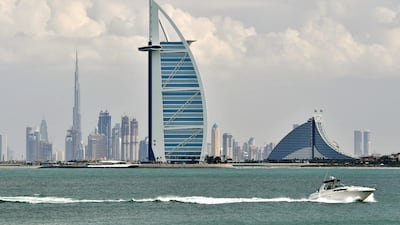
The UAE secured a top 10 ranking in sub-indicators, including cyber security, health infrastructure, entrepreneurship, public finances and employment among others, in the IMD World Competitivenss Ranking 2021. Photo: AFP
The UAE secured a top 10 ranking in sub-indicators, including cyber security, health infrastructure, entrepreneurship, public finances and employment among others, in the IMD World Competitivenss Rank

Middle East hotel occupancy rates during Ramadan close to 2019 levels


Fareed Rahman
  • English
  • Arabic

Hotels in the Middle East recorded higher occupancy rates this Ramadan, compared with last year, as the region recovers from the Covid-19 pandemic.

Average occupancy rates stood at 53.1 per cent during the week from May 10 to 16, when Eid was celebrated, according to hotel data specialist STR.

The figure is slightly below occupancy rates recorded in 2019.

“Muslims worldwide have marked Ramadan in decidedly different ways over the past two years but for the Middle East, there is a sense of some normality as vaccinations expand and domestic restrictions are lifted,” said Philip Wooller, STR’s area director for the Middle East and Africa.

“Key markets in the region have been outperforming their global peers and near-normal occupancy levels for the holy month are another good indicator for the industry moving forward.”

Movement restrictions drove down average hotel occupancy rates around the world last year.

However, a wider distribution of vaccines has supported the resumption of travel and improved the hospitality sector’s outlook.

The recovery of the UAE’s hospitality and tourism industry is expected to hasten this year, driven by its Covid-19 vaccine push and relaxed travel restrictions for some markets, according to government officials and hoteliers.

STR said Sharjah, Abu Dhabi and Dubai had hotel occupancy rates of 67.2 per cent, 63.6 per cent and 59.7 per cent, respectively, during the reporting period.

Abu Dhabi expects its hotel occupancy rates to increase to at least 80 per cent this year, from 70 per cent in 2020, Saood Al Hosani, undersecretary of the Department of Culture and Tourism Abu Dhabi, told The National last week.

The UAE capital is also planning to remove Covid-19 quarantine restrictions for international travellers from July 1, apart from visitors from India, and expand its green travel list to boost inbound tourism.

Meanwhile, Dubai hosted more than 810,000 international guests in January and February and expects to attract more visitors this year. The emirate welcomed 5.51 million visitors last year, according to Dubai Tourism.

The Saudi Arabian cities of Al Khobar and Jeddah registered 63.5 per cent and 58.6 per cent hotel occupancy rates respectively during the period, according to STR.


Three-day coronation

Royal purification

The entire coronation ceremony extends over three days from May 4-6, but Saturday is the one to watch. At the time of 10:09am the royal purification ceremony begins. Wearing a white robe, the king will enter a pavilion at the Grand Palace, where he will be doused in sacred water from five rivers and four ponds in Thailand. In the distant past water was collected from specific rivers in India, reflecting the influential blend of Hindu and Buddhist cosmology on the coronation. Hindu Brahmins and the country's most senior Buddhist monks will be present. Coronation practices can be traced back thousands of years to ancient India.

The crown

Not long after royal purification rites, the king proceeds to the Baisal Daksin Throne Hall where he receives sacred water from eight directions. Symbolically that means he has received legitimacy from all directions of the kingdom. He ascends the Bhadrapitha Throne, where in regal robes he sits under a Nine-Tiered Umbrella of State. Brahmins will hand the monarch the royal regalia, including a wooden sceptre inlaid with gold, a precious stone-encrusted sword believed to have been found in a lake in northern Cambodia, slippers, and a whisk made from yak's hair.

The Great Crown of Victory is the centrepiece. Tiered, gold and weighing 7.3 kilograms, it has a diamond from India at the top. Vajiralongkorn will personally place the crown on his own head and then issues his first royal command.

The audience

On Saturday afternoon, the newly-crowned king is set to grant a "grand audience" to members of the royal family, the privy council, the cabinet and senior officials. Two hours later the king will visit the Temple of the Emerald Buddha, the most sacred space in Thailand, which on normal days is thronged with tourists. He then symbolically moves into the Royal Residence.

The procession

The main element of Sunday's ceremonies, streets across Bangkok's historic heart have been blocked off in preparation for this moment. The king will sit on a royal palanquin carried by soldiers dressed in colourful traditional garb. A 21-gun salute will start the procession. Some 200,000 people are expected to line the seven-kilometre route around the city.

Meet the people

On the last day of the ceremony Rama X will appear on the balcony of Suddhaisavarya Prasad Hall in the Grand Palace at 4:30pm "to receive the good wishes of the people". An hour later, diplomats will be given an audience at the Grand Palace. This is the only time during the ceremony that representatives of foreign governments will greet the king.