

Red Sea Development Company, the developer of the mammoth tourism project on Saudi Arabia’s west coast, said it signed deals with “a large number” of hotel companies for the project’s first phase and will reveal the line-up of operators soon.
The company, which is owned by the kingdom’s Public Investment Fund, is developing 16 hotels with 3,000 rooms across five islands and two inland sites as part of the first phase that will be delivered by 2023. Phase one also includes construction of a new international airport.
"We've signed agreements with a large number of those hotel companies and more are coming," the company's chief executive, John Pagano, told The National.
"We're going to make an announcement later in the year where we'll announce the stable of brands. But you will not be surprised or disappointed by the brand stable that we are going to be presenting to the marketplace.”
Red Sea Development Company’s masterplan covers a 28,000 square kilometre site – an area slightly smaller than Belgium – containing an archipelago of 90 offshore islands and 200 kilometres of coastline, with inland sites featuring mountains, canyons, wadis and an extinct volcano. Once complete by 2030, it will house 50 hotels containing 8,000 rooms.
The first phase will cost an estimated 28 billion Saudi riyals to 29bn riyals ($7.46bn-$7.73bn) to develop, 14bn riyals of which will be debt funded through a syndicated loan, with participation principally from local lenders.
“We’re just finalising the loan facility, which we hope to sign before the end of the year,” Mr Pagano said.
The project is moving “at pace”, Mr Pagano said, with 5,000 workers already on site and 7.5bn riyals ($2bn) worth of contracts awarded to date. This will increase to 15bn riyals by the end of this year, including the recently announced public private partnership agreement with Acwa Power, which will provide 100 per cent renewable energy for phase one, as well as water, wastewater treatment, waste management and district cooling.
The deal with Acwa Power involves building the world’s largest battery storage facility, which will be connected to a solar and wind facility providing the bulk of the power, although some installations will be built locally on islands.
The hotels will initially be owned by The Red Sea Development Company.
“Having said that, there are opportunities and we're having discussions with a number of investors who are interested in participating in the hotel assets. We'll probably have more to say about that in the coming months.”
The Red Sea Development Company’s capital is committed to the project so it doesn’t need external investors, but bringing in private sector partners will add credibility, he said.
“If the private sector is underwriting, then there's more confidence in what we're doing,” he added.
The company is not interested in selling sites for others build on, because development is being carried out in a “critical habitat”, Mr Pagano said.
"If I screw up one part of the lagoon, I screw up the whole thing. So we're not prepared to take that risk,” he said.
Instead, it is offering joint ventures through which a partner could buy out the whole property at a later date.
-
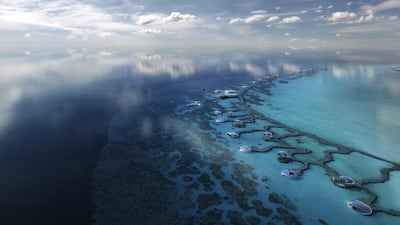
The Red Sea Project is designed to enhance the natural environment for future generations. Courtesy The Red Sea Development Company -
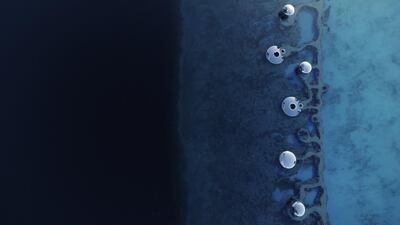
75 percent of the 90+ islands in the Red Sea Project area have been set aside for conservation, with nine islands designated as areas of significant ecological value. Courtesy Red Sea Development Company -
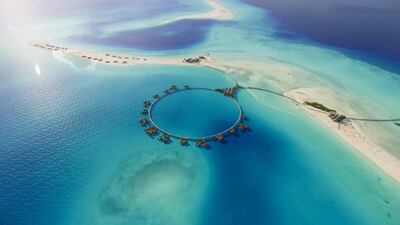
The location of some of the overwater villas at Saudi Arabia's Red Sea Project have been set. Courtesy The Red Sea Development Company -
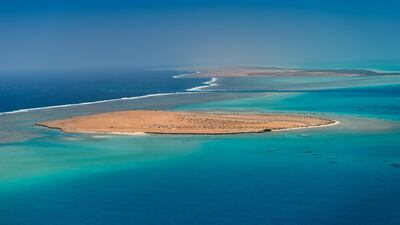
The Red Sea Project will develop an area of 28,000 square meters in total, including a vast archipelago of more than 50 untouched islands. Courtesy The Red Sea Development Company -
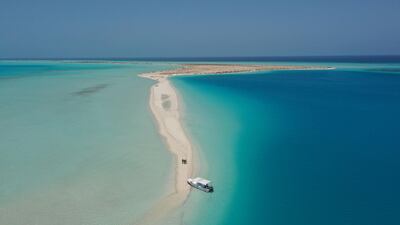
The first phase of the resort is set to open at the end of 2022 with 14 hotels across five islands. Courtesy The Red Sea Development Company -
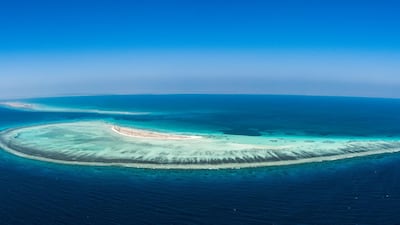
The Red Sea Project includes a vast archipelago of more than 50 untouched islands, with direct access to unspoiled, and thriving coral reefs. Courtesy The Red Sea Development Company -
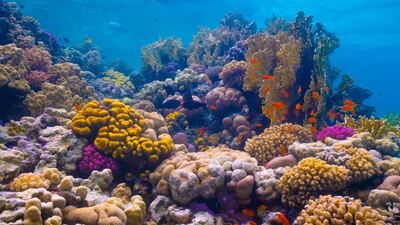
The Red Sea Project offers access to a unique underwater world, home to some of the world’s few remaining thriving coral reefs. Courtesy The Red Sea Development Company -
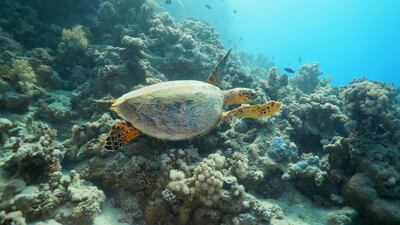
The Red Sea project is home to a number of endangered species, including the hawksbill sea turtle. Courtesy The Red Sea Development Company -
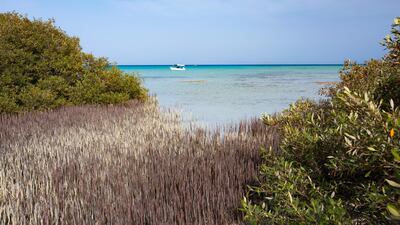
The Red Sea Project is home to exotic wildlife, and a wide range of flora and fauna. Courtesy The Red Sea Development Company -
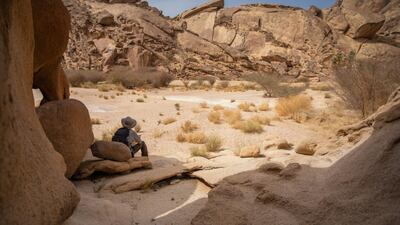
The Red Sea Project offers a unique constellation of experiences, made possible by the unique and varied landscape of the region. Courtesy The Red Sea Development Company -
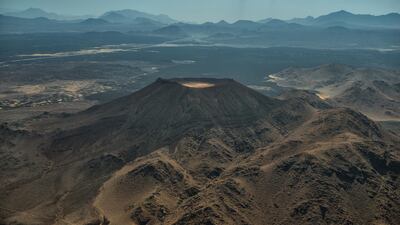
The Harrat Lunayyir volcano and lava field provides a stunning setting for outdoor and wellness activities. Courtesy The Red Sea Development Company -
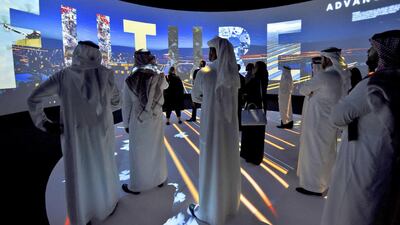
Participants watch a movie advertising Saudi's Red Sea project on the sidelines of the three-day Future Investment Initiatives conference in Riyadh, on October 25, 2017. AFP


“Or we can look at various other mechanisms by which there's a capital event, whether we spin it off into a real estate investment trust, whether we just simply refinance with permanent finance in place. There are many opportunities for us to then recycle capital.”
The project is being built under a “regenerative tourism” model, which aims not only to protect local habitats, but to create the conditions for local environments to thrive. Only 22 of the 90 islands will be built on and visitor numbers to the site will be capped at one million a year.
"It's going to be a less crowded destination, which I think will resonate well in a post-Covid world," Mr Pagano said.

