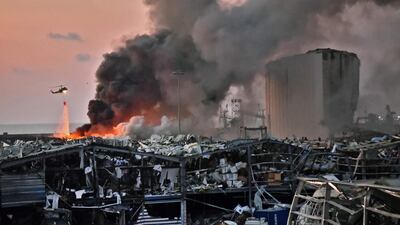
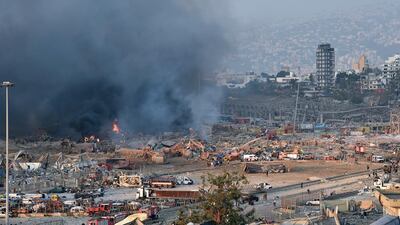
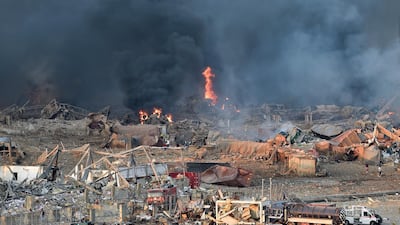
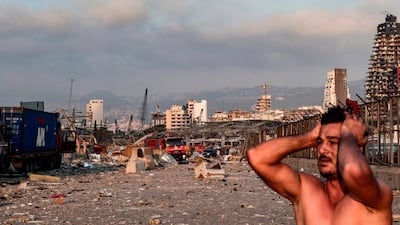
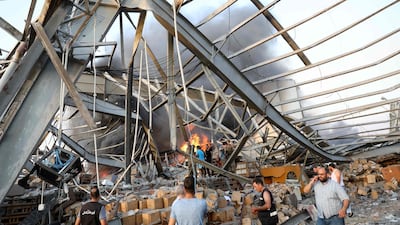
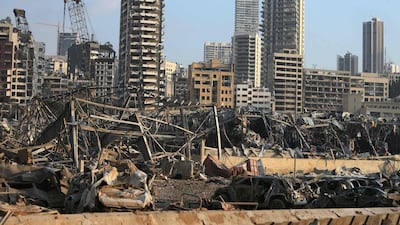
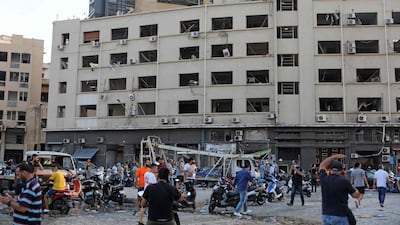
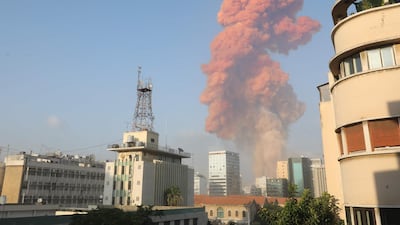
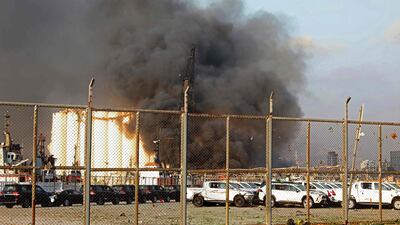
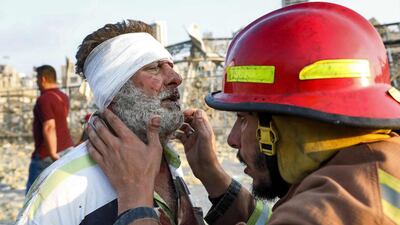
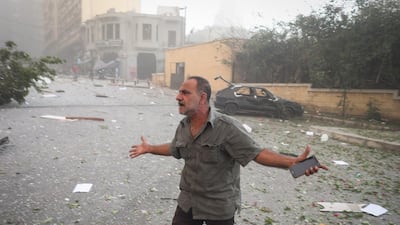
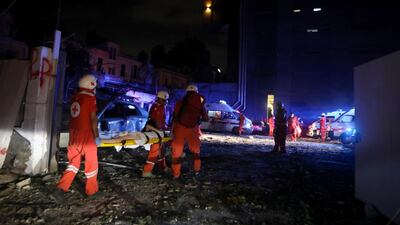
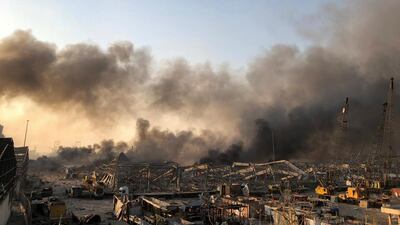
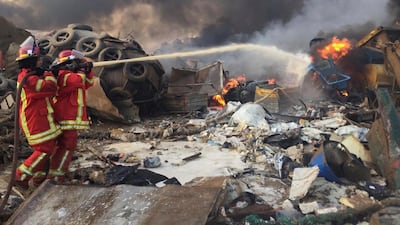
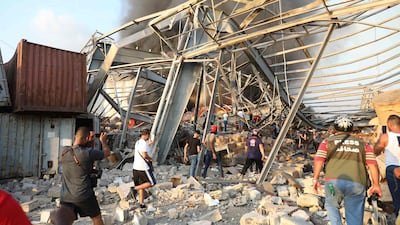
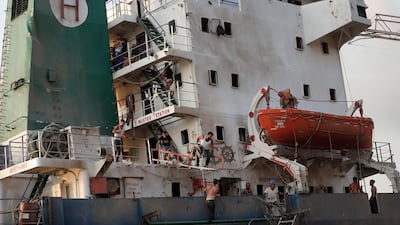
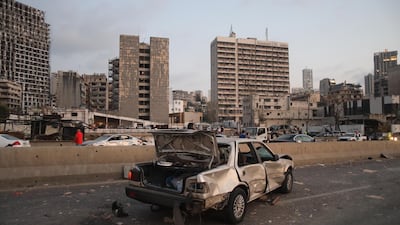
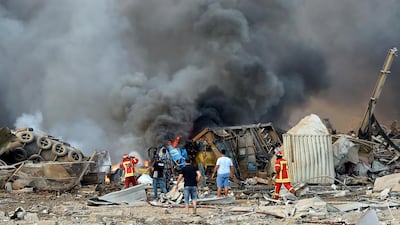
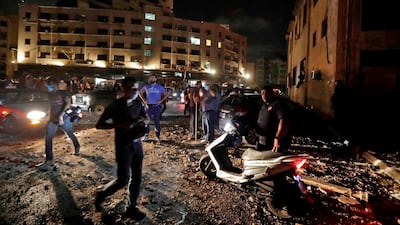
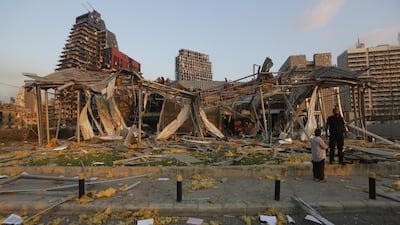
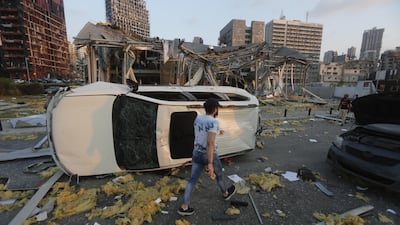
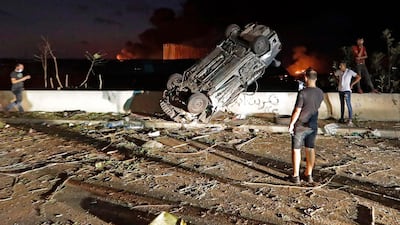
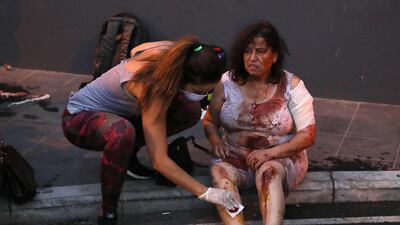
The devastating explosion that rocked the Lebanese capital this month caused up to $4.6 billion (Dh16.88bn) in damage to infrastructure and physical assets in Beirut, the World Bank said.
Losses including changes in economic flows on the back of a decline in output in several economic sectors are estimated to be in the range of $2.9bn to $3.5bn, the World Bank said in its Rapid Damage and Needs Assessment (RDNA) report released on Monday.
Public sector reconstruction and recovery needs for this year and 2021 are in the range of US$1.8bn and $2.2bn, according to the report, which was conducted in cooperation with the United Nations and the European Union. Lebanese ministries, civil society organisations and other key stakeholders also contributed to the report, which the World Bank said, will help guide the urgently needed global response.
In the immediate term, Lebanon needs up to $760 million until December 2020, and between $1.18bn and $1.46bn in 2021 to address its most pressing needs in the aftermath of the explosion.
The most severely affected sectors of the economy are housing, transport and tangible and intangible cultural assets – religious and archaeological sites, national monuments, theatres, archives, libraries and monuments, according to the report's findings. The transport sector’s needs are the highest, followed by culture and housing.
“Although its estimates are preliminary due to the rapid nature of the assessment that was carried out … under challenging circumstances, the RDNA lays the groundwork for an agenda for reform, recovery, and reconstruction,” the World Bank said.
“The three main economic effects of the explosion are: losses in economic activity caused by the destruction of physical capital; trade disruptions; and losses in fiscal revenues for the government.”
In terms of critical recovery, the World Bank said, Lebanon needs up to $40m in the next three months alone for an immediate “large-scale cash transfer to meet the basic needs of 90,000 affected individuals, and to create short-term jobs for 15,000 individuals”.
Immediate housing needs are estimated at up to $35m, while up to $275m in financial support is needed to restore services of 5,200 micro businesses and 4,800 small companies that employ thousands of Lebanese.
The World Bank estimates are in line with consultancy Strategy&'s $5bn damage assessment to infrastructure and physical assets. The departing Lebanese government has previously estimated the impact of the explosion, which left 300,000 people homeless, to be as high as $15bn.
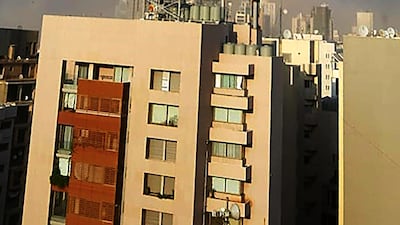
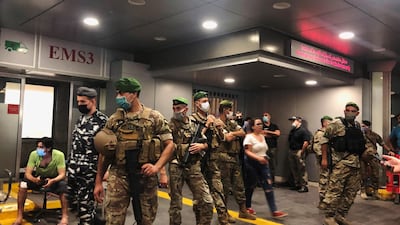
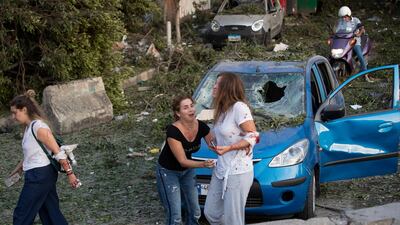
The caretaker government estimates 190 people have been killed and more than 6,500 injured by the Beirut port explosion, while 50,000 houses, nine major hospitals and 178 schools sustained damage.
Lebanon is facing its worst economic crisis since its independence in 1943 and the Beirut port explosion has compounded its economic woes. Pre-explosion projections of 2020 real gross domestic product contraction were well into the double digits, driven by months of political and financial crisis that led to mass protests.
The Institute of International Finance estimates that Lebanon’s economy will shrink 24 per cent this year, compared with an earlier forecast of 15 per cent as a result of the blast.
Lebanon defaulted on eurobonds worth $31bn in March, which led its currency – pegged to the US dollar since 1997 – to lose more than 80 per cent of its value against the greenback in the black market. The inflation rate in Lebanon in July rose 112.4 per cent, compared with under 90 per cent in June, according to official data.
“Given Lebanon’s state of insolvency and lack of sufficient foreign exchange reserves, international aid and private investment will be essential for comprehensive recovery and reconstruction,” the World Bank said on Monday.
“Lebanon’s implementation of a credible reform agenda will be key to accessing international development assistance and to unlock external and private sector sources of financing.”

FROM%20THE%20ASHES
%3Cp%3EDirector%3A%20Khalid%20Fahad%3C%2Fp%3E%0A%3Cp%3EStarring%3A%20Shaima%20Al%20Tayeb%2C%20Wafa%20Muhamad%2C%20Hamss%20Bandar%3C%2Fp%3E%0A%3Cp%3ERating%3A%203%2F5%3C%2Fp%3E%0A
You might also like to read
The%20Beekeeper
%3Cp%3E%3Cstrong%3EDirector%3A%20%3C%2Fstrong%3EDavid%20Ayer%C2%A0%3C%2Fp%3E%0A%3Cp%3E%3Cstrong%3EStarring%3A%20%3C%2Fstrong%3EJason%20Statham%2C%20Josh%20Hutcherson%2C%20Emmy%20Raver-Lampman%2C%20Minnie%20Driver%2C%20Jeremy%20Irons%3C%2Fp%3E%0A%3Cp%3E%3Cstrong%3ERating%3A%20%3C%2Fstrong%3E3%2F5%3C%2Fp%3E%0A
Iftar programme at the Sheikh Mohammed Centre for Cultural Understanding
Established in 1998, the Sheikh Mohammed Centre for Cultural Understanding was created with a vision to teach residents about the traditions and customs of the UAE. Its motto is ‘open doors, open minds’. All year-round, visitors can sign up for a traditional Emirati breakfast, lunch or dinner meal, as well as a range of walking tours, including ones to sites such as the Jumeirah Mosque or Al Fahidi Historical Neighbourhood.
Every year during Ramadan, an iftar programme is rolled out. This allows guests to break their fast with the centre’s presenters, visit a nearby mosque and observe their guides while they pray. These events last for about two hours and are open to the public, or can be booked for a private event.
Until the end of Ramadan, the iftar events take place from 7pm until 9pm, from Saturday to Thursday. Advanced booking is required.
For more details, email openminds@cultures.ae or visit www.cultures.ae
COMPANY%20PROFILE%20
%3Cp%3E%3Cstrong%3EName%3A%3C%2Fstrong%3E%20Dooda%20Solutions%0D%3Cbr%3E%3Cstrong%3EBased%3A%3C%2Fstrong%3E%20Lebanon%0D%3Cbr%3E%3Cstrong%3EFounder%3A%20%3C%2Fstrong%3ENada%20Ghanem%0D%3Cbr%3E%3Cstrong%3ESector%3A%3C%2Fstrong%3E%20AgriTech%0D%3Cbr%3E%3Cstrong%3ETotal%20funding%3A%20%3C%2Fstrong%3E%24300%2C000%20in%20equity-free%20funding%0D%3Cbr%3E%3Cstrong%3ENumber%20of%20employees%3A%3C%2Fstrong%3E%2011%3C%2Fp%3E%0A
UAE currency: the story behind the money in your pockets
Malcolm & Marie
Directed by: Sam Levinson
Starring: John David Washington and Zendaya
Three stars
The specs
Engine: 2-litre or 3-litre 4Motion all-wheel-drive Power: 250Nm (2-litre); 340 (3-litre) Torque: 450Nm Transmission: 8-speed automatic Starting price: From Dh212,000 On sale: Now
The%20National%20selections
%3Cp%3E6pm%3A%20Barakka%3Cbr%3E6.35pm%3A%20Dhahabi%3Cbr%3E7.10pm%3A%20Mouheeb%3Cbr%3E7.45pm%3A%20With%20The%20Moonlight%3Cbr%3E8.20pm%3A%20Remorse%3Cbr%3E8.55pm%3A%20Ottoman%20Fleet%3Cbr%3E9.30pm%3A%20Tranquil%20Night%3C%2Fp%3E%0A
RESULTS
5pm: Maiden (PA) Dh80,000 1,400m
Winner: JAP Almahfuz, Fernando Jara (jockey), Irfan Ellahi (trainer).
5.30pm: Handicap (PA) Dh90,000 1,400m
Winner: AF Momtaz, Antonio Fresu, Musabah Al Muhairi.
6pm: Handicap (TB) Dh100,000 1,400m
Winner: Yaalail, Fernando Jara, Ali Rashid Al Raihe.
6.30pm: Abu Dhabi Championship Listed (PA) Dh180,000 1,600m
Winner: Ihtesham, Szczepan Mazur, Ibrahim Al Hadhrami.
7pm: Wathba Stallions Cup Handicap (PA) Dh70,000 1,600m
Winner: Dahess D’Arabie, Fernando Jara, Helal Al Alawi.
7.30pm: Maiden (PA) Dh80,000 2.200m
Winner: Ezz Al Rawasi, Connor Beasley, Helal Al Alawi.
How green is the expo nursery?
Some 400,000 shrubs and 13,000 trees in the on-site nursery
An additional 450,000 shrubs and 4,000 trees to be delivered in the months leading up to the expo
Ghaf, date palm, acacia arabica, acacia tortilis, vitex or sage, techoma and the salvadora are just some heat tolerant native plants in the nursery
Approximately 340 species of shrubs and trees selected for diverse landscape
The nursery team works exclusively with organic fertilisers and pesticides
All shrubs and trees supplied by Dubai Municipality
Most sourced from farms, nurseries across the country
Plants and trees are re-potted when they arrive at nursery to give them room to grow
Some mature trees are in open areas or planted within the expo site
Green waste is recycled as compost
Treated sewage effluent supplied by Dubai Municipality is used to meet the majority of the nursery’s irrigation needs
Construction workforce peaked at 40,000 workers
About 65,000 people have signed up to volunteer
Main themes of expo is ‘Connecting Minds, Creating the Future’ and three subthemes of opportunity, mobility and sustainability.
Expo 2020 Dubai to open in October 2020 and run for six months
GULF MEN'S LEAGUE
Pool A Dubai Hurricanes, Bahrain, Dubai Exiles, Dubai Tigers 2
Pool B Abu Dhabi Harlequins, Jebel Ali Dragons, Dubai Knights Eagles, Dubai Tigers
Opening fixtures
Thursday, December 5
6.40pm, Pitch 8, Abu Dhabi Harlequins v Dubai Knights Eagles
7pm, Pitch 2, Jebel Ali Dragons v Dubai Tigers
7pm, Pitch 4, Dubai Hurricanes v Dubai Exiles
7pm, Pitch 5, Bahrain v Dubai Eagles 2
Recent winners
2018 Dubai Hurricanes
2017 Dubai Exiles
2016 Abu Dhabi Harlequins
2015 Abu Dhabi Harlequins
2014 Abu Dhabi Harlequins
MATCH INFO
Norwich City 0 Southampton 3 (Ings 49', Armstrong 54', Redmond 79')
The specs
Price, base / as tested Dh1,100,000 (est)
Engine 5.2-litre V10
Gearbox seven-speed dual clutch
Power 630bhp @ 8,000rpm
Torque 600Nm @ 6,500rpm
Fuel economy, combined 15.7L / 100km (est)
F1 line ups in 2018
Mercedes-GP Lewis Hamilton and Valtteri Bottas; Ferrari Sebastian Vettel and Kimi Raikkonen; Red Bull Daniel Ricciardo and Max Verstappen; Force India Esteban Ocon and Sergio Perez; Renault Nico Hülkenberg and Carlos Sainz Jr; Williams Lance Stroll and Felipe Massa / Robert Kubica / Paul di Resta; McLaren Fernando Alonso and Stoffel Vandoorne; Toro Rosso TBA; Haas F1 Romain Grosjean and Kevin Magnussen; Sauber TBA
Indoor Cricket World Cup
Venue Insportz, Dubai, September 16-23
UAE squad Saqib Nazir (captain), Aaqib Malik, Fahad Al Hashmi, Isuru Umesh, Nadir Hussain, Sachin Talwar, Nashwan Nasir, Prashath Kumara, Ramveer Rai, Sameer Nayyak, Umar Shah, Vikrant Shetty
The specs: 2019 Aston Martin DBS Superleggera
Price, base: Dh1.2 million
Engine: 5.2-litre twin-turbo V12
Transmission: Eight-speed automatic
Power: 725hp @ 6,500pm
Torque: 900Nm @ 1,800rpm
Fuel economy, combined: 12.3L / 100km (estimate)
THE LOWDOWN
Romeo Akbar Walter
Rating: 2/5 stars
Produced by: Dharma Productions, Azure Entertainment
Directed by: Robby Grewal
Cast: John Abraham, Mouni Roy, Jackie Shroff and Sikandar Kher
Mercer, the investment consulting arm of US services company Marsh & McLennan, expects its wealth division to at least double its assets under management (AUM) in the Middle East as wealth in the region continues to grow despite economic headwinds, a company official said.
Mercer Wealth, which globally has $160 billion in AUM, plans to boost its AUM in the region to $2-$3bn in the next 2-3 years from the present $1bn, said Yasir AbuShaban, a Dubai-based principal with Mercer Wealth.
“Within the next two to three years, we are looking at reaching $2 to $3 billion as a conservative estimate and we do see an opportunity to do so,” said Mr AbuShaban.
Mercer does not directly make investments, but allocates clients’ money they have discretion to, to professional asset managers. They also provide advice to clients.
“We have buying power. We can negotiate on their (client’s) behalf with asset managers to provide them lower fees than they otherwise would have to get on their own,” he added.
Mercer Wealth’s clients include sovereign wealth funds, family offices, and insurance companies among others.
From its office in Dubai, Mercer also looks after Africa, India and Turkey, where they also see opportunity for growth.
Wealth creation in Middle East and Africa (MEA) grew 8.5 per cent to $8.1 trillion last year from $7.5tn in 2015, higher than last year’s global average of 6 per cent and the second-highest growth in a region after Asia-Pacific which grew 9.9 per cent, according to consultancy Boston Consulting Group (BCG). In the region, where wealth grew just 1.9 per cent in 2015 compared with 2014, a pickup in oil prices has helped in wealth generation.
BCG is forecasting MEA wealth will rise to $12tn by 2021, growing at an annual average of 8 per cent.
Drivers of wealth generation in the region will be split evenly between new wealth creation and growth of performance of existing assets, according to BCG.
Another general trend in the region is clients’ looking for a comprehensive approach to investing, according to Mr AbuShaban.
“Institutional investors or some of the families are seeing a slowdown in the available capital they have to invest and in that sense they are looking at optimizing the way they manage their portfolios and making sure they are not investing haphazardly and different parts of their investment are working together,” said Mr AbuShaban.
Some clients also have a higher appetite for risk, given the low interest-rate environment that does not provide enough yield for some institutional investors. These clients are keen to invest in illiquid assets, such as private equity and infrastructure.
“What we have seen is a desire for higher returns in what has been a low-return environment specifically in various fixed income or bonds,” he said.
“In this environment, we have seen a de facto increase in the risk that clients are taking in things like illiquid investments, private equity investments, infrastructure and private debt, those kind of investments were higher illiquidity results in incrementally higher returns.”
The Abu Dhabi Investment Authority, one of the largest sovereign wealth funds, said in its 2016 report that has gradually increased its exposure in direct private equity and private credit transactions, mainly in Asian markets and especially in China and India. The authority’s private equity department focused on structured equities owing to “their defensive characteristics.”