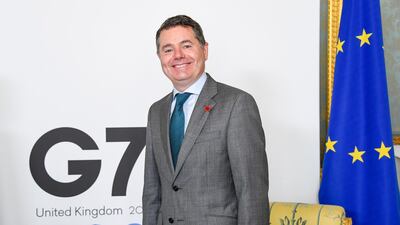
Ireland's finance minister Paschal Donohoe says tax competition is a legitimate tool for smaller countries that do not have the same resources as larger ones. Getty Images

Ireland to defend right to set lower corporate taxes, finance minister says


  • English
  • Arabic

Ireland will make the case for the role of legitimate tax competition, Irish finance minister Paschal Donohoe said after the Group of Seven advanced economies agreed on a minimum global corporate tax rate of at least 15 per cent.

“Today is an important sign post,” Mr Donohoe said. “It does have consequences for the future of corporate tax policy across the world, but in the process that is to come, I’ll be making the case for the role of legitimate tax competition,” he told reporters in London, adding that he will be engaging “constructively” with the Organisation for Economic Cooperation and Development and US Treasury Secretary Janet Yellen.

Any international agreement on how companies are taxed will need to meet the needs of “small and large countries, developed and developing”, Mr Donohoe said in am earlier tweet, noting that there are 139 countries in the OECD's negotiations on tax policy.

Ireland has a corporation tax rate of 12.5 per cent, which it has staunchly defended, even in the face of criticism from larger European countries. Tax competition is a legitimate tool for small countries, which may not have the same advantages as big ones, Mr Donohoe argued in April.

Changes to tax rules could result in Ireland losing up to a fifth of its corporate tax revenue, Mr Donohoe said, though this is already accounted for in medium-term budget calculations. Projections show the Irish economy returning to “a position of fiscal balance in the coming years”, even with a drop in corporate tax revenues, he added.

“We still have some time to go up to the OECD process and even then when the OECD process concludes, the actual agreement then has to be implemented,” he said.

The government is also looking at other policy areas to ensure that Ireland continues to remain a “very, very attractive place for domestic enterprise to flourish and for international investmen,”, Mr Donohoe added.


In%20the%20Land%20of%20Saints%20and%20Sinners
%3Cp%3E%3Cstrong%3EDirector%3A%20%3C%2Fstrong%3ERobert%20Lorenz%3C%2Fp%3E%0A%3Cp%3E%3Cstrong%3EStarring%3A%3C%2Fstrong%3E%20Liam%20Neeson%2C%20Kerry%20Condon%2C%20Jack%20Gleeson%2C%20Ciaran%20Hinds%3C%2Fp%3E%0A%3Cp%3E%3Cstrong%3ERating%3A%20%3C%2Fstrong%3E2%2F5%3C%2Fp%3E%0A
SPEC%20SHEET%3A%20NOTHING%20PHONE%20(2a)
%3Cp%3E%3Cstrong%3EDisplay%3A%3C%2Fstrong%3E%206.7%E2%80%9D%20flexible%20Amoled%2C%202412%20x%201080%2C%20394ppi%2C%20120Hz%2C%20Corning%20Gorilla%20Glass%205%3C%2Fp%3E%0A%3Cp%3E%3Cstrong%3EProcessor%3A%3C%2Fstrong%3E%20MediaTek%20Dimensity%207200%20Pro%2C%204nm%2C%20octa-core%3C%2Fp%3E%0A%3Cp%3E%3Cstrong%3EMemory%3A%3C%2Fstrong%3E%208%2F12GB%3C%2Fp%3E%0A%3Cp%3E%3Cstrong%3ECapacity%3A%3C%2Fstrong%3E%20128%2F256GB%3C%2Fp%3E%0A%3Cp%3E%3Cstrong%3EPlatform%3A%3C%2Fstrong%3E%20Android%2014%2C%20Nothing%20OS%202.5%3C%2Fp%3E%0A%3Cp%3E%3Cstrong%3EMain%20camera%3A%3C%2Fstrong%3E%20Dual%2050MP%20main%2C%20f%2F1.88%20%2B%2050MP%20ultra-wide%2C%20f%2F2.2%3B%20OIS%2C%20EIS%2C%20auto-focus%2C%20ultra%20XDR%2C%20night%20mode%3C%2Fp%3E%0A%3Cp%3E%3Cstrong%3EMain%20camera%20video%3A%3C%2Fstrong%3E%204K%20%40%2030fps%2C%20full-HD%20%40%2060fps%3B%20slo-mo%20full-HD%20at%20120fps%3C%2Fp%3E%0A%3Cp%3E%3Cstrong%3EFront%20camera%3A%3C%2Fstrong%3E%2032MP%20wide%2C%20f%2F2.2%3C%2Fp%3E%0A%3Cp%3E%3Cstrong%3EBattery%3A%3C%2Fstrong%3E%205000mAh%3B%2050%25%20in%2030%20mins%20w%2F%2045w%20charger%3C%2Fp%3E%0A%3Cp%3E%3Cstrong%3EConnectivity%3A%3C%2Fstrong%3E%20Wi-Fi%2C%20Bluetooth%205.3%2C%20NFC%20(Google%20Pay)%3C%2Fp%3E%0A%3Cp%3E%3Cstrong%3EBiometrics%3A%3C%2Fstrong%3E%20Fingerprint%2C%20face%20unlock%3C%2Fp%3E%0A%3Cp%3E%3Cstrong%3EI%2FO%3A%3C%2Fstrong%3E%20USB-C%3C%2Fp%3E%0A%3Cp%3E%3Cstrong%3EDurability%3A%3C%2Fstrong%3E%20IP54%2C%20limited%20protection%20from%20water%2Fdust%3C%2Fp%3E%0A%3Cp%3E%3Cstrong%3ECards%3A%3C%2Fstrong%3E%20Dual-nano%20SIM%3C%2Fp%3E%0A%3Cp%3E%3Cstrong%3EColours%3A%3C%2Fstrong%3E%20Black%2C%20milk%2C%20white%3C%2Fp%3E%0A%3Cp%3E%3Cstrong%3EIn%20the%20box%3A%3C%2Fstrong%3E%20Nothing%20Phone%20(2a)%2C%20USB-C-to-USB-C%20cable%2C%20pre-applied%20screen%20protector%2C%20SIM%20tray%20ejector%20tool%3C%2Fp%3E%0A%3Cp%3E%3Cstrong%3EPrice%20(UAE)%3A%3C%2Fstrong%3E%20Dh1%2C199%20(8GB%2F128GB)%20%2F%20Dh1%2C399%20(12GB%2F256GB)%3C%2Fp%3E%0A

Mercer, the investment consulting arm of US services company Marsh & McLennan, expects its wealth division to at least double its assets under management (AUM) in the Middle East as wealth in the region continues to grow despite economic headwinds, a company official said.

Mercer Wealth, which globally has $160 billion in AUM, plans to boost its AUM in the region to $2-$3bn in the next 2-3 years from the present $1bn, said Yasir AbuShaban, a Dubai-based principal with Mercer Wealth.

Within the next two to three years, we are looking at reaching $2 to $3 billion as a conservative estimate and we do see an opportunity to do so,” said Mr AbuShaban.

Mercer does not directly make investments, but allocates clients’ money they have discretion to, to professional asset managers. They also provide advice to clients.

“We have buying power. We can negotiate on their (client’s) behalf with asset managers to provide them lower fees than they otherwise would have to get on their own,” he added.

Mercer Wealth’s clients include sovereign wealth funds, family offices, and insurance companies among others.

From its office in Dubai, Mercer also looks after Africa, India and Turkey, where they also see opportunity for growth.

Wealth creation in Middle East and Africa (MEA) grew 8.5 per cent to $8.1 trillion last year from $7.5tn in 2015, higher than last year’s global average of 6 per cent and the second-highest growth in a region after Asia-Pacific which grew 9.9 per cent, according to consultancy Boston Consulting Group (BCG). In the region, where wealth grew just 1.9 per cent in 2015 compared with 2014, a pickup in oil prices has helped in wealth generation.

BCG is forecasting MEA wealth will rise to $12tn by 2021, growing at an annual average of 8 per cent.

Drivers of wealth generation in the region will be split evenly between new wealth creation and growth of performance of existing assets, according to BCG.

Another general trend in the region is clients’ looking for a comprehensive approach to investing, according to Mr AbuShaban.

“Institutional investors or some of the families are seeing a slowdown in the available capital they have to invest and in that sense they are looking at optimizing the way they manage their portfolios and making sure they are not investing haphazardly and different parts of their investment are working together,” said Mr AbuShaban.

Some clients also have a higher appetite for risk, given the low interest-rate environment that does not provide enough yield for some institutional investors. These clients are keen to invest in illiquid assets, such as private equity and infrastructure.

“What we have seen is a desire for higher returns in what has been a low-return environment specifically in various fixed income or bonds,” he said.

“In this environment, we have seen a de facto increase in the risk that clients are taking in things like illiquid investments, private equity investments, infrastructure and private debt, those kind of investments were higher illiquidity results in incrementally higher returns.”

The Abu Dhabi Investment Authority, one of the largest sovereign wealth funds, said in its 2016 report that has gradually increased its exposure in direct private equity and private credit transactions, mainly in Asian markets and especially in China and India. The authority’s private equity department focused on structured equities owing to “their defensive characteristics.”