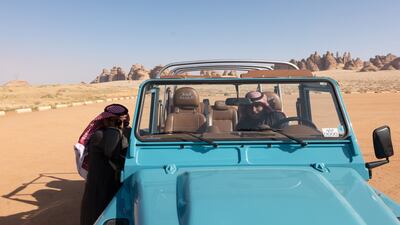
The UAE improved its travel and tourism index score by 4.4 per cent between 2019 and 2024, showing strengths in several key areas, such as business environment, safety, information and communications technology, as well as human resources, the WEF said. Shutterstock
The UAE improved its travel and tourism index score by 4.4 per cent between 2019 and 2024, showing strengths in several key areas, such as business environment, safety, information and communications

UAE leads Mena region and ranks among top 20 on WEF travel and tourism index


  • English
  • Arabic

The UAE is leading the Middle East and North Africa region on the World Economic Forum's travel and tourism development index, as the Arab world’s second-largest economy continues to attract visitors from around the world.

The Emirates, whose tourism sector bounced back swiftly from the coronavirus pandemic, ranks 18th on the Travel and Tourism Development Index – a measure of a country’s ability to sustainably grow its travel and tourism industry – a WEF report found on Tuesday.

Saudi Arabia was ranked 41st on the index, followed by Israel at 48th, Qatar at 53rd, Bahrain at 58th, and Egypt at 61st.

The UAE improved its score by 4.4 per cent between 2019 and 2024, showing strengths in several key areas such as business environment, safety, information and communications technology, as well as human resources, the report said.

Among high-income economies, only Saudi Arabia and the UAE were ranked in the top 10 for showing the most improvement in their scores between 2019 and 2024.

Dubai, the Gulf region's tourism and finance hub, has been investing heavily in its tourism and aviation infrastructure to keep peace with growing demand.

The city hosted 5.18 million international overnight visitors in the first quarter of 2024, compared with 4.67 million tourist arrivals during the same period last year, according to official data.

Dubai is also building a new passenger terminal at Al Maktoum International, the emirate's second airport also known as Dubai World Central, as its main hub, Dubai International, inches closer to full capacity.

Meanwhile, Abu Dhabi's tourism body is planning to invest more than $10 billion in infrastructure as part of its new major tourism strategy, the chairman of the emirate's Department of Culture and Tourism told The National last month.

The oil-rich emirate aims to boost the number of hotel rooms to 52,000, from the current 34,000, to support the Abu Dhabi Tourism Strategy 2030, Mohamed Al Mubarak had said at the time.

“This year marks a turning point for the travel and tourism sector, which we know has the capacity to unlock growth and serve communities through economic and social transformation,” said Francisco Betti, head of the global industries team at the WEF.

International tourist arrivals and the travel sector's contribution to the global economy are expected to return to pre-pandemic levels this year, according to the WEF.

International tourist arrivals climbed to 88 per cent of the 2019 level, last year, with travel and tourism’s share of the global gross domestic product reaching pre-pandemic levels at $9.9 trillion, the report said.

The Middle East experienced the highest recovery rates in tourist arrivals, surpassing 2019 levels by 20 per cent.

Meanwhile, Europe, Africa and the Americas also recorded strong recovery rates, with tourist arrivals reaching around 90 per cent of their pre-pandemic levels in 2023, the report said.

In 2024, global tourism is expected to expand further, driven by pent-up demand and growth in major Asian markets after travel restrictions were lifted later than in other regions.

However, the uneven recovery, labour shortages, supply and demand imbalances, rising travel prices, and service disruptions have put pressure on some destinations and businesses, the WEF said.

While travel demand has proven resilient, the macroeconomic and geopolitical landscape – marked by economic uncertainty, high inflation and energy prices, increased interest rates, and conflicts from Ukraine to the Middle East – has exacerbated the sector’s challenging operating conditions, the report said.

“Combined with the impact of climate events such as global heatwaves and wildfires in countries like Greece and the return of overcrowding at destinations such as Venice, the sector’s influence on economic, social and environmental issues has become even more apparent,” it added.

Mixed recovery

While the travel and tourism sector is recovering from the impact of the pandemic, there is a wide gap between the growth rates of developing and high-income countries.

The top positions in this year's WEF travel and tourism development index were occupied by mature, high-income travel and tourism economies in Europe, and to a lesser extent, in Asia-Pacific.

Among the top 30 scorers, 19 were from Europe, seven from Asia-Pacific, three from the Americas, and one from the Mena region – the UAE.

The US, Spain and Japan took the first three positions in the index, followed by France, Australia, Germany, the UK, China, Italy and Switzerland.

High-income economies generally have more favourable conditions for travel and tourism development, supported by conducive business environments, dynamic labour markets, and open travel policies, among others, the report said.

However, developing countries have recorded significant improvements in recent years.

China, the world’s second-largest economy, has cemented its place in the top 10 among upper-middle-income economies, while emerging destinations such as Indonesia, Brazil and Turkey have also joined the Asian country in the top quartile of the rankings, the WEF said.

Overall, low- to upper-middle-income economies represented more than 70 per cent of countries that have improved their scores since 2019, with the Mena and sub-Saharan Africa regions showing notable progress, the report added.

It, however, warned that significant investments were still needed to close gaps in enabling conditions and market share between developing and high-income countries.

One pathway to achieve this could be leveraging natural and cultural assets, which offer developing economies an opportunity for tourism-led economic development, the WEF said.

“It’s essential to bridge the divide between differing economies’ ability to build a strong environment for their travel and tourism sector to thrive,” said Lis Tussyadiah, head of the school of hospitality and tourism management at the University of Surrey.

“The sector has big potential to foster prosperity and mitigate global risks, but that potential can only be fully realised through a strategic and inclusive approach.”


The stats

Ship name: MSC Bellissima

Ship class: Meraviglia Class

Delivery date: February 27, 2019

Gross tonnage: 171,598 GT

Passenger capacity: 5,686

Crew members: 1,536

Number of cabins: 2,217

Length: 315.3 metres

Maximum speed: 22.7 knots (42kph)

Indika
%3Cp%3E%3Cstrong%3EDeveloper%3A%3C%2Fstrong%3E%2011%20Bit%20Studios%3Cbr%3E%3Cstrong%3EPublisher%3A%3C%2Fstrong%3E%20Odd%20Meter%3Cbr%3E%3Cstrong%3EConsole%3A%3C%2Fstrong%3E%20PlayStation%205%2C%20PC%20and%20Xbox%20series%20X%2FS%3Cbr%3E%3Cstrong%3ERating%3A%3C%2Fstrong%3E%204%2F5%3C%2Fp%3E%0A
Our family matters legal consultant

Name: Hassan Mohsen Elhais

Position: legal consultant with Al Rowaad Advocates and Legal Consultants.

Mountain%20Boy
%3Cp%3E%3Cstrong%3EDirector%3A%3C%2Fstrong%3E%20Zainab%20Shaheen%3C%2Fp%3E%0A%3Cp%3E%3Cstrong%3EStarring%3A%3C%2Fstrong%3E%20Naser%20Al%20Messabi%3C%2Fp%3E%0A%3Cp%3E%3Cstrong%3ERating%3C%2Fstrong%3E%3A%203%2F5%3C%2Fp%3E%0A
Tips to stay safe during hot weather
  • Stay hydrated: Drink plenty of fluids, especially water. Avoid alcohol and caffeine, which can increase dehydration.
  • Seek cool environments: Use air conditioning, fans, or visit community spaces with climate control.
  • Limit outdoor activities: Avoid strenuous activity during peak heat. If outside, seek shade and wear a wide-brimmed hat.
  • Dress appropriately: Wear lightweight, loose and light-coloured clothing to facilitate heat loss.
  • Check on vulnerable people: Regularly check in on elderly neighbours, young children and those with health conditions.
  • Home adaptations: Use blinds or curtains to block sunlight, avoid using ovens or stoves, and ventilate living spaces during cooler hours.
  • Recognise heat illness: Learn the signs of heat exhaustion and heat stroke (dizziness, confusion, rapid pulse, nausea), and seek medical attention if symptoms occur.
Why are asylum seekers being housed in hotels?

The number of asylum applications in the UK has reached a new record high, driven by those illegally entering the country in small boats crossing the English Channel.

A total of 111,084 people applied for asylum in the UK in the year to June 2025, the highest number for any 12-month period since current records began in 2001.

Asylum seekers and their families can be housed in temporary accommodation while their claim is assessed.

The Home Office provides the accommodation, meaning asylum seekers cannot choose where they live.

When there is not enough housing, the Home Office can move people to hotels or large sites like former military bases.

Benefits of first-time home buyers' scheme
  • Priority access to new homes from participating developers
  • Discounts on sales price of off-plan units
  • Flexible payment plans from developers
  • Mortgages with better interest rates, faster approval times and reduced fees
  • DLD registration fee can be paid through banks or credit cards at zero interest rates
COMPANY PROFILE
Name: Kumulus Water
 
Started: 2021
 
Founders: Iheb Triki and Mohamed Ali Abid
 
Based: Tunisia 
 
Sector: Water technology 
 
Number of staff: 22 
 
Investment raised: $4 million 
COMPANY%20PROFILE
%3Cp%3E%3Cstrong%3ECompany%20name%3C%2Fstrong%3E%3A%20ASI%20(formerly%20DigestAI)%3C%2Fp%3E%0A%3Cp%3E%3Cstrong%3EStarted%3A%3C%2Fstrong%3E%202017%3C%2Fp%3E%0A%3Cp%3E%3Cstrong%3EFounders%3A%3C%2Fstrong%3E%20Quddus%20Pativada%3C%2Fp%3E%0A%3Cp%3E%3Cstrong%3EBased%3A%3C%2Fstrong%3E%20Dubai%2C%20UAE%3C%2Fp%3E%0A%3Cp%3E%3Cstrong%3EIndustry%3A%3C%2Fstrong%3E%20Artificial%20intelligence%2C%20education%20technology%3C%2Fp%3E%0A%3Cp%3E%3Cstrong%3EFunding%3A%3C%2Fstrong%3E%20%243%20million-plus%3C%2Fp%3E%0A%3Cp%3E%3Cstrong%3EInvestors%3A%3C%2Fstrong%3E%20GSV%20Ventures%2C%20Character%2C%20Mark%20Cuban%3C%2Fp%3E%0A
The%20trailblazers
%3Cp%3ESixteen%20boys%20and%2015%20girls%20have%20gone%20on%20from%20Go-Pro%20Academy%20in%20Dubai%20to%20either%20professional%20contracts%20abroad%20or%20scholarships%20in%20the%20United%20States.%20Here%20are%20two%20of%20the%20most%20prominent.%0D%3C%2Fp%3E%0A%3Cp%3E%3Cstrong%3EGeorgia%20Gibson%20(Newcastle%20United)%3C%2Fstrong%3E%0D%3Cbr%3EThe%20reason%20the%20academy%20in%20Dubai%20first%20set%20up%20a%20girls%E2%80%99%20programme%20was%20to%20help%20Gibson%20reach%20her%20potential.%20Now%20she%20plays%20professionally%20for%20Newcastle%20United%20in%20the%20UK.%0D%3C%2Fp%3E%0A%3Cp%3E%3Cstrong%3EMackenzie%20Hunt%20(Everton)%3C%2Fstrong%3E%0D%3Cbr%3EAttended%20DESS%20in%20Dubai%2C%20before%20heading%20to%20the%20UK%20to%20join%20Everton%20full%20time%20as%20a%20teenager.%20He%20was%20on%20the%20bench%20for%20the%20first%20team%20as%20recently%20as%20their%20fixture%20against%20Brighton%20on%20February%2024.%0D%3C%2Fp%3E%0A
Living in...

This article is part of a guide on where to live in the UAE. Our reporters will profile some of the country’s most desirable districts, provide an estimate of rental prices and introduce you to some of the residents who call each area home.

RoboCop%3A%20Rogue%20City
%3Cp%3E%3Cstrong%3EDeveloper%3A%20%3C%2Fstrong%3ETeyon%3Cbr%3E%3Cstrong%3EPublisher%3A%20%3C%2Fstrong%3ENacon%3Cbr%3E%3Cstrong%3EConsole%3A%3C%2Fstrong%3E%20PlayStation%205%2C%20Xbox%20Series%20X%2FS%20and%20PC%3Cbr%3E%3Cstrong%3ERating%3A%20%3C%2Fstrong%3E3%2F5%3C%2Fp%3E%0A
Which honey takes your fancy?

Al Ghaf Honey

The Al Ghaf tree is a local desert tree which bears the harsh summers with drought and high temperatures. From the rich flowers, bees that pollinate this tree can produce delicious red colour honey in June and July each year

Sidr Honey

The Sidr tree is an evergreen tree with long and strong forked branches. The blossom from this tree is called Yabyab, which provides rich food for bees to produce honey in October and November. This honey is the most expensive, but tastiest

Samar Honey

The Samar tree trunk, leaves and blossom contains Barm which is the secret of healing. You can enjoy the best types of honey from this tree every year in May and June. It is an historical witness to the life of the Emirati nation which represents the harsh desert and mountain environments

Pathaan
%3Cp%3E%3Cstrong%3EDirector%3A%3C%2Fstrong%3E%20Siddharth%20Anand%C2%A0%3C%2Fp%3E%0A%3Cp%3E%3Cstrong%3EStars%3A%3C%2Fstrong%3E%20Shah%20Rukh%20Khan%2C%20Deepika%20Padukone%2C%20John%20Abraham%C2%A0%3C%2Fp%3E%0A%3Cp%3E%3Cstrong%3ERating%3A%3C%2Fstrong%3E%203%2F5%3C%2Fp%3E%0A
Updated: May 21, 2024, 8:53 AM