

One of the foundations of online shopping has been free returns — but not anymore.
After years of subsidising them, more retailers are charging customers to send back unwanted goods. It’s a risky move because shoppers have become accustomed to buying an item in a number of sizes and colours and returning what doesn’t fit for free.
The list of retailers cutting back includes Zara, Abercrombie & Fitch and Boohoo.
In the US, the number of large retailers requiring a return fee has jumped from 31 per cent to 40 per cent this year, research by Narvar, a logistics software firm, showed.
“I do expect others to follow,” said Honor Strachan, an analyst at research and consulting firm GlobalData.
“It only takes one, and the others will think: ‘Well, if Zara can do it, we can do it, too’.”
The pullback on returns comes after the e-commerce sector spent the past two decades removing costs from supply chains and customer service.
But returns had barely been touched, leaving them as one of the few places with lots of room for reducing expenses. They are costly because of the labour to have them shipped back, inspected and put up for resale.
Investors are also clamouring for online businesses to boost profitability (or be profitable) in a shift from incessantly focusing on growth.
The pandemic played a role, too, causing a spike in online shopping — that has since receded — when the masses stayed away from physical stores. That meant more returns, and Covid-19’s disruptions created an inventory glut in categories such as apparel, which is expected to increase discounting and the potential for shoppers to return goods when they see better deals.
A volatile economic environment this Christmas shopping season has added to the pressure.
Consumers experiencing the highest inflation in four decades are more frugal, increasing the chances that they second-guess a purchase and return it, said Amit Sharma, chief executive and founder of Narvar.
Higher costs for transport, energy and labour have made returns even more expensive, raising the stakes for chains to change behaviour.
“That’s the big question: how do we reset expectations?” said Mr Sharma, who previously held senior roles at Apple and Walmart. “Everybody’s losing money on shipping and returns.”
Online retailers realised early on that they needed to win the trust of shoppers before they would hand over their credit card number to a website and buy a product they hadn’t seen in person.
Free returns helped make consumers comfortable. An early adopter was shoe retailer Zappos, now owned by Amazon, which let customers order several sizes and return what didn’t fit without any extra fees.
The industry followed, and now weaning the masses off free returns will be difficult. The practice of buying several items online to try at home — now known as bracketing — increased during the pandemic when fitting rooms were closed. About two thirds of US shoppers engage in the practice, a survey this year by Narvar showed.
Social media platforms such as TikTok and YouTube have made bracketing more popular thanks to so-called try on haul videos in which followers are asked to comment on whether the buyer should keep or return their purchased items.
Return fraud, with tactics such as returning a counterfeit item, is also rising. In the US, about 10 per cent of the $761 billion in returns made on all purchases last year were fraudulent, research by the National Retail Federation, an industry group, showed.
And online purchases have a higher rate of return at nearly 21 per cent, up from 18.1 per cent in 2020.
Retailers increasingly view returns as a threat to their businesses.
ThredUp recently said return rates are increasing, causing a $3 million hit to sales in its most recent quarter. And the online resale platform charges $1.99 for what it calls a “restocking fee” if a customer sends an item back.
Earlier this year, London-based Asos slashed its annual guidance, saying that a significant rise in returns in the UK and Europe hurt sales. It added that rising returns coupled with inflation have a “disproportionate impact on profitability”, but said it would keep returns free for customers.
-
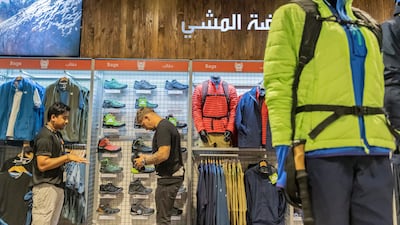
The next few months are the busiest time of the year for outdoor pursuit shops. Antonie Robertson / The National -

Outdoor furniture and plants for sale at the Garden Concept store in Dubai. Pawan Singh / The National -

Lucy Holmes, marketing manager at the Garden Concept store. Pawan Singh / The National -
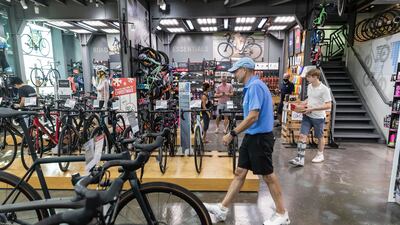
The Cycle Hub in Dubai Motor City enjoyed a boom in business once the Covid-19 lockdown was lifted in 2020. Antonie Robertson / The National -

Sam Sayadan, co-founder of The Cycle Hub Shop, said cycling is a year-round activity, but interest piques in the cooler months. Antonie Robertson / The National -
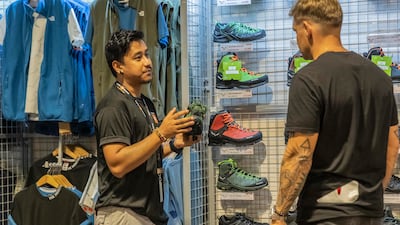
Hiking is popular among residents in the UAE in the winter. Antonie Robertson / The National -

Sherief Medhat, head of business at Adventure HQ in Dubai, said people became more aware about having an active lifestyle during the pandemic. Antonie Robertson / The National -

Adventure HQ is busy all year round thanks to its Adventure Zone, the family-active entertainment centre for kids aged four to 14. Antonie Robertson / The National


Chains are employing a series of tactics to reduce the financial hit. Some are shortening how long a shopper has to bring back an item.
Bath & Body Works said it will not allow the return or exchange of products that show “excessive wear and tear”, a notable switch from the personal care brand that has famously let customers return used products.
An approach being taken with low-value goods by retailers such as Amazon and Target is refunding a return, but letting the customer keep the item. In this case, the retailer is calculating that it will save money to avoid the costly process of trying to resell a returned good.
It’s a strategy that’s catching on, with the number of merchants using the tactic jumping 1,700 per cent in the first half of 2022, Narvar said.
However, these tactics don’t address the main reason so many online purchases get returned: fit.
The industry has tried to use technology such as augmented reality to help shoppers make better choices with virtual dressing rooms, but those tools haven’t been widely adopted despite lots of investment.
“Sizing is a big problem to solve in e-commerce, especially with apparel,” said Katia Walsh, chief strategy and artificial intelligence officer at Levi Strauss.
“It’s something that companies have to solve, and we are doing our best to do that.”

