

Authorities in the Bahamas have arrested Sam Bankman-Fried, the former chief executive of collapsed cryptocurrency company FTX, the US attorney's office in New York said late on Monday.
“Earlier this evening, Bahamian authorities arrested Samuel Bankman-Fried at the request of the US Government, based on a sealed indictment filed by the United States Attorney’s Office for the Southern District of New York," US Attorney Damian Williams said.
"We expect to move to unseal the indictment in the morning and will have more to say at that time.”
Mr Bankman-Fried is under criminal investigation by US and Bahamian authorities after the collapse last month of FTX.
Bahamas-based FTX and more than 100 related entities, including the company’s US arm, filed for bankruptcy in November, sending shockwaves across the cryptocurrency ecosystem.
The arrest came a day before Mr Bankman-Fried was due to testify before the House financial services committee in Washington, along with the company's current chief executive, John Ray III.
Mr Bankman-Fried, 30, said recently that he did not "knowingly" misuse customers' funds, and he believed his millions of angry customers would eventually be made whole.
At the centre of the investigations are questions about whether the firm mishandled customer funds by lending them out to the trading platform’s sister company, Alameda Research, to shore up risky investments.
His sudden fall from grace and arrest has stunned investors and crypto enthusiasts, who once hailed the American as the saviour of the industry.
Mr Bankman-Fried amassed billions of dollars in personal wealth running FTX, one of the world's largest crypto exchanges, which was valued this year at $32 billion.
Agencies contributed to this report.
Cryptocurrencies - in pictures
-
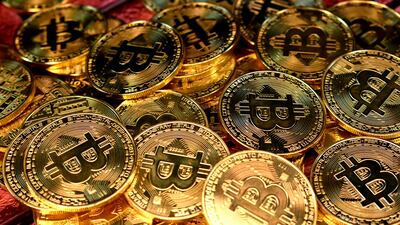
The crypto market, which includes currencies such as Bitcoin, pictured, has lost $2 trillion of its value in six months. Unsplash -
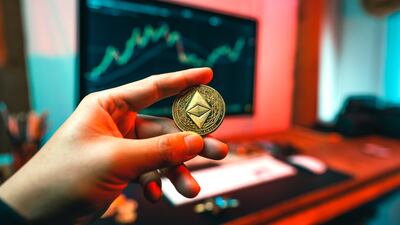
The price of Ethereum, the second largest cryptocurrency by market size, has fallen by 70 per cent this year. Investors and analysts are watching to see if it will dip below $1,000. Unsplash -
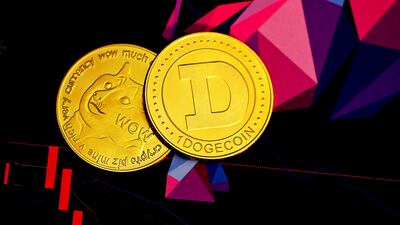
Dogecoin, supported by Elon Musk, is about 90 per cent down from May last year, yet it is outperforming Bitcoin and Ethereum in the current crash. Unsplash -
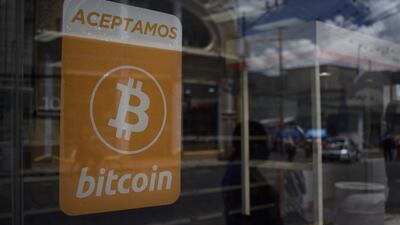
The government of El Salvador has invested $105 million in Bitcoin. President Nayib Bukele's embrace of the cryptocurrency as legal tender is being questioned as the market crashes. Getty -

Changpeng Zhao, founder of crypto exchange giant Binance, has compared the current market turmoil to the dotcom bubble of the early 2000s. Still, the company is aggressively pursuing licensing in international jurisdictions and introducing new products. Getty -
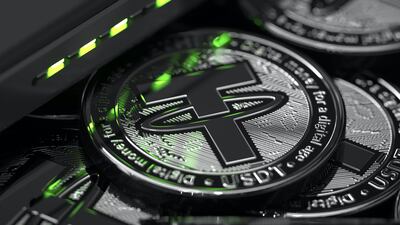
Tether is the biggest issuer of stablecoins, a type of cryptocurrency pegged to a traditionally stable asset like the US dollar. Most stablecoins are meant to maintain a constant price of $1 and are backed by real reserve funds, making it easy to convert crypto investments into cash. But Tether's financial statements show that may not be true, leaving the issuer and its investors vulnerable. Unsplash -

The recent crypto crash can in part be attributed to the collapse of TerraUSD, a stablecoin pegged to the US dollar through algorithms and linked to a "sister" cryptocurrency named Luna. When the price of Luna plummeted, TerraUSD also fell, creating a “death spiral” to practically zero for both coins. Unsplash -

On June 12 crypto lender Celsius Network said it had paused customer withdrawals, saying it needed “to stabilise liquidity and operations”. Investors are still waiting, with no signs that the current meltdown will let up. Getty



