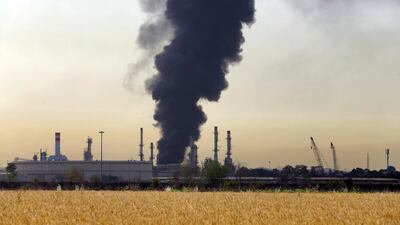
Smoke at a refinery near Tehran. Fires that have hit Iran’s energy sector could partly be due to substandard parts. AP

Future of Iran's oil industry remains uncertain as it heads to the polls


Robin Mills
  • English
  • Arabic

Iranian oil minister Bijan Zanganeh must be looking forward to retirement after 16 years in the hot seat. The country’s presidential elections are colliding with crunch time in the nuclear talks, determining whether and when Iranian oil returns to the world market. In the tradition of bullish pronouncements, Mr Zanganeh goes out with a few parting shots.

Last week's Opec+ meeting ended exceptionally quickly and smoothly, with an agreement to continue with plans to steadily ease production cuts. The group will add 2 million barrels per day by July, with 700,000 bpd of this coming this month. Ministers will have been encouraged by strong prices, with Brent crude trading at about $72 per barrel on Friday, the highest level in two years.

The market is set to be about 2 million bpd in deficit for the rest of this year, with swollen stocks from last year drawn down to almost normal levels. Opec forecasts a 6 million bpd gain in demand this year, mostly concentrated in the second half, even as rising Covid-19 infections in parts of Asia keep the picture cloudy.

Iran's return would quickly bring back between 1 million bpd to 1.5 million bpd of exports – as was the case after the first lifting of sanctions under Barack Obama, US president at the time – plus a temporary surge from drawing down the remainder of the country's excess stocks.

Opec+ will still have 5.8 million bpd of cuts in place after July. Accommodating the resurgence of Iran would slow the pace of normalisation, depending on demand and production elsewhere, but there seems to be enough space in the market. Iran, alongside troubled Venezuela and Libya, has been exempt from quotas. It is not expected to discuss joining the framework of production limits until it has had at least a few months to operate at full output.

So, what happens then? Mr Zanganeh told journalists last week that Iran could and should raise output to 6.5 million bpd, exceeding record levels reached in the 1970s. It would be emulating its neighbours – the UAE, Saudi Arabia and Iraq, which all have plans for production growth.

As with them, Iran may be increasingly mindful of the need to be ahead of a threatened decline in global oil demand highlighted in the International Energy Agency’s latest report.

Contracts were awarded last month to local companies for the further development of the new West Karoun fields on the Iraqi border amid plans to add about 200,000 bpd over the next couple of years. But gaining 2.5 million bpd or more beyond pre-sanctions levels while mitigating declines in the mature fields might cost in the order of $100 billion.

Iran has suffered a string of fires and explosions in recent months, several of which have affected the petroleum industry. They include a blaze at a refinery near Tehran last Wednesday that was sparked by a leaking pipeline, a blast that hit an oxygen pipeline serving petrochemical plants in the southern industrial centre of Assaluyeh the week before and a blaze last month at the Kangan refinery, which was inaugurated by President Rouhani a few months earlier.

A fierce blaze broke out at the refinery in southern Tehran after a liquefied gas line leaked and exploded. AFP

While some of these, especially an explosion that damaged the Natanz uranium enrichment plant in April, are suspected to be acts of sabotage, others could be the result of hot weather, poor safety policies and the use of sub-standard parts because of sanctions. Whatever the cause, Iran needs both cash and international equipment.

One big mistake Iran made after the nuclear deal – called the Joint Comprehensive Plan of Agreement – came into effect in January 2016 was moving too slowly to attract foreign investment. It dawdled on drawing up its new “Iran Petroleum Contract”, which in the end was not that appealing to international oil companies, and laid out an over-ambitious scope of projects with too small a team of negotiators.

This was the fault of hardline parliamentary opponents of President Hassan Rouhani's government, institutional atrophy after eight years of the maverick Mahmoud Ahmadinejad and residual political and sanctions risk. In the end, Tehran signed numerous preliminary agreements but the most substantial deal – with Total and the China National Petroleum Corporation for the development of liquefied natural gas exports, after the deal was abandoned by Donald Trump, Mr Obama's successor, and sanctions were reimposed.

A string of major investments by European, Chinese, Japanese and Russian companies, and expanded gas exports to neighbours would have given their governments more incentive to resist Mr Trump’s torching of the nuclear deal. The window for Iran to use its hydrocarbon resources strategically closed then, and may soon close again, possibly forever.

Mr Rouhani's administration only has until early August to seal any revival of the nuclear deal with the US. With the election on June 18, Opec+ will know the next Iranian president by its next meeting on June 24, unless the election goes to a run-off the day after. The tiny slate of candidates who passed the vetting process includes two uninspiring moderates, four conservatives or hardliners and the hand-picked and probable winner, Ebrahim Raisi.

Mr Raisi, a hardline judiciary chief who lost to Mr Rouhani in 2017, could be declared the winner this time on a low turn-out. However, he will be problematic for western countries and Iran’s regional rivals to deal with. He or another hardliner may well return to the JCPOA and bring Iran’s oil back to the market but it will not be a friendly place for international investment.

Subsidiaries of supreme leader Ali Khamenei’s organisation were awarded two of the West Karoun contracts. Despite attempts to maintain the power of the clergy, he and an unpopular president will need the support of the Revolutionary Guard, whose engineering arm already plays a major role in the domestic oil industry.

The course of Iranian politics rarely runs smooth. Despite Mr Zanganeh’s long efforts, he is unlikely to see his country’s petroleum industry ever reach its potential.

Robin Mills is chief executive of Qamar Energy and author of The Myth of the Oil Crisis

The specs

Engine: 2.0-litre 4cyl turbo

Power: 261hp at 5,500rpm

Torque: 405Nm at 1,750-3,500rpm

Transmission: 9-speed auto

Fuel consumption: 6.9L/100km

On sale: Now

Price: From Dh117,059

Sleep Well Beast
The National
4AD

Where to donate in the UAE

The Emirates Charity Portal

You can donate to several registered charities through a “donation catalogue”. The use of the donation is quite specific, such as buying a fan for a poor family in Niger for Dh130.

The General Authority of Islamic Affairs & Endowments

The site has an e-donation service accepting debit card, credit card or e-Dirham, an electronic payment tool developed by the Ministry of Finance and First Abu Dhabi Bank.

Al Noor Special Needs Centre

You can donate online or order Smiles n’ Stuff products handcrafted by Al Noor students. The centre publishes a wish list of extras needed, starting at Dh500.

Beit Al Khair Society

Beit Al Khair Society has the motto “From – and to – the UAE,” with donations going towards the neediest in the country. Its website has a list of physical donation sites, but people can also contribute money by SMS, bank transfer and through the hotline 800-22554.

Dar Al Ber Society

Dar Al Ber Society, which has charity projects in 39 countries, accept cash payments, money transfers or SMS donations. Its donation hotline is 800-79.

Dubai Cares

Dubai Cares provides several options for individuals and companies to donate, including online, through banks, at retail outlets, via phone and by purchasing Dubai Cares branded merchandise. It is currently running a campaign called Bookings 2030, which allows people to help change the future of six underprivileged children and young people.

Emirates Airline Foundation

Those who travel on Emirates have undoubtedly seen the little donation envelopes in the seat pockets. But the foundation also accepts donations online and in the form of Skywards Miles. Donated miles are used to sponsor travel for doctors, surgeons, engineers and other professionals volunteering on humanitarian missions around the world.

Emirates Red Crescent

On the Emirates Red Crescent website you can choose between 35 different purposes for your donation, such as providing food for fasters, supporting debtors and contributing to a refugee women fund. It also has a list of bank accounts for each donation type.

Gulf for Good

Gulf for Good raises funds for partner charity projects through challenges, like climbing Kilimanjaro and cycling through Thailand. This year’s projects are in partnership with Street Child Nepal, Larchfield Kids, the Foundation for African Empowerment and SOS Children's Villages. Since 2001, the organisation has raised more than $3.5 million (Dh12.8m) in support of over 50 children’s charities.

Noor Dubai Foundation

Sheikh Mohammed bin Rashid Al Maktoum launched the Noor Dubai Foundation a decade ago with the aim of eliminating all forms of preventable blindness globally. You can donate Dh50 to support mobile eye camps by texting the word “Noor” to 4565 (Etisalat) or 4849 (du).

Company%20profile
%3Cp%3E%3Cstrong%3ECompany%20name%3A%3C%2Fstrong%3E%20Fasset%0D%3Cbr%3E%3Cstrong%3EStarted%3A%20%3C%2Fstrong%3E2019%0D%3Cbr%3E%3Cstrong%3EFounders%3A%3C%2Fstrong%3E%20Mohammad%20Raafi%20Hossain%2C%20Daniel%20Ahmed%0D%3Cbr%3E%3Cstrong%3EBased%3A%3C%2Fstrong%3E%20Dubai%0D%3Cbr%3E%3Cstrong%3ESector%3A%20%3C%2Fstrong%3EFinTech%0D%3Cbr%3E%3Cstrong%3EInitial%20investment%3A%3C%2Fstrong%3E%20%242.45%20million%0D%3Cbr%3E%3Cstrong%3ECurrent%20number%20of%20staff%3A%3C%2Fstrong%3E%2086%0D%3Cbr%3E%3Cstrong%3EInvestment%20stage%3A%3C%2Fstrong%3E%20Pre-series%20B%0D%3Cbr%3E%3Cstrong%3EInvestors%3A%3C%2Fstrong%3E%20Investcorp%2C%20Liberty%20City%20Ventures%2C%20Fatima%20Gobi%20Ventures%2C%20Primal%20Capital%2C%20Wealthwell%20Ventures%2C%20FHS%20Capital%2C%20VN2%20Capital%2C%20local%20family%20offices%3C%2Fp%3E%0A
FIGHT CARD

From 5.30pm in the following order:

Featherweight

Marcelo Pontes (BRA) v Azouz Anwar (EGY)

Catchweight 90kg

Moustafa Rashid Nada (KSA) v Imad Al Howayeck (LEB)

Welterweight

Mohammed Al Khatib (JOR) v Gimbat Ismailov (RUS)

Flyweight (women)

Lucie Bertaud (FRA) v Kelig Pinson (BEL)

Lightweight

Alexandru Chitoran (BEL) v Regelo Enumerables Jr (PHI)

Catchweight 100kg

Mohamed Ali (EGY) v Marc Vleiger (NED)

Featherweight

James Bishop (AUS) v Mark Valerio (PHI)

Welterweight

Gerson Carvalho (BRA) v Abdelghani Saber (EGY)

Middleweight 

Bakhtiyar Abbasov (AZE) v Igor Litoshik (BLR)

Bantamweight:

Fabio Mello (BRA) v Mark Alcoba (PHI)

Welterweight

Ahmed Labban (LEB) v Magomedsultan Magemedsultanov (RUS)

Bantamweight

Trent Girdham (AUS) v Jayson Margallo (PHI)

Lightweight

Usman Nurmagomedov (RUS) v Roman Golovinov (UKR)

Middleweight

Tarek Suleiman (SYR) v Steve Kennedy (AUS)

Lightweight

Dan Moret (USA) v Anton Kuivanen (FIN)

Company%20profile
%3Cp%3E%3Cstrong%3ECompany%20name%3A%20%3C%2Fstrong%3EHakbah%0D%3Cbr%3E%3Cstrong%3EStarted%3A%20%3C%2Fstrong%3E2018%0D%3Cbr%3E%3Cstrong%3EFounder%3A%20%3C%2Fstrong%3ENaif%20AbuSaida%0D%3Cbr%3E%3Cstrong%3EBased%3A%20%3C%2Fstrong%3ESaudi%20Arabia%0D%3Cbr%3E%3Cstrong%3ESector%3A%20%3C%2Fstrong%3EFinTech%0D%3Cbr%3E%3Cstrong%3ECurrent%20number%20of%20staff%3A%20%3C%2Fstrong%3E22%20%0D%3Cbr%3E%3Cstrong%3EInitial%20investment%3A%20%3C%2Fstrong%3E%24200%2C000%0D%3Cbr%3E%3Cstrong%3EInvestment%20stage%3A%20%3C%2Fstrong%3Epre-Series%20A%0D%3Cbr%3E%3Cstrong%3EInvestors%3A%20%3C%2Fstrong%3EGlobal%20Ventures%20and%20Aditum%20Investment%20Management%0D%3Cbr%3E%3Cbr%3E%3C%2Fp%3E%0A
Tips for job-seekers
  • Do not submit your application through the Easy Apply button on LinkedIn. Employers receive between 600 and 800 replies for each job advert on the platform. If you are the right fit for a job, connect to a relevant person in the company on LinkedIn and send them a direct message.
  • Make sure you are an exact fit for the job advertised. If you are an HR manager with five years’ experience in retail and the job requires a similar candidate with five years’ experience in consumer, you should apply. But if you have no experience in HR, do not apply for the job.

David Mackenzie, founder of recruitment agency Mackenzie Jones Middle East

COMPANY%20PROFILE%20
%3Cp%3EName%3A%20DarDoc%3Cbr%3EBased%3A%20Abu%20Dhabi%3Cbr%3EFounders%3A%20Samer%20Masri%2C%20Keswin%20Suresh%3Cbr%3ESector%3A%20HealthTech%3Cbr%3ETotal%20funding%3A%20%24800%2C000%3Cbr%3EInvestors%3A%20Flat6Labs%2C%20angel%20investors%20%2B%20Incubated%20by%20Hub71%2C%20Abu%20Dhabi's%20Department%20of%20Health%3Cbr%3ENumber%20of%20employees%3A%2010%3C%2Fp%3E%0A
Results

57kg quarter-finals

Zakaria Eljamari (UAE) beat Hamed Al Matari (YEM) by points 3-0.

60kg quarter-finals

Ibrahim Bilal (UAE) beat Hyan Aljmyah (SYR) RSC round 2.

63.5kg quarter-finals

Nouredine Samir (UAE) beat Shamlan A Othman (KUW) by points 3-0.

67kg quarter-finals

Mohammed Mardi (UAE) beat Ahmad Ondash (LBN) by points 2-1.

71kg quarter-finals

Ahmad Bahman (UAE) defeated Lalthasanga Lelhchhun (IND) by points 3-0.

Amine El Moatassime (UAE) beat Seyed Kaveh Safakhaneh (IRI) by points 3-0.

81kg quarter-finals

Ilyass Habibali (UAE) beat Ahmad Hilal (PLE) by points 3-0

Credits

Produced by: Colour Yellow Productions and Eros Now
Director: Mudassar Aziz
Cast: Sonakshi Sinha, Jimmy Sheirgill, Jassi Gill, Piyush Mishra, Diana Penty, Aparshakti Khurrana
Star rating: 2.5/5

Jawan
%3Cp%3E%3Cstrong%3EDirector%3A%20%3C%2Fstrong%3EAtlee%3C%2Fp%3E%0A%3Cp%3E%3Cstrong%3EStars%3A%3C%2Fstrong%3E%20Shah%20Rukh%20Khan%2C%20Nayanthara%2C%20Vijay%20Sethupathi%26nbsp%3B%3C%2Fp%3E%0A%3Cp%3E%3Cstrong%3ERating%3A%20%3C%2Fstrong%3E4%2F5%3C%2Fp%3E%0A
