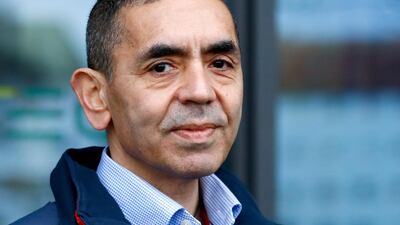
BioNTech could have capacity to make 3 billion doses of Covid-19 vaccine with US partner Pfizer next year, the German company’s chief executive said, making their pioneering shot far more widely available around the world.
“In principle, we could further increase manufacturing capacity,” Ugur Sahin said on Tuesday in an interview with Bloomberg TV. “It depends on demand, it depends on factors such as if an additional boost to vaccinations is required.”
Demand is growing around the world for Covid vaccines that countries desperately need to breathe back life into economies, return children to schools and get people back into offices and shops. Both the US and Europe have sought to accelerate vaccine deliveries this year as new, more aggressive variants of the virus spread.
“We have an order book of already 1.3 billion orders, which is already fixed,” Mr Sahin said. “We are discussing additional doses – hundreds of millions of doses as options – with government organisations.”
BioNTech shares rose as much as 1.3 per cent early Wednesday in Frankfurt.
The two companies have committed to make 2 billion doses of their two-shot vaccine this year. Pfizer promised to ship two-thirds of the US’s 300 million-dose order by the end of May. In the European Union, the partners have promised to ship at least 500 million doses this year, with an option for an additional 100 million doses.
Pfizer has projected about $15 billion in revenue this year from Covid vaccine sales, and chief executive Albert Bourla said the price of the shot may increase.
Concerns about mutated versions of the virus may also drive demand if new variants evolve with the ability to evade current inoculations. BioNTech is already discussing potential orders for boosters, Mr Sahin said.
BioNTech and Pfizer have begun laying the groundwork for a booster shot of their vaccine, which uses a new technology called messenger RNA.
One trial, begun in February, is examining the safety and immune response of a third dose of the vaccine in people who took part in an early study of the shot last year. The partners have also said they’re planning a human test of a new vaccine that’s specific to a particularly problematic vaccine variant that emerged late last year in South Africa.
“We now understand the evolution of the virus can result in new variants that come with new biological and medical features,” Mr Sahin said. “The whole world was not prepared for this pandemic, and we now understand that this could happen again.”
In lab studies using blood of people who’ve been inoculated, the existing form of the vaccine seems to be less effective against the South Africa strain than against other mutant versions of the coronavirus. While the vaccine still appears to offer some protection, the implications of the variants remain unclear.
The companies will gain more data on the South Africa variant within six to eight weeks, Mr Sahin said.
The Pfizer-BioNTech vaccine is cleared in more than 50 countries. Aside from the EU and the US, other major orders have come from Japan, Canada and the UK.
The BioNTech chief called for continued solidarity among EU countries, despite concerns in countries like Germany that tethering vaccine purchasing and distribution to the bloc has slowed the immunisation push. In the UK, more than a third of the population has received a shot, compared with 6 per cent in Germany, according to Bloomberg’s vaccination tracker.
-
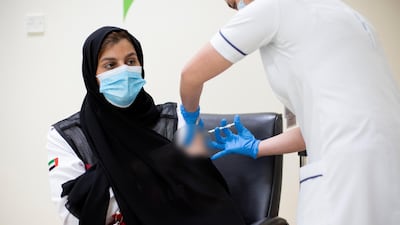
A Dubai ambulance worker is vaccinated with the Pfizer-BioNtech vaccine in Dubai. -
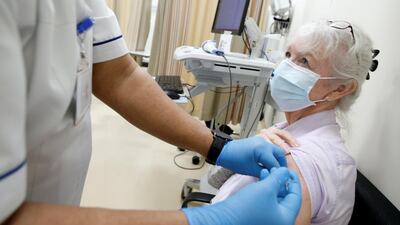
An older resident receives her first shot at Zabeel Health Centre on December 27, 2020. -
The vaccine is expected to be rolled out to all age groups once people in the essential categories have been vaccinated. -
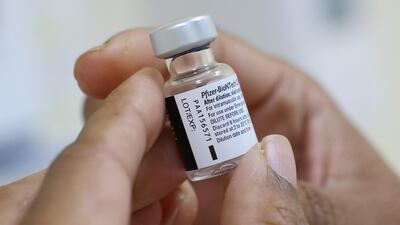
A nurse holds a dose of the Pfizer-BioNTech vaccine, which was approved for use by Dubai's emergency and crisis authority and the federal Ministry of Health. -
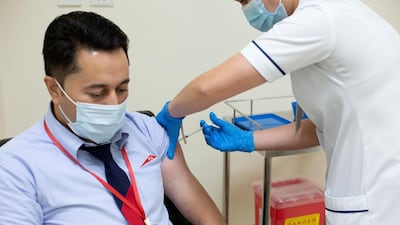
An employee from Roads and Transport Authority receives a dose of the Pfizer-BioNTech vaccine in Dubai. -
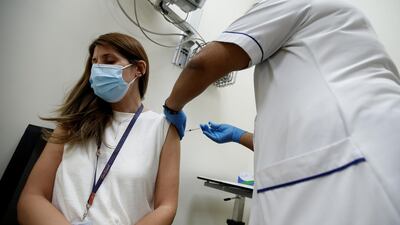
A woman receives a dose of the Pfizer-BioNTech vaccine at Zabeel Health Centre in Dubai on 27 December, 2020. -
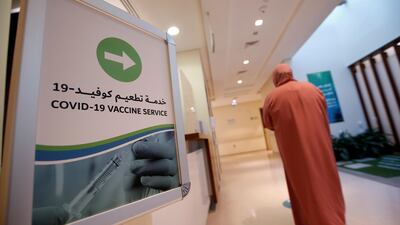
The city has six vaccine centres where the Pfizer-BioNTech shot is available. -
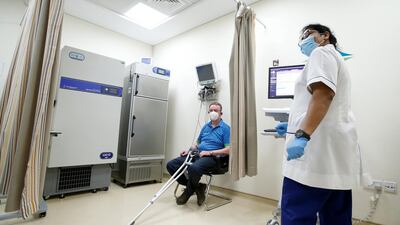
A man waits to receive the first of two doses at Zabeel Health Centre in Dubai on 27 December, 2020. -
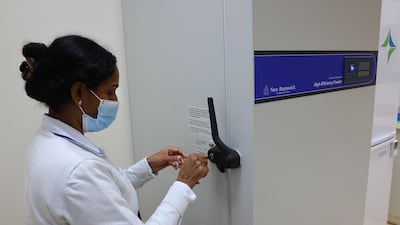
A nurse opens a freezer at Barsha Health Centre. The Pfizer-BioNTech vaccine must be kept at minus 70C when transported. -
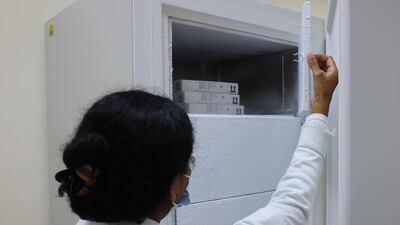
A nurse opens a freezer at Barsha Health Centre. The Pfizer-BioNTech vaccine must be kept at minus 70C when transported. -
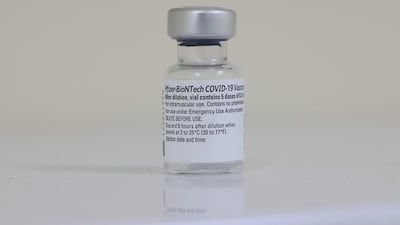
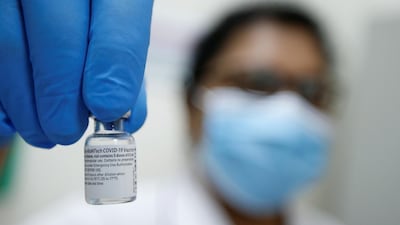
A vial of the vaccine is seen at Barsha Health Centre. AFP -
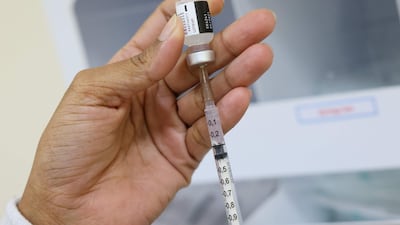
A nurse prepares a dose of the Pfizer-BioNTech vaccine at al-Barsha Health Centre in Dubai. AFP


“At the end of the day we have to see that Germany is not an isolated state,” Mr Sahin said. “It’s part of Europe, and Europe decides and has to come to a common solution.”
As vaccine campaigns pick up, Mr Sahin said he’s optimistic that inoculations will become more widespread this year and next.
“I’m pretty confident that we will be able to provide vaccines in Europe and the US and that everyone who requires a vaccine gets a vaccine by the end of summer,” Mr Sahin said, provided there are no production glitches. “Within 2022, we hope to have enough to vaccinate around the world.”

