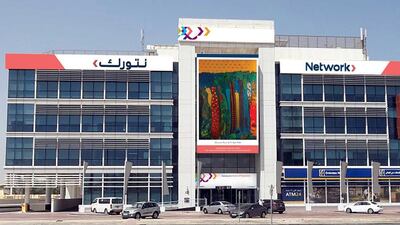
Network International's Dubai HQ. The company on Tuesday swung to first-half loss as its revenue declined. Image courtesy of Network International

Network International swings to first half loss as revenue declines amid pandemic


Sarmad Khan
  • English
  • Arabic

Payments processor Network International swung to a first-half loss as a double-digit drop in revenue due to the Covid-19 pandemic dented profitability.

The Dubai-based company's net loss from continuing operations for the six months ending June 30 fell to $150,000 (Dh550,500), compared to a profit of $15.8m in the same period last year. Revenue for the reporting period dropped 12 per cent to $134.2 million, it said in a statement on Tuesday.

Network International’s Middle East revenue slumped 15.3 per cent year-on-year, while its Africa revenue dropped 10.5 per cent. The company attributed the drop in earnings to Covid-19-related movement restrictions, and the associated reductions in domestic and tourism-related consumer spending throughout its primary markets.

Underlying earnings before interest, taxes, depreciation and amortisation (Ebitda) at the end of June declined 31 per cent to $52.7m from a year earlier. Its underlying Ebitda margin – excluding share of an associate – came in at 36.2 per cent, which reflects revenue reduction and largely fixed cost base, the company said.

Although the pandemic has and will continue to “impact financial performance in the short term, we have a strong balance sheet with significant liquidity”, Simon Haslam, chief executive of Network International, said.

“We are very pleased with the recent improvement in trading momentum during July, although it is still early in the second half and seasonally this is always a lower revenue month, so our overall outlook for 2020 remains unchanged.”

In April, the company said it is halting capital expenditure in order to conserve cash amid the pandemic. It paused $40m of expenditure earmarked for the separation of shared services with Emirates NBD, and its entry to the Saudi Arabian market.

The company has also taken “prudent measure to protect” its cash flows. While around two-thirds of the company’s operational expenditure is fixed, it is enforcing a hiring freeze and cutting discretionary spending among other measures, it said in a statement at the time.

Companies across the globe are cutting costs to offset the impact of the coronavirus-induced economic slowdown. From global banks to airlines and oil and gas firms, major corporations have suspended expansion plans as they look to bolster cash reserves during the crisis.

Network International, however, said it has seen a significant growth in online payments during the first six months of the year. E-commerce volumes - excluding government and airlines sectors - climbed 45 per cent on annual basis in the second quarter of the year, with growth rates in July touching 61 per cent, it said on Tuesday.

The London-listed company in July said it has signed an agreement to acquire DPO Group, an online commerce platform in Africa, for approximately $288m.

“Our strategic approach remains consistent and we have ensured we remain focused on pursuing the numerous opportunities presented by our markets,” Mr Haslam said on Tuesday.

The proposed acquisition of DPO will widen the company’s capabilities across online and mobile money payments as it brings direct merchant relationships to the business, he said.

“We also have numerous opportunities remaining to pursue, whether that be our market entry to Saudi Arabia, our strategic partnership with Mastercard or discussions with banks around substantial outsourcing contracts,” Mr Haslam added.


Mercer, the investment consulting arm of US services company Marsh & McLennan, expects its wealth division to at least double its assets under management (AUM) in the Middle East as wealth in the region continues to grow despite economic headwinds, a company official said.

Mercer Wealth, which globally has $160 billion in AUM, plans to boost its AUM in the region to $2-$3bn in the next 2-3 years from the present $1bn, said Yasir AbuShaban, a Dubai-based principal with Mercer Wealth.

Within the next two to three years, we are looking at reaching $2 to $3 billion as a conservative estimate and we do see an opportunity to do so,” said Mr AbuShaban.

Mercer does not directly make investments, but allocates clients’ money they have discretion to, to professional asset managers. They also provide advice to clients.

“We have buying power. We can negotiate on their (client’s) behalf with asset managers to provide them lower fees than they otherwise would have to get on their own,” he added.

Mercer Wealth’s clients include sovereign wealth funds, family offices, and insurance companies among others.

From its office in Dubai, Mercer also looks after Africa, India and Turkey, where they also see opportunity for growth.

Wealth creation in Middle East and Africa (MEA) grew 8.5 per cent to $8.1 trillion last year from $7.5tn in 2015, higher than last year’s global average of 6 per cent and the second-highest growth in a region after Asia-Pacific which grew 9.9 per cent, according to consultancy Boston Consulting Group (BCG). In the region, where wealth grew just 1.9 per cent in 2015 compared with 2014, a pickup in oil prices has helped in wealth generation.

BCG is forecasting MEA wealth will rise to $12tn by 2021, growing at an annual average of 8 per cent.

Drivers of wealth generation in the region will be split evenly between new wealth creation and growth of performance of existing assets, according to BCG.

Another general trend in the region is clients’ looking for a comprehensive approach to investing, according to Mr AbuShaban.

“Institutional investors or some of the families are seeing a slowdown in the available capital they have to invest and in that sense they are looking at optimizing the way they manage their portfolios and making sure they are not investing haphazardly and different parts of their investment are working together,” said Mr AbuShaban.

Some clients also have a higher appetite for risk, given the low interest-rate environment that does not provide enough yield for some institutional investors. These clients are keen to invest in illiquid assets, such as private equity and infrastructure.

“What we have seen is a desire for higher returns in what has been a low-return environment specifically in various fixed income or bonds,” he said.

“In this environment, we have seen a de facto increase in the risk that clients are taking in things like illiquid investments, private equity investments, infrastructure and private debt, those kind of investments were higher illiquidity results in incrementally higher returns.”

The Abu Dhabi Investment Authority, one of the largest sovereign wealth funds, said in its 2016 report that has gradually increased its exposure in direct private equity and private credit transactions, mainly in Asian markets and especially in China and India. The authority’s private equity department focused on structured equities owing to “their defensive characteristics.”

The%20end%20of%20Summer
%3Cp%3EAuthor%3A%20Salha%20Al%20Busaidy%3C%2Fp%3E%0A%3Cp%3EPages%3A%20316%3C%2Fp%3E%0A%3Cp%3EPublisher%3A%20The%20Dreamwork%20Collective%C2%A0%3C%2Fp%3E%0A
Our family matters legal consultant

Name: Hassan Mohsen Elhais

Position: legal consultant with Al Rowaad Advocates and Legal Consultants.

Who was Alfred Nobel?

The Nobel Prize was created by wealthy Swedish chemist and entrepreneur Alfred Nobel.

  • In his will he dictated that the bulk of his estate should be used to fund "prizes to those who, during the preceding year, have conferred the greatest benefit to humankind".
  • Nobel is best known as the inventor of dynamite, but also wrote poetry and drama and could speak Russian, French, English and German by the age of 17. The five original prize categories reflect the interests closest to his heart.
  • Nobel died in 1896 but it took until 1901, following a legal battle over his will, before the first prizes were awarded.
MATCH INFO

Uefa Champions League last-16, second leg:

Real Madrid 1 (Asensio 70'), Ajax 4 (Ziyech 7', Neres 18', Tadic 62', Schone 72')

Ajax win 5-3 on aggregate

UAE currency: the story behind the money in your pockets
Jewel of the Expo 2020

252 projectors installed on Al Wasl dome

13.6km of steel used in the structure that makes it equal in length to 16 Burj Khalifas

550 tonnes of moulded steel were raised last year to cap the dome

724,000 cubic metres is the space it encloses

Stands taller than the leaning tower of Pisa

Steel trellis dome is one of the largest single structures on site

The size of 16 tennis courts and weighs as much as 500 elephants

Al Wasl means connection in Arabic

World’s largest 360-degree projection surface

The Vile

Starring: Bdoor Mohammad, Jasem Alkharraz, Iman Tarik, Sarah Taibah

Director: Majid Al Ansari

Rating: 4/5

COMPANY%20PROFILE
%3Cp%3E%3Cstrong%3EName%3A%3C%2Fstrong%3E%20Floward%0D%3Cbr%3E%3Cstrong%3EBased%3A%20%3C%2Fstrong%3ERiyadh%2C%20Saudi%20Arabia%0D%3Cbr%3E%3Cstrong%3EFounders%3A%20%3C%2Fstrong%3EAbdulaziz%20Al%20Loughani%20and%20Mohamed%20Al%20Arifi%0D%3Cbr%3E%3Cstrong%3ESector%3A%20%3C%2Fstrong%3EE-commerce%0D%3Cbr%3E%3Cstrong%3ETotal%20funding%3A%20%3C%2Fstrong%3EAbout%20%24200%20million%0D%3Cbr%3E%3Cstrong%3EInvestors%3A%20%3C%2Fstrong%3EAljazira%20Capital%2C%20Rainwater%20Partners%2C%20STV%20and%20Impact46%0D%3Cbr%3E%3Cstrong%3ENumber%20of%20employees%3A%20%3C%2Fstrong%3E1%2C200%3C%2Fp%3E%0A