
The UAE has developed a comprehensive road map to support the growth of the local industrial sector with several new initiatives launched to support public and private partnership within the sector, Dr Sultan Al Jaber, Minister of Industry and Advanced Technology, has said.
While the UAE has achieved significant progress, the industrial sector still has much work to do to keep pace with that growth and the country's ambitions for the future, Dr Al Jaber told state news agency Wam in an interview.
"As such, the Ministry of Industry and Advanced Technology (MoIAT) will continue to exert every effort to enable the sector, enhance its role in stimulating the national economy and increase its contribution to the GDP [gross domestic product] to Dh300 billion ($81.7bn) by 2031," he said.
Here's the interview in full.
The World Government Summit (WGS) concluded last week at Expo 2020 Dubai. How do you see the importance of the summit in anticipating the future, specifically in the industrial sector?
The WGS is a global knowledge exchange platform specifically designed to shape future governments and create a better future for humanity. While past editions presented an invaluable platform for discussion and knowledge sharing, I think this year in particular was very critical. The onset of the Covid-19 pandemic has truly shed light on the importance of resilience, long-term planning and future-proofing, all of which are core to the discussions at the WGS.
I would like to congratulate the WGS organisers for ensuring that we came together again, despite the pandemic, to discuss some of the world’s most pressing challenges.
Bringing together presidents, heads of state, ministers, senior officials and thought leaders, WGS embodies the vision of the UAE leadership in establishing our nation as a centre of gravity for inclusive and collaborative progress.
This year’s summit, which brought together 4,000 participants and 30 international entities from 190 countries and took place one day before the closing of Expo 2020 Dubai, focused its attention on how future governments will harness technology and digital transformation, which is a main pillar for us at the MoIAT as we seek to empower industry by empowering advanced technology application.
In playing its part as a regulatory and legislative authority mandated with creating a conducive system for industrial growth, the ministry is committed to enabling industry, identifying sectors of strategic priority and empowering industry’s contribution to the national GDP.
-
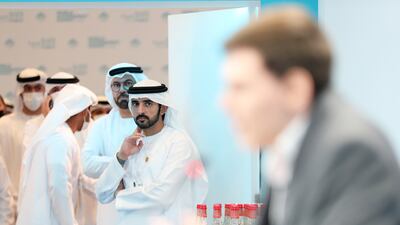
Sheikh Hamdan bin Mohammed, Crown Prince of Dubai, and Mohammed Al Gergawi, Minister of Cabinet Affairs, listen to 'ethical hacker' David Colombo speak at a session at the World Government Summit 2022. Pawan Singh / The National -
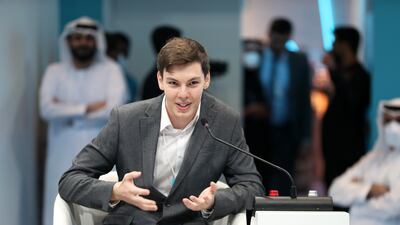
Colombo, founder and chief executive of the Colombo Technology cyber security company, at the summit. Pawan Singh / The National -
Sheikh Mohammed bin Rashid, Vice President and Ruler of Dubai, attends the World Government Summit in Dubai. Photo: Dubai Media Office -
Sheikh Mohammed, Sheikh Hamdan and Sheikh Maktoum bin Mohammed, Deputy Prime Minister, Minister of Finance and Deputy Ruler of Dubai, at the summit. Photo: Dubai Media Office -
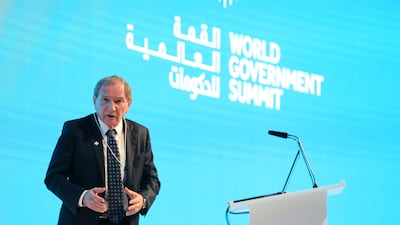
George Friedman, founder and chairman of Geopolitical Futures, at the summit. Pawan Singh / The National -
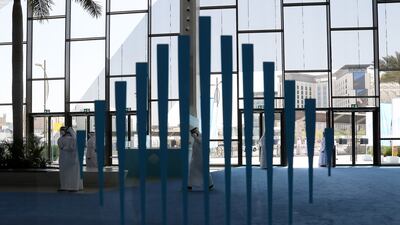
The summit will conclude on Wednesday. Pawan Singh / The National -

A visitor steps on to a self-driving vehicle at the summit. Pawan Singh / The National -
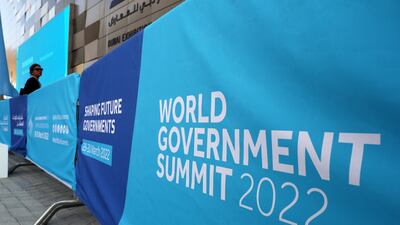
Thousands of delegates and hundreds of speakers are attending the summit. Pawan Singh / The National -
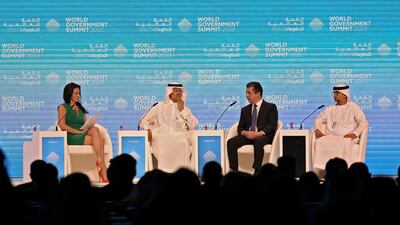
CNBC anchor Hadley Gamble, left, moderates a panel discussion featuring the UAE's Minister of Energy and Infrastructure, Suhail Al Mazrouei, Saudi Arabia's Energy Minister Prince Abdulaziz bin Salman and Iraqi Kurdistan's Prime Minister Masrour Barzani. AFP -

People arrive at the World Government Summit, being held on Tuesday and Wednesday. Pawan Singh / The National -
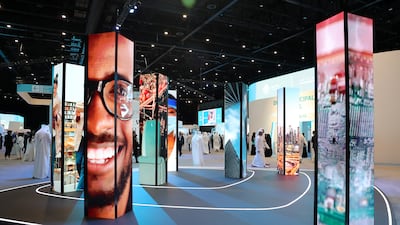
People arrive at the World Government Summit, being held on Tuesday and Wednesday. Pawan Singh / The National -

A poster shows Elon Musk, a speaker at a previous year's event. Pawan Singh / The National -

Delegates at the World Government Summit 2022. Pawan Singh / The National -
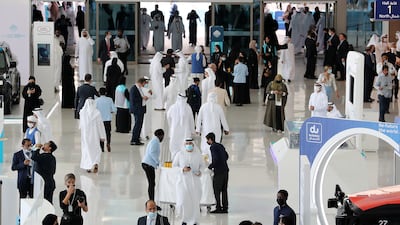
The conference centre at Expo 2020 Dubai. Pawan Singh / The National -
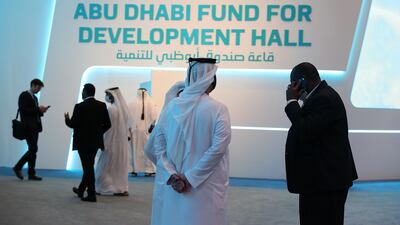
The auditorium is one of the major buildings that will remain in place after the world's fair ends. Pawan Singh / The National


How do you see the success of the UAE in organising Expo 2020 Dubai and what are its implications for the industrial sector?
I think the numbers, level of engagement and convening power speak for themselves. Over 24 million guests, 192 nations, in addition to international organisations, came together over a span of six months to truly connect minds and create the future.
Simply put, Expo 2020 Dubai, despite global unprecedented challenges, was a resounding success and a testament to our leadership’s perseverance and unwavering vision.
Expo 2020 Dubai is and will continue to be a reflection of the world’s confidence in our nation and its ability to mobilise and motivate positive social and economic progress. It has been an honour to be a part of the Expo 2020 higher committee that supported the effort.
-
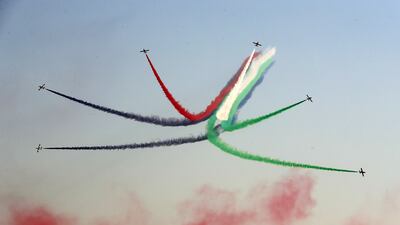
Air show display on the last day of Expo 2020 Dubai. Pawan Singh / The National -

Nearly 23 million visits had been made to Expo by the start of this week after the more than one million visits recorded from Friday to Sunday. Pawan Singh / The National -

The Expo has hosted 30,000 events, including government summits and 5,000 sporting fixtures. Pawan Singh / The National -

A spectacular closing ceremony will be 'end of a beautiful journey' for Expo 2020 Dubai. Antonie Robertson/The National -
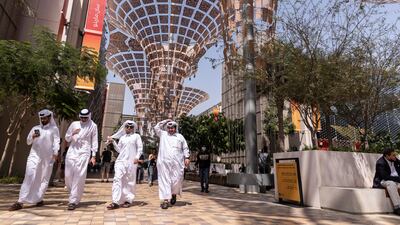
Green spaces and architecture at day of Expo 2020. Antonie Robertson/The National -

Green spaces and architecture at day of Expo 2020. Antonie Robertson/The National -
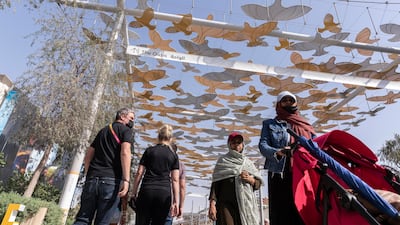
Green spaces and architecture at day of Expo 2020. Antonie Robertson/The National -
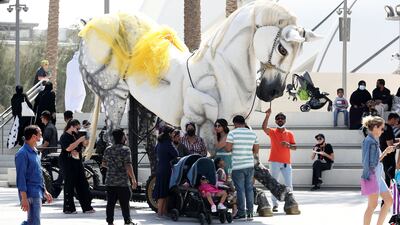
It's a party atmosphere for the last day of Expo 2020 Dubai. Pawan Singh / The National -
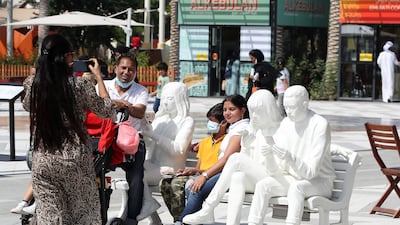
Some funky costumes to mark the end of the hugely successful event in Dubai. Pawan Singh / The National -
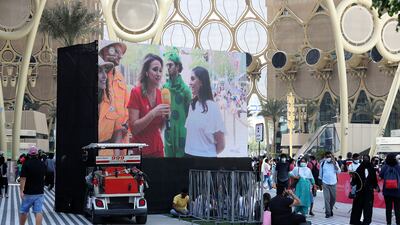
Big screens put up on the last day of the world's fair in Dubai. Pawan Singh / The National -
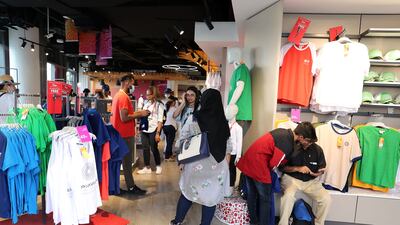
People flock to the merchandise outlet on the last day of Expo 2020 Dubai. Pawan Singh / The National -

Kids enjoying the dance class at the Sustainability pavilion as Expo 2020 Dubai nears its conclusion. Pawan Singh / The National -

Visitors on the last day of Expo 2020 Dubai could watch the closing ceremony on more than 20 giant screens across the site, including at the Jubilee Stage, Dubai Millennium Amphitheatre and Festival Garden. Pawan Singh / The National -
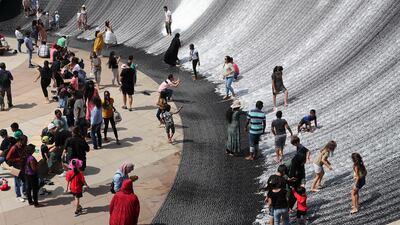
Visitors enjoy the water feature on the last day. Pawan Singh / The National -
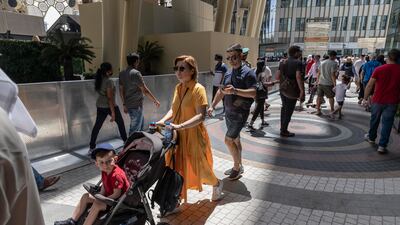
Visitors arrive for the expo's final day. Antonie Robertson / The National -
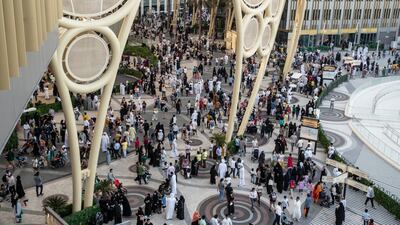
Crowds on the last day of Expo 2020 Dubai. Antonie Robertson / The National -
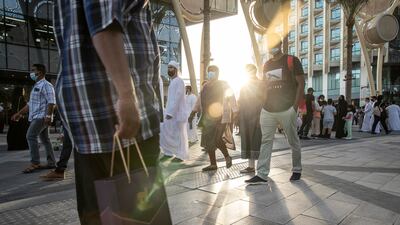
Visitors arrive at the world's fair for the last time. Antonie Robertson / The National -
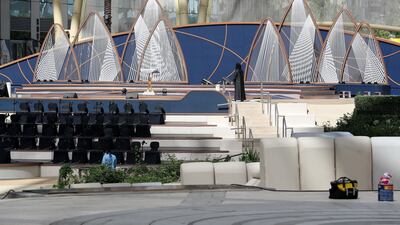
Preparations going on for the closing ceremony at Al Wasl Plaza. Pawan Singh / The National -
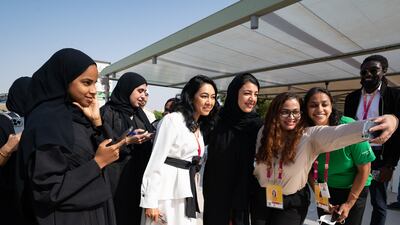
Reem Al Hashimy, centre, Minister of State for International Co-operation and director general of Expo 2020 Dubai, on the final day of the Expo. Photo: Expo 2020 Dubai -
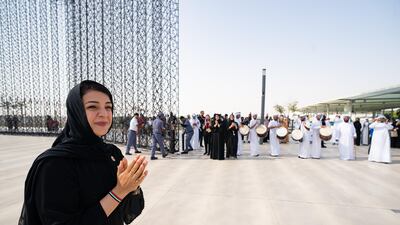
Ms Al Hashimy opens the Sustainability Portal on the Expo's final day. Photo: Expo 2020 Dubai -

Visitors queue to enter the site on the final day. Pawan Singh / The National -
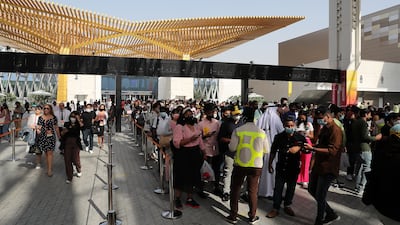
Expo staff at the site entrances faced a busy start to the final day. Pawan Singh / The National -

Visitors queue at the security gate. Pawan Singh / The National -
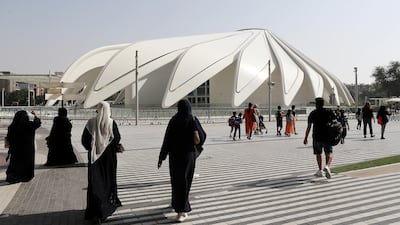
Early arrivals on the final day of the world fair. Pawan Singh / The National -
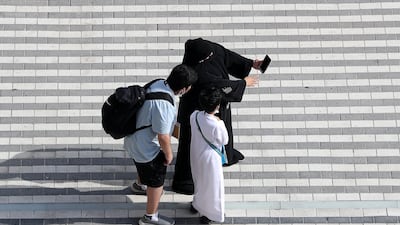
Visitors taking selfies to record their presence on the final day of Expo 2020 Dubai. Pawan Singh / The National -
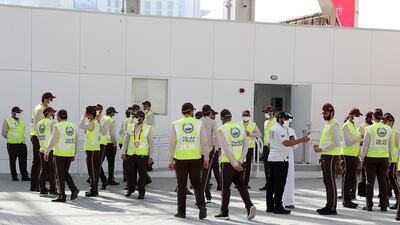
Dubai police prepare for the final day at the world's fair. Pawan Singh / The National -
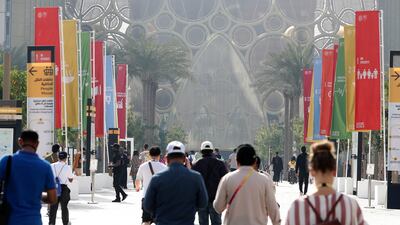
Visitors approach Al Wasl Plaza. Pawan Singh / The National -
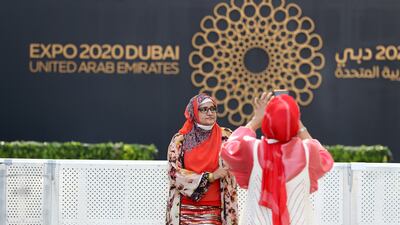
A rare opportunity to capture a quiet moment at Expo 2020 Dubai. Pawan Singh / The National -
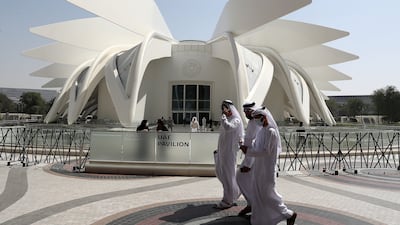
Visitors on the last day at the EXPO 2020 site in Dubai. Pawan Singh / The National


The MoIAT is committed to continuing to connect minds and create the future through its engagements with the public and private sectors and all stakeholders to realise the ambitions of our leadership in the industrial sector and achieve sustainable industrial economic growth.
Sheikh Mansour bin Zayed, Deputy Prime Minister and Minister of Presidential Affairs, delivered remarks about national industry at WGS. Can you give us your comments about his speech?
The remarks of Sheikh Mansour during WGS embody the vision of the UAE’s leadership to advance the country's national industrial sector.
The remarks presented a comprehensive road map highlighting the strategic importance of developing the industrial sector and its role in enhancing self-sufficiency and resilience, diversifying the economy, supporting national manufacturing and enhancing competitiveness.
Sheikh Mansour also outlined the critical importance of developing the industrial sector and spoke of the historical relationship that the people of the UAE had with the sea as a vehicle for trade.
He highlighted how the Covid-19 pandemic brought to light the importance of empowering vital industrial sectors such as food, pharmaceuticals and defence, and stressed the significance of increasing the contribution of the industrial sector to the GDP.
Sheikh Mansour also sent a very clear message on the importance of confidence in partnerships, emphasising the UAE’s unique value proposition as an attractive destination for local, regional and international investors offering transparency, reliability, flexibility and a willingness to develop and amend laws to serve national interests and the interests of investors.
And finally, he also highlighted that the leadership is adamant that UAE citizens take advantage of this drive for industrial development and actively contribute to the nation’s economic diversification efforts.
As a regulatory and legislative authority for the industrial sector, the ministry will continue to work and co-operate with local partners to implement the [country's] strategic objectives. By doing so we can achieve the national vision aimed at encouraging the growth of the industrial sector, improving its performance and enhancing its competitiveness in line with the UAE’s ambitions for the next 50 years.

Can you elaborate on the role of the MoIAT in supporting the growth of the industrial sector in the UAE during the coming decades?
To answer this question, we have to go back to the beginning. Until recently, and more specifically up until the Covid-19 pandemic, the industry was just a sector associated with a ministry. That changed in July 2020 with the establishment of a stand-alone Ministry of Industry and Advanced Technology when the portfolio of the industry was merged with the Standards and Metrology Authority as well as the Advanced Technology mandate to establish a solid base and an independent body focused specifically on developing and regulating the industrial sector and enhancing industrial competitiveness to build industrial resilience and realise the national development agenda.
The mandate of the ministry is to increase the industrial sector’s GDP contribution and ensure a sustainable knowledge-based economy centred on the adoption of advanced technology empowered by the National In-Country Value Programme [ICV programme] and focused on key priority industrial sectors.
With that in mind, the ministry immediately went to work on preparing the National Strategy for Industry and Advanced Technology, which is based on two tracks.
The first track focuses on empowering the development of our existing and priority industries and the second track is focused on developing new competitive advantages for the industries of the future.
To achieve those tracks, the strategy includes more than 16 initiatives and projects. Implementation has begun and the ministry continues to work on ensuring that it creates the environment and ecosystem that empowers the much-needed major leap in this vital sector.
The strategy of the ministry has four objectives: Creating a suitable and attractive business environment for local and international investors, supporting the growth of national industries and enhancing their competitiveness, stimulating innovation and the adoption of advanced technology in the industrial sector, and implementing solutions to highlight the nation’s unique value proposition as a leading global destination for industries of the future.
In an effort to ensure that the strategy is built in a practical, relevant and inclusive way, the ministry organised a series of Future of Industry Dialogue sessions with industrialists and stakeholders. These engagements are ongoing and continue to be critical to enhancing ways to facilitate the advancement of the sector and remove any barriers.
The UAE has achieved significant growth and progress across various sectors. However, the industrial sector still has much work to do to keep pace with that growth and our leadership’s ambitions for the future. As such, the MoIAT will continue to exert every effort to support the sector, enhance its role in stimulating the national economy and increase its contribution to the GDP to Dh300bn [$81.68bn] by 2031.
What are the main pillars on which the ministry is founded?
Stemming from its federal role as a legislative and regulatory authority, the ministry is working to create an investment, legislative and technical ecosystem that is conducive to the growth of the industrial sector.
The ministry does this in co-ordination, co-operation and integration with all federal and local authorities, and in consultation with partners from the private sector, through the Industrial Development Council, the Standards and Metrology Steering Committee, and the National Committee for the National ICV Programme.
The strategy is enabled through four pillars.
The first is to provide enablers for industrial sector growth supportive legislation that attracts partners, investors and talent from around the world.
The second is to enhance the competitive advantages of national products across priority sectors such as food and medicine, heavy industries such as iron and aluminium, as well as defence, electrical industries and petrochemicals. In addition, this will focus on capacity building in future industries, such as space, hydrogen and agricultural technology.
The third is to strengthen the national industry by supporting the adoption of advanced technology, which in turn enhances production quality, operational efficiencies and, as a result, consumer satisfaction.
And finally, our fourth pillar focuses on incentive programmes such as the ICV Programme to empower national industries to enhance their competitiveness and expand their growth.
We already have some great success stories in the UAE of industrial companies that we support and enable.
Borouge, for example, is a leading company in the petrochemicals industry that produces polyolefins and, in fact, is the fourth largest producer in Asia and the Middle East. The company has multiplied its production ten-fold since 2001. Today, it produces 5 million tonnes of polyolefins annually with sales of more than $6bn in 2021.

Another example is Edge, which is among the world's 25 largest defence companies, with annual sales of more than $5bn.
Emirates Global Aluminium is another example. EGA is one of the largest aluminium producers in the world, manufacturing approximately 2.5 million tonnes of cast aluminium annually, which represents 4 per cent of global aluminium production and nearly half of the aluminium produced in the GCC.

RAK Ceramics is the fourth largest global producer in its sector and has a production capacity of 123 million square metres of ceramics per year.
And one final example is in the food industry, Al Khaleej Sugar Factory, which is the largest stand-alone sugar refinery in the world with a production capacity of more than 7,000 tonnes per day.
There are more examples, of course, but these are just some of them.
What has been achieved since the establishment of the ministry?
In 2021, we accomplished a number of important steps. UAE industrial exports achieved record growth, rising to Dh116bn, compared to Dh78bn two years ago, while the contribution of the industrial sector to GDP reached Dh140bn. Also, over 220 new factories went online. As a result, the UAE climbed in the global industrial competitiveness index to 30th place from 35th, according to the United Nations Industrial Development Organisation.
The Ministry has also launched and begun implementing the ICV Programme at the national level, with the aim of redirecting the largest possible share of the procurement of products and services to the national economy, which in 2021 amounted to Dh41.4bn compared to Dh27bn in 2018. The programme has succeeded in attracting 45 federal government agencies and 13 major national institutions and has added 1,000 jobs for UAE nationals in the private sector.
We are also joining forces with the "Nafis" programme through the ICV Programme to connect UAE nationals with job opportunities and enrol them in advanced training courses.
Updating legislation and regulations: When it comes to legislation, we have amended a policy, the food Traffic Light Nutritional Labelling System and made it optional, which is expected to save Dh1.4bn for the F&B sector over the next five years. This was in addition to saving Dh7 million in the food packaging industry by updating technical requirements.
Additionally, we have managed to reduce measurement errors, including for gold scales and fuel metres, and adopted 616 standards and technical legislations. We also engaged the private sector in the development of 30 per cent of our standards.
The ministry also established the National Standards and Metrology Committee that includes key government agencies and updated the Made in the Emirate's labelling system to enhance the quality of national products and support their competitiveness in local and international markets. In addition, we launched the Make it in the Emirates laboratory programme in the F&B sector in partnership with a number of food manufacturers, including Procter & Gamble, to build capacities for small and medium enterprises.
Industrial accelerators, financing solutions and attracting investment: The ministry is working on developing strategic frameworks for co-operation with key stakeholders to support the growth of national industries and enhance their competitiveness, as well as attract foreign industrial investments, ideas and talent. For example, financing solutions were secured from the Emirates Development Bank for priority sectors and for the uptake of advanced technology. To date, companies have received Dh1bn.
Moreover, to help attract investments, the ministry developed an investor’s guide to facilitate business and encourage foreign investments.
More than 3,200 factories were granted custom duties exemptions on industrial inputs worth Dh2.7bn. Incentive packages were secured to support the Make in the Emirates campaign, such as the strategic partnership between MoIAT and Dubai Industrial City to enhance the performance of the industrial sector.
Minister of Industry and Advanced Technology
What is the role of advanced technology in the national industrial system?
The UAE has many competitive advantages, most notably a modern infrastructure supported by advanced technology. In line with the national strategy for industry, we focused on the opportunities that help the UAE become a global destination for industries of the future.
With that in mind, the ministry launched the Fourth Industrial Revolution Programme (Industry 4.0), to accelerate the integration of 4IR solutions and applications across the UAE’s industrial sector, enhance the UAE’s overall industrial competitiveness, drive down costs, increase productivity and efficiency, enhance quality, improve safety and create new jobs.
One key element of the programme is the implementation of the Smart Industry Readiness Index which helps companies understand their current digital maturity as well as contributes to increasing their awareness of 4IR applications. To date, the Ministry has assessed 160 industrial companies with a target of 200 by mid-2022.
The programme also includes the Industry Champions 4.0 Network, in which leading local and international companies have united to share best practice in the deployment of 4IR technologies across the UAE’s industrial sector. To date, 14 national and global entities have joined the network.
Moreover, in partnership with the Mohamed bin Zayed University of Artificial Intelligence, we launched the Leadership 4.0 initiative aimed at developing knowledge and skills around 4IR solutions in smart manufacturing and how it helps the implementation of the UAE’s industrial strategy. The first batch of 30 executives have already concluded the programme. Our target is to train more than 100 executives and leaders from the industrial sector by the end of the year.
In addition, we developed a national guide in co-operation with the Federal Competitiveness and Statistics Centre to measure spending on research and development in the government sector.
With the aim of enhancing the contribution of research and development to sustainable economic growth in the UAE, focusing on strategic and priority sectors, the Emirates Research and Development Council was established. Consequently, the ministry developed a policy for R&D governance, which establishes a national system for research and development supported by scientific and research competencies and capabilities to unify efforts towards achieving national priorities.
In addition, introductory sessions for technology start-ups were carried out in Spain, Israel, Korea and France to develop national capabilities and exchange knowledge.
Through all these initiatives, we are following a clear road map aimed at enhancing the UAE’s position as a global destination for advanced technology application and development, contributing to building a resilient economy and enhancing readiness for the future.
Can you tell us about the Industrial Development Council and its role going forward?
The UAE Cabinet established the Industrial Development Council, which includes amongst its members, representatives from relevant local and federal authorities, with the aim of ensuring the alignment, co-ordination and integration of efforts between the concerned authorities in the industrial sector.
The council has already begun its work which includes developing a fit-for-purpose ecosystem for local and international investors, with a focus on SME growth, co-ordinating with federal and local government entities to develop policies and legislation necessary for the development of the UAE’s industrial sector and adopting and monitoring unified key performance indicators
What is required of existing and new manufacturers? As well as investors?
Empowering the industrial ecosystem requires a collaborative effort between the ministry, local authorities, the private sector and financial institutions. There is a real opportunity for investors today to join us on this journey and I invite them to take advantage of the unique investment ecosystem and incentives in the UAE.
In addition, we invite and urge UAE companies to contribute to supporting the development of SMEs through the National ICV Programme and to back locally produced products by giving them priority in the procurement process; which in turn will support local value chains, enhance economic self-sufficiency and facilitate the development of national capability and expertise.
In terms of local manufacturers, it is important that they keep pace with advanced technology applications and automation to improve their productivity, enhance their efficiency and improve their competitiveness. Existing manufacturers and new investors should focus on key sectors as outlined in the national industrial strategy, high-value industries, as well as R&D.
Finally, we encourage manufacturers to take advantage of the incentives that the ministry offers, such as green financing and technology financing through the Emirates Development Bank, which aims to support investment in sustainability projects and advanced technology.

