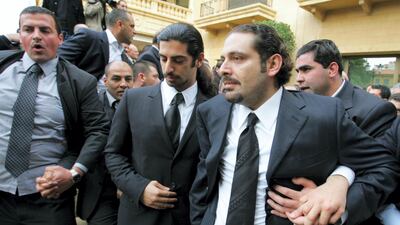
• Former Lebanese prime minister Saad Hariri reacts and speaks to the press as he leaves the UN-backed Special Tribunal for Lebanon (STL) at Leidschendam after the expected verdict on the 2005 murder of his father, former Lebanese premier Rafik Hariri. AFP
    Former Lebanese prime minister Saad Hariri reacts and speaks to the press as he leaves the UN-backed Special Tribunal for Lebanon (STL) at Leidschendam after the expected verdict on the 2005 murder of his father, former Lebanese premier Rafik Hariri. AFP
  • Former Lebanese Prime Minister Saad Hariri reacts after a session of the United Nations-backed Lebanon Tribunal handing down a judgement in the case of four men being tried in absentia for the 2005 bombing that killed former prime minister Rafik Hariri. Reuters
    Former Lebanese Prime Minister Saad Hariri reacts after a session of the United Nations-backed Lebanon Tribunal handing down a judgement in the case of four men being tried in absentia for the 2005 bombing that killed former prime minister Rafik Hariri. Reuters
  • A security officer stands guard near the graves of people who were killed in the 2005 bombing that killed former Prime Minister Rafik Hariri, in Beirut, Lebanon. Reuters
    A security officer stands guard near the graves of people who were killed in the 2005 bombing that killed former Prime Minister Rafik Hariri, in Beirut, Lebanon. Reuters
  • Bahiya Hariri, the sister of Lebanon's former Prime Minister Rafik Hariri, reacts as she prays at his grave, in Beirut, Lebanon. Reuters
    Bahiya Hariri, the sister of Lebanon's former Prime Minister Rafik Hariri, reacts as she prays at his grave, in Beirut, Lebanon. Reuters
  • Former Lebanese Prime Minister Saad Hariri speaks after the United Nations-backed Lebanon Tribunal in Leidschendam, Netherlands handed down its judgement. AP
    Former Lebanese Prime Minister Saad Hariri speaks after the United Nations-backed Lebanon Tribunal in Leidschendam, Netherlands handed down its judgement. AP
  • Bahiya Hariri, the sister of Lebanon's former Prime Minister Rafik Hariri, prays at his grave in Beirut, Lebanon. Getty
    Bahiya Hariri, the sister of Lebanon's former Prime Minister Rafik Hariri, prays at his grave in Beirut, Lebanon. Getty
  • Members of security forces stand guard near a billboard depicting Lebanon's former Prime Minister Rafik Hariri, who was killed in a 2005 suicide bombing, in Sidon, southern Lebanon. Reuters
    Members of security forces stand guard near a billboard depicting Lebanon's former Prime Minister Rafik Hariri, who was killed in a 2005 suicide bombing, in Sidon, southern Lebanon. Reuters
  • Former Lebanese prime minister Saad Hariri leaves the UN-backed Special Tribunal for Lebanon (STL) at Leidschendam after the expected verdict on the 2005 murder of his father former Lebanese premier Rafik Hariri. AFP
    Former Lebanese prime minister Saad Hariri leaves the UN-backed Special Tribunal for Lebanon (STL) at Leidschendam after the expected verdict on the 2005 murder of his father former Lebanese premier Rafik Hariri. AFP
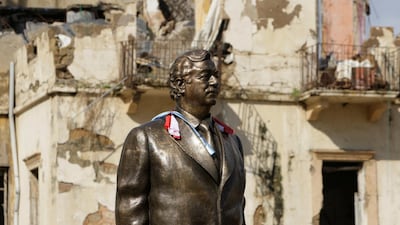
  • A statue of Lebanon's former prime minister Rafik Hariri is seen near the site of the 2005 bombing that killed him on August 18, 2020 in Beirut, Lebanon. Getty
    A statue of Lebanon's former prime minister Rafik Hariri is seen near the site of the 2005 bombing that killed him on August 18, 2020 in Beirut, Lebanon. Getty
  • Saad Hariri speaks to the press after leaving the Lebanon Tribunal after the ruling on the assassination of ex-Prime Minister Rafik Hariri of Lebanon in Leidschendam, The Netherlands. EPA
    Saad Hariri speaks to the press after leaving the Lebanon Tribunal after the ruling on the assassination of ex-Prime Minister Rafik Hariri of Lebanon in Leidschendam, The Netherlands. EPA

'We are afraid': Beirut empty as verdict declared on assassination of Rafik Hariri


Sunniva Rose
  • English
  • Arabic

The streets of Beirut were deserted on Tuesday afternoon as the Lebanese stayed home in fear of violence while judges in the Netherlands read out the verdict on the assassination of former prime minister Rafik Hariri, 15 years after his killing.

“We are afraid that violent things could happen,” said Andrea, 27, a bank employee who rushed to drive home in the normally busy square of Sassine.

“Let’s pray for Lebanon."

Maya, 31, was one of the only people spotted on the usually bustling Corniche, a few hundred metres away from where Hariri died on February 14, 2005, in a suicide bomb attack that killed 21 other people and injured 220.

“I was watching the [live transmission] of the tribunal and I needed a mental break,” Maya said.

“As we stand here, someone from either Hezbollah or his Future Movement could start shooting and kill us by mistake.

“People are traumatised now."

Much of the trauma came from the August 4 explosion of 2,750 tonnes of ammonium nitrate in Beirut port, which devastated the city and killed at least 177 people.

Lebanese officials have said that the explosion was probably caused by unsafe storage of the chemicals for seven years.

“But if I die, I die," Maya said. "I can’t sit at home all the time.”

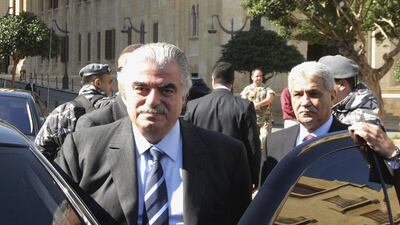
  • Rafik Hariri, left, and his bodyguard Yahya Arab, leave the Parliament in Beirut, Lebanon in 2005. Minutes later, Hariri and several of his bodyguards were killed in a massive bomb explosion. AP
    Rafik Hariri, left, and his bodyguard Yahya Arab, leave the Parliament in Beirut, Lebanon in 2005. Minutes later, Hariri and several of his bodyguards were killed in a massive bomb explosion. AP
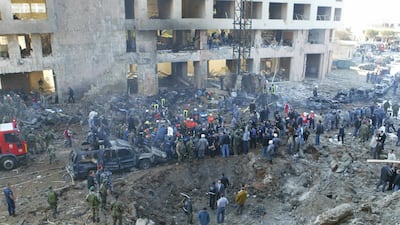
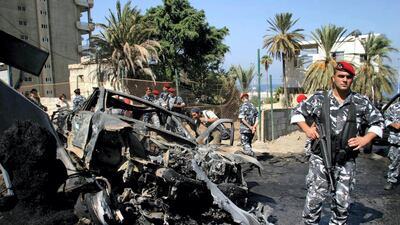
  • The site of devastation where former Lebanon prime minister Hariri was assassinated in the blast in Beirut on February 14, 2005. AFP
    The site of devastation where former Lebanon prime minister Hariri was assassinated in the blast in Beirut on February 14, 2005. AFP
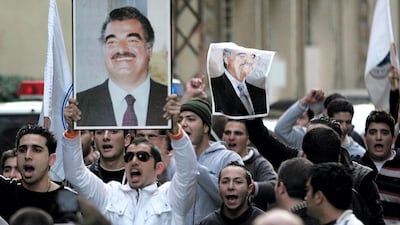
  • Supporters of former Lebanese prime minister Hariri after Hariri's death outside his house in Beirut. AFP
    Supporters of former Lebanese prime minister Hariri after Hariri's death outside his house in Beirut. AFP
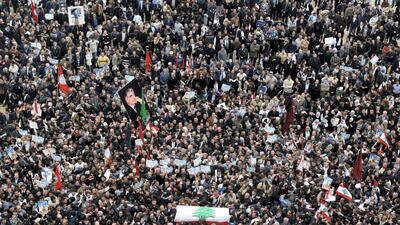
  • The national flag-draped coffin of Hariri is carried to his final resting place in central Beirut two days after the killing. AFP
    The national flag-draped coffin of Hariri is carried to his final resting place in central Beirut two days after the killing. AFP
  • Saad Hariri and other family members leave their family home to join the funeral procession. AFP
    Saad Hariri and other family members leave their family home to join the funeral procession. AFP
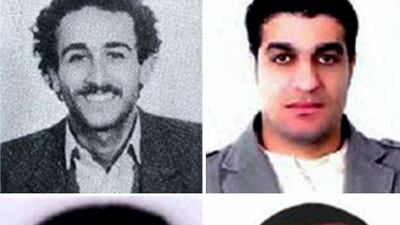
  • A combination of handout pictures obtained on July 29, 2011 from the website of the Special Tribunal for Lebanon shows four Hezbollah suspects indicted in the assassination case of Hariri, (from top left to right) Mustafa Amine Badreddine, Assad Hassan Sabra, Hussein Hassan Oneissi and Salim Jamil Ayyash. AFP
    A combination of handout pictures obtained on July 29, 2011 from the website of the Special Tribunal for Lebanon shows four Hezbollah suspects indicted in the assassination case of Hariri, (from top left to right) Mustafa Amine Badreddine, Assad Hassan Sabra, Hussein Hassan Oneissi and Salim Jamil Ayyash. AFP
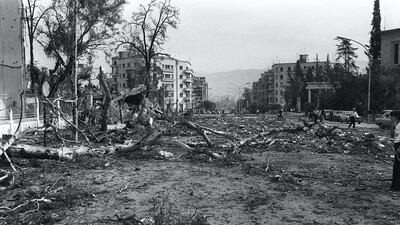
  • An avenue in central Beirut destroyed by 18 months of civil war is pictured, November 15, 1976. AFP
    An avenue in central Beirut destroyed by 18 months of civil war is pictured, November 15, 1976. AFP
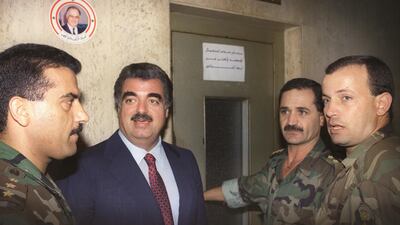
  • Hariri on October 22, 1992 in Beirut, after being nominated as prime minister by then president Elias Hrawi. AFP
    Hariri on October 22, 1992 in Beirut, after being nominated as prime minister by then president Elias Hrawi. AFP
  • Hariri and his wife Nazic on September 1, 1996 in their villa in Beirut. AFP
    Hariri and his wife Nazic on September 1, 1996 in their villa in Beirut. AFP
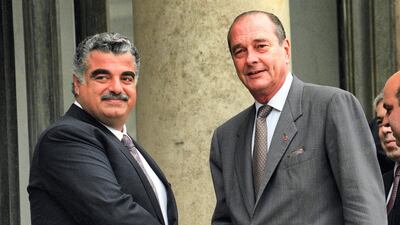
  • Then French president Jacques Chirac greets Hariri at the Elysee Palace in Paris, September 28, 1996. AFP
    Then French president Jacques Chirac greets Hariri at the Elysee Palace in Paris, September 28, 1996. AFP
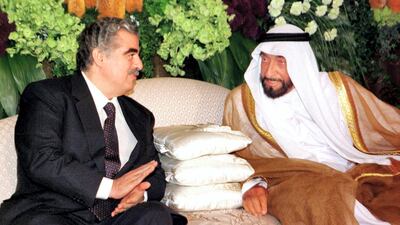
  • Sheikh Zayed, the Founding Father, meets Hariri in Dubai on March 17, 1999. Hariri was in Dubai for a three-day official visit. AFP
    Sheikh Zayed, the Founding Father, meets Hariri in Dubai on March 17, 1999. Hariri was in Dubai for a three-day official visit. AFP
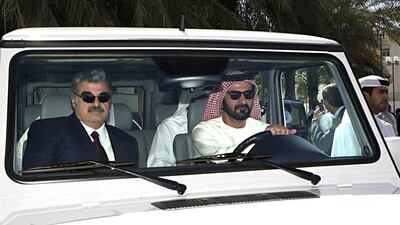
  • Sheikh Mohammed bin Rashed, then Crown Prince of Dubai, drives Hariri in Dubai on March 6, 2000. AFP
    Sheikh Mohammed bin Rashed, then Crown Prince of Dubai, drives Hariri in Dubai on March 6, 2000. AFP
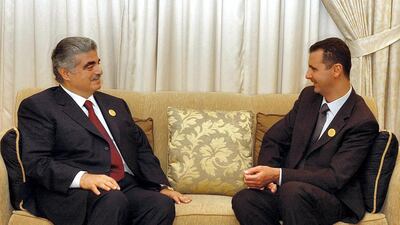
  • Hariri meets Syrian President Bashar al Assad on the sidelines of the Arab summit in Beirut, March 27, 2002. AFP
    Hariri meets Syrian President Bashar al Assad on the sidelines of the Arab summit in Beirut, March 27, 2002. AFP
  • Lebanese policemen gather at the site where outgoing economy and trade minister Marwan Hamadeh's car was targeted by a bomb in Beirut on October 1, 2004. AFP
    Lebanese policemen gather at the site where outgoing economy and trade minister Marwan Hamadeh's car was targeted by a bomb in Beirut on October 1, 2004. AFP
  • The Hariri monument in Beirut. Reuters
    The Hariri monument in Beirut. Reuters

In the early afternoon, shortly after the judge began reading his verdict, downtown Beirut was deserted, except for policemen and journalists.

They were waiting for a delegation from the Future Movement, the political party of Hariri's son Saad, to pay its respects at the former leader's tomb later in the day.

Several people declined to comment on the tribunal’s verdict.

“What’s the point?" a woman sitting on a bench said. "Hariri died 15 years ago. We all know who did it."

Maha Yahya, director of the Carnegie Middle East Centre, said: “Everybody is worried.

"You don’t want to be caught in the middle of a clash between Hezbollah and the Future movement.

"We have been living through so much for the last 15 years since Hariri’s assassination.

"In many ways, we are still experiencing the ripple effects of that instability.”

Ms Yahya was referring to, among other things, the wave of political assassinations after Hariri’s death.

A 'time of mourning and listening to justice'

But politicians were keen to stress that they expected no major clashes.

“We do not believe in making disturbances today,” said Nasser Hammoud, general co-ordinator for the Future Movement in Saida and South Lebanon.

"This is a time of mourning and listening to justice."

The party did not organise political rallies or social gatherings to mark the day.
Despite the acquittal of three of four of the accused, Mr Hammoud said he was happy with the verdict.

“This proves the transparency of the tribunal," he said.

"It said there were no immediate links with Hezbollah but we all know that all four are Hezbollah members.

"You're faced with two interpretations: either Hezbollah is involved and they are hiding it; or [Hezbollah leader] Hassan Nasrallah does not control every person in his party.

“This is the first time in the history of Lebanon that we have an international tribunal that tried to solve such a huge assassination. This should deter future criminal activity."

The Lebanese people were less praising on social media.

As judges were still reading the verdict, the Lebanese started sharing dark jokes on Twitter to express their disappointment.

“It’s almost like the international tribunal is telling us that Hariri died because of the coronavirus,” one posted.