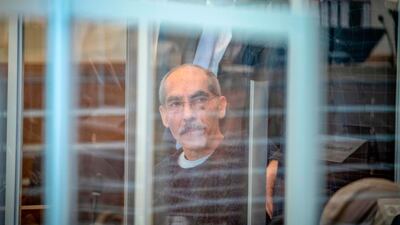
Anwar Raslan is being tried on the principle of universal jurisdiction, which allows a foreign country to prosecute crimes against humanity. AFP

Syrian colonel’s plea of innocence in murder trial rejected by accusers


Jamie Prentis
  • English
  • Arabic

Syrian campaigners have rejected claims by a senior former Assad regime intelligence official that he had no role in torture and mistreatment in state prisons as he faces trial in Germany for crimes against humanity in his homeland.

Anwar Raslan, 57, is alleged to have overseen the murder of 58 people and torture of some 4,000 others in the Al Khatib detention centre in Damascus, Syria, in the wake of protests in 2011 and 2012 against the regime of Bashar Al Assad.

He appeared in a German court on Monday and rejected the claims, saying he “never acted inhumanely” and had in fact “helped to free” detainees. He insisted that he did not condone the acts of the Syrian government and felt “regret and compassion” for the victims.

Mansour Omari, a Syrian activist, expressed his dismay at the proceeding. "Anwar R's denial is just another abuse of his victims and their families. It shows that he does have remorse or regret for torturing human beings and killing them under torture."

The  45-page account, read out by his lawyers, was the defendants first statements to the court in Koblenz since the trial began last month.

But his plea of innocence has been rejected by the European Centre for Constitutional and Human Rights (ECCHR), an activist group that is supporting 17 torture victims, including seven who are joint plaintiffs in the case.

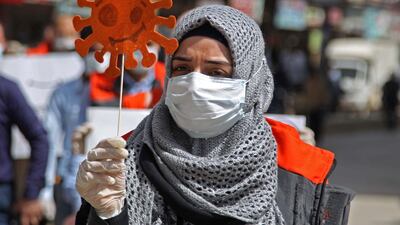
  • A mask-clad civil society volunteer marches with an effigy depicting the SARS-CoV-2 virion, the agent responsible for the COVID-19 coronavirus disease, during an awareness campaign about the novel coronavirus pandemic, urging people to remain at home, in Syria's northwestern city of Idlib in Idlib province on March 24, 2020. (Photo by Abdulaziz KETAZ / AFP)
    A mask-clad civil society volunteer marches with an effigy depicting the SARS-CoV-2 virion, the agent responsible for the COVID-19 coronavirus disease, during an awareness campaign about the novel coronavirus pandemic, urging people to remain at home, in Syria's northwestern city of Idlib in Idlib province on March 24, 2020. (Photo by Abdulaziz KETAZ / AFP)
  • Syrian Kurdish passengers who were stranded in Damascus arrive in Qamishli in Syria's northeastern Hasakeh province on April 5, 2020, after being stranded in Damascus for the past weeks. (Photo by DELIL SOULEIMAN / AFP)
    Syrian Kurdish passengers who were stranded in Damascus arrive in Qamishli in Syria's northeastern Hasakeh province on April 5, 2020, after being stranded in Damascus for the past weeks. (Photo by DELIL SOULEIMAN / AFP)
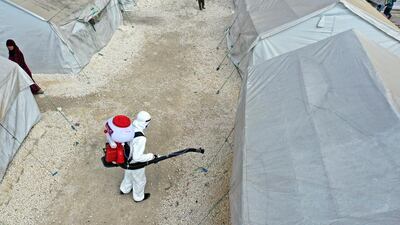
  • A drone image taken on April 9, 2020, shows a sanitation worker disinfecting a camp for displaced Syrians next to the Idlib municipal stadium in the northwestern Syrian city, during a campaign to limit the spread of the coronavirus (COVID-19) pandemic. (Photo by OMAR HAJ KADOUR / AFP)
    A drone image taken on April 9, 2020, shows a sanitation worker disinfecting a camp for displaced Syrians next to the Idlib municipal stadium in the northwestern Syrian city, during a campaign to limit the spread of the coronavirus (COVID-19) pandemic. (Photo by OMAR HAJ KADOUR / AFP)
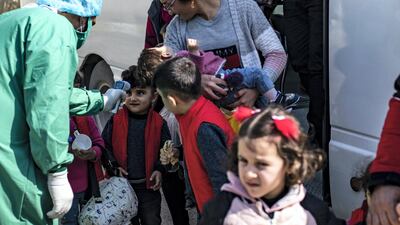
  • A medic checks the body temperature of young passengers, as a preventive measure against the coronavirus, upon their arrival by bus in Syria's Kurdish area from Iraqi Kurdistan via the Semalka border crossing in northeastern Syria on February 26, 2020. (Photo by Delil SOULEIMAN / AFP)
    A medic checks the body temperature of young passengers, as a preventive measure against the coronavirus, upon their arrival by bus in Syria's Kurdish area from Iraqi Kurdistan via the Semalka border crossing in northeastern Syria on February 26, 2020. (Photo by Delil SOULEIMAN / AFP)
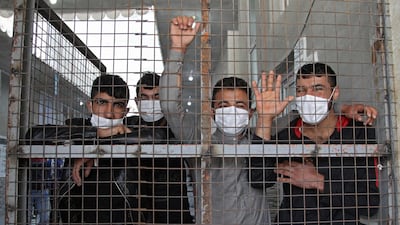
  • A picture taken on April 27, 2020 shows Syrians who returned from Turkey standing at a quarantine facility in the countryside of the town of Jisr al-Shughur, west of the mostly rebel-held Syrian province of Idlib, on April 27, 2020 during the coronavirus COVID-19 pandemic. / AFP / Abdulaziz KETAZ
    A picture taken on April 27, 2020 shows Syrians who returned from Turkey standing at a quarantine facility in the countryside of the town of Jisr al-Shughur, west of the mostly rebel-held Syrian province of Idlib, on April 27, 2020 during the coronavirus COVID-19 pandemic. / AFP / Abdulaziz KETAZ
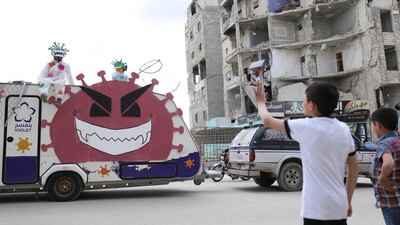
  • epa08392436 A truck for prevention against the COVID-19 coronavirus disease, operated by local NGO 'Violet Organization', drives through the streets of Idlib, Syria, 29 April 2020. EPA/YAHYA NEMAH
    epa08392436 A truck for prevention against the COVID-19 coronavirus disease, operated by local NGO 'Violet Organization', drives through the streets of Idlib, Syria, 29 April 2020. EPA/YAHYA NEMAH
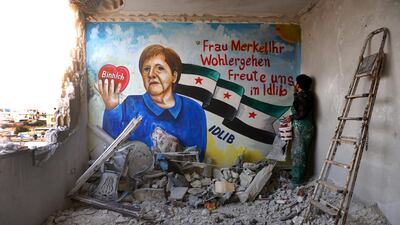
  • Artist Aziz al-Asmar paints a mural wishing for the well-being of German Chancellor Angela Merkel, who is in quarantine after being treated by a doctor who tested positive for coronavirus (COVID-19), inside a damaged building in the town of Binnish in Syria's northwestern Idlib province on March 24, 2020. (Photo by Muhammad HAJ KADOUR / AFP)
    Artist Aziz al-Asmar paints a mural wishing for the well-being of German Chancellor Angela Merkel, who is in quarantine after being treated by a doctor who tested positive for coronavirus (COVID-19), inside a damaged building in the town of Binnish in Syria's northwestern Idlib province on March 24, 2020. (Photo by Muhammad HAJ KADOUR / AFP)
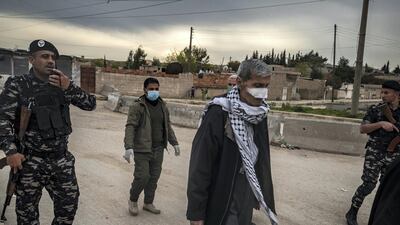
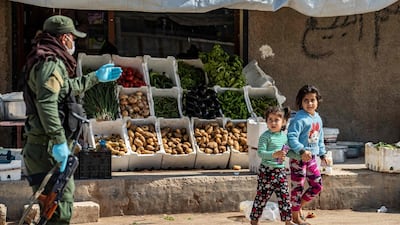
  • A member of the Kurdish Internal Security Forces of Asayesh urges children to return home, in Syria's northeastern city of Hasakeh on April 30, 2020, following measures taken by the Kurdish-led local authorities there, to limit the spread of the novel coronavirus. / AFP / DELIL SOULEIMAN
    A member of the Kurdish Internal Security Forces of Asayesh urges children to return home, in Syria's northeastern city of Hasakeh on April 30, 2020, following measures taken by the Kurdish-led local authorities there, to limit the spread of the novel coronavirus. / AFP / DELIL SOULEIMAN
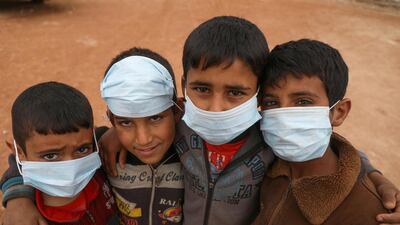
  • Syrian boys pose for a picture during an awareness workshop on Coronavirus (COVID-19) held by Doctor Ali Ghazal at a camp for displaced people in Atme town in Syria's northwestern Idlib province, near the border with Turkey, on March 14, 2020. (Photo by AAREF WATAD / AFP)
    Syrian boys pose for a picture during an awareness workshop on Coronavirus (COVID-19) held by Doctor Ali Ghazal at a camp for displaced people in Atme town in Syria's northwestern Idlib province, near the border with Turkey, on March 14, 2020. (Photo by AAREF WATAD / AFP)
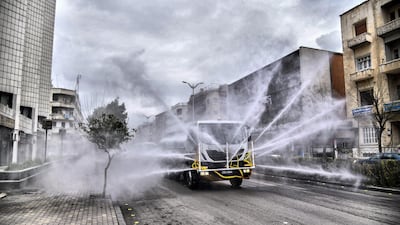
  • A handout picture released by the official Syrian Arab News Agency (SANA) on March 20, 2020 shows Syrian Red Crescent vehicles spraying disinfectant along a street in the capital Damascus, as part of measures against the spread of COVID-19 coronavirus disease. (Photo by - / SANA / AFP) / == RESTRICTED TO EDITORIAL USE - MANDATORY CREDIT "AFP PHOTO / HO / SANA" - NO MARKETING NO ADVERTISING CAMPAIGNS - DISTRIBUTED AS A SERVICE TO CLIENTS ==
    A handout picture released by the official Syrian Arab News Agency (SANA) on March 20, 2020 shows Syrian Red Crescent vehicles spraying disinfectant along a street in the capital Damascus, as part of measures against the spread of COVID-19 coronavirus disease. (Photo by - / SANA / AFP) / == RESTRICTED TO EDITORIAL USE - MANDATORY CREDIT "AFP PHOTO / HO / SANA" - NO MARKETING NO ADVERTISING CAMPAIGNS - DISTRIBUTED AS A SERVICE TO CLIENTS ==
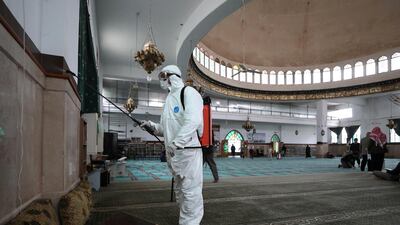
  • A volunteer from the Violet organisation disinfects a mosque in Syria's northwestern city of Idlib on April 25, 2020, from coronavirus (COVID-19) during the Muslim holy fasting month of Ramadan. (Photo by OMAR HAJ KADOUR / AFP)
    A volunteer from the Violet organisation disinfects a mosque in Syria's northwestern city of Idlib on April 25, 2020, from coronavirus (COVID-19) during the Muslim holy fasting month of Ramadan. (Photo by OMAR HAJ KADOUR / AFP)
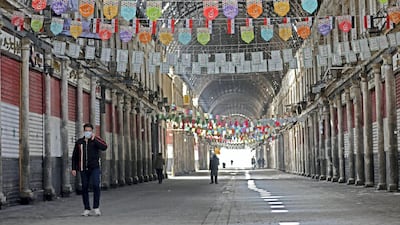
  • Only a few people walk in the century-old covered bazaar of Hamidiya in Syria's capital Damascus on March 24, 2020, after measures were taken by the authorities to fight the novel coronavirus pandemic. - Across much of the Syrian capital, with squares and markets once thronging with people even during the war, are now almost entirely empty. Five cases of COVID-19 have been reported in the country since Sunday, and the authorities have ordered all non-essential businesses closed. (Photo by LOUAI BESHARA / AFP)
    Only a few people walk in the century-old covered bazaar of Hamidiya in Syria's capital Damascus on March 24, 2020, after measures were taken by the authorities to fight the novel coronavirus pandemic. - Across much of the Syrian capital, with squares and markets once thronging with people even during the war, are now almost entirely empty. Five cases of COVID-19 have been reported in the country since Sunday, and the authorities have ordered all non-essential businesses closed. (Photo by LOUAI BESHARA / AFP)
  • Researchers are examining the possibility of using inhalers to introduce stem cells into a patients lungs. AFP
    Researchers are examining the possibility of using inhalers to introduce stem cells into a patients lungs. AFP
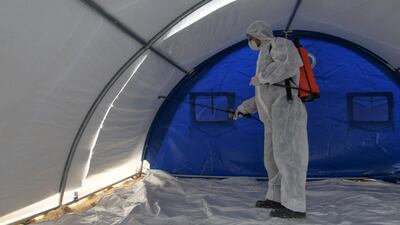
  • A member of the Syrian Violet NGO disinfects a triage tent erected for suspected coronavirus patients outside the Ibn Sina Hospital in Syria's northwestern Idlib city on March 19, 2020. - Syrian authorities on March 13 announced measures aimed at preventing coronavirus from reaching the war-torn country, including school closures and a ban on smoking shisha in cafes, state media reported. (Photo by Abdulaziz KETAZ / AFP)
    A member of the Syrian Violet NGO disinfects a triage tent erected for suspected coronavirus patients outside the Ibn Sina Hospital in Syria's northwestern Idlib city on March 19, 2020. - Syrian authorities on March 13 announced measures aimed at preventing coronavirus from reaching the war-torn country, including school closures and a ban on smoking shisha in cafes, state media reported. (Photo by Abdulaziz KETAZ / AFP)
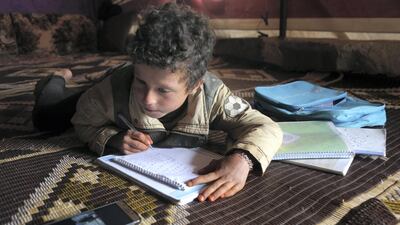
  • A young pupil follows a lesson on a mobile telephone inside a tent, in a camp for displaced Syrians in the village of Kafr Yahmoul in the northwestern Idlib province, amid the coronavirus pandemic on April 3, 2020. - Like in much of the world, educators in Syria are taking classes online after the country's various regions sent pupils home hoping to stem the COVID-19 pandemic. But distance learning is no small feat in a country battered by nine years of war, where fighting has displaced millions and the electricity supply is sporadic at best. (Photo by Aref TAMMAWI / AFP)
    A young pupil follows a lesson on a mobile telephone inside a tent, in a camp for displaced Syrians in the village of Kafr Yahmoul in the northwestern Idlib province, amid the coronavirus pandemic on April 3, 2020. - Like in much of the world, educators in Syria are taking classes online after the country's various regions sent pupils home hoping to stem the COVID-19 pandemic. But distance learning is no small feat in a country battered by nine years of war, where fighting has displaced millions and the electricity supply is sporadic at best. (Photo by Aref TAMMAWI / AFP)

Mr Raslan and fellow defendant Eyad al-Gharib, 43, are being tried on the principle of universal jurisdiction, which allows a foreign country to prosecute crimes against humanity.

The group, which is monitoring the trail, said the 90-minute statement amounted to a blanket rejection of all allegations facing the defendant. Woflgang Kaleck, a director of ECCHR, rejected Mr Raslan’s claim that he was of little importance.

“Anwar R is obviously trying to downplay his role by saying he obeyed orders and that Subdivision 40, led by Hafez Makhlouf, exercised the factual power in the Al Khatib detention centre. That is common practice in such trials,” Mr Kaleck said.

“But he allegedly issued, not merely received and followed, orders in his department. We do not believe he played a minor role,” he added.

Hafez Makhlouf was a former chief of Syria’s notorious intelligence service and cousin and confidant of Bashar Al Assad.

Mr Kaleck claimed that Mr Raslan was a long-time “who made his career in Assad’s government even before 2011”.

Prosecutors say Mr Raslan, who rose to the rank of colonel, oversaw rape and sexual abuse, "electric shocks", beatings with "fists, wires and whips" and "sleep deprivation" at the prison.

Referring to accusations made by witnesses, in court on Monday he repeatedly denied any responsibility, particularly in the case of an alleged rape. "It is against our morals, against our religion," he said.

"I distance myself from such acts if they have been committed," he added.

Mr Raslan fled Syria at the end of 2012 and arrived in Germany in 2014. His case has given hope to torture survivors that senior figures from the Syrian regime may one day face trial for their alleged crimes. It forms part of a wider series of criminal complaints filed in courts in Germany, Austria, Sweden and Norway.

The victims are expected to give evidence in July.

The President's Cake

Director: Hasan Hadi

Starring: Baneen Ahmad Nayyef, Waheed Thabet Khreibat, Sajad Mohamad Qasem 

Rating: 4/5

Company profile

Date started: 2015

Founder: John Tsioris and Ioanna Angelidaki

Based: Dubai

Sector: Online grocery delivery

Staff: 200

Funding: Undisclosed, but investors include the Jabbar Internet Group and Venture Friends

Red flags
  • Promises of high, fixed or 'guaranteed' returns.
  • Unregulated structured products or complex investments often used to bypass traditional safeguards.
  • Lack of clear information, vague language, no access to audited financials.
  • Overseas companies targeting investors in other jurisdictions - this can make legal recovery difficult.
  • Hard-selling tactics - creating urgency, offering 'exclusive' deals.

Courtesy: Carol Glynn, founder of Conscious Finance Coaching

Mercer, the investment consulting arm of US services company Marsh & McLennan, expects its wealth division to at least double its assets under management (AUM) in the Middle East as wealth in the region continues to grow despite economic headwinds, a company official said.

Mercer Wealth, which globally has $160 billion in AUM, plans to boost its AUM in the region to $2-$3bn in the next 2-3 years from the present $1bn, said Yasir AbuShaban, a Dubai-based principal with Mercer Wealth.

Within the next two to three years, we are looking at reaching $2 to $3 billion as a conservative estimate and we do see an opportunity to do so,” said Mr AbuShaban.

Mercer does not directly make investments, but allocates clients’ money they have discretion to, to professional asset managers. They also provide advice to clients.

“We have buying power. We can negotiate on their (client’s) behalf with asset managers to provide them lower fees than they otherwise would have to get on their own,” he added.

Mercer Wealth’s clients include sovereign wealth funds, family offices, and insurance companies among others.

From its office in Dubai, Mercer also looks after Africa, India and Turkey, where they also see opportunity for growth.

Wealth creation in Middle East and Africa (MEA) grew 8.5 per cent to $8.1 trillion last year from $7.5tn in 2015, higher than last year’s global average of 6 per cent and the second-highest growth in a region after Asia-Pacific which grew 9.9 per cent, according to consultancy Boston Consulting Group (BCG). In the region, where wealth grew just 1.9 per cent in 2015 compared with 2014, a pickup in oil prices has helped in wealth generation.

BCG is forecasting MEA wealth will rise to $12tn by 2021, growing at an annual average of 8 per cent.

Drivers of wealth generation in the region will be split evenly between new wealth creation and growth of performance of existing assets, according to BCG.

Another general trend in the region is clients’ looking for a comprehensive approach to investing, according to Mr AbuShaban.

“Institutional investors or some of the families are seeing a slowdown in the available capital they have to invest and in that sense they are looking at optimizing the way they manage their portfolios and making sure they are not investing haphazardly and different parts of their investment are working together,” said Mr AbuShaban.

Some clients also have a higher appetite for risk, given the low interest-rate environment that does not provide enough yield for some institutional investors. These clients are keen to invest in illiquid assets, such as private equity and infrastructure.

“What we have seen is a desire for higher returns in what has been a low-return environment specifically in various fixed income or bonds,” he said.

“In this environment, we have seen a de facto increase in the risk that clients are taking in things like illiquid investments, private equity investments, infrastructure and private debt, those kind of investments were higher illiquidity results in incrementally higher returns.”

The Abu Dhabi Investment Authority, one of the largest sovereign wealth funds, said in its 2016 report that has gradually increased its exposure in direct private equity and private credit transactions, mainly in Asian markets and especially in China and India. The authority’s private equity department focused on structured equities owing to “their defensive characteristics.”

Avatar: Fire and Ash

Director: James Cameron

Starring: Sam Worthington, Sigourney Weaver, Zoe Saldana

Rating: 4.5/5

U19 WORLD CUP, WEST INDIES

UAE group fixtures (all in St Kitts)

  • Saturday 15 January: UAE beat Canada by 49 runs 
  • Thursday 20 January: v England 
  • Saturday 22 January: v Bangladesh 

UAE squad:

Alishan Sharafu (captain), Shival Bawa, Jash Giyanani, Sailles
Jaishankar, Nilansh Keswani, Aayan Khan, Punya Mehra, Ali Naseer, Ronak Panoly,
Dhruv Parashar, Vinayak Raghavan, Soorya Sathish, Aryansh Sharma, Adithya
Shetty, Kai Smith