
Syrian President Bashar Al Assad on Thursday dismissed Imad Khamis as prime minister and appointed Water Minister Hussein Arnous in his place, according to a short statement on state media.
No reason was given for the removal of Mr Khamis, who held the post since 2016.
Under the Assad family regime, Syria's prime ministers are appointed from the Sunni majority, but the post is largely inconsequential as all power is held by an inner circle dominated the president's Alawite minority.
Mr Al Assad's sudden move appears to be designed to absorb discontent among loyalists as regime-held regions lurch off an economic cliff with the currency in freefall.
The collapse in the Syrian pound contributed to sporadic demonstrations breaking out this week in the Druze majority governorate of Suweida. The regime considers the Druze a loyalist fellow minority.
An increasingly public feud between the president and his cousin, the oligarch Rami Makhlouf, exposed the wealth of the inner circle at a time of severe economic hardship that affects the regime's core support base comprising Alawites and other minorities.

The sharp fall in the Syrian currency in recent weeks to 2,450 pounds per dollar has pushed even the middle class into hardship with the cost of basic commodities rising rapidly. The pound was trading at 50 pounds to the dollar when a public revolt against Assad family rule broke out in March 2011.
Mr Arnous, born in 1953, has served as water minister since November 2018 and was previously the public works and housing minister.
State media said Mr Al Assad had tasked Mr Arnous with the duties of the prime minister as well as his current responsibility as water minister.
Before he became prime minister, Mr Khamis served as electricity minister and was sanctioned by the European Union in 2012 for his role in using power cuts to punish and silence the 2011 uprising.
The peaceful revolt had militarised by the end of the year, largely in reaction to the abduction and killing of thousands of demonstrators by the security forces. The country fractured during the ensuing civil war into Russian, US, Iranian and Turkish spheres of influence.
Syrian war in pictures
-
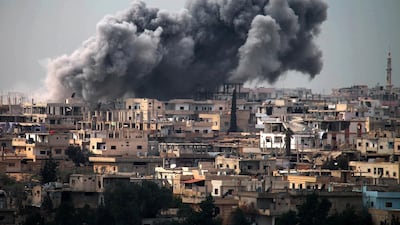
Smoke billows following air strikes on a rebel-held area in the southern city of Daraa on March 16, 2017. AFP -
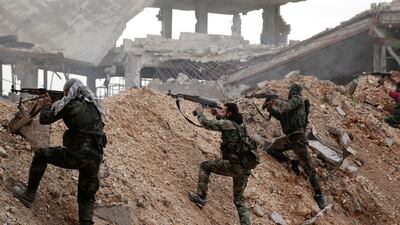
Syrian army soldiers fire their weapons during a battle with rebel fighters at the Ramouseh front line, east of Aleppo, on December 5, 2016. AP Photo -

Russians, Syrians and others gather next to an American military convoy stuck in the village of Khirbet Ammu, east of Qamishli city, on February 12, 2020. AP Photo -
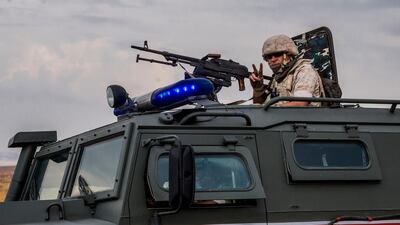
A Russian soldier mans a machine gun during a patrol near the Syrian and Turkish border in north Syria on October 25, 2019. AP Photo -
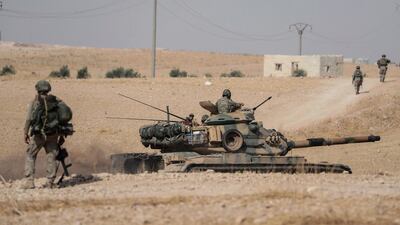
Turkish tanks and troops stationed near Syrian town of Manbij. AP -
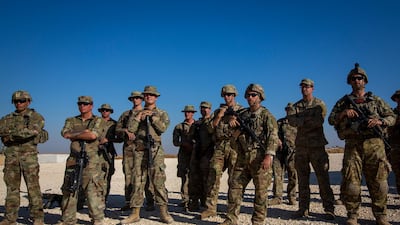
Crew of Bradley fighting vehicles stand at a US military base in north-eastern Syria on November 11, 2019. AP Photo -
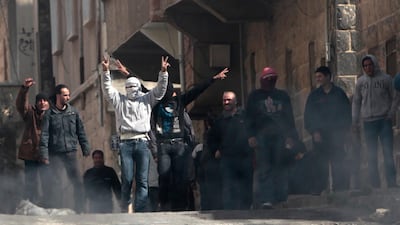
Anti-government protesters flash victory signs as they protest in the southern Syrian city of Daraa on March 23, 2011. AP Photo -
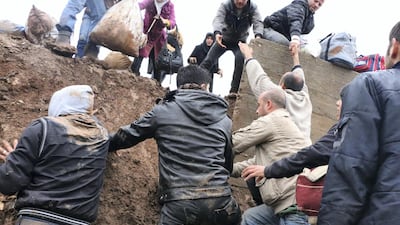
Syrians climb up a mud bank as they flee across fields to reach the Syrian-Turkish border on March 10, 2014. AFP -
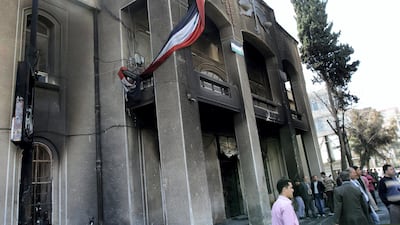
Syrian men gather outside the courthouse in Daraa that was torched a day earlier by angry protesters on March 21, 2011. AFP -
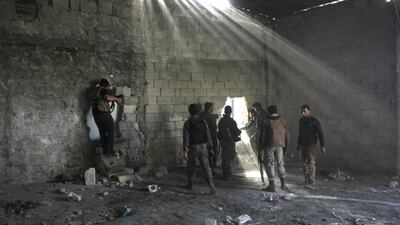
Rebel fighters inside a building during clashes with pro-government forces in the Sheikh Al Said neighbourhood of Aleppo city on November 28, 2013. AFP -
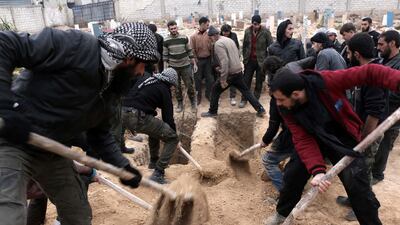
Syrians bury victims in a group funeral following air strikes in the rebel-held city of Douma on January 7, 2016. AFP -
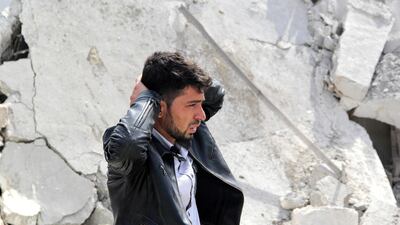
A man reacts to the destruction of his home in an air strike by government forces on the northern Syrian city of Aleppo on February 22, 2014. AFP -
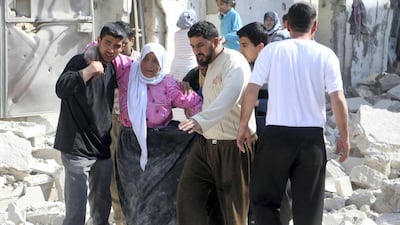
A woman is helped through the rubble of buildings hit by a reported Syrian government air strike in Al Sakhour district of Aleppo city on April 4, 2014. AFP -
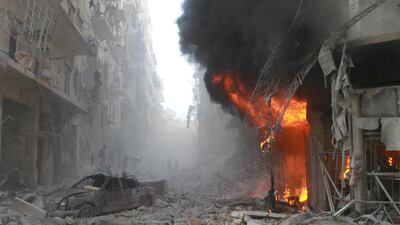
Debris fills a street and flames rise from a building following an air strike by Syrian government forces in the Sukkari neighborhood of Aleppo on March 7, 2014. AFP -
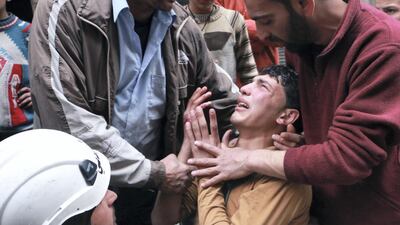
A man is comforted following an air strike by government forces that killed a rescue worker in Aleppo city on March 9, 2014. AFP -
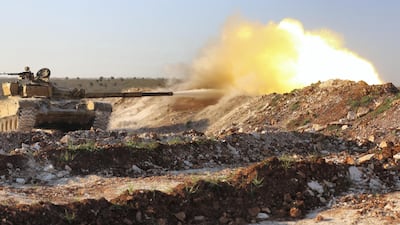
A tank seized by rebel fighters fires at a pro-government position near the Syrian city of Hama on February 19, 2014. AFP -
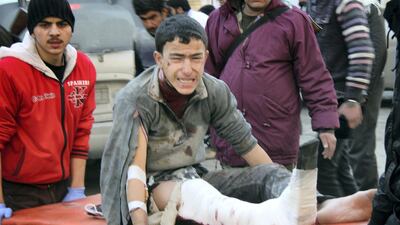
An injured Syrian youth cries as he is carried on a gurney following an air strike in the Maadi neighbourhood of Aleppo city on December 17, 2013. AFP -
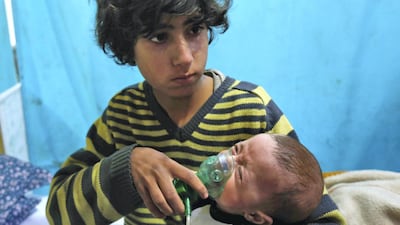
A Syrian boy holds an oxygen mask to an infant's face following a reported gas attack in Douma on January 22, 2018, when the town near Damascus was held by rebels. AFP -
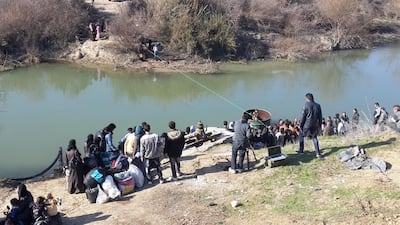
Displaced Syrians wait to enter Turkey from Idlib province across the Orontes river on February 5, 2014. AFP



