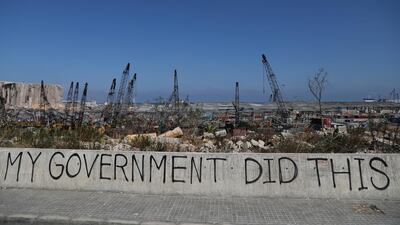
Lebanon's top Christian cleric called on Sunday for a government to rescue the country, rather than the ruling "political class", after the explosion in Beirut's port threw the nation further into turmoil.
The Cabinet resigned amid protests over the August 4 blast that killed at least 177 people, injured 6,000, left 300,000 homeless and destroyed large areas of Lebanon's capital, compounding a financial crisis.
Patriarch Bechara Boutros Al Rai, head of the Maronite church, called for elections, saying Lebanon was facing "its biggest danger".
"We will not allow for Lebanon to become a compromise card between nations that want to rebuild ties among themselves," Mr Al Rai said in his Sunday sermon.
"We must start immediately with change and quickly hold early parliamentary elections without the distraction of discussing a new election law and to form a new government."
The patriarch holds sway as the head of Lebanon's Christian community, from which the president must be selected under the country's sectarian power-sharing system.
Several MPs submitted their resignations after the port explosion but not enough to dissolve Parliament.
Under the constitution, President Michel Aoun is required to designate a candidate for prime minister with the most support from parliamentary blocs.
The presidency has yet to say when consultations will take place.
Mr Aoun said he could not step down because it would create a power vacuum, he told French station BFMTV on Saturday.
“The political and popular atmosphere can't take new elections before restoring calm,” he said.
“They would be emotional, and not a true representation of the people.”
Mr Al Rai said the Lebanese wanted a government that would reverse "national, moral and material" corruption, enact reforms and "rescue Lebanon, not the leadership and political class".
-
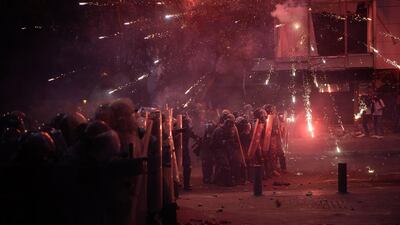
Fireworks thrown at riot police by anti-government protesters explode during clashes near the parliament building following last Tuesday's massive explosion in the seaport which devastated Beirut, Lebanon. AP Photo -
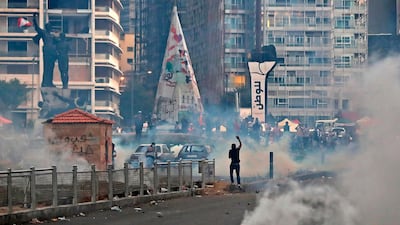
Lebanese protesters, enraged by a deadly explosion, clash with security forces at Martyrs' Square in Beirut. Lebanon's Prime Minister Hassan Diab stepped down amid fury within and outside his government over the deadly Beirut port blast he blamed on the incompetence and corruption of a decades-old ruling class. AFP -
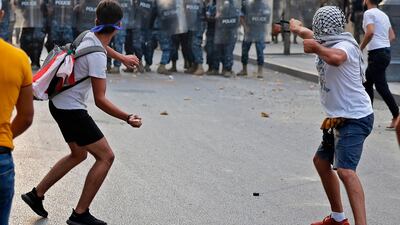
Lebanese protesters, enraged by a deadly explosion, hurl stones at security forces amid clashes in central Beirut. Lebanon's Prime Minister Hassan Diab stepped down amid fury within and outside his government over the deadly Beirut port blast he blamed on the incompetence and corruption of a decades-old ruling class. AFP -
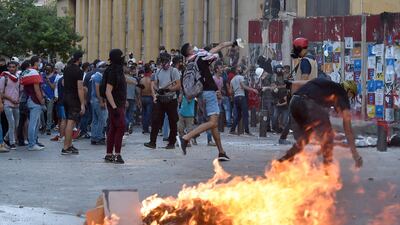
Lebanese anti-government protesters throw stones at security forces at one of the roads leading to the parliament building in Beirut, Lebanon. EPA -
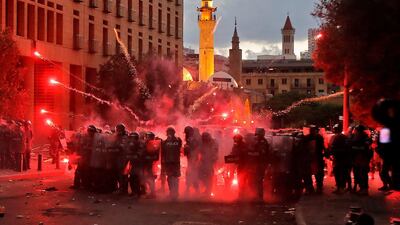
Lebanese security forces clash with protesters near the parliament building in central Beirut following a huge chemical explosion that devastated large parts of the Lebanese capital. AFP -
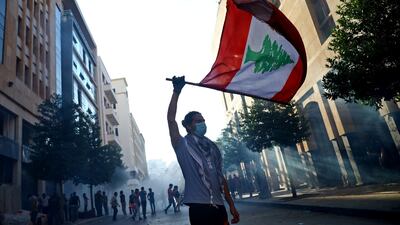
A demonstrator waves a Lebanese flag during anti-government protests that have been ignited by a massive explosion in Beirut, Lebanon. Reuters -
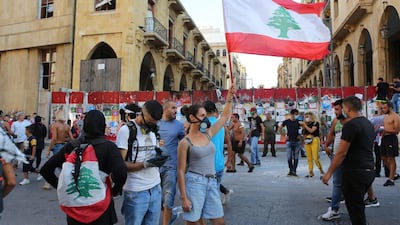
Protesters wave a Lebanese flag during demonstrations near the parliament building in Beirut, Lebanon. EPA -
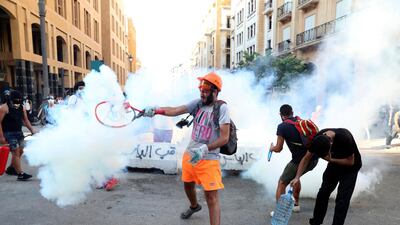
An anti-government protester uses a tennis racket to hit back a tear gas canister towards riot policemen during a protest following last Tuesday's massive explosion, which devastated Beirut, Lebanon. AP Photo -
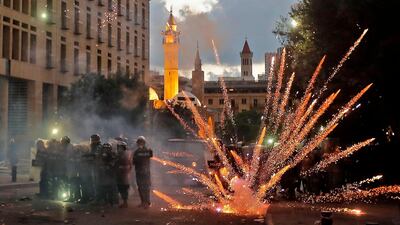
Lebanese security forces clash with protesters near the parliament in central Beirut following a huge chemical explosion that devastated large parts of the Lebanese capital. AFP -
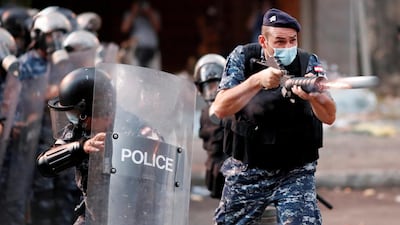
A member of Lebanese riot police fires a weapon during anti-government protests that have been ignited by a massive explosion in Beirut, Lebanon. Reuters -
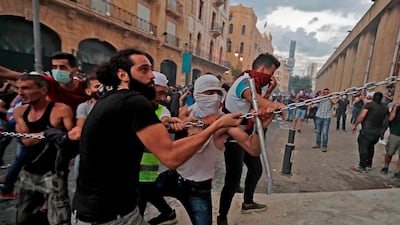
Lebanese protesters try to storm the vicinity of the parliament in central Beirut following a huge chemical explosion that devastated large parts of the Lebanese capital. AFP -
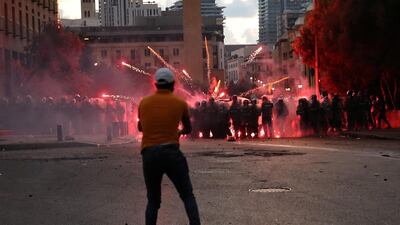
A demonstrator throws fireworks at riot police during anti-government protests that have been ignited by a massive explosion in Beirut, Lebanon. Reuters


The blast added to long-simmering public anger against Lebanon's ruling elite, who are blamed for bringing on the country's worst economic crisis through corruption and mismanagement.
Documents have emerged showing that the country’s top leadership, including Mr Aoun, and security officials were aware that the 2,750 tonnes of ammonium nitrate that caused the blast had been stored at the port for years.
He said he shared the rage.
“They call me the father of the people,” Mr Aoun said. “I am one of them.”
He said the investigation into the explosion was “very complex” and would not be finished quickly.
It is looking into whether negligence, an accident or "external interference" caused the detonation of the chemicals.
Mr Aoun's son-in-law, Gebran Bassil, who leads the largest Christian political bloc, said investigating negligence should be quick as it was "known and documented".
But he said the cause of the blast was "a mystery that requires deep investigation".
Mr Bassil, whose party is allied with Lebanon's Iran-backed party and militia Hezbollah, said in a televised speech on Sunday that threats of further western sanctions would "drown Lebanon in chaos and discord".
The US has imposed sanctions on Hezbollah, which it classifies as a terrorist group, and US officials have said those sanctions could be extended to allies of the heavily armed movement.
During a visit to Beirut after the blast, French President Emmanuel Macron raised the prospect of sanctions as a last resort to push Lebanese action on reform.
Senior French and US officials have said any foreign financial aid to Lebanon must come with reforms, including state control over the port and Lebanese borders.

