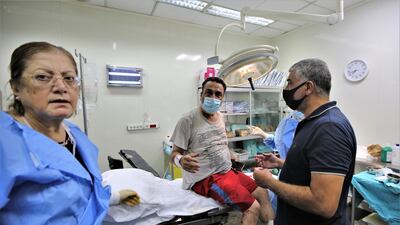
As the haze from the chemical blast moved through Beirut’s streets on Tuesday and military helicopters battled fires at the port, medics used their personal cars as makeshift ambulances.
Doctors and nurses immediately rallied to help residents of the Lebanese capital as hospitals already struggling with the coronavirus outbreak filled up and quickly became overwhelmed.
Medical centres across the city filled beyond capacity, forcing doctors to plead for blood supplies and generators to ensure their lights would stay on so they could treat the nearly 4,000 wounded.
At least 135 people were killed in the explosion that Lebanese security officials said was caused by 2,700 tonnes of confiscated ammonium nitrate catching light.
The fallout was a scene of carnage. There were dazed people covered in blood, staggering or standing motionless on streets strewn with glass and mortar.
Distraught men carried the limp body of an unconscious or possibly dead woman, and a man with a bandage-wrapped head had his face half hidden with blood.
Motorcycles and army vehicles wove through debris-covered streets to rescue and ferry the wounded to hospitals, while small clusters of people carried others on stretchers.
Hospitals became centres of grieving.
The scene around the American University of Beirut Medical Centre was one of trauma.
Victims lined the pavements next to relatives. Some were crying in pain, others for the loss of their loved ones.
-
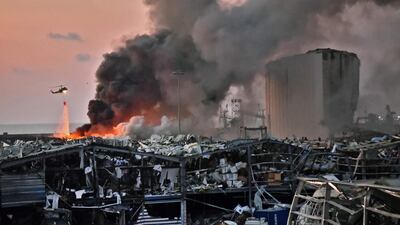
A helicopter puts out a fire at the scene of the explosion at the port of Lebanon's capital Beirut on August 4, 2020. AFP -
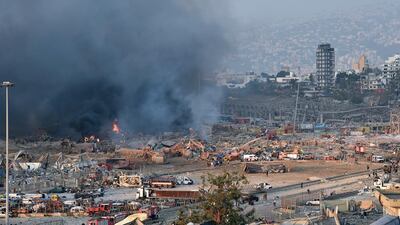
Smoke billows from an area of a large explosion that rocked the harbour area of Beirut, Lebanon. EPA -

The aftermath of blast in Beirut. Sunniva Rose / The National -
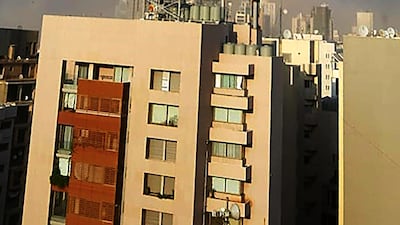
The scene of the explosion that rocked Beirut. AFP -
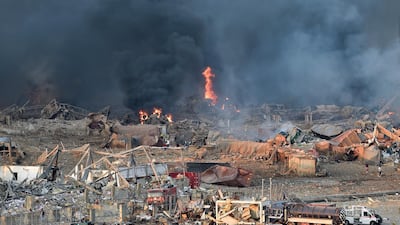
The harbour area with smoke billowing from an area of the explosion, Beirut, Lebanon. EPA -
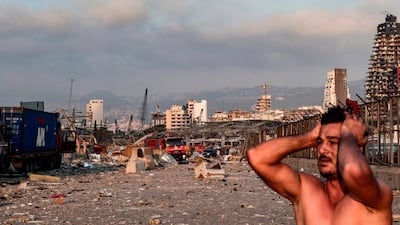
A man reacts at the scene of an explosion at the port in Lebanon's capital Beirut. AFP -
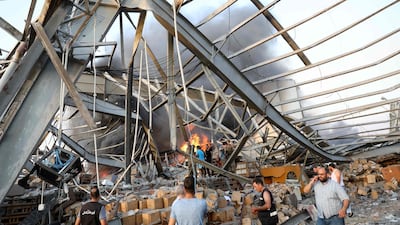
The scene of the explosion at the port in Beirut. AFP -
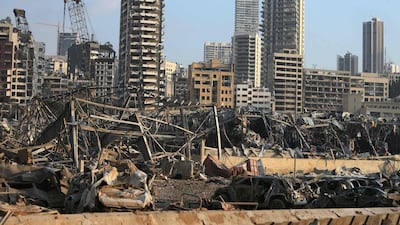
The scene of the explosion at the port in Beirut. AFP -

The scene of the explosion in Beirut. AFP -
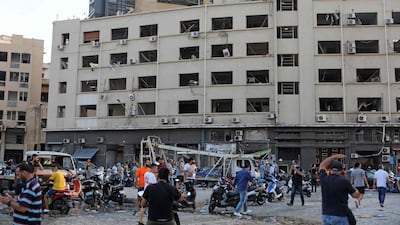
People gather near the scene of the explosion in Beirut. AFP -
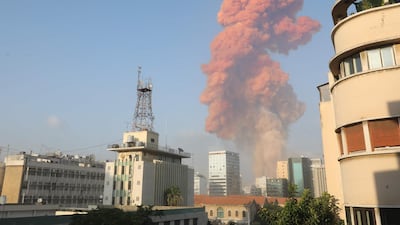
The scene of the blast in Beirut. AFP -
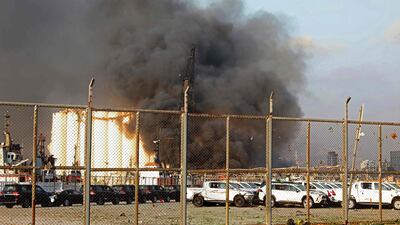
The scene of the explosion in Beirut. AFP -
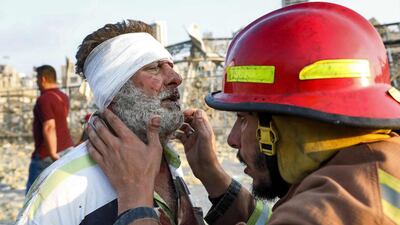
A wounded man is checked by a fireman near the scene of the explosion in Beirut. AFP -
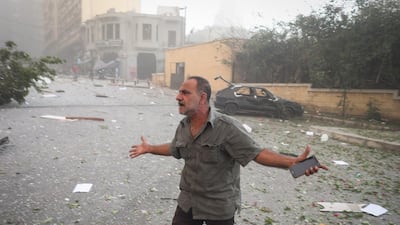
A resident stands in the street by a destroyed car, following the explosion near by at the port of Beirut. Bloomberg -
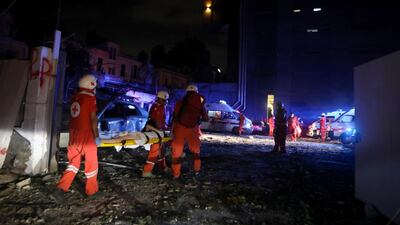
Lebanese Red Cross officers carry an injured woman following an explosion at the port of Beirut on August 4, 2020. AFP -
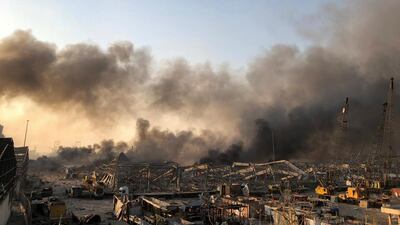
Smoke rises after the explosion was heard in Beirut. Reuters -
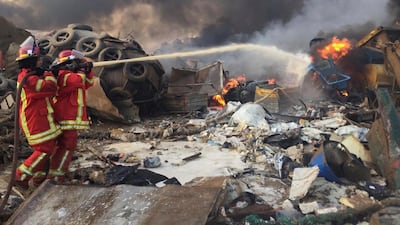
Firefighters spray water at a blaze after the explosion in Beirut. Reuters -
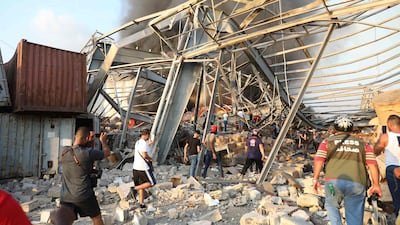
People walk at scene of the explosion in Beirut. AFP -

The blast at Beirut port. Twitter/ @borzou -

Army personnel around entrance to port. -

The aftermath of the blast in Beirut. Sunniva Rose / The National -

The aftermath of the blast in Beirut. Sunniva Rose / The National -
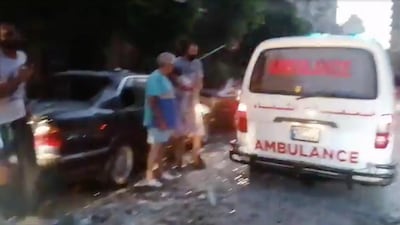
The aftermath of the blast in Beirut. Sunniva Rose / The National -
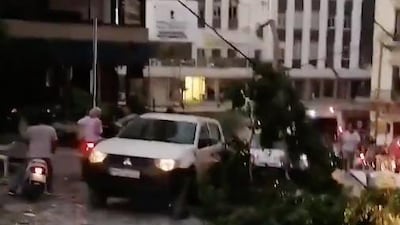
The aftermath of blast in Beirut. Sunniva Rose / The National -
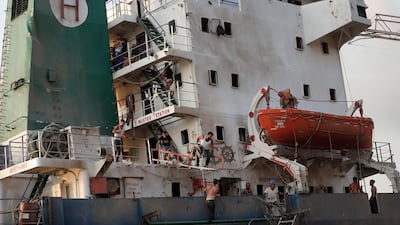
Sailors leave their damaged ship near the explosion in Beirut. AP Photo -
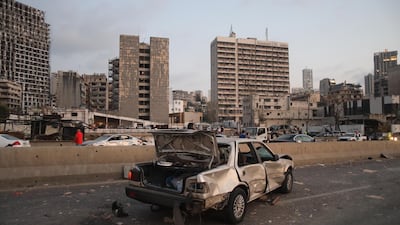
A vehicle stands damaged on a road following a large explosion at the port area of Beirut. Bloomberg -
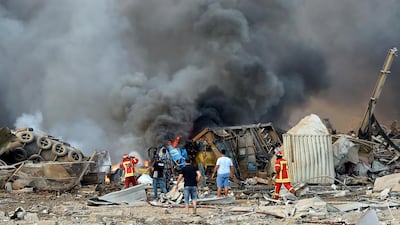
Firefighters try to extinguish flames after a large explosion rocked the harbour area of Beirut. EPA -
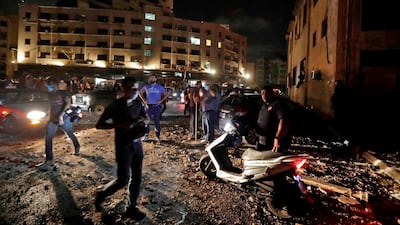
People and journalists gather at the scene of an explosion at the port of Lebanon's capital Beirut. AFP -

An injured man sits outside American University of Beirut medical centre on August 5, 2020. Reuters -
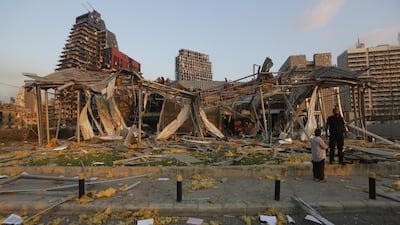
Men stand before wrecked buildings near the port. Getty Images -
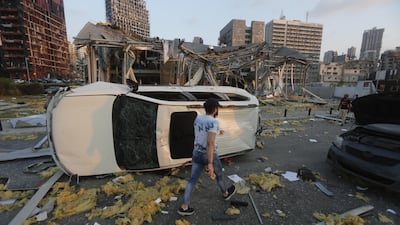
A man walks by an overturned car and destroyed buildings. Getty Images -
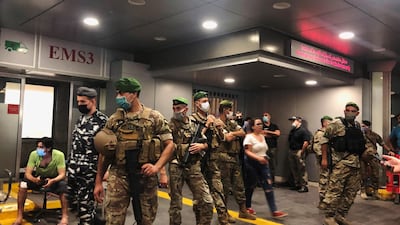
Lebanese soldiers stand outside American University of Beirut medical centre. Reuters -
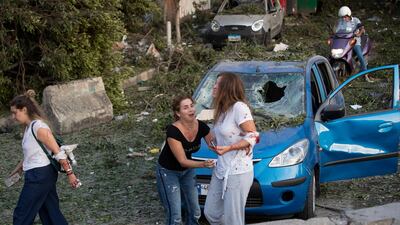
Injured people stand after the explosion. AP Photo -
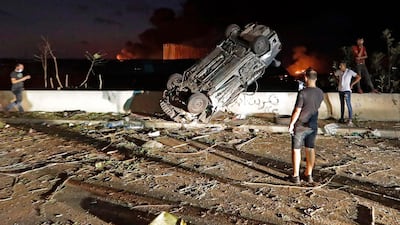
People gather by cars destroyed following an explosion at the port of Lebanon's capital Beirut. AFP -
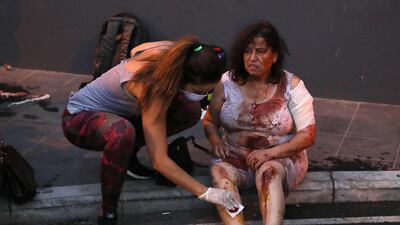
Wounded people wait to receive treatment outside a hospital following an explosion near the Beirut port. AFP


At the entrance, an inconsolable man leaned against the wall, staring at the pavement.
His brother-in-law was instantly killed when the mushroom cloud rose into the sky, destroying buildings and smashing windows for kilometres, including his office opposite Beirut port.
“He was still at his office working and we received a call from his colleague that Ayman got injured in the explosion," the relative said.
"At first we did not know how critical it was but later on when we gathered up at the emergency entrance of the hospital, we were told that he succumbed to a critical injury in his head."
Others tried to save their relatives with more success.
Harachuhee Kuyumegian, 80, lived in a neighbourhood next to the port where the explosion took place.
Her son-in-law said his sister found Ms Kuyumegian covered in blood and critically injured.
He drove to the elderly woman’s house and rushed her to hospital in a bid to save her life.
“We put her on a chair and rushed her down the stairs and she was crying in pain," he said. "We rushed her in my car to the hospital."
The son-in-law said the last update he received said she was stable.
Resident doctors in the emergency ward at the American University of Beirut Medical Centre said more than 400 injured were taken there.
Those who could wait until the next day for an operation were taken to ordinary rooms.
The response became so large that the chemists' union asked all pharmacies to open and treat those with light injuries, freeing up space for the more critical cases at hospitals.
One physician, Dr Eid Azar of St George Hospital, said that the scene at his centre, the oldest in Lebanon, was chaos.
Another medical centre close to the port had to be evacuated as it was partly destroyed and beyond functioning.
Others reported cancer patients and newborn babies being shaken by the blast and covered in glass.
Some ambulances were filled with more than three victims because of the sheer volume of injured.
Many of those injured were transferred to hospitals outside of the capital, in the Mount Lebanon area and the city of Sidon to the south.
The Red Cross’s call for blood donations at hospitals to help across the capital was met with thousands of volunteers, an employee said.
Red Cross departments across Lebanon, from Tripoli to Sidon to Mount Lebanon, sent their ambulances to Beirut to help with the rescue and movement of patients.
It was a Dunkirk-like moment offering a flicker of hope, one that a country racked by economic and health woes and now the worst disaster in its history, desperately needs.

