

Egypt on Wednesday took a dim view of the prospects of reaching a deal with Ethiopia on the operation of a massive Nile dam being built by the Horn of Africa nation and which Cairo fears will threaten its vital share of the river’s waters.
A statement by the Irrigation Ministry said it would be “difficult” to categorise as positive the first day of negotiations held by videoconference on Tuesday or that they have made any tangible progress.
“The discussions reflected the intention by Ethiopia to start (from scratch) discussions on all issues, including proposals already made by Addis Ababa in previous rounds of negotiations,” said the statement. The Ethiopian approach, it added, also covered “timelines and figures” that have already been discussed.
-
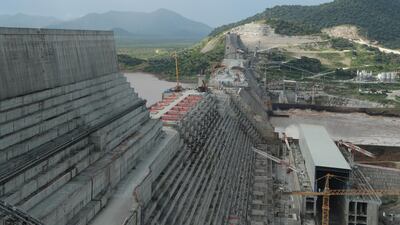
Ethiopia's Grand Renaissance Dam under construction on September 26, 2019. Reuters -

Ethiopia's Grand Renaissance Dam under construction on September 26, 2019. Reuters -
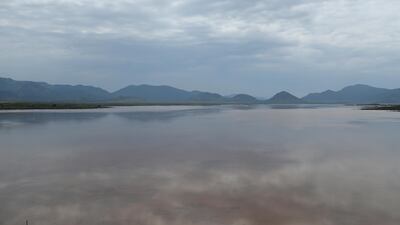
A water basin near Ethiopia's Grand Renaissance Dam. Reuters -

Turbine housings at Ethiopia's Grand Renaissance Dam powerhouse. Reuters


It said Ethiopia, moreover, remained adamant to start filling the reservoir behind the dam next month regardless of whether an agreement was reached with Egypt and fellow downstream nation Sudan. Both have rejected an Ethiopian suggestion for an interim agreement to govern the first filling of the reservoir.
Ethiopia plans to store a total of 18.4 billion cubic metres of water in the reservoir behind the dam over two years. While the impact of this amount might be manageable, Egypt and Sudan fear that allowing Addis Ababa to do this unilaterally sets a dangerous precedent.
Cairo’s scepticism over the outcome of the ongoing negotiations - they resumed on Wednesday - first surfaced on Tuesday in a strongly-worded statement by Egypt’s National Security Council, the country’s highest decision-making body on security issues.
Chaired by President Abdel Fatah El Sisi, it complained that the negotiations were being held three weeks after the call for their resumption was first made by Sudan - suggesting that Addis Ababa was buying time - and that they coincided with a renewed threat by Ethiopia that it intended to fill the reservoir whether Egypt and Sudan agreed or not.
“This makes it absolutely necessary to arrive at a time frame for these negotiations … to prevent them from turning into a new tool of procrastination,” said the statement. “Egypt will participate in these meetings to gauge whether there is a political will (by Ethiopia) to reach an agreement and also to reinforce its continuing goodwill.”
On Wednesday, the Irrigation Ministry spelt out Egypt’s stand on the negotiations in some detail, saying Ethiopia must clearly declare that it had no intention of unilaterally filling the reservoir and that a US-mediated agreement reached in February and which Addis Ababa refused to sign would serve as the starting point of the resumed negotiations.
The ministry also wanted observers from the United States, the European Union and South Africa - the current chairman of the African Union - to act as “facilitators” and that the timeframe of the negotiations be limited to June 9 - 13.
The Egyptian statement appeared to be in response to Sudan’s seemingly upbeat take on the negotiations. Its irrigation minister suggested on Tuesday that an agreement might be within reach, saying the negotiations were focusing on the remaining unresolved issues which he said accounted for just 10 per cent of all issues.
Egypt, the most populous Arab nation, depends on the Nile for more than 90 per cent of its water needs. It has been trying to persuade Ethiopia to agree to a gradual filling of the 74-billion-cubic metre reservoir behind the dam to reduce the impact on its water share. It also wants Ethiopia to commit to releasing sufficient water in the case of drought and allow for joint committees to run the dam.
A significantly reduced share of water could cost Egypt hundreds of thousands of jobs and threaten its food security as its 100 million population rapidly grows.
Ethiopia maintains that the dam is essential to its development and that building it falls well within its sovereign rights. It has accused Egypt of clinging to colonial-era agreements that gave Cairo the lion’s share of the Nile water and ignored the needs of the 10 other Nile basin countries.
The dam, which on completion will produce 6,000 megawatts, is being built on the Blue Nile, which originates on the Ethiopian highlands and thunders down into eastern Sudan where it converges with the White Nile near the Sudanese capital Khartoum before flowing north through the deserts of northern Sudan, into Egypt and all the way to the Mediterranean.

