

The Lebanese government aims to release about 3000 detainees, almost a third of the country’s inmates, over fears of a rapid spread of the coronavirus in its overcrowded prisons, top officials said.
"The objective is to reduce the prison population by 3,000 people," Justice Minister Marie-Claude Najm told The National. She stressed that the figure was not finalised and would depend on the decisions of judges who will work "case by case".
Interior Minister Mohamed Fehmi tweeted on Sunday that 559 detainees had been freed over coronavirus fears out of a total of 9,200, without saying when the releases took place. He said the total number of releases could be “less or more” than 3,000.
According to Lebanese authorities, there have been no cases of Covid-19 in Lebanese prisons. The Interior Ministry did not respond to a request asking whether inmates had been tested and declared negative. The virus had infected 527 and killed 18 people as of Sunday in the small Mediterranean country with a population of between five and six million.
“The aim is for this [releases] to be as fast as possible,” said Mrs Najm.
Several other countries in the region have decided to release prisoners over fears of the spread of the coronavirus, including Turkey, Iran, Egypt and Bahrain.
Mrs Najm said the Lebanese government set up a crisis cell this month to prevent the spread of the coronavirus to prisons, with members from the justice, interior and health ministries.
The government fears the virus could spread rapidly in prisons, which hold 220 per cent of their intended capacity, according to the Justice Ministry.
Lebanon’s largest prison, in the town of Roumieh east of Beirut, was built in the 1960s for 1,100 inmates but holds 3,800 today.
“The risk of widespread contamination is very high,” Mrs Najm said.
The ministry estimates the total number of detainees in Lebanon to be as high as 10,000, with 7,500 people held in official prisons and the rest in temporary detention centres run by different security forces.
Mrs Najm said the government had taken measures to prevent the spread of the coronavirus to prisons, such as restricting family visits to only those facilities where the detainee and the visitor can be separated by a glass window.
In a tweet, Mr Fehmi addressed rumours that no preventive measures had been taken in Roumieh prison, saying he would visit it soon and that the government aimed to release 550 people held there.
Mrs Najm said the her ministry was preparing a list of several hundred names to be presented to President Michel Aoun for an amnesty.
She said the list would include detainees who had served their prison sentence but were being held until they paid their fines, as well as those who had six months or left to serve. Priority is being given to sick and elderly inmates.
“I cannot guarantee that these people will be released. This will be the president’s decision, but he is fully aware of the necessity of reducing the prison population for public health reasons,” she said.
Judicial hearings were suspended in early March to curtail the spread of the coronavirus, but judges and policemen started interrogating detainees over the phone and through mobile applications such as WhatsApp and Zoom since March 20, Mrs Najm said. At least 15 people were questioned in this way in North Lebanon in the past two weeks, she said.
Legally, a detainee must be interrogated within 48 hours of their arrest but because of the coronavirus, some have been in custody for weeks.
However, the biggest challenge for the Justice Ministry is to address the 3,700 cases of detainees awaiting trial.
The ministry is encouraging judges to be flexible when examining requests for release and to minimise the number of new detainees.
“Judges are sensitive to the idea of relaxing rules,” said Mrs Najm. “If a release does not harm society or the victim, I think that judges do not hesitate to request it.”
_______________
Coronavirus in the Middle East
-
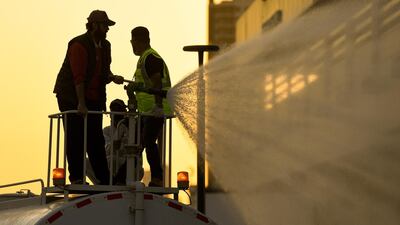
Municipality workers spray disinfectant as a precaution against the spread of coronavirus at the Kuwait Salmiya market. EPA -
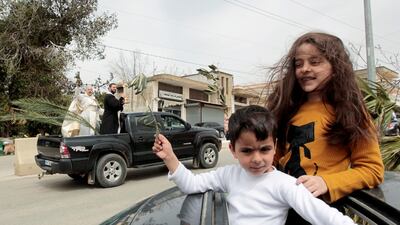
Children hold olive branches as they look out from the sunroof of a car to be blessed by priests to celebrate Palm Sunday, amid the lockdown to contain the coronavirus in Marjayoun, southern Lebanon. Reuters -
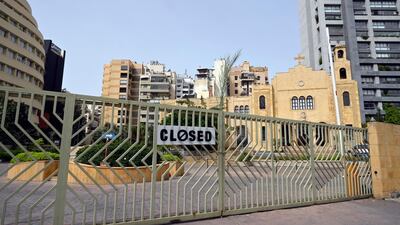
An empty Greek Catholic Church during a Mass on Palm Sunday in Beirut, Lebanon. EPA -
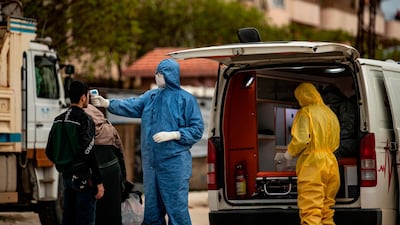
Members of the Kurdish Red Crescent check passengers who were stranded in Damascus upon their arrival at the Qamishli airport in Syria's north-eastern Hasakeh province. AFP -
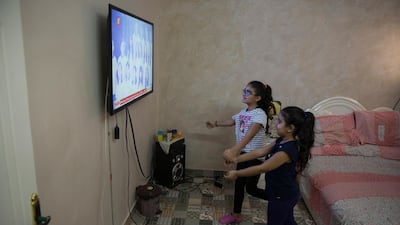
Coptic girls reacting while watching hymns performed on telelvision at home at Shubra Al Khema district in Cairo, Egypt. EPA -
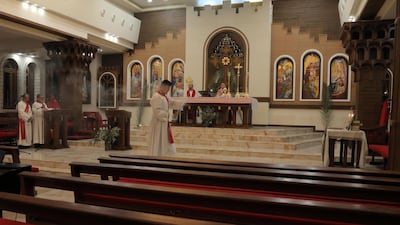
Iraqi priests celebrate the Palm Sunday Mass at the empty Saint Joseph Church in Erbil, the capital of the autonomous Kurdish region of northern Iraq. AFP -
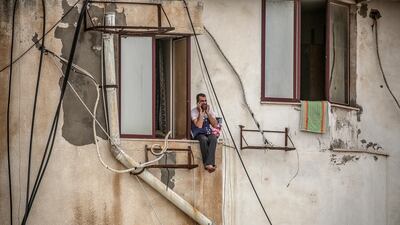
A Palestinian man, who was quarantined, talks on his phone on a hotel window in Gaza City. EPA -
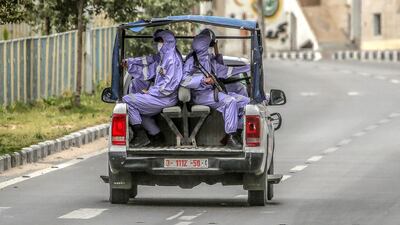
Palestinian security policemen wearing protective gear, patrol on the street of Gaza city. EPA -

A street vendor wearing protective face mask stands between lines of cars during a sandstorm in Cairo, Egypt. EPA -
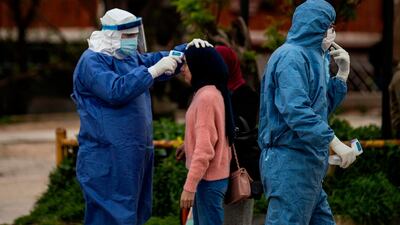
Members of the Kurdish Red Crescent check passengers who were stranded in Damascus upon their arrival at the Qamishli airport in Syria's north-eastern Hasakeh province. AFP -
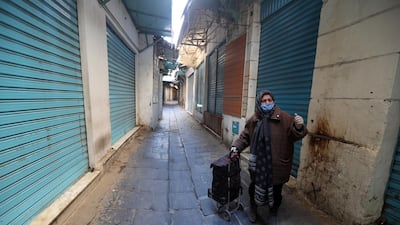
A view of an empty street during the coronavirus pandemic in Tunis, Tunisia. EPA -
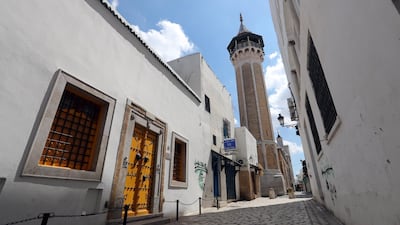
A view of an empty street during the coronavirus pandemic in Tunis, Tunisia. EPA -
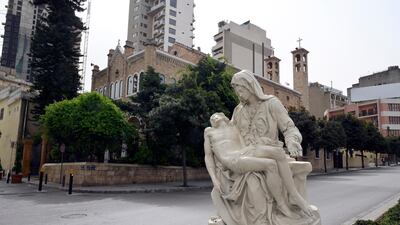
A statue representing the Virgin Mary and Jesus is seen in front of the closed St Maroun Maronite Catholic Church during Mass on Palm Sunday in downtown Beirut, Lebanon. EPA -

Municipality workers spray disinfectant as a precaution against the spread of coronavirus at the Kuwait Salmiya market following the outbreak of coronavirus in Kuwait. EPA -
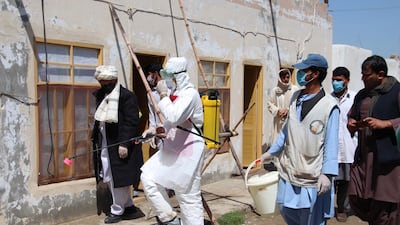
Afghan health workers spray disinfectants at public places in Helmand, Afghanistan. EPA


_______________
Since the outbreak of the coronavirus, prisoners and their families have intensified their lobbying for a general amnesty, which would cover several charges ranging from terrorism to drug trafficking. The issue has been discussed for years but remains a highly sensitive point of contention between political parties.
On March 16, prisoners in Roumieh rioted over the demand for a general amnesty, starting fires, ripping out surveillance cameras and breaking doors.
But Mrs Najm said she was opposed to the hasty adoption of a general amnesty. “We must think of the interest of Lebanese society,” she said. “I do not think it’s on the agenda.”
Additionally, a general amnesty would have to be approved by parliament, which has been closed since March 10. Parliament member Yassine Jaber said online meetings for house committees were expected to start “soon”.
Mrs Najm said makeshift hospitals would be set up to treat any cases of coronavirus among prisoners, so as to not overwhelm the health sector. “The idea would be to set up field hospitals in big prisons with enough space to isolate people infected with the virus,” she said.

