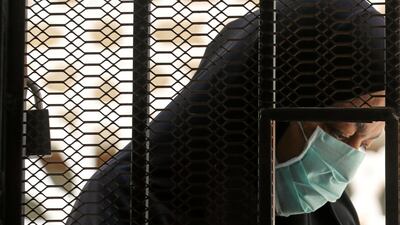

Egypt reported its highest daily death toll from Covid-19 on Sunday, the third consecutive day of more than 1,500 new cases, figures that confirm the first-half of June as by far the deadliest time since the outbreak of the coronavirus pandemic in February.
The Health Ministry said late on Sunday that 91 people succumbed to the disease over the previous 24 hours.
That's 29 more deaths than the previous record high of 62 announced on Saturday. The total death toll now stands at 1,575 of which 616, or 39.1 per cent, occurred in the last two weeks alone.
The doctors’ union said on Sunday that 64 of its members have died of the disease.
In its daily report, the Health Ministry said 1,618 Covid-19 cases were confirmed over the previous 24 hours.
The overall number of confirmed cases now stands at 44,598, of which 19,621, or nearly 44 per cent, recorded since June 1.
Cases have consistently numbered above 1,000 since the start of the month, with Friday and Saturday recording 1,577 and 1,677 _ a record high _ respectively.
These figures remain relatively low for a country of Egypt’s size – 100 million people – but there could be numerous reasons. Critics say the number could be low because authorities don’t carry out enough testing. Another reason is that some patients self-isolate and receive treatment outside the health care network. Patients with mild Covid-19 symptoms also recover under the radar of the authorities.
The government maintains that it has dealt scientifically, professionally and transparently with the pandemic, with more than 300 hospitals available for Covid-19 patients.
It has also established heavily used hotlines offering medical assistance and psychological support for patients as well as a smartphone application that gives instructions to anyone who suspects to have contracted the disease.
One senior health ministry official said last week that the number of cases will continue to rise during the remainder of June, with the worst daily number of cases possibly hitting 2,500, but that the curve would be flattened by mid-July.
-
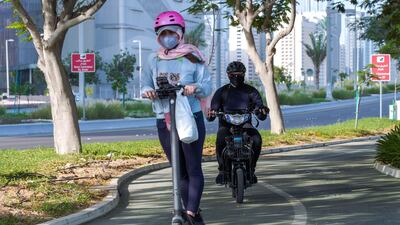
Abu Dhabi, United Arab Emirates, June 14, 2020. Abu Dhabi residents exercise on the reopened side of the Corniche as the UAE gradually returns to normal life as restrictions are being eased. Victor Besa / The National Section: NA Reporter: -
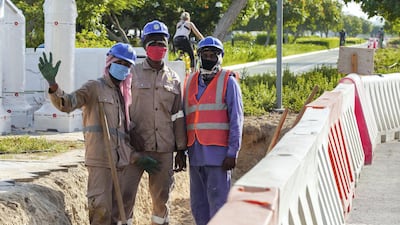
Abu Dhabi, United Arab Emirates, June 14, 2020. Abu Dhabi government road workers takes a break at the reopened side of the Corniche as the UAE gradually returns to normal life as restrictions are being eased. Victor Besa / The National Section: NA Reporter: -
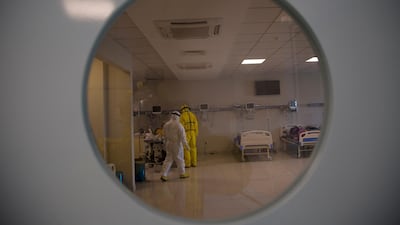
Medical staff in the intensive care unit in Al Emarat hospital in Erbil, the capital of the Kurdistan Region in Iraq. EPA -
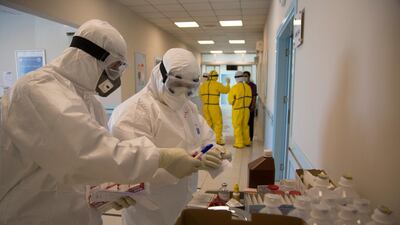
Medical staff in the intensive care in Al Emarat hospital in Erbil, the capital of the Kurdistan Region in Iraq. EPA -

Palestinian trainers, from the Palestine Athletic Federation, take part in an online CECS Level 1 course, with trainers from the World Athletics Federation, in Gaza City during the Coronavirus pandemic. AFP -
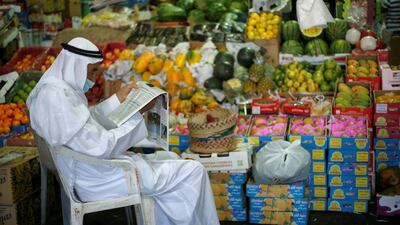
A Bahraini vendor, wearing a face mask, following the outbreak of the coronavirus disease (COVID-19), reads a newspaper as he waits for customers at his fruits stand, in Central Market, in Manama, Bahrain. REUTERS -
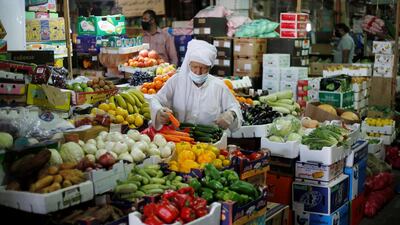
A Bahraini man, wearing a face mask, following the outbreak of the coronavirus disease (COVID-19), shops at a vegetables stand, in Central Market, in Manama, Bahrain. REUTERS -
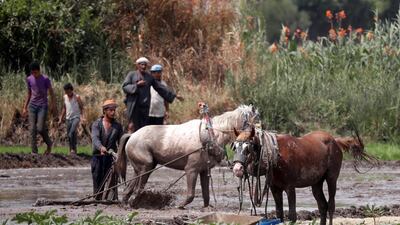
Farmers flatten the soil using horses to prepare the agricultural land for growing rice, amid concerns over the coronavirus disease (COVID-19), in Abu Kabir, Sharqia Governorate, north of Cairo, Egypt. REUTERS -
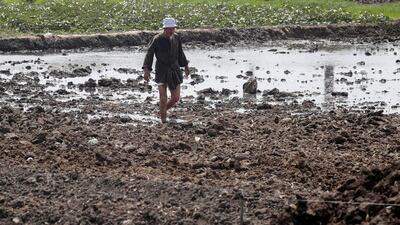
A farmer works at his rise field at agricultural land, amid concerns over the coronavirus disease (COVID-19), in Abu Kabir, Sharqia Governorate, north of Cairo, Egypt. REUTERS -
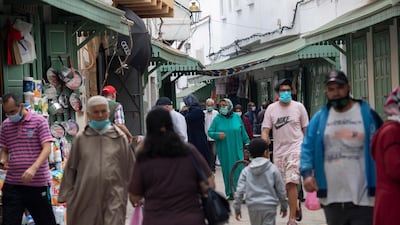
Citizens on bougroun Street wear mandatory face masks to prevent the spread of the coronavirus, in Rabat, Morocco. Morocco decided to gradually reduce the closing procedures and extended the public health emergency until July 10, according to a joint statement from the Ministry of Health and Ministry of Interior. EPA


The government has been seeking to strike a balance between protecting Egyptians from the pandemic and preventing the economy from tanking.
It has been gradually easing the lockdown it imposed in March while counselling that, with a vaccine not developed yet, everyone must learn to live with the coronavirus while taking precautions like social distancing and embracing stringent hygiene standards.
It has made wearing a mask mandatory in public spaces, like transport, government offices and banks, but many Egyptians have continued to take a dangerously casual approach to the pandemic.
A Cabinet minister last month warned that the number of Covid-19 cases could shoot up to 100,000 or even 1 million if Egyptians continue to ignore preventive measures like social distancing and hygiene practices.
The government, meanwhile, has said that the number of cases and fatalities remain within the boundaries of its forecasts and that it has the resources to handle many more cases if need be.

