

Lebanon has been anxiously watching the US presidential race after four years of increasingly crushing sanctions against Hezbollah and its allies.
But the effect of Joe Biden's victory on the small Mediterranean country will only be clear once the new president-elect takes a clear stance on Iran, analysts told The National.
“Look at Iran and the rest will follow,” said Joseph Bahout, director of the Issam Fares institute at the American University of Beirut.
The effect of Mr Biden’s presidency on Lebanon will be a “biproduct of what happens between the new administration and Iran", Mr Bahout said.
Mr Biden is widely expected to try to revive the nuclear deal struck between Iran and world powers in 2015, and abandoned three years later by Mr Trump, who imposed crippling sanctions on Tehran.
Reopening talks with Iran would also probably loosen the noose around Iran's main ally in Lebanon, Hezbollah, which the US considers to be a terrorist organisation.
“It’s a trickle-down mechanism. It’s too early to talk about a change in position or posture,” Mr Bahout said.
Mr Trump’s administration also increased sanctions against Hezbollah’s allies in Lebanon, last week hitting the country’s most powerful Christian leader, Gebran Bassil, for corruption.
-
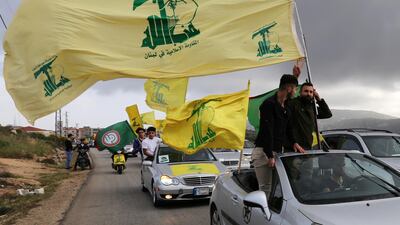
A supporter of Lebanon's Hezbollah gestures as he holds a Hezbollah flag in Marjayoun, Lebanon May 7, 2018. Reuters -
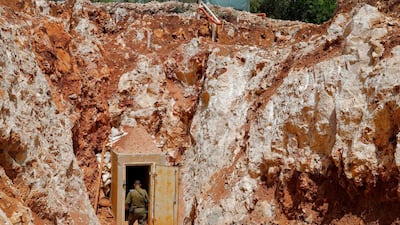
In 2019, Israel said this was a Hezbollah-dug tunnel under the "blue line", a demarcation line drawn by the UN to mark Israel's withdrawal from southern Lebanon in 2000. AFP -
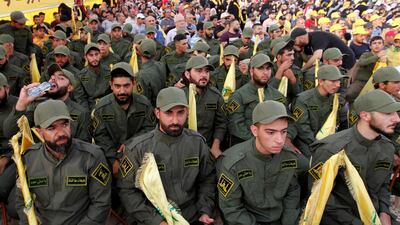
Lebanon's Hezbollah members hold party flags as they listen to their leader Sayyed Hassan Nasrallah. Reuters -

A banner depicting Hezbollah leader Sayyed Hassan Nasrallah and an United Nation's post in Lebanon. Reuters -
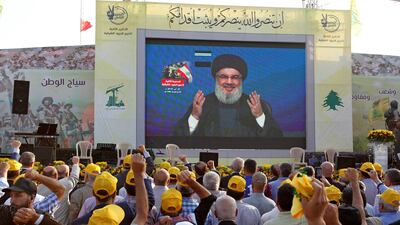
Hezbollah leader Hassan Nasrallah has direct ties with Iran's supreme leader Ayatollah Ali Khamenei. Reuters -
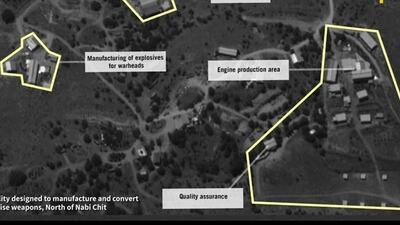
The Israeli military claimed that Hezbollah, with Iranian assistance, had been bringing specialised equipment to a weapons factory in southern Lebanon. Screengrab/YouTube -
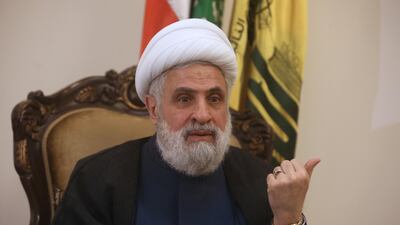
Lebanon's Hezbollah deputy leader Sheikh Naim Qassem gestures as he speaks during an interview with Reuters in Beirut, Lebanon March 15, 2018. Reuters -
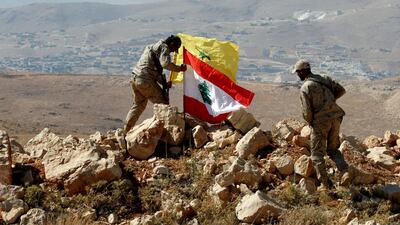
Hezbollah fighters put Lebanese and Hezbollah flags at Juroud Arsal, Syria-Lebanon border, July 25, 2017. Reuters -
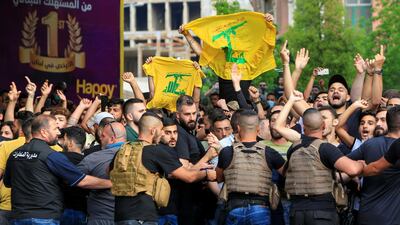
Lebanese soldiers try to block Hezbollah supporters as they gesture and chant slogans against anti-government demonstrators, in Beirut. Reuters -
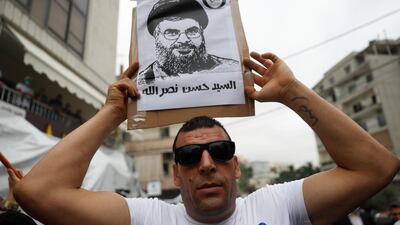
A Hezbollah supporter holds a placard of its leader Hassan Nasrallah, during a protest against the US in Beirut. AP Photo -
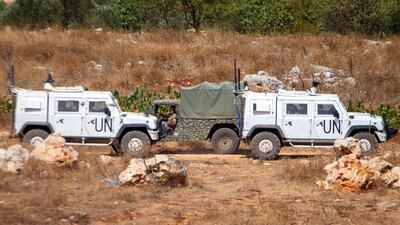
Lebanese soldiers on patrol drive by UN vehicles on the border with Israel on July 28, 2020. AP -
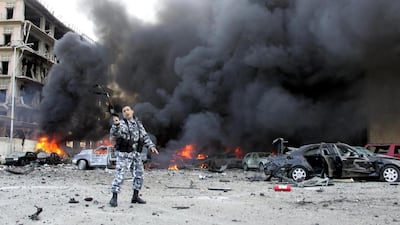
A Lebanese police officer gesturing on the site of an explosion in Beirut that killed ex-premier Rafik Hariri in 2005. AFP -
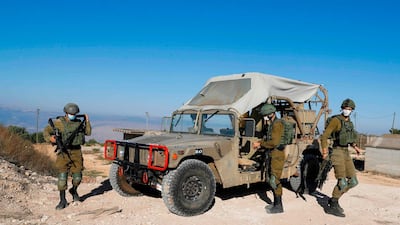
Israeli soldiers monitor the country's border with Lebanon near the northern town of Metula, in July 14, 2020. AFP -
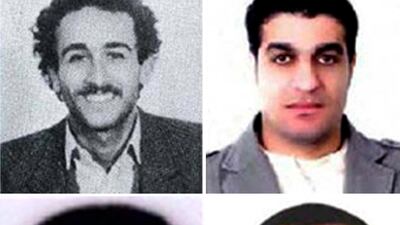
In this file photo obtained on July 29, 2011 from the Special Tribunal for Lebanon shows a combo of pictures showing four Hezbollah suspects indicted in the assassination case of former Lebanese prime minister Rafiq Hariri. AFP -
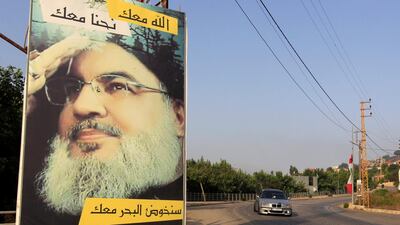
A car drives past a poster depicting Lebanon's Hezbollah leader Sayyed Hassan Nasrallah in Adaisseh village, near the Lebanese-Israeli border, Lebanon July 28, 2020. REUTERS/Aziz Taher


Mr Bassil reacted with an angry speech on Sunday, denying the charges and arguing that America’s attempts to weaken his political party, the Free Patriotic Movement, will “force [Hezbollah] to defend itself, and it will win.”
He warned of sectarian strife between Sunni and Shiite Muslims and Christians.
Mr Bassil also set out new demands for the Cabinet formation, which will probably slow down attempts by Prime Minister-designate Saad Hariri.
Mr Hariri was appointed on October 22 and faces the daunting task of tackling Lebanon’s ever-worsening economic and financial crisis, which has pushed more than half of the country's population into poverty.
It remains unlikely that Mr Biden will withdraw sanctions on Lebanese political figures such as Mr Bassil.
“They are irreversible,” Mr Bahout said. “This is why the Trump administration was in a hurry to take them, because they know it’ll remain after them.”
Mr Biden’s victory was good news for most Lebanese politicians, not just Hezbollah and its allies, said Mohannad Ali, director of communications at Carnegie Middle East Centre in Beirut.
“I think that it was not just Hezbollah that wanted Biden to win," Mr Hage Ali said.
"The entire Lebanese political class, with a few exceptions, wanted Biden, because Trump’s maximum-pressure campaign wasn’t empowering anybody.
"It was more focused on destroying Hezbollah through collective punishment.
“It was inconsiderate in many ways and focused on an unattainable goal."
In Lebanon, power is shared among the country’s many religious groups.
Most of them are represented in government, pushing them to collaborate despite differences.
Hezbollah has been represented in Parliament since 1992 and in government since 2005.
US sanctions also focused on Lebanese financial institutions, forcing the closure of Jammal Trust Bank in late 2019 over claimed ties with Hezbollah.
“Sanctions became a regular event in which there were a lot of anticipation and worry about their impact,” Mr Hage Ali said.
"The US became a source of unexpected changes."
But Mr Biden, who will take office on January 20, might not have time to rekindle links with Iran before the Iranian presidential elections scheduled for June 2021.
Mr Hage Ali said that if he did not move quickly, it could mean another hardliner like former president Mahmoud Ahmadinejad takes over after eights years of the moderate Hassan Rouhani.
"This will affect the region,” he said. “I wouldn’t blame it all on the Biden administration. There was four years of Trump behind that."

