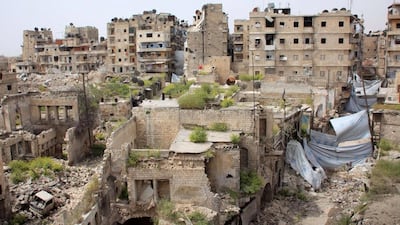
After nearly a decade of war, Syria is crumbling under the weight of a repressive, corrupt ruling elite, a pandemic and an economic downslide compounded by western sanctions. AP Photo
Souvenir plates bearing the Syrian flag and the portraits of Russian President Vladimir Putin and Syrian President Bashar Al Assad are pictured in a shop in a bazaar in old Damascus. AFP
A man works in his metal workshop beneath a portrait of Syrian President Bashar Al Assad in old Damascus earlier this week. AFP
A Syrian boy carrying textiles is pictured in the bazaar in old Damascus. AFP
A Syrian shopkeeper waits for customers in a bazaar in old Damascus. AFP
Syrians walk in old Damascus in front of a portrait of Syrian President Bashar Al Assad. AFP
Syrian shoppers walk in the bazaar in old Damascus. AFP
Syrian men work in their bakery in old Damascus. AFP
Employees stack packets of the Syrian pound in the Central Syrian Bank in Damascus. AP Photo
An anti-Assad regime demonstration under way in Suweida, southern Syria, in early June 2020. AFP
Lt Gen Sir John Lorimer was questioned about the security issues the Middle East faced by countries currently involved in conflict.
He was asked about their status and how problems could be resolved
Iraq
The new Prime Minister, Mustafa Al Kadhimi, has had a good start and got a cabinet together. That’s really positive.
But there’s a long list of things to sort out and Covid-19 is quite low down on the list.
You’ve got the economy, the internal politics, foreign relations and the threat of ISIS.
The Iraqis also realise that, despite great improvements in Iraqi and Kurdish security forces they still need support from the coalition. There’s still a role for the Nato mission. So much good co-operation has been conducted between the coalition and the Iraqis it would be devastating if that were lost.
Am I concerned about Iraq? Yes. I always am but I think the prime minister is in there with a great team. But there are challenges regarding who his neighbours are.
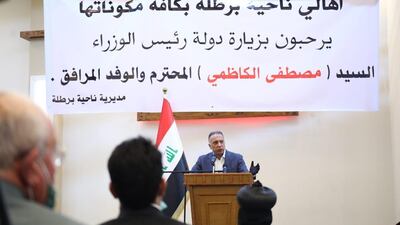
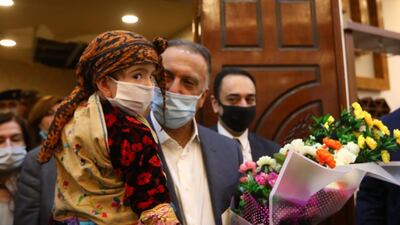
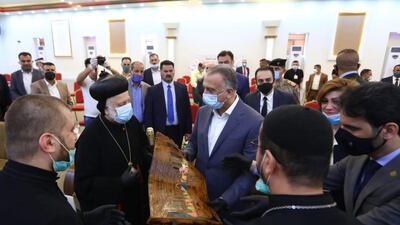
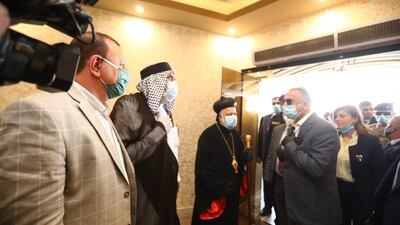
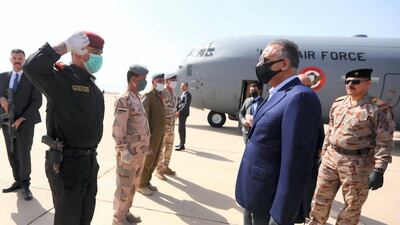
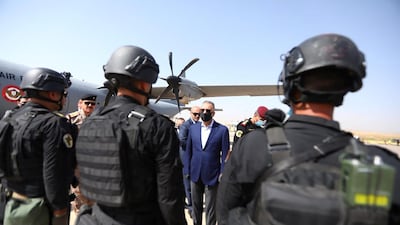
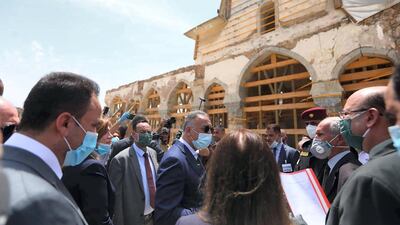
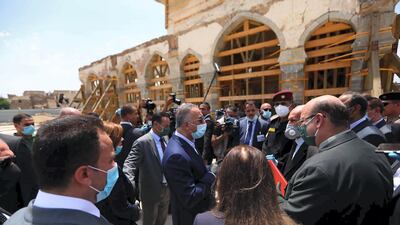
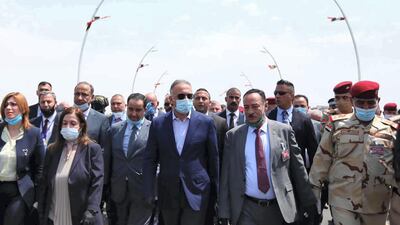
Iraqi Prime Minister Mustafa Al Kadhimi during his visit to the Nineveh province.
Prime Minister Mustafa Al Kadhimi during his visit to the Nineveh province.
Prime MInister Mustafa Al Kadhimi arrives in Mosul. Iraqi PM Media Office HO
Prime Minister Mustafa Al Kadhimi in Mosul last month. The PM's Media Office
Prime Minister Mustafa Al Kadhimi arrives in Mosul. Iraqi PM Media Office HO
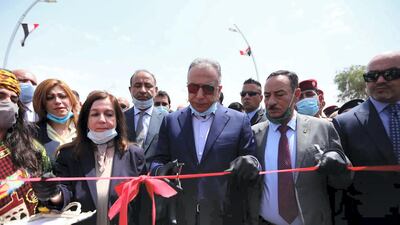
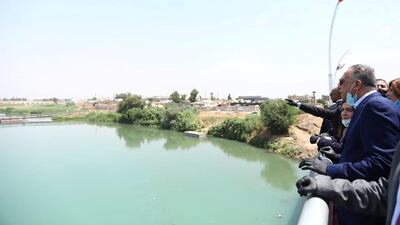
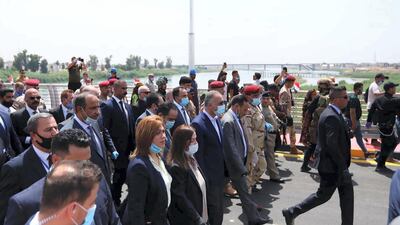
Prime Minister Mustafa Al Kadhimi officially opens the Al Hurriya or Freedom Bridge crossing the Tigris river to Mosul's old city. Iraqi PM Media Office HO
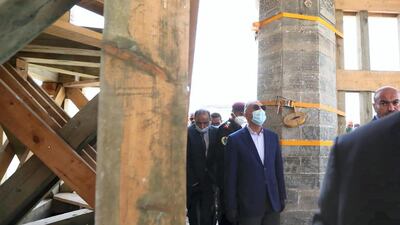
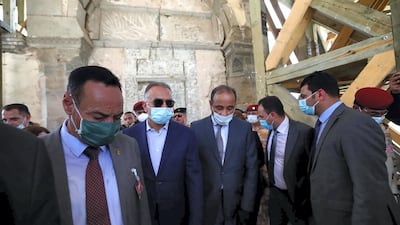
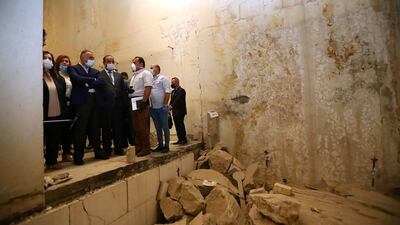
Prime Minister Mustafa Al Kadhimi tours Al Nuri Mosque, destroyed by ISIS and being rebuilt with assistance from the UAE. Iraqi PM Media Office HO
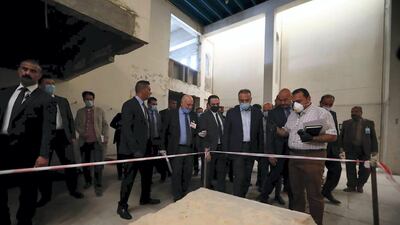
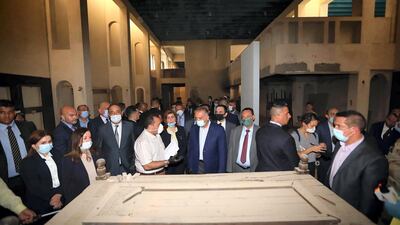
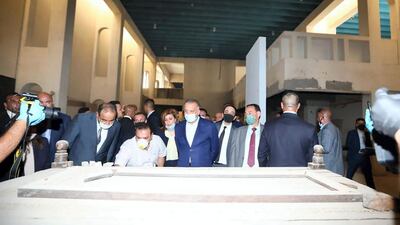
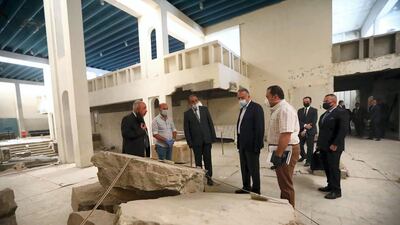
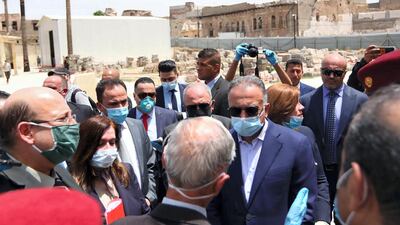
Prime Minister Mustafa Al Kadhimi tours Mosul Museum during a visit to the city six years after ISIS captured it. Iraqi PM Media Office HO
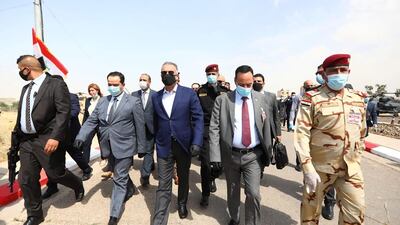
Prime Minister Mustafa Al Kadhimi tours Mosul six years after ISIS captured the city. Iraqi PM Media Office HO
Prime Minister Mustafa Al Kadhimi tours Mosul Museum during a visit to the city six years after ISIS captured it. Iraqi PM Media Office HO
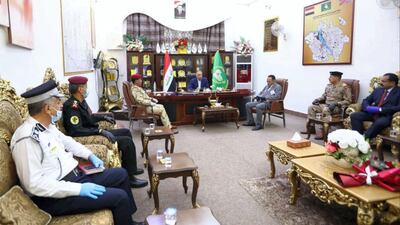
PM Mustafa Al Kadhimi and Lieutenant General Abdul Wahab Al Saadi, the head of the Iraqi Counter-Terrorism Service, meet with Najim Jubouri, Governor of Mosul. Iraqi PM Media Office HO
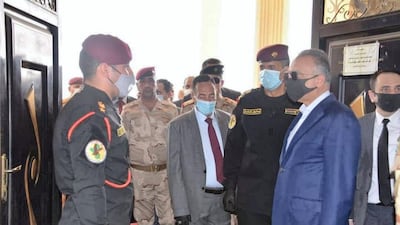
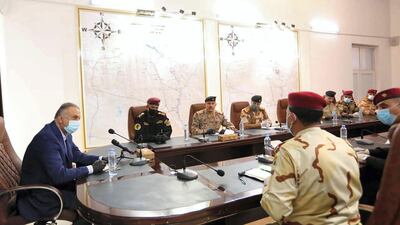
Prime Minister Mustafa Al Kadhimi meets military and security heads after arriving in Mosul six years after ISIS captured the city. Iraqi PM Media Office HO
Prime Minister Mustafa Al Kadhimi walks beside Najm Al Jabouri, the city's governor and the general who led the battle against ISIS in 2017. Iraqi PM Media Office HO
Prime Minister Mustafa Al Kadhimi officially opens the Al Hurriya or Freedom Bridge crossing the Tigris river to Mosul's old city. Iraqi PM Media Office HO
ISIS
We must not lose sight of the threat ISIS poses and not convince ourselves that it’s all done and dusted. Iraq’s prime minister knows that. We have to work for the lasting defeat of ISIS that will help sustain a peaceful future.
We’ve seen a bit of an uptick in activity. There have been some attacks, it has seized the opportunity in some places to attack Iraq security forces who are doing some very good operations that are taking the fight to ISIS.
This is not just a military matter it’s about dealing with the conditions that led to the rise of ISIS, trying to prevent those conditions rising again.
The coalition led by the Americans has been extremely successful and it’s an important tool for defeating ISIS.
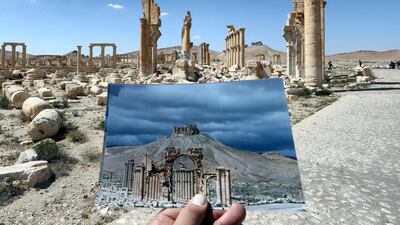
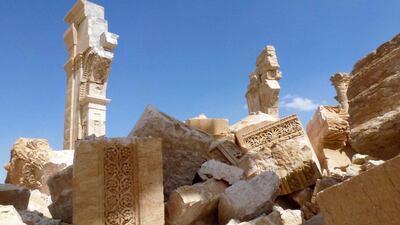
A photographer holding his picture of the Arc du Triomphe (Triumph's Arch) taken on March 14, 2014 in front of the remains of the historic monument after it was destroyed by ISIS in October 2015 in the ancient Syrian city of Palmyra. AFP
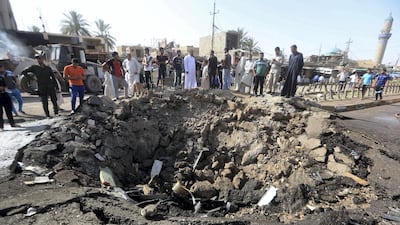
Iraqi men look at a crater left by a massive suicide car bomb attack carried out the previous day by ISIS in the predominantly Shiite town of Khan Bani Saad, 20km north of Baghdad, on July 18, 2015. AFP
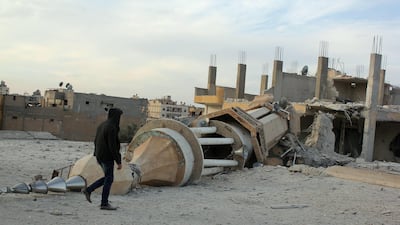
A Syrian man walks past a minaret destroyed following an alleged air strikes by Syrian government forces in the ISIS controlled Syrian city of Raqqa, on November 25, 2014. AFP
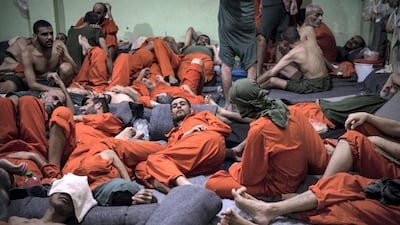
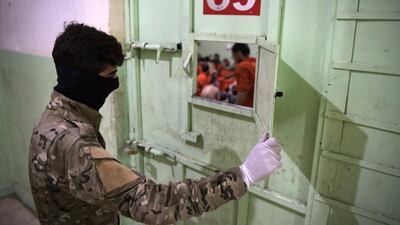
Men, suspected of being affiliated with ISIS, gather in a prison cell in the northeastern Syrian city of Hasakeh on October 26, 2019. AFP
A member of the Syrian Democratic Forces (SDF) stands guard in a prison where men suspected to be affiliated with ISIS are jailed in northeast Syria in the city of Hasakeh on October 26, 2019. AFP
A woman stands in front of a bullet riddled facade in the northern Syrian city of Raqqa, the former Syrian capital of ISIS, on August 21, 2019. AFP
A fighter with the Syrian Democratic Forces (SDF) monitors on Surveillance screens, prisoners who are accused of being affiliated with ISIS, at a prison in the northeastern Syrian city of Hasakeh on October 26, 2019. AFP
A general view shows blankets hanging across the road for protection from sniper fire in the Hamidiyeh neighbourhood of the northern Syrian city of Aleppo as local popular committee fighters, who support the Syrian government forces, try to defend the traditionally Christian district on the third day of intense battles with ISIS on April 9, 2015. AFP
An undated image, which appears to be a screenshot from a video and which was published by ISIS in the Homs province (Welayat Homs) on August 25, 2015, allegedly shows smoke billowing from the Baal Shamin temple in Syria's ancient city of Palmyra. AFP
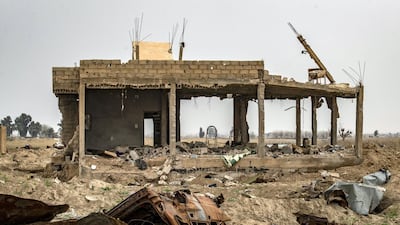
The house of local farmer Hamad al-Ibrahim is seen destroyed in the eastern Syrian village of Baghouz on March 13, 2020, a year after the fall of ISIS. AFP
A picture taken on January 13, 2020 during a press tour organised by the US-led coalition fighting the remnants of ISIS, shows a view of the damage at Ain al-Asad military airbase housing US and other foreign troops in the western Iraqi province of Anbar. AFP
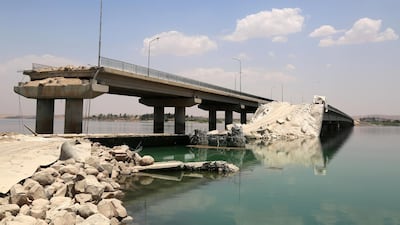
A bridge that was destroyed by ISIS after they took control of the river crossing and rebuilt the bridge as US-backed Kurdish and Arab fighters advance into ISIS's bastion of Manbij, in northern Syria, on June 23, 2016. AFP
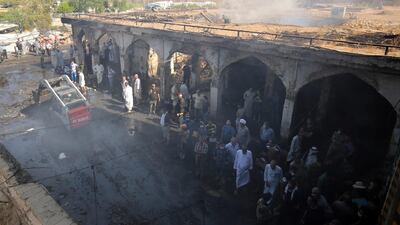
Iraqis look at the damage at aftermath scene of a mortar and bombing attack on the Sayyid Mohammed shrine in the Balad area, located 70km (around 45 miles) north of Baghdad, on July 8, 2016. AFP
Part of the remains of Arch of Triumph, also called the Monumental Arch of Palmyra, that was destroyed by ISIS in October 2015 in the ancient Syrian city of Palmyra, after government troops recaptured the UNESCO world heritage site. AFP
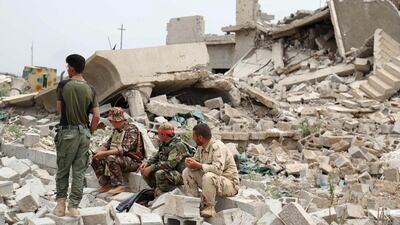
Iraqi Kurdish and Turkmen Shiite forces sit in the northern Iraqi town of Bashir after they recaptured the town from ISIS on May 1, 2016. AFP
Syria
The UK is pretty clear that it needs a lasting resolution that protects all rights of all civilians. We support the UN process and long-term political settlement.
We do not believe that Syrian President Bashar Al Assad is capable of delivering lasting peace in Syria given the atrocities his regime has committed. What we do welcome and recognise are reports that the regime will return to constitutional talks. That will be another nudge on the route to a long term political settlement. But it is complex and really difficult.
Displaced people, in Syria, one of the regional crisis points. AFP
Libya
Libya is complex if it were just the Libyans trying to sort out their future.
If they could try to sort out the future by themselves that would be great; at the moment there have been other people involved and that makes it more complex. In particular there have been reports about Turkey and what it has been doing.
If you throw in the humanitarian aspect and Covid-19 into a conflict environment where the healthcare system is under pressure anyway, then that’s a nightmare and a catastrophic scenario that will be horrendous for Libyans.
We want a ceasefire and political talks led by the UN. It’s really important for the region, for Europe and Britain itself.
Yemen
We are really concerned about the ongoing conflict and humanitarian crisis in Yemen.
Cholera, locusts and now Covid-19, Yemen has suffered hugely.
We support the peace process led by Martin Griffiths [UN Special Envoy for Yemen]. We would urge all the parties to support the peace process and engage constructively in it. A political settlement is the only way to bring long-term stability to the region and to address the humanitarian crisis. There’s no military solution to it.
If the fighting stops it will allow the world engage in these humanitarian issues.

What vitamins do we know are beneficial for living in the UAE
Vitamin D: Highly relevant in the UAE due to limited sun exposure; supports bone health, immunity and mood. Vitamin B12: Important for nerve health and energy production, especially for vegetarians, vegans and individuals with absorption issues. Iron: Useful only when deficiency or anaemia is confirmed; helps reduce fatigue and support immunity. Omega-3 (EPA/DHA): Supports heart health and reduces inflammation, especially for those who consume little fish.
Profile
Company: Libra Project
Based: Masdar City, ADGM, London and Delaware
Launch year: 2017
Size: A team of 12 with six employed full-time
Sector: Renewable energy
Funding: $500,000 in Series A funding from family and friends in 2018. A Series B round looking to raise $1.5m is now live.
Series result
1st ODI Zimbabwe won by 6 wickets
2nd ODI Sri Lanka won by 7 wickets
3rd ODI Sri Lanka won by 8 wickets
4th ODI Zimbabwe won by 4 wickets
5th ODI Zimbabwe won by 3 wickets
Itcan profile
Founders: Mansour Althani and Abdullah Althani
Based: Business Bay, with offices in Saudi Arabia, Egypt and India
Sector: Technology, digital marketing and e-commerce
Size: 70 employees
Revenue: On track to make Dh100 million in revenue this year since its 2015 launch
Funding: Self-funded to date
Calls
Directed by: Fede Alvarez
Starring: Pedro Pascal, Karen Gillian, Aaron Taylor-Johnson
4/5
THE LIGHT
Director: Tom Tykwer
Starring: Tala Al Deen, Nicolette Krebitz, Lars Eidinger
Rating: 3/5
Specs
Engine: 51.5kW electric motor
Range: 400km
Power: 134bhp
Torque: 175Nm
Price: From Dh98,800
Available: Now
Benefits of first-time home buyers' scheme
Priority access to new homes from participating developers
Discounts on sales price of off-plan units
Flexible payment plans from developers
Mortgages with better interest rates, faster approval times and reduced fees
DLD registration fee can be paid through banks or credit cards at zero interest rates
Prop idols
Girls full-contact rugby may be in its infancy in the Middle East, but there are already a number of role models for players to look up to.
Sophie Shams (Dubai Exiles mini, England sevens international)
An Emirati student who is blazing a trail in rugby. She first learnt the game at Dubai Exiles and captained her JESS Primary school team. After going to study geophysics at university in the UK, she scored a sensational try in a cup final at Twickenham. She has played for England sevens, and is now contracted to top Premiership club Saracens.
----
Seren Gough-Walters (Sharjah Wanderers mini, Wales rugby league international)
Few players anywhere will have taken a more circuitous route to playing rugby on Sky Sports. Gough-Walters was born in Al Wasl Hospital in Dubai, raised in Sharjah, did not take up rugby seriously till she was 15, has a master’s in global governance and ethics, and once worked as an immigration officer at the British Embassy in Abu Dhabi. In the summer of 2021 she played for Wales against England in rugby league, in a match that was broadcast live on TV.
----
Erin King (Dubai Hurricanes mini, Ireland sevens international)
Aged five, Australia-born King went to Dubai Hurricanes training at The Sevens with her brothers. She immediately struck up a deep affection for rugby. She returned to the city at the end of last year to play at the Dubai Rugby Sevens in the colours of Ireland in the Women’s World Series tournament on Pitch 1.
Want to sound on message about the biggest show on television without actually watching it? Best not to get locked into the labyrinthine tales of revenge and royalty: as Isaac Hempstead Wright put it, all you really need to know from now on is that there’s going to be a huge fight between humans and the armies of undead White Walkers.
The season ended with a dragon captured by the Night King blowing apart the huge wall of ice that separates the human world from its less appealing counterpart. Not that some of the humans in Westeros have been particularly appealing, either.
Anyway, the White Walkers are now free to cause any kind of havoc they wish, and as Liam Cunningham told us: “Westeros may be zombie land after the Night King has finished.” If the various human factions don’t put aside their differences in season 8, we could be looking at The Walking Dead: The Medieval Years.
What is Folia?
Prince Khaled bin Alwaleed bin Talal's new plant-based menu will launch at Four Seasons hotels in Dubai this November. A desire to cater to people looking for clean, healthy meals beyond green salad is what inspired Prince Khaled and American celebrity chef Matthew Kenney to create Folia. The word means "from the leaves" in Latin, and the exclusive menu offers fine plant-based cuisine across Four Seasons properties in Los Angeles, Bahrain and, soon, Dubai.
Kenney specialises in vegan cuisine and is the founder of Plant Food Wine and 20 other restaurants worldwide. "I’ve always appreciated Matthew’s work," says the Saudi royal. "He has a singular culinary talent and his approach to plant-based dining is prescient and unrivalled. I was a fan of his long before we established our professional relationship."
Folia first launched at The Four Seasons Hotel Los Angeles at Beverly Hills in July 2018. It is available at the poolside Cabana Restaurant and for in-room dining across the property, as well as in its private event space. The food is vibrant and colourful, full of fresh dishes such as the hearts of palm ceviche with California fruit, vegetables and edible flowers; green hearb tacos filled with roasted squash and king oyster barbacoa; and a savoury coconut cream pie with macadamia crust.
In March 2019, the Folia menu reached Gulf shores, as it was introduced at the Four Seasons Hotel Bahrain Bay, where it is served at the Bay View Lounge. Next, on Tuesday, November 1 – also known as World Vegan Day – it will come to the UAE, to the Four Seasons Resort Dubai at Jumeirah Beach and the Four Seasons DIFC, both properties Prince Khaled has spent "considerable time at and love".
There are also plans to take Folia to several more locations throughout the Middle East and Europe.
While health-conscious diners will be attracted to the concept, Prince Khaled is careful to stress Folia is "not meant for a specific subset of customers. It is meant for everyone who wants a culinary experience without the negative impact that eating out so often comes with."
Lt Gen Erik Petersen, deputy chief of programs, US Army, has argued it took a “three decade holiday” on modernising tanks.
“There clearly remains a significant armoured heavy ground manoeuvre threat in this world and maintaining a world class armoured force is absolutely vital,” the general said in London last week.
“We are developing next generation capabilities to compete with and deter adversaries to prevent opportunism or miscalculation, and, if necessary, defeat any foe decisively.”
Mercer, the investment consulting arm of US services company Marsh & McLennan, expects its wealth division to at least double its assets under management (AUM) in the Middle East as wealth in the region continues to grow despite economic headwinds, a company official said.
Mercer Wealth, which globally has $160 billion in AUM, plans to boost its AUM in the region to $2-$3bn in the next 2-3 years from the present $1bn, said Yasir AbuShaban, a Dubai-based principal with Mercer Wealth.
“Within the next two to three years, we are looking at reaching $2 to $3 billion as a conservative estimate and we do see an opportunity to do so,” said Mr AbuShaban.
Mercer does not directly make investments, but allocates clients’ money they have discretion to, to professional asset managers. They also provide advice to clients.
“We have buying power. We can negotiate on their (client’s) behalf with asset managers to provide them lower fees than they otherwise would have to get on their own,” he added.
Mercer Wealth’s clients include sovereign wealth funds, family offices, and insurance companies among others.
From its office in Dubai, Mercer also looks after Africa, India and Turkey, where they also see opportunity for growth.
Wealth creation in Middle East and Africa (MEA) grew 8.5 per cent to $8.1 trillion last year from $7.5tn in 2015, higher than last year’s global average of 6 per cent and the second-highest growth in a region after Asia-Pacific which grew 9.9 per cent, according to consultancy Boston Consulting Group (BCG). In the region, where wealth grew just 1.9 per cent in 2015 compared with 2014, a pickup in oil prices has helped in wealth generation.
BCG is forecasting MEA wealth will rise to $12tn by 2021, growing at an annual average of 8 per cent.
Drivers of wealth generation in the region will be split evenly between new wealth creation and growth of performance of existing assets, according to BCG.
Another general trend in the region is clients’ looking for a comprehensive approach to investing, according to Mr AbuShaban.
“Institutional investors or some of the families are seeing a slowdown in the available capital they have to invest and in that sense they are looking at optimizing the way they manage their portfolios and making sure they are not investing haphazardly and different parts of their investment are working together,” said Mr AbuShaban.
Some clients also have a higher appetite for risk, given the low interest-rate environment that does not provide enough yield for some institutional investors. These clients are keen to invest in illiquid assets, such as private equity and infrastructure.
“What we have seen is a desire for higher returns in what has been a low-return environment specifically in various fixed income or bonds,” he said.
“In this environment, we have seen a de facto increase in the risk that clients are taking in things like illiquid investments, private equity investments, infrastructure and private debt, those kind of investments were higher illiquidity results in incrementally higher returns.”
The Abu Dhabi Investment Authority, one of the largest sovereign wealth funds, said in its 2016 report that has gradually increased its exposure in direct private equity and private credit transactions, mainly in Asian markets and especially in China and India. The authority’s private equity department focused on structured equities owing to “their defensive characteristics.”