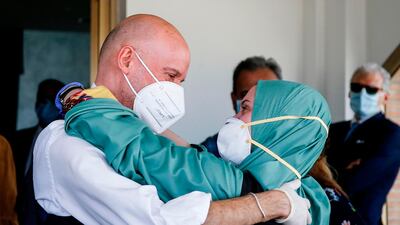
Europeans oppose paying ransoms to terrorist groups unless their own relatives are being held hostage, according to survey results published after the release of an Italian aid worker reputedly held by Al Shabab.
Silvia Romano, 25, was kidnapped by gunmen 18 months ago in Kenya but returned to Italy at the weekend after a reported payment to the Somalian Islamist group. The payment sparked a backlash among the Italian right-wing over the role of Turkey and her conversion to Islam while she was being held.
The study conducted in March by pollster YouGov found that more Europeans in the six countries polled believed that paying an Islamist organisation to free a hostage should be illegal compared to those who though it should be illegal.
The most stark difference was in the UK where 55 per cent of Britons thought it should be illegal compared to 17 per cent who thought it should be legal. The finding was, however, reversed in all countries if they were told that relatives were held hostage.
The issue came to the fore with the emergence of the ISIS and the killing of foreign prisoners by death squads in Syria and Iraq. In response to the kidnappings and beheadings, leaders of the G8 group of nations said in 2013 that they “unequivocally” rejected the payments of ransoms to terrorists.
“We call on countries around the world to follow our lead and stamp out this as well as other lucrative sources of income for terrorists,” the leaders of the industrialised nations, including Italy, said in the statement after a meeting in Northern Ireland.
Ms Romano was freed from close to Mogadishu, Somalia, after Italian intelligence services worked with their Turkish counterparts and Somalian government officials. Work on her release started in December last year, according to reports.
Her case and the survey highlighted the difficulties of payments when the life and death of citizens was in the balance, according to Tom Keatinge, the head of the financial crime centre at the Royal United Services Institute think-tank.
The US has a no-concessions policy that does not allow for ransoms to be paid by the state to foreign terrorist organisations. There is no formal ban on paying governments.
Following the ISIS kidnappings, the Department of Justice said in 2015 that it has never prosecuted a hostage’s family or friends for paying a ransom for the safe return of their relatives.
“These survey results suggest that other governments might be well-served in considering a similar approach,” he said.

HAJJAN
%3Cp%3EDirector%3A%20Abu%20Bakr%20Shawky%C2%A0%3C%2Fp%3E%0A%3Cp%3E%3Cbr%3EStarring%3A%20Omar%20Alatawi%2C%20Tulin%20Essam%2C%20Ibrahim%20Al-Hasawi%C2%A0%3C%2Fp%3E%0A%3Cp%3E%3Cbr%3ERating%3A%204%2F5%3C%2Fp%3E%0A
UAE currency: the story behind the money in your pockets
MATCH INFO
Uefa Champions League, semi-final result:
Liverpool 4-0 Barcelona
Liverpool win 4-3 on aggregate
Champions Legaue final: June 1, Madrid
Timeline
2012-2015
The company offers payments/bribes to win key contracts in the Middle East
May 2017
The UK SFO officially opens investigation into Petrofac’s use of agents, corruption, and potential bribery to secure contracts
September 2021
Petrofac pleads guilty to seven counts of failing to prevent bribery under the UK Bribery Act
October 2021
Court fines Petrofac £77 million for bribery. Former executive receives a two-year suspended sentence
December 2024
Petrofac enters into comprehensive restructuring to strengthen the financial position of the group
May 2025
The High Court of England and Wales approves the company’s restructuring plan
July 2025
The Court of Appeal issues a judgment challenging parts of the restructuring plan
August 2025
Petrofac issues a business update to execute the restructuring and confirms it will appeal the Court of Appeal decision
October 2025
Petrofac loses a major TenneT offshore wind contract worth €13 billion. Holding company files for administration in the UK. Petrofac delisted from the London Stock Exchange
November 2025
180 Petrofac employees laid off in the UAE
Tonight's Chat on The National
Tonight's Chat is a series of online conversations on The National. The series features a diverse range of celebrities, politicians and business leaders from around the Arab world.
Tonight’s Chat host Ricardo Karam is a renowned author and broadcaster with a decades-long career in TV. He has previously interviewed Bill Gates, Carlos Ghosn, Andre Agassi and the late Zaha Hadid, among others. Karam is also the founder of Takreem.
Intellectually curious and thought-provoking, Tonight’s Chat moves the conversation forward.
Facebook | Our website | Instagram
Kandahar%20
%3Cp%3E%3Cstrong%3EDirector%3A%3C%2Fstrong%3E%20Ric%20Roman%20Waugh%3C%2Fp%3E%0A%3Cp%3E%3Cstrong%3EStars%3A%C2%A0%3C%2Fstrong%3EGerard%20Butler%2C%20Navid%20Negahban%2C%20Ali%20Fazal%3C%2Fp%3E%0A%3Cp%3E%3Cstrong%3ERating%3A%3C%2Fstrong%3E%202.5%2F5%3C%2Fp%3E%0A
Specs%20
%3Cp%3E%3Cstrong%3EPower%20train%3A%20%3C%2Fstrong%3E4.0-litre%20twin-turbo%20V8%20and%20synchronous%20electric%20motor%3Cbr%3E%3Cstrong%3EMax%20power%3A%20%3C%2Fstrong%3E800hp%3Cbr%3E%3Cstrong%3EMax%20torque%3A%20%3C%2Fstrong%3E950Nm%3Cbr%3E%3Cstrong%3ETransmission%3A%20%3C%2Fstrong%3EEight-speed%20auto%3Cbr%3E%3Cstrong%3EBattery%3A%20%3C%2Fstrong%3E25.7kWh%20lithium-ion%3Cbr%3E0-100km%2Fh%3A%203.4sec%3Cbr%3E0-200km%2Fh%3A%2011.4sec%3Cbr%3E%3Cstrong%3ETop%20speed%3A%20%3C%2Fstrong%3E312km%2Fh%3Cbr%3E%3Cstrong%3EMax%20electric-only%20range%3A%3C%2Fstrong%3E%2060km%20(claimed)%3Cbr%3E%3Cstrong%3EOn%20sale%3A%3C%2Fstrong%3E%20Q3%3Cbr%3E%3Cstrong%3EPrice%3A%20%3C%2Fstrong%3EFrom%20Dh1.2m%20(estimate)%3Cbr%3E%3Cbr%3E%3C%2Fp%3E%0A
UAE%20FIXTURES
%3Cp%3EWednesday%2019%20April%20%E2%80%93%20UAE%20v%20Kuwait%3Cbr%3EFriday%2021%20April%20%E2%80%93%20UAE%20v%20Hong%20Kong%3Cbr%3ESunday%2023%20April%20%E2%80%93%20UAE%20v%20Singapore%3Cbr%3EWednesday%2026%20April%20%E2%80%93%20UAE%20v%20Bahrain%3Cbr%3ESaturday%2029%20April%20%E2%80%93%20Semi-finals%3Cbr%3ESunday%2030%20April%20%E2%80%93%20Third%20position%20match%3Cbr%3EMonday%201%20May%20%E2%80%93%20Final%3C%2Fp%3E%0A
