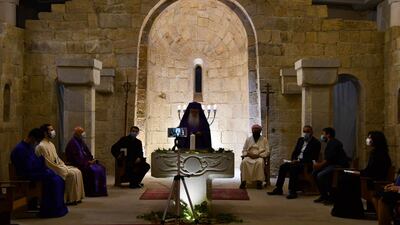
On October 24, faith leaders from the Armenian, Azeri, Georgian and Yazidi community came together for the first peace prayer in the Peace Cathedral in Tbilisi, Georgia. They pledge to pray every Saturday until the war ends between Armenia and Azerbaijan.
The vigil attracted about 15 attendees but many more couldn’t join due to the risk of Covid-19 transmission. Others around the world from Iran to the US – rabbis, priests, imams and all in between – joined from their places of worship and homes.
It came as the US Secretary of State, Mike Pompeo, met Armenian and Azerbaijani Foreign Ministers to discuss how to resolve the conflict.
But the ceasefire that followed frayed yet again on Monday for the third time with both sides blaming the other for violating the agreement.
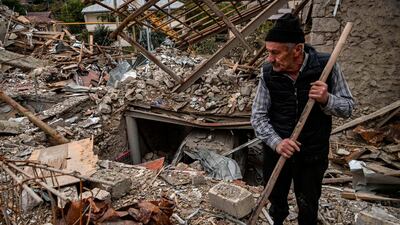
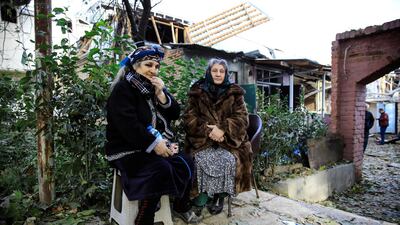
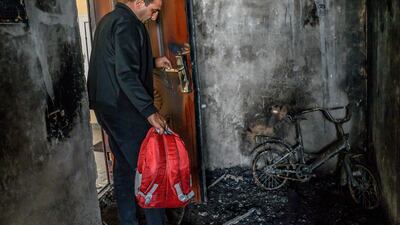
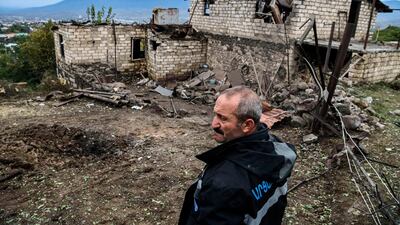
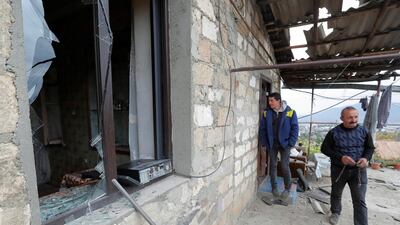
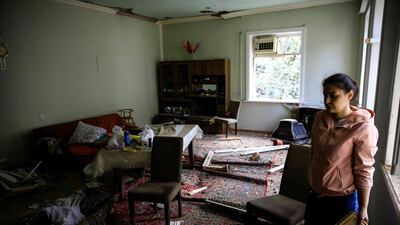
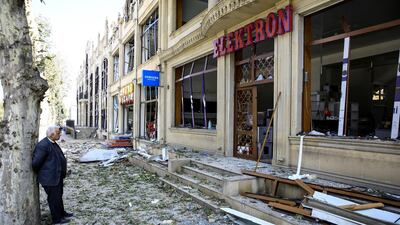
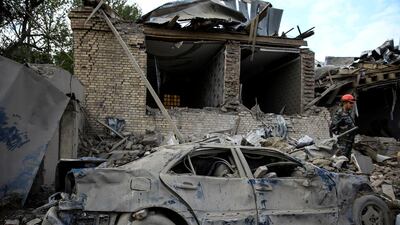
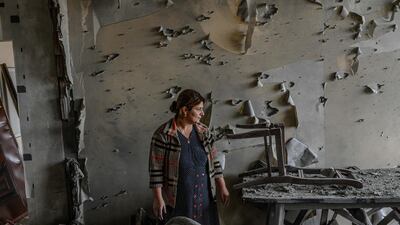
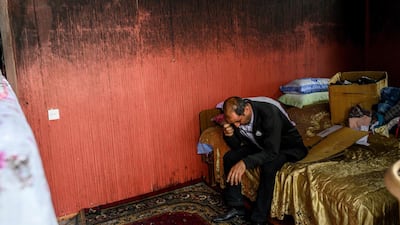
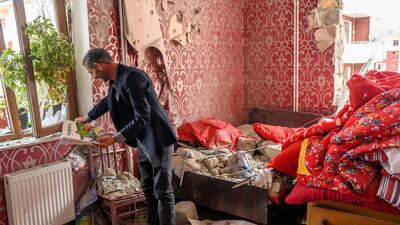
The fighting between Armenia and Azerbaijan over the disputed territory of Nagorno-Karabakh has now raged for more than a month, and cost over a thousand lives with many more injured and displaced.
"We're very concerned about what's happening in our region. We don't want war or any more loss of life. For us, every human has intrinsic value, regardless of their ethnic or religious background", said Dimitri Pirbari, a Yazidi spiritual leader, who led the first peace prayer on Saturday.
His family, like many other Yazidis at the time, emigrated to Georgia, which shares a border with Armenia and Azerbaijan, in the early 1900s during the Ottoman Empire.
Yazidi participation in the prayer was crucial as they recently experienced a genocide in the Iraqi region of Sinjar in 2014, said Malkhaz Songulashvili, Head Bishop of the Peace Cathedral.
The families of the dead are only now, six years later, beginning to exhume Yazidi mass graves in Sinjar as part of a UN mission to recover those killed by ISIS. "They came with this experience of enormous pain and they shared this experience," Mr Songulashvili said.
Tension evaporates in prayer
Armenian and Azeri communities make up 12 per cent of Georgia’s population, Crisis Group estimates. They have coexisted peacefully for many decades, live side-by-side in pockets of villages across the country and even learn each other’s languages.
When the conflict initially broke out there were tensions between both sides at the Peace Cathedral, Mr Songulashvili explains.
“It took some efforts to convince [the Azeri and Armenian clergy] that we should come together and pray without delay", he adds.
But when the service started, “the tension evaporated as we prayed for peace”, Mr Songulashvili said.
By the end of the service, neither the Azeri nor the Armenians wanted to leave the church.
"I'm very proud of the Azeri and Armenian clergy being in the same room because they are being harshly criticized by their own people for praying with their alleged enemies”, he adds.
The peace prayer emphasises that this is not a religious war. After recitations from the Quran, Bible and other holy scriptures in Georgian, Arabic, and Armenian, a candle of hope was lit.
Shared grief
“Georgia is a multicultural country and we live here together. We can't be at war, when there's war in our home country”, said Rima Marangozyan, an Armenian student living in Tbilisi.
Ms Marangozyan, who lost a close relative in the renewed conflict said it has put many of her friendships to the test and brought about a “cyber war” pitting people against each other.
But Ms Marangozyan, who has many Azeri friends, emphasises the importance of maintaining peace.
She recalls exchanging photos and stories of what happened in Ganja and Stepanakert with an Azeri friend. Sharing how their relatives were affected by the conflict, “we tried to look at both sides of the war because we know it's not the people who are guilty of the war”, she said.
“Ethnic hostility between Armenians and Azeris is artificial”, said Said Babazade, an Azeri journalist who lost two close friends in the conflict.
From folk songs like Sari Gelin to food like Dolma, meatballs wrapped in grape leaves, Armenia and Azerbaijan share many cultural characteristics, he said.
In fact, "we have more in common with Armenians than Georgians," Mr Babazade adds.
Georgia as 'secondary mediator'
Beyond peaceful coexistence, the new flare-up in the fighting is also a geopolitical nightmare for Georgia.
The country borders all main stakeholders in the conflict – Russia, Armenia, Azerbaijan and Turkey. Historically, Georgia has tried to maintain neutral ties with Armenia and Azerbaijan and keep out of disputes.
The last round of fighting over the Nagorno-Karabakh territory, which spans over 30 years, erupted in July.
But the renewed hostilities pose a greater threat to Georgia than in the past, said Alexander Scrivener, a research fellow at Eurasia Democratic Security Network.
Last week, a Russian MP of Putin’s United Russia party told the media that Moscow may send troops to Armenia over Georgian airspace if necessary and Georgia must ‘calmly accept’ the fact.
This week, reports circulated that Iran allegedly deployed military units to the Azeri-Armenian border.
At worst, Georgia could be “under pressure from all sides to allow transit of weaponry through its territory”, said Mr Scrivener.
While Georgia has little influence over the war, it could act “as a secondary mediator”, he explains. “Not top-level negotiations – but more secondary technical discussions between the two sides facilitated by Georgia”.
Georgian territory could also be used as neutral ground to build more intensive inter-community contact which would build on previous efforts, the researcher added.
The key is that Georgia doesn’t seek to “replace the more powerful players on the map”, he emphasises.
A meeting by the OSCE Minsk Group – established in 1992 to encourage peaceful negotiation on the Nagorno-Karabakh dispute – scheduled for October 29 to help reach a peaceful settlement has now been postponed. It comes as a missile struck the Azeri town of Barda killing 21 civilians.
Ahead of the second peace prayer, Mr Songulashvili said: “We hope there are not too many Saturdays. But if the war continues, we will continue to pray for peace.”

Ten tax points to be aware of in 2026
1. Domestic VAT refund amendments: request your refund within five years
If a business does not apply for the refund on time, they lose their credit.
2. E-invoicing in the UAE
Businesses should continue preparing for the implementation of e-invoicing in the UAE, with 2026 a preparation and transition period ahead of phased mandatory adoption.
3. More tax audits
Tax authorities are increasingly using data already available across multiple filings to identify audit risks.
4. More beneficial VAT and excise tax penalty regime
Tax disputes are expected to become more frequent and more structured, with clearer administrative objection and appeal processes. The UAE has adopted a new penalty regime for VAT and excise disputes, which now mirrors the penalty regime for corporate tax.
5. Greater emphasis on statutory audit
There is a greater need for the accuracy of financial statements. The International Financial Reporting Standards standards need to be strictly adhered to and, as a result, the quality of the audits will need to increase.
6. Further transfer pricing enforcement
Transfer pricing enforcement, which refers to the practice of establishing prices for internal transactions between related entities, is expected to broaden in scope. The UAE will shortly open the possibility to negotiate advance pricing agreements, or essentially rulings for transfer pricing purposes.
7. Limited time periods for audits
Recent amendments also introduce a default five-year limitation period for tax audits and assessments, subject to specific statutory exceptions. While the standard audit and assessment period is five years, this may be extended to up to 15 years in cases involving fraud or tax evasion.
8. Pillar 2 implementation
Many multinational groups will begin to feel the practical effect of the Domestic Minimum Top-Up Tax (DMTT), the UAE's implementation of the OECD’s global minimum tax under Pillar 2. While the rules apply for financial years starting on or after January 1, 2025, it is 2026 that marks the transition to an operational phase.
9. Reduced compliance obligations for imported goods and services
Businesses that apply the reverse-charge mechanism for VAT purposes in the UAE may benefit from reduced compliance obligations.
10. Substance and CbC reporting focus
Tax authorities are expected to continue strengthening the enforcement of economic substance and Country-by-Country (CbC) reporting frameworks. In the UAE, these regimes are increasingly being used as risk-assessment tools, providing tax authorities with a comprehensive view of multinational groups’ global footprints and enabling them to assess whether profits are aligned with real economic activity.
Contributed by Thomas Vanhee and Hend Rashwan, Aurifer
The biog
Date of birth: 27 May, 1995
Place of birth: Dubai, UAE
Status: Single
School: Al Ittihad private school in Al Mamzar
University: University of Sharjah
Degree: Renewable and Sustainable Energy
Hobby: I enjoy travelling a lot, not just for fun, but I like to cross things off my bucket list and the map and do something there like a 'green project'.
The schedule
December 5 - 23: Shooting competition, Al Dhafra Shooting Club
December 9 - 24: Handicrafts competition, from 4pm until 10pm, Heritage Souq
December 11 - 20: Dates competition, from 4pm
December 12 - 20: Sour milk competition
December 13: Falcon beauty competition
December 14 and 20: Saluki races
December 15: Arabian horse races, from 4pm
December 16 - 19: Falconry competition
December 18: Camel milk competition, from 7.30 - 9.30 am
December 20 and 21: Sheep beauty competition, from 10am
December 22: The best herd of 30 camels
Mercer, the investment consulting arm of US services company Marsh & McLennan, expects its wealth division to at least double its assets under management (AUM) in the Middle East as wealth in the region continues to grow despite economic headwinds, a company official said.
Mercer Wealth, which globally has $160 billion in AUM, plans to boost its AUM in the region to $2-$3bn in the next 2-3 years from the present $1bn, said Yasir AbuShaban, a Dubai-based principal with Mercer Wealth.
“Within the next two to three years, we are looking at reaching $2 to $3 billion as a conservative estimate and we do see an opportunity to do so,” said Mr AbuShaban.
Mercer does not directly make investments, but allocates clients’ money they have discretion to, to professional asset managers. They also provide advice to clients.
“We have buying power. We can negotiate on their (client’s) behalf with asset managers to provide them lower fees than they otherwise would have to get on their own,” he added.
Mercer Wealth’s clients include sovereign wealth funds, family offices, and insurance companies among others.
From its office in Dubai, Mercer also looks after Africa, India and Turkey, where they also see opportunity for growth.
Wealth creation in Middle East and Africa (MEA) grew 8.5 per cent to $8.1 trillion last year from $7.5tn in 2015, higher than last year’s global average of 6 per cent and the second-highest growth in a region after Asia-Pacific which grew 9.9 per cent, according to consultancy Boston Consulting Group (BCG). In the region, where wealth grew just 1.9 per cent in 2015 compared with 2014, a pickup in oil prices has helped in wealth generation.
BCG is forecasting MEA wealth will rise to $12tn by 2021, growing at an annual average of 8 per cent.
Drivers of wealth generation in the region will be split evenly between new wealth creation and growth of performance of existing assets, according to BCG.
Another general trend in the region is clients’ looking for a comprehensive approach to investing, according to Mr AbuShaban.
“Institutional investors or some of the families are seeing a slowdown in the available capital they have to invest and in that sense they are looking at optimizing the way they manage their portfolios and making sure they are not investing haphazardly and different parts of their investment are working together,” said Mr AbuShaban.
Some clients also have a higher appetite for risk, given the low interest-rate environment that does not provide enough yield for some institutional investors. These clients are keen to invest in illiquid assets, such as private equity and infrastructure.
“What we have seen is a desire for higher returns in what has been a low-return environment specifically in various fixed income or bonds,” he said.
“In this environment, we have seen a de facto increase in the risk that clients are taking in things like illiquid investments, private equity investments, infrastructure and private debt, those kind of investments were higher illiquidity results in incrementally higher returns.”
The Abu Dhabi Investment Authority, one of the largest sovereign wealth funds, said in its 2016 report that has gradually increased its exposure in direct private equity and private credit transactions, mainly in Asian markets and especially in China and India. The authority’s private equity department focused on structured equities owing to “their defensive characteristics.”
The Old Slave and the Mastiff
Patrick Chamoiseau
Translated from the French and Creole by Linda Coverdale
Australia squads
ODI: Tim Paine (capt), Aaron Finch (vice-capt), Ashton Agar, Alex Carey, Josh Hazlewood, Travis Head, Nathan Lyon, Glenn Maxwell, Shaun Marsh, Jhye Richardson, Kane Richardson, D’Arcy Short, Billy Stanlake, Marcus Stoinis, Andrew Tye.
T20: Aaron Finch (capt), Alex Carey (vice-capt), Ashton Agar, Travis Head, Nic Maddinson, Glenn Maxwell, Jhye Richardson, Kane Richardson, D’Arcy Short, Billy Stanlake, Marcus Stoinis, Mitchell Swepson, Andrew Tye, Jack Wildermuth.
Our legal columnist
Name: Yousef Al Bahar
Advocate at Al Bahar & Associate Advocates and Legal Consultants, established in 1994
Education: Mr Al Bahar was born in 1979 and graduated in 2008 from the Judicial Institute. He took after his father, who was one of the first Emirati lawyers
How to apply for a drone permit
- Individuals must register on UAE Drone app or website using their UAE Pass
- Add all their personal details, including name, nationality, passport number, Emiratis ID, email and phone number
- Upload the training certificate from a centre accredited by the GCAA
- Submit their request
What are the regulations?
- Fly it within visual line of sight
- Never over populated areas
- Ensure maximum flying height of 400 feet (122 metres) above ground level is not crossed
- Users must avoid flying over restricted areas listed on the UAE Drone app
- Only fly the drone during the day, and never at night
- Should have a live feed of the drone flight
- Drones must weigh 5 kg or less
SPEC%20SHEET%3A%20APPLE%20M3%20MACBOOK%20AIR%20(13%22)
%3Cp%3E%3Cstrong%3EProcessor%3A%3C%2Fstrong%3E%20Apple%20M3%2C%208-core%20CPU%2C%20up%20to%2010-core%20CPU%2C%2016-core%20Neural%20Engine%3C%2Fp%3E%0A%3Cp%3E%3Cstrong%3EDisplay%3A%3C%2Fstrong%3E%2013.6-inch%20Liquid%20Retina%2C%202560%20x%201664%2C%20224ppi%2C%20500%20nits%2C%20True%20Tone%2C%20wide%20colour%3C%2Fp%3E%0A%3Cp%3E%3Cstrong%3EMemory%3A%3C%2Fstrong%3E%208%2F16%2F24GB%3C%2Fp%3E%0A%3Cp%3E%3Cstrong%3EStorage%3A%3C%2Fstrong%3E%20256%2F512GB%20%2F%201%2F2TB%3C%2Fp%3E%0A%3Cp%3E%3Cstrong%3EI%2FO%3A%3C%2Fstrong%3E%20Thunderbolt%203%2FUSB-4%20(2)%2C%203.5mm%20audio%2C%20Touch%20ID%3C%2Fp%3E%0A%3Cp%3E%3Cstrong%3EConnectivity%3A%3C%2Fstrong%3E%20Wi-Fi%206E%2C%20Bluetooth%205.3%3C%2Fp%3E%0A%3Cp%3E%3Cstrong%3EBattery%3A%3C%2Fstrong%3E%2052.6Wh%20lithium-polymer%2C%20up%20to%2018%20hours%2C%20MagSafe%20charging%3C%2Fp%3E%0A%3Cp%3E%3Cstrong%3ECamera%3A%3C%2Fstrong%3E%201080p%20FaceTime%20HD%3C%2Fp%3E%0A%3Cp%3E%3Cstrong%3EVideo%3A%3C%2Fstrong%3E%20Support%20for%20Apple%20ProRes%2C%20HDR%20with%20Dolby%20Vision%2C%20HDR10%3C%2Fp%3E%0A%3Cp%3E%3Cstrong%3EAudio%3A%3C%2Fstrong%3E%204-speaker%20system%2C%20wide%20stereo%2C%20support%20for%20Dolby%20Atmos%2C%20Spatial%20Audio%20and%20dynamic%20head%20tracking%20(with%20AirPods)%3C%2Fp%3E%0A%3Cp%3E%3Cstrong%3EColours%3A%3C%2Fstrong%3E%20Midnight%2C%20silver%2C%20space%20grey%2C%20starlight%3C%2Fp%3E%0A%3Cp%3E%3Cstrong%3EIn%20the%20box%3A%3C%2Fstrong%3E%20MacBook%20Air%2C%2030W%2F35W%20dual-port%2F70w%20power%20adapter%2C%20USB-C-to-MagSafe%20cable%2C%202%20Apple%20stickers%3C%2Fp%3E%0A%3Cp%3E%3Cstrong%3EPrice%3A%3C%2Fstrong%3E%20From%20Dh4%2C599%3C%2Fp%3E%0A
How much do leading UAE’s UK curriculum schools charge for Year 6?
- Nord Anglia International School (Dubai) – Dh85,032
- Kings School Al Barsha (Dubai) – Dh71,905
- Brighton College Abu Dhabi - Dh68,560
- Jumeirah English Speaking School (Dubai) – Dh59,728
- Gems Wellington International School – Dubai Branch – Dh58,488
- The British School Al Khubairat (Abu Dhabi) - Dh54,170
- Dubai English Speaking School – Dh51,269
*Annual tuition fees covering the 2024/2025 academic year
Scorebox
Sharjah Wanderers 20-25 Dubai Tigers (After extra-time)
Wanderers
Tries Gormley, Penalty
Cons Flaherty
Pens Flaherty 2
Tigers
Tries O’Donnell, Gibbons, Kelly
Cons Caldwell 2
Pens Caldwell, Cross
Graduated from the American University of Sharjah
She is the eldest of three brothers and two sisters
Has helped solve 15 cases of electric shocks
Enjoys travelling, reading and horse riding
Dhadak
Director: Shashank Khaitan
Starring: Janhvi Kapoor, Ishaan Khattar, Ashutosh Rana
Stars: 3
What can you do?
Document everything immediately; including dates, times, locations and witnesses
Seek professional advice from a legal expert
You can report an incident to HR or an immediate supervisor
You can use the Ministry of Human Resources and Emiratisation’s dedicated hotline
In criminal cases, you can contact the police for additional support
UAE currency: the story behind the money in your pockets
match info
Athletic Bilbao 1 (Muniain 37')
Atletico Madrid 1 (Costa 39')
Man of the match Iker Muniain (Athletic Bilbao)
Wicked: For Good
Director: Jon M Chu
Starring: Ariana Grande, Cynthia Erivo, Jonathan Bailey, Jeff Goldblum, Michelle Yeoh, Ethan Slater
Rating: 4/5
GROUPS AND FIXTURES
Group A
UAE, Italy, Japan, Spain
Group B
Egypt, Iran, Mexico, Russia
Tuesday
4.15pm: Italy v Japan
5.30pm: Spain v UAE
6.45pm: Egypt v Russia
8pm: Iran v Mexico
if you go
The flights
Direct flights from the UAE to the Nepalese capital, Kathmandu, are available with Air Arabia, (www.airarabia.com) Fly Dubai (www.flydubai.com) or Etihad (www.etihad.com) from Dh1,200 return including taxes. The trek described here started from Jomson, but there are many other start and end point variations depending on how you tailor your trek. To get to Jomson from Kathmandu you must first fly to the lake-side resort town of Pokhara with either Buddha Air (www.buddhaair.com) or Yeti Airlines (www.yetiairlines.com). Both charge around US$240 (Dh880) return. From Pokhara there are early morning flights to Jomson with Yeti Airlines or Simrik Airlines (www.simrikairlines.com) for around US$220 (Dh800) return.
The trek
Restricted area permits (US$500 per person) are required for trekking in the Upper Mustang area. The challenging Meso Kanto pass between Tilcho Lake and Jomson should not be attempted by those without a lot of mountain experience and a good support team. An excellent trekking company with good knowledge of Upper Mustang, the Annaurpuna Circuit and Tilcho Lake area and who can help organise a version of the trek described here is the Nepal-UK run Snow Cat Travel (www.snowcattravel.com). Prices vary widely depending on accommodation types and the level of assistance required.