
Denmark is to repatriate 22 women and children from detention camps in north-eastern Syria, where they are being held for their association with ISIS fighters.
The Social Democratic government is facing mounting pressure from human rights activists and from other parties in its coalition that have threatened a vote of no confidence in the foreign minister of the minority government.
The Danish citizens are among nearly 10,000 foreign women and children from 57 countries detained at Al Hol and Roj camps, run by Syrian Kurdish authorities, where the majority of residents are Iraqi and Syrian citizens.
The decision to repatriate the three Danish women and their 14 children, as well as five other children without their mothers, was based on a recommendation by the Danish Security and Intelligence Service.
Until Tuesday, the government had refused to repatriate the women, saying they were a security threat to Denmark.
"They must be held accountable for their actions, and they will be tried for custody as soon as they set foot on Danish soil," Justice Minister Nick Hekkerup said.
Under international law, states have a duty to repatriate their citizens and, if there is evidence, to prosecute adults for war crimes or other offences at fair trials in their domestic courts, UN rights experts said in February
Denmark's minority government led by Prime Minister Mette Frederiksen faces criticism for pushing ahead with efforts to return refugees to war-torn Syria, based on claims conditions in parts of the country have improved.
-
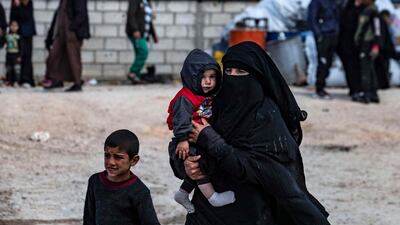
A family awaits departure during the release of another group of Syrian families from the Kurdish-run Al Hol camp, Syria. AFP -
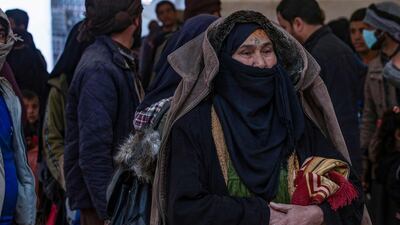
The camp, in the Hasakah governorate of northeastern Syria, holds suspected relatives of ISIS fighters. AFP -
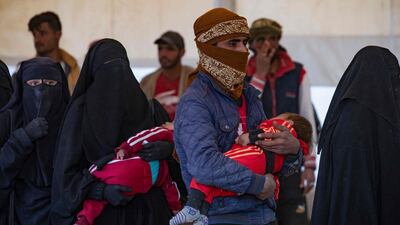
The sprawling site is home to more than 30,000 people, the majority of them children. AFP -
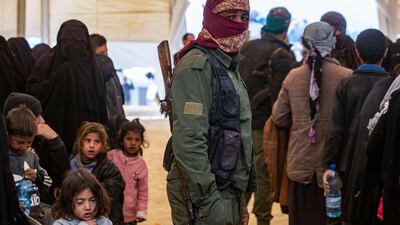
The United Nations has called on countries, including the US, the UK and Germany, to repatriate its citizens. AFP -
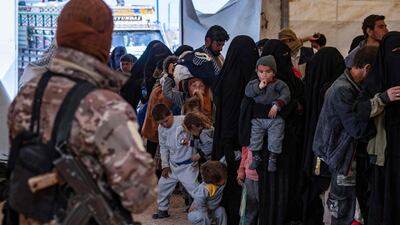
There are an estimated 10,000 foreign women and children from 57 countries detained at the Al Hol camp and its neighbouring Roj camp. AFP -
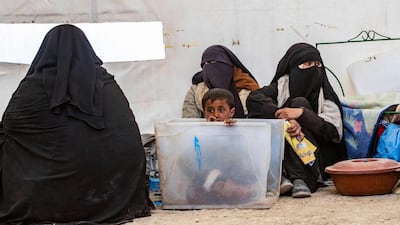
The UN has warned of fast-spreading disease and coronavirus outbreaks at the camps. AFP -
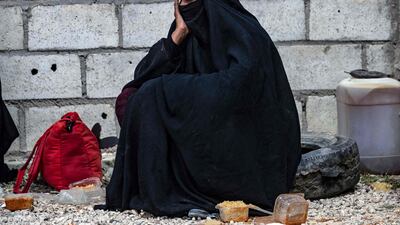
This month, Denmark announced it is to repatriate 22 Danish citizens, women and children. AFP -
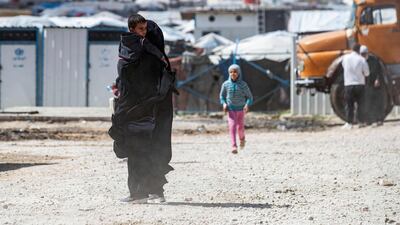
Under international law, states have a duty to repatriate their citizens and, if there is evidence, to prosecute adults for war crimes or other offences at fair trials in their domestic courts, UN rights experts said. AFP



