


A $59 billion annual funding gap means more than half of the world’s children could lack the basic skills needed for employment by the end of the decade, education leaders say.
Governments were urged to step up and give priority to young people in Covid-19 recovery efforts.
Global children’s charity Theirworld calculated $75bn a year is needed in aid if the UN’s sustainable development goal of inclusive, equitable quality primary and secondary education by 2030 is to be met.
In 2019, only $16bn was given – a figure likely to fall after the pandemic savaged the global economy, and indications that governments are likely to cut aid programmes.
“Already underfunded, global education now needs additional resources for catch-up programmes, digital inclusion and the safe return to school,” said Gordon Brown, the UN’s special envoy for global education and former UK prime minister.
“To meet the sustainable development goal commitments between now and 2030, we must pressure governments not to cut their education budgets but to increase them, and call on the international community to reverse current plans for cuts in aid budgets for education."
-

Nigerian security forces are searching for gunmen who abducted more than 300 pupils from a government girls junior secondary school in Jangebe, northern Nigeria, on Friday. AP photo -
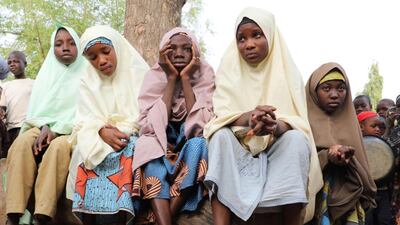
Students who escaped from gunmen wait outside the school premises for their parents after 317 girls were taken at gunpoint from their school in Zamfara state, Nigeria. EPA -

Parents of kidnapped pupils of wait at Jangebe Government Girls Junior Secondary School wait for information about their children from Zamfara state police. AP -

Parents arrive at the school compound in search of children kidnapped by gunmen in Jangede, Zamfara state in northern Nigeria. AFP -
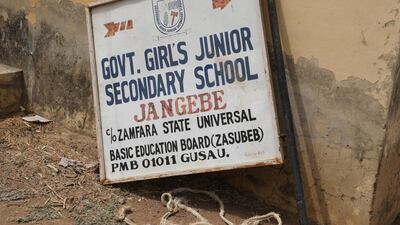
Nigerian President Muhammad Buhari said the people who took pupils from the government girls junior secondary school in Jangebe were "bandits, kidnappers and terrorists". AP -
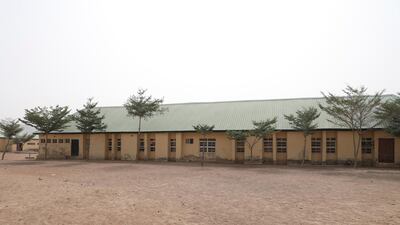
Empty classroom of the government girls junior secondary school following an attack by gunmen in Jangebe, Nigeria. AP -
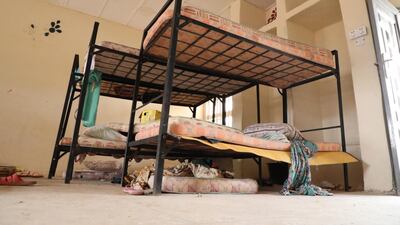
A ransacked dormitory at the school in Jangede, northern Nigeria, after more than 300 pupils were taken at gunpoint. EPA -
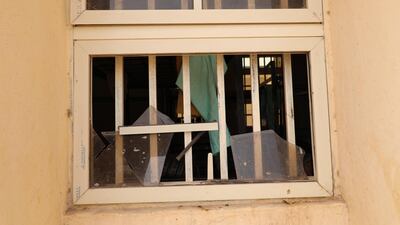
A broken window of a dormitory at Jangebe Government Girls Secondary School in Zamfara state, Nigeria. EPA -
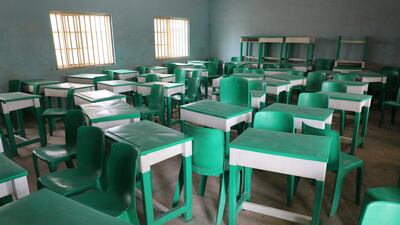
An empty classroom of at the government girls junior secondary school following an attack by gunmen in Jangebe, Nigeria. AP


Justin van Fleet, president of Theirworld, said leaving the next generation without basic skills would have a knock-on effect on global issues such as climate change, security and economic growth.
Before the pandemic, about 260 million children were not in school, a figure that rose to 1.6 billion last year when classrooms closed around the world.
Now, another 24 million, typically from the most marginalised and poorest regions, are at risk of never returning to school.
"Girls are now more vulnerable," Mr van Fleet told The National. Communities are less safe, more people are unemployed. Climate change remains unaddressed. Refugees are still not in school.
“Children are dying, really, before the age of 5, because their mothers didn’t have a basic education. That’s what we’re up against.”
In its Education Finance Playbook, Theirworld calls on the G7 nations to set the standard in prioritising education when they meet in south-west England in June.
“There’s no way to invest in economic recovery and not make sure every young person has the skills that they need to participate in society, get a job and help to grow the economy,” Mr van Fleet said.
The pandemic should serve as “a real eye-opener” for the importance of sustainable development goals and education, he said.
While the monetary black hole is vast and requires “serious commitment", Theirworld said it was “attainable and practical” during the recovery from Covid-19.
It called on institutions to be fully funded and for greater support for the International Finance Facility for Education, a new fund designed to support lower-middle-income countries, and aiming to maximise the money donated.
It uses a mixtures of guarantees and grants from donors, alongside existing initiatives and institutions, to “supercharge” finance pools for education for developing countries.
“In the traditional aid model, making $22bn would cost $22bn,” the Education Finance Playbook said.
“But through innovative finance, it would only require the international community to contribute $2.75bn [$750m in cash payments guaranteeing contingent financing and $2bn in grants] for lower-income countries to gain access to $22bn for education.”
Theirworld said a collective $1bn commitment from the G7 to innovative funding such as the International Finance Facility for Education could lead to $25bn for children’s education.
The facility was backed by top officials including Mr Brown, who also served as the UK’s chancellor of the exchequer.
But Mr van Fleet believes there was a need to raise awareness.
Mr Brown urged that the international facility be used immediately and said that “for obvious reasons, we will need innovative financial instruments”.
Hiro Mizuno, the UN special envoy for innovative finance and sustainable investments, called for major global organisations and summits to commit to the fund in 2021.
“Conventional finance approach will not sufficiently support and fill the funding gap," Mr Mizuno said.
"It's critical for all financial players in the public and private sector to bring in innovative finance ideas."
Mr van Fleet said global leaders must honour their pledges and increase their ambition.
"Countries are investing a lot right now in recovery efforts and if the one thing that they want to save money on is on the backs of the poorest and most marginalised young people, I think that sends the wrong signal,” he said.
"We really need our leaders to step up for the next generation.”
His call was echoed by Amina Mohammed, deputy Secretary General of the UN, who called for more “investment in national education budgets, fully funding institutions and leveraging innovative finance”.
“Education must be at the core of the pandemic recovery efforts and the financing gap must be filled,” Ms Mohammed said.

