


Inside a small, dimly lit room in Afghanistan’s southern city of Lashkargah in Helmand province, Pir Mohammad reaches into a clear plastic box where dozens of little yellow scorpions scuttle for cover.
Using a pair of metal tweezers, he gently picks one up by the tail. “This is where the money is,” he laughs, gesturing towards the tear-shaped stinger inches from his finger. “I have international buyers who will pay $1 million per kilo for use in medical research.”
Mohammad, 46, is one of Afghanistan’s first scorpion farmers and in this conflict-ridden country, where a steady income is difficult to come by, he is hoping these small, venomous creatures will bring him serious profits.
From the bustling road outside, Mohammad’s small operation looks like any other building in the city; a squat, two-story structure with splashes of the pastel pinks and greens common in Afghanistan’s south. But in a set of adjoining back rooms, Mohammad has constructed a tidy, climate-controlled haven to raise and breed his rapidly expanding inventory of locally-caught scorpions.
Gravel-filled plastic boxes line every shelf in this makeshift terrarium, that’s home to over 16,000 scorpions plucked from the surrounding landscape. Some of the boxes contain cardboard egg cartons writhing with hundreds of baby scorpions — each no more than an inch long. Others hold larger, more mature specimens that are nearly the size of Mohammad’s palm when stretched out to full length.
Within the bulbous, needle-sharp stinger of each creature is a few drops of one of the most valuable substances on earth.
Scorpion venom is highly prized among medical researchers. “Not all the venom components of scorpions are dangerous to humans, and there are actually many components with useful potential applications in medicine,” says Dr Lourival Possani, a biotech researcher from the National Autonomous University of Mexico.
-
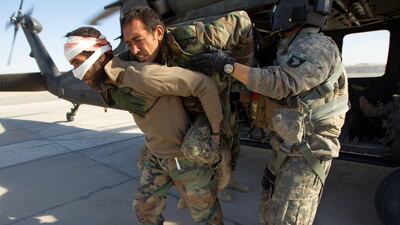
Sergeant Jay Kenney, 26, with the 101st Airborne Division, Task Force Destiny, assists wounded Afghan National Army (ANA) soldiers off the Blackhawk UH-60A helicopter after they were rescued in an air mission in Kandahar on December 12, 2010 in Kandahar province, Afghanistan. Getty Images -
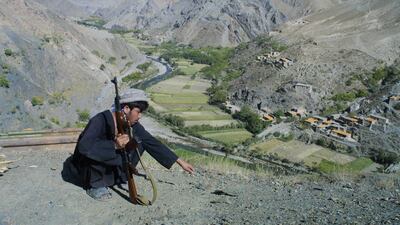
An Afghan Northern Alliance fighter mans the front line against the Taliban on October 2, 2001 near Jabul os Sarache, 30 miles north of Kabul. Getty Images -
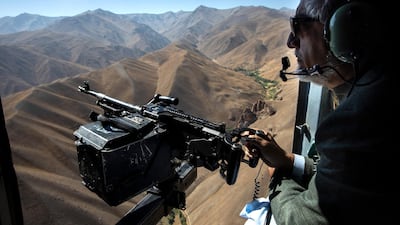
Abdullah Abdullah, chief executive of Afghanistan travelling via helicopter for the final campaign rally in Bamiyan, Afghanistan on September 25, 2019. Afghans will head to the polls on Saturday, September 28th. Getty Images -
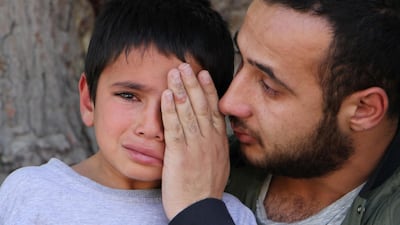
Mustafa Tamanna, 10, son of Afghan reporter Zabihullah Tamanna, weeps during the funeral ceremony in Kabul, Afghanistan on June 7, 2016. Tamanna was killed by a rocket-propelled grenade fired by the Taliban. Getty Images -
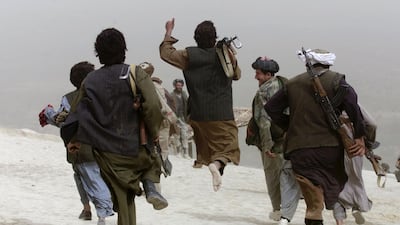
Northern Alliance soldiers come back from the front line after a battle near Charatoy town in the north of Afghanistan on October 10, 2001. REUTERS -
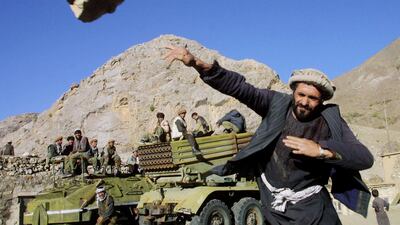
A Northern Alliance fighter throwing rocks as part of a popular national game yards away from a multiple Grad missile launcher in October 12, 2001 in the Salang Gorge in Northern Afghanistan. Getty Images -
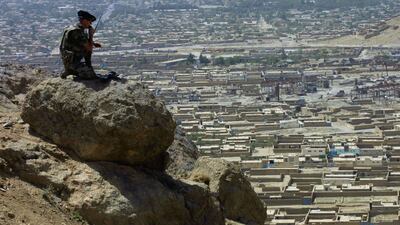
A French soldier from the 7th Mountain Regiment, part of the International Security and Assistance Force (ISAF) stands on a boulder overlooking Kabul during a patrol August 3, 2002 in Afghanistan. The ISAF has been patrolling Kabul since January 2002, working with the government and a new police force to prevent the violence and lawlessness that threatened to engulf the city after a U.S.-led coalition forced the Taliban from power. Getty Images -
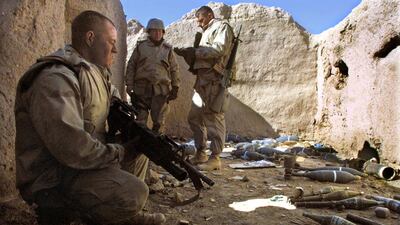
US Marine Sgt. Jerry Brown (L) of Jacksonville, North Carolina watches over a weapons cache found during a patrol near the American military compound at Kandahar Airport in January 16, 2002 in Kandahar, Afghanistan. The Marines recovered mortars, rockets, rocket-propelled grenades and artillery rounds discovered in various caches near the base while on the patrol. Getty Images) -
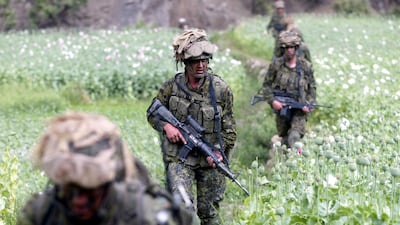
Members of the Princess Patricia's Canadian Light Infantry patrol through poppy fields in the village of Markhanai in May 6, 2002 in the Tora Bora valley region of Afghanistan. Getty Images -
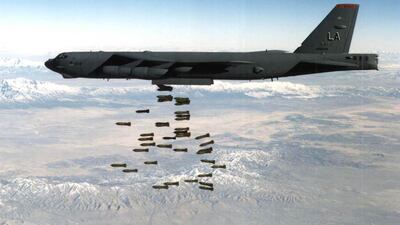
The United States and Britain on October 7, 2001 launched a first wave of air strikes against Afghanistan. President George W. Bush said the action heralded a "sustained, comprehensive and relentless" campaign against terrorism. REUTERS -
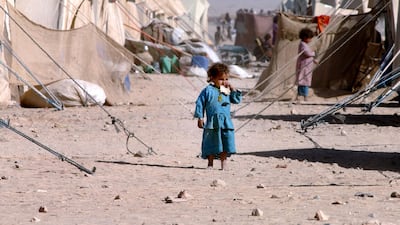
A young Afghan girl eats a piece of bread at the Chaman refugee camp on November 8, 2001 on the Pakistan border with Afghanistan. The UNHCR has estimated that since September 11, 2001 over 135,000 Afghans have crossed the border into Pakistan, adding to the already millions of refugees living in the country. Getty Images -
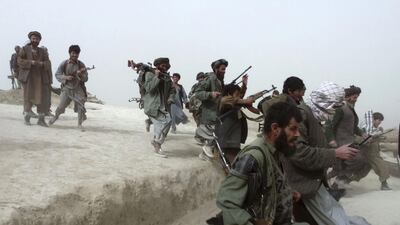
Afghan opposition Northern Alliance soldiers leap over a trench as they return from front line positions after battle near the town of Charatoy in the north of Afghanistan October 10, 2001. REUTERS -
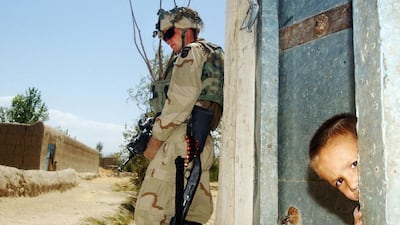
An Afghan child peeks out from the doorway of his family's home as a US Army soldier from the 101st Airborne stands guard in the eastern Afghan village of Hesarak on July 16, 2002 during what the Army refers to as a 'sensitive site exploitation' mission or 'SSE'. Getty Images -
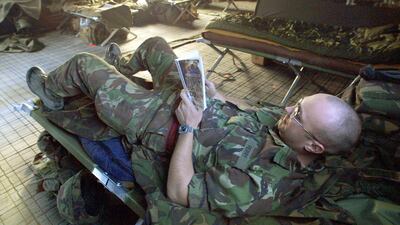
Fred Perry, a British Royal Engineer soldier, reads the book "Black Hawk Down" inside his tent after a day of work on January 29, 2002 at the International Security Assistance Force (ISAF) barracks at the Kabul airport in Kabul, Afghanistan. Getty Images -
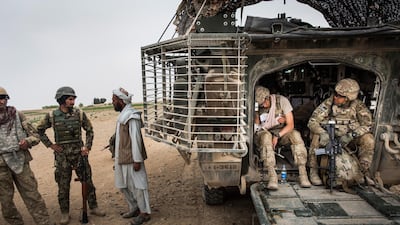
Afghan soldiers (L) speak to a local Afghan, while a medic in the U.S. Army's 1st Battalion, 36th Infantry Regiment, Charlie Company (R) monitors a soldier who has just survived a blast from an improvised explosive device (IED) while driving a vehicle during a mission near Command Outpost Pa'in Kalay, on March 19, 2013 in Kandahar Province, Maiwand District, Afghanistan. Getty Images -

Marines on a light armored vehicle prepare for patrol as an AH1W "Super Cobra" helicopter flies by on December 28, 2001 at the U.S. Marine Corps Base in Kandahar, Afghanistan. Getty Images -
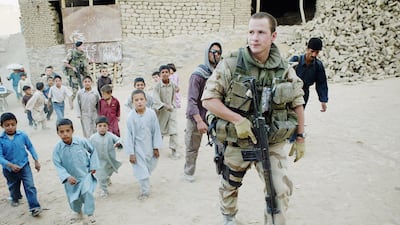
A Norwegian ISAF (International Security Assistance Force)soldier from Recce Squadron 3 patrols on October 4, 2004 in Kabul, Afghanistan as election officials get ready for the Presidential elections. Getty Images -
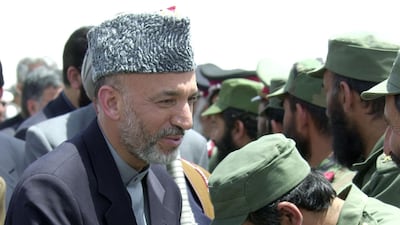
Interim Afghan leader Hamid Karzai (L) is greeted by a group of Afghan military officers on his arrival to Kandahar airbase on May 04, 2002 in Southern Afghanistan. Getty Images -
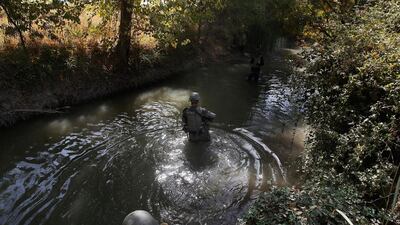
Soldiers in the U.S. Army's 101st Airborne Division wade though a creek to avoid buried insurgent bombs while on patrol October 16, 2010 in Zhari district west of Kandahar, Afghanistan. Getty Images -

British commandos descend from a mountain observation post overlooking the beginning of the Helmand River at the Kajaki hydroelectric dam on March 13, 2007 in Afghanistan's southern Helmand province. Getty Images -
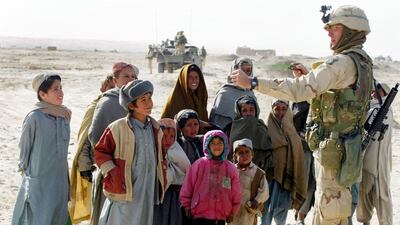
101st Airbornes 1st Sgt. Kerry Black from Westmoreland, Tennessee uses an Afghan child's sling shot on February 6, 2002 as children crowd around him while he patrols on the outskirts of Kandahar, Afghanistan. Getty Images -

Marine Cpl. Jonathan Eckert of Oak Lawn, IL attached to India Battery, 3rd Battalion, 12th Marine Regiment works his improvised explosive device (IED) sniffing dog Bee as they secure a compound during a patrol near Forward Operating Base (FOB) Zeebrugge on October 11, 2010 in Kajaki, Afghanistan. Getty Images -
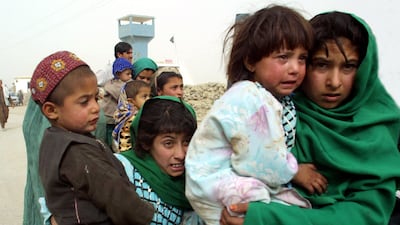
Afghan refugees walk across the border into Pakistan on October 11, 2001 as they leave Afghanistan at the Chaman crossing point on the 4th day of U.S.-led air strikes against the ruling Taliban and terrorist networks in the country. Getty Images -

Anti-Taliban Afghan fighters watch several explosions from U.S. bombings in the Tora Bora mountains in Afghanistan on December 16, 2001. -
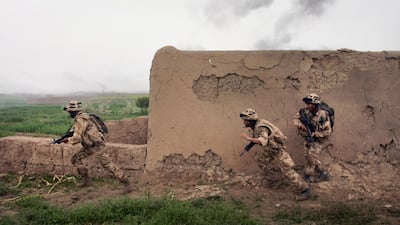
British Marines run under fire from the Taliban during a morning operation on March 18, 2007 near Kajaki in the Afghan province of Helmand. Getty Images -

Afghan Army troops prepare to board a British chinook helicopter from their base at Shorabak on March 12, 2007 in Southern Helmand province, Afghanistan. Getty Images -
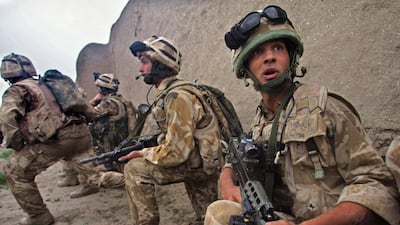
British Marine Joe Harvey from Stafford, England (R), watches as British forces come under fire by Taliban insurgents on March 18, 2007 near Kajaki in the Afghan province of Helmand. Getty Images -

U.S. Army 101st Airborne 3-187 "Bravo" company soliders pass through a corn field while conducting a sensitive site exploitation (SSE) mission July 23, 2002 near the town of Narizah in Southeastern Afghanistan. Getty Images -
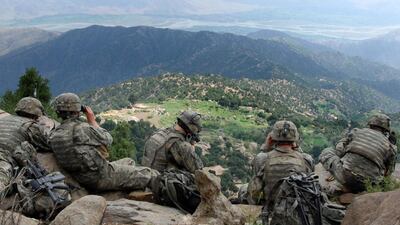
Scouts from 2nd Battalion, 503rd Infantry Regiment (Airborne), pull overwatch during Operation Destined Strike while 2nd Platoon, Able Company searches a village below the Chowkay Valley in Kunar Province, Afghanistan on August 22, 2006. US Army


This rare substance has a huge range of potential uses, including “as an antimalarial agent, anti-epileptic, insecticide, anti-cancer cell, antibiotic and others,” Dr Possani adds.
Because of its medical value, scorpion venom does not come cheap. One gram of venom can sell for as much as $115,000 and medical catalogues seldom sell more than one gram at a time.
“By volume, scorpion venom is one of the most precious materials in the world. It would cost $39 million to produce a gallon of it,” Stanford University researcher Richard Zare told the Stanford University News. At these prices, even a small harvest of venom could bring huge profits to a man like Mohammad.
Although he is starting on a small scale with just two rooms and 10 staff, Mohammed has much bigger ambitions for his business in the near future. “In the summer, we pay members of the community to go out looking for more scorpions,” he says.
“After eight months of operation, we have collected over 16,000 scorpions. But to be a viable business, we need much more than that. We aim to have one million scorpions by the end of next year, and our long-term goal is to construct a facility that can house 10 million scorpions.”
But the road to this goal is a long one, and so far they are yet to see any profits.
“Because it’s only been eight months since we began this operation, we haven’t yet harvested our first drops of venom,” he says. “Each scorpion takes about six months to produce just one or two drops of venom, which we can then extract, but they don’t start producing this venom until they are almost fully grown. It’s a slow process, and right now, many of our scorpions are still too young to be producing these amounts of venom.”
Once they mature, extracting the venom will be delicate work. A small electrical pulse administered to the scorpion’s stinger causes the venom to be expelled, producing one or two drops of milky white fluid that must be carefully collected in airtight vials.
Mohammad and his team have practised this process in 2018 during their training in Iran, which has its own burgeoning scorpion venom industry, and is one of the only countries where Mohammad and his staff could easily obtain a visa to travel. But they have yet to work on their own scorpions. Each adult scorpion can only produce 1-2 milligrams of venom at a time, and will then take six months or more to replenish their supply.
Mohammad is aware of the risks he is taking in such an unstable economic environment. “I don’t yet have any return on my investment with this venture. I sent 10 of my staff to Iran for specialised training, and I have spent money on specialised equipment like the climate control system and venom-extractions tools.” Training his staff and importing specialised equipment from Europe has already cost Mohammed tens of thousands of dollars, but he remains optimistic about his venture’s outlook. “ I believe that it will pay off. This is not a business for impatient people,” he smiles.
Since 2016, scorpion farming has become increasingly popular across Central Asia and the Middle East and Mohammad’s is not the only venture of this kind in Afghanistan. In Herat, a city in Afghanistan’s west, another group of entrepreneurial Afghans opened their own facility in early 2019, investing over $500,000. But Mohammad hopes to eclipse the scale of his competition once the business takes off.
Now that he has mastered the difficulties of extracting the venom, establishing his client base is the next challenge. International buyers have extremely stringent requirements on the type, quality, and origin of any venom they purchase for research purposes, and, at this point, that's not information Mohammad is able to supply.
Only a handful of internationally recognised companies, like French-run Latoxan and UK-based Venomtech, supply pharmaceutical and research companies with venom on a large scale, and they are subject to strict international safety regulations. But Mohammad seems undaunted. “I know there are people who will buy the product,” he says. “This is not something that I’m worried about.”
Mohammad also hopes the burgeoning venture can benefit his local community in Lashkargah, where wages are low and unemployment is high. “We have about 180 people here in the community who are always looking for scorpions during the summer period. I pay them 300 Afghani (about $4) per scorpion they bring me, which is a significant amount to a normal shopkeeper or farmer.
“These creatures are not really useful to people here, except for use in a few traditional medicines, so something that used to be a pest can now provide some small income to local people,” he adds.
With such potential profits scurrying across the rocky plains of Helmand, Mohammad isn’t worried about competing scorpion farms looking to get a slice of this lucrative business. “Even if everybody in this area knew the value of the scorpion’s venom, they don’t have the right equipment and knowledge to extract it.”
As he places a scorpion back in its terrarium, he seems optimistic about the future of his business. “If we are able to expand, it can help others in this area with jobs and income. We are starting small, but I want this business to grow into one of the best of its kind in the world.”

